
Why Was Marina Del Rey Practically Built for Slab Leaks?
Slab leak detection marina del rey california starts with the ground. Much of it was placed by dredges. In the 1960s, crews filled 900-plus acres of Ballona Wetlands to make the marina. Our technicians know what fill means: it sinks in patches for decades, flexing each slab and buried line.
The homes came next. Crews built 1960s and 1970s condos, townhomes, and apartment blocks. Most sit on slab on grade. That first plumbing is now 50 to 60 years old. That is the age when copper fails. Shared slabs raise the risk. Dozens of units share one slab. They share busy lines. One hidden leak lands on each bill. The high water table keeps soils damp and loose. Slabs sit in near constant touch with wet soil.
Salt air is the third threat. Sea air eats each bare fitting. Hose bibs, heater joints, and slab entry points wear first. These are the spots where buried lines meet the world above. Years of unit-by-unit remodels added mixed joints. Our slab leak warning signs guide shows the signs to watch for.
What Should Marina Del Rey Residents Watch For?



Harbor leaks hide in plain sight. A unit or whole-block bill climbs for no clear cause. A warm patch shows on a ground floor slab, garage floor, or patio. You hear water run in a still home. Tile cracks. Baseboards warp. A musty smell sits near your floor. Look for white crust on bare slab too. That is efflorescence — mineral crust from damp below. Watch damp spots that never quite dry.
Our HOA’s master bill jumped. Is it a slab leak? Very likely. In a master-metered block on one slab, one hidden leak lands on each bill. A pro scan finds it fast.
Why is the garage floor damp in one corner? Water runs along the slab and comes up at rims and nooks. Damp stuck in one spot points to a leak below. Plain damp air does not.
Does the high water table cause leaks? It does not break pipes. But soaked fill soils shift more than dry ground. That shift strains buried lines. The damp also hides the first signs.
Ground-floor homes should stay most alert. They sit next to the slab. They show signs first. Damp woes like mold under slab grow fast in sea air.
Which Marina Del Rey Areas Do We Serve?
We serve all of Marina del Rey. Our technicians visit the condo towers and townhome blocks by the harbor. We visit the harbor homes along the main channel and basins. We cover the home streets by the Ballona Wetlands edge. We cover the blocks near Fisherman’s Village. We cover the flat districts and the streets by Venice and Playa del Rey. From harbor-view high-rises to low-rise townhomes, each home here is in our work zone.
We work with local HOAs and build staff. We set up entry to shared areas, garages, and meter rooms.
Areas and ZIP Codes We Serve in Marina Del Rey
This area uses two ZIP codes. We cover both in full:
- 90292 — most of Marina del Rey. Covers the harbor condos, the harbor homes, and the main home streets.
- 90295 — the rest of the area. Covers the near blocks and districts.
Our California service page lists the other shore communities we serve.
What Happens During a Marina del Rey Detection Visit?
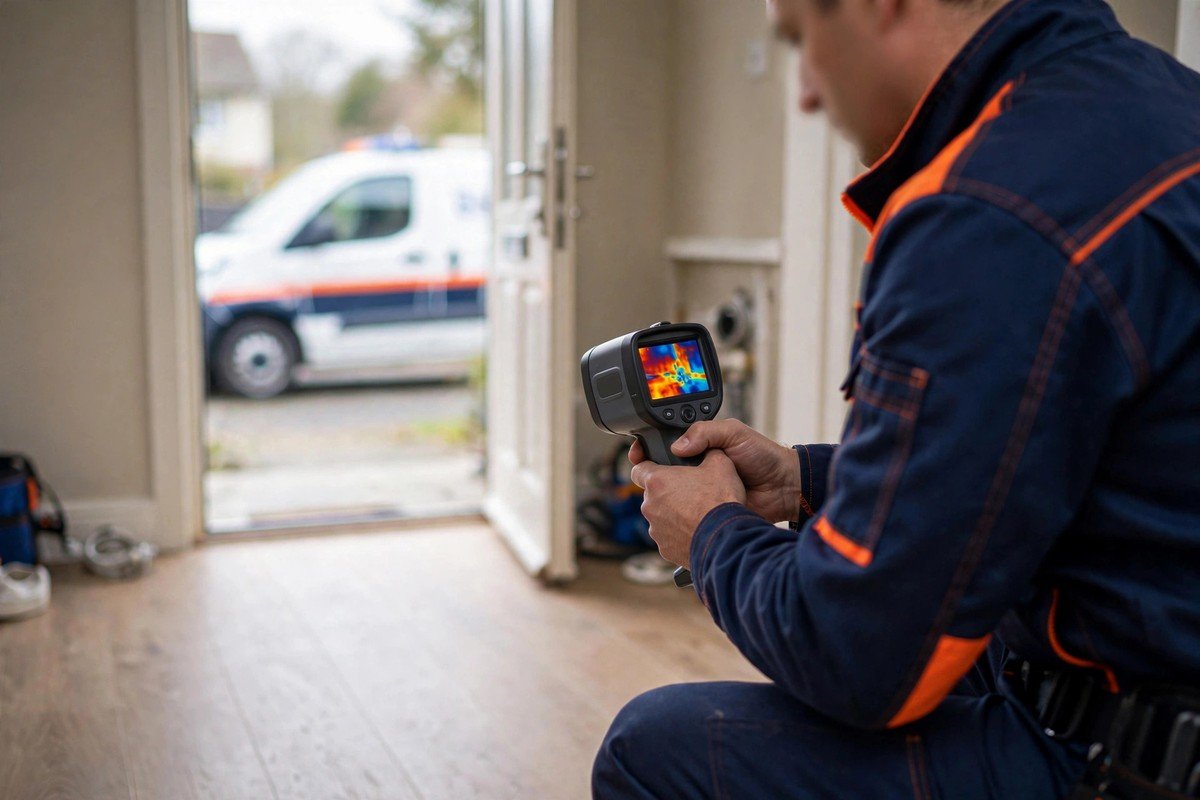
Call (833) 542-3027 — we answer 24/7. Your technician shows up with a harbor-ready plan. Most visits take 1 to 3 hours. In your home, sound checks come first. They catch water leaking from a buried line. That is the know-how behind our acoustic leak detection service. A thermal scan comes next across your slabs and floors. It maps hidden hot and cold spots, like our thermal imaging leak detection work. For tricky leaks, we add tracer gas. We feed it in the cut-off line and track it to the breach. That is the way our tracer gas leak detection process works.
Can you test one unit in a shared-slab building? Yes. Your technician uses the block shutoffs. Units and shared lines get checked one by one.
Will it bother your home? Barely. We cut nothing and stay quiet. Most folks here never know we came.
How close is the mark? We tend to place the leak to 1 to 3 feet. That keeps each fix small.
Do you give HOA-ready notes? Yes. You get a clear report. It lists the leak spot, the test used, and the fix we suggest. It is set for board review.
In 1960s–70s harbor blocks, your technician checks the first copper mains. They check each worn slab entry point.
What Does a Marina del Rey Slab Leak Repair Cost?
Your technician shows each fix path. Costs are up front before work. The sums here are national estimates as of 2026:
| Repair option | National estimate as of 2026 | When our technicians recommend it |
|---|---|---|
| Slab leak detection | $150–$500 (complex cases to ~$600) | Always the first step |
| Spot repair | $1,500–$4,500 | One leak in a line that is otherwise sound |
| Reroute | $3,500–$7,000 | The old line is failing; a new path bypasses the slab |
| Tunneling | $3,500–$8,000 | Deep leak under finished common areas |
| Epoxy lining | $3,000–$6,000 | Isolated weak points in a mostly intact system |
| Whole-home repiping | $4,500–$15,000 | Original 1960s–70s plumbing failing building-wide |
For a harbor block with first 1960s pipes and repeat leaks, a phased repipe or reroute tends to end the loop. Visit our whole-home repiping page. A single first leak here tends to be a clean slab leak repair. Run the sums in our cost guide.
Who pays in a condo — the HOA or the home owner? It rests on your CC&Rs and the leak spot. The report pins it down. That settles most fights.
Does insurance pay for harbor slab leaks? Plans differ. HOA master plans and solo plans pay out in their own ways. Check with your HOA and your rep.
FAQs
How much does slab leak detection cost in Marina del Rey?
Homeowners here pay $150–$500 nationally as of 2026 for detection. Tough jobs hit near $600. You get the leak spot and a report before you choose a fix.
Are slab leaks common in Marina del Rey condos?
Yes. The 1960s–70s blocks are now 50 to 60 years old. The fill soils still sink. Shared slabs spread each leak wide. It is one of the most leak-prone stocks we serve.
Does building on fill really cause plumbing problems?
Fill sinks in patches for decades. That sink flexes slabs and the lines in them. It is a known cause of slab strain by the marina.
Can salt air damage pipes under the slab?
Buried lines stay safe. But each bare fitting and slab entry point meets sea air wear. Those are the top fail spots in harbor blocks.
Do you work with HOAs and property managers?
Yes, all the time. We set the time, gain entry, and file notes. Each check comes with board-ready notes.
Are you available for waterfront emergencies?
Yes — 24/7. Call (833) 542-3027 at any hour. We will send a local technician to you.
Call (833) 542-3027 now. Nova Slab Leak Detection is open day and night. Our technicians bring harbor-tested, pinpoint finds here — before the fill, salt, and high water win.