
Why Do Cedar Glen Cabins Get Slab Leaks?
Cedar Glen is a small mountain community in the San Bernardino Mountains near Lake Arrowhead, sitting well above 5,000 feet. Cabins and homes here face real winters with snow and freezing nights. Our technicians serve Cedar Glen, California homeowners with acoustic, thermal, and tracer gas tools. We mark the break within a few feet of its true spot.
A slab leak means a broken water line under your concrete floor. Mountain homes often have pipes in or under the slab. When a pipe splits, water soaks the ground beneath it. It can heave floors, rot wood, and feed mold in closed-up cabins. A fast check stops a small break from ruining a season.
What Breaks Pipes in Cedar Glen?
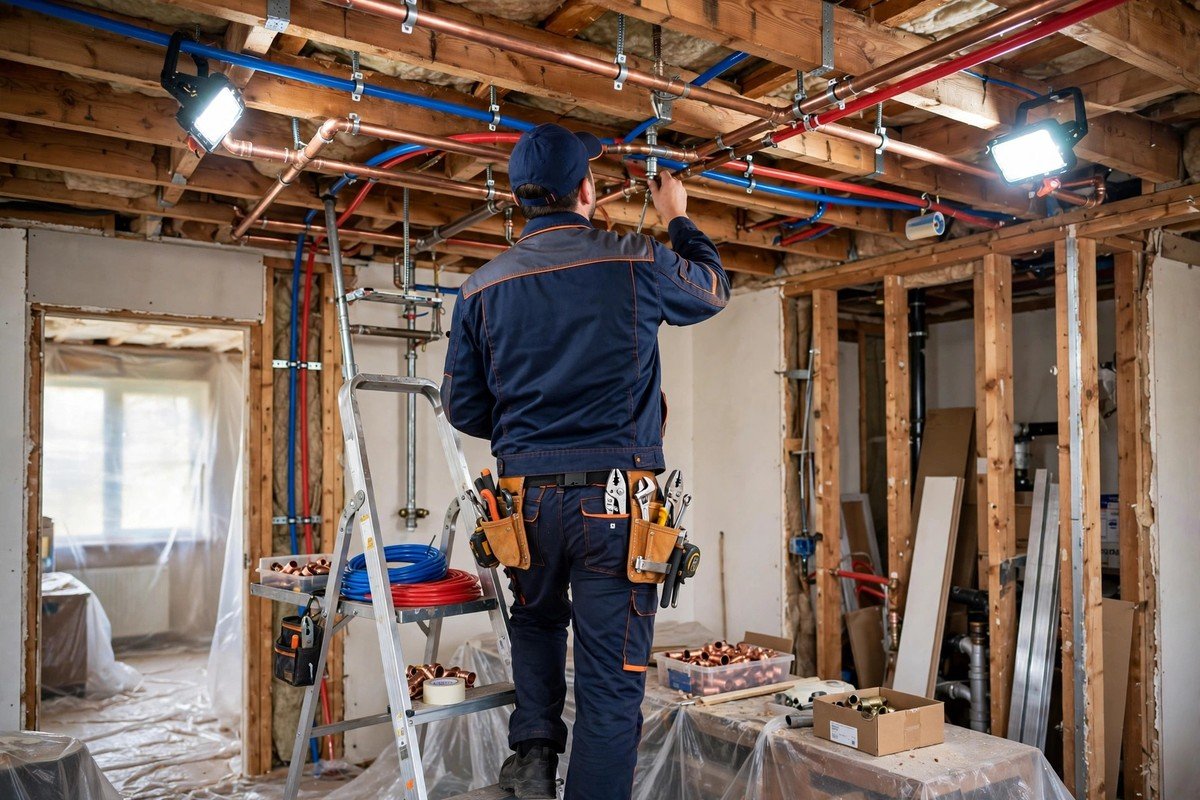

Freeze-thaw cycles are the top driver. Winter nights drop well below freezing. Water in pipes expands as it freezes. That expansion cracks pipe walls and joints. Spring thaws bring more shift. Each winter adds new stress to buried lines.
Cabin age is the second driver. Many Cedar Glen cabins date back years. Old copper and steel lines are past their prime. Pipes that freeze even once can weaken for good. A line that survived last winter may fail this one.
Rocky mountain soil is the third factor. The ground here is full of rock and granite. Hard soil doesn’t cushion pipes. It presses on them and shifts with frost. Joints take the brunt. A joint that loosens in frozen ground leaks when the thaw comes.
Q: Can one hard freeze break a pipe? A: Yes — Freezing water expands with great force. It can split copper and crack joints in a single night.
Q: Are older cabins more at risk? A: Yes — Old pipes are thinner and weaker. They handle freeze stress worse than new lines.
Q: Does rocky soil hurt pipes? A: It does. Hard ground presses on pipes and shifts with frost. That stress finds the weak joints.
Review the warning signs of a slab leak for mountain cabins.
What Are the Signs of a Leak in a Cabin?
A warm floor patch is a telltale sign. Hot water leaking under the slab heats the concrete. In a cabin with tile or wood floors, bare feet catch it. Don’t dismiss it as the heater.
Water bills show slow leaks. Compare your high water bill to last season. A climb with no extra use means hidden loss. A cabin left vacant can leak for months before anyone sees it.
Look for damp spots and smells. Water under the slab wicks into walls and floors. Musty odors in a closed cabin often mean trapped moisture. Warped boards and stained concrete are late signs. Catch it early and the fix stays small.
How Do We Find a Leak in a Mountain Home?
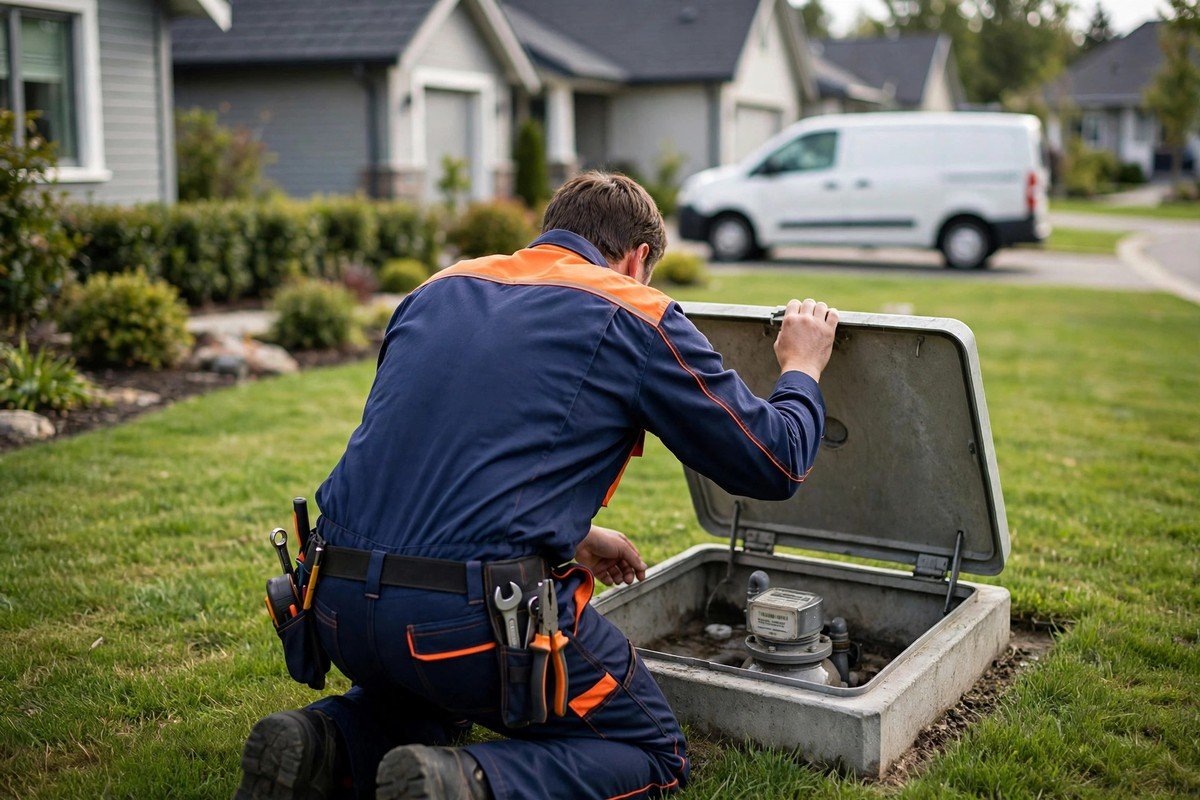
We start at the meter or the well pressure tank. Everything water-using goes off. If flow continues with fixtures off, a leak is confirmed. Hot and cold lines are then tested one by one.
Listening comes next. Floor sensors catch the hiss of water moving under concrete. We zero in where the sound is strongest. A thermal camera follows for hot lines. A leak shows as a warm smear across the screen.
Cold lines get the gas test. We empty the line and charge it with safe tracer gas. Gas escapes at the split and rises through the slab. The sniffer leads us to it from above. We mark within one to three feet of the true break.
The visit lasts one to three hours. We work around cabin layouts and tight spaces. You get a marked spot and a clear plan. Learn about our water line leak detection service.
What Does Slab Leak Repair Cost in Cedar Glen?
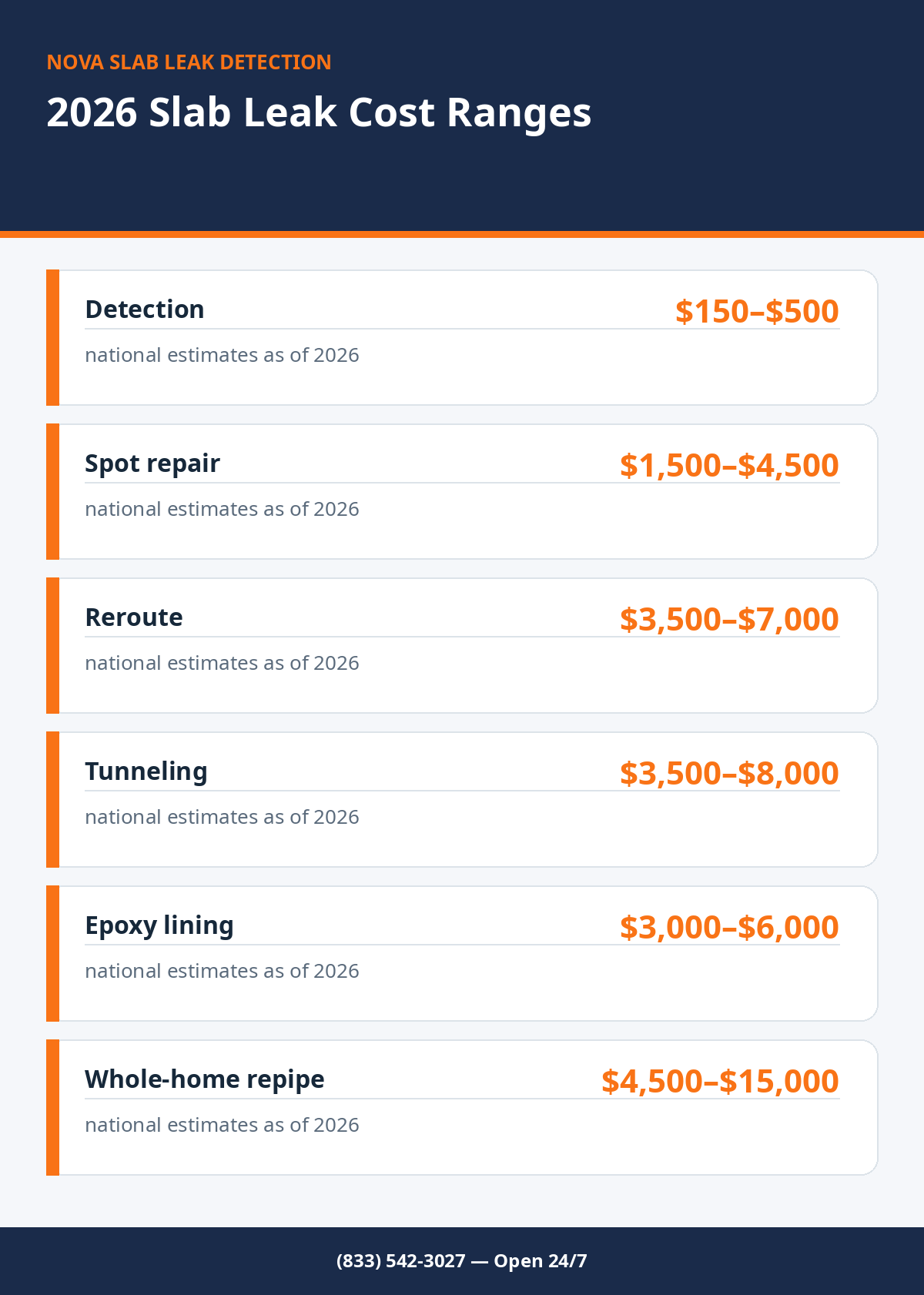
The leak check costs little next to the repair. Detection is $150 to $500 on national estimates as of 2026, with hard jobs near $600. Repair ranges:
| Repair choice | National estimate (2026) |
|---|---|
| Spot repair | $1,500 to $4,500 |
| Pipe reroute | $3,500 to $7,000 |
| Tunneling | $3,500 to $8,000 |
| Epoxy lining | $3,000 to $6,000 |
| Whole-home repipe | $4,500 to $15,000 |
A spot repair fixes one part through a small cut. A reroute runs new pipe through walls or the attic, avoiding the slab. Tunneling digs under the slab from outside. Epoxy lining seals the pipe’s interior. A repipe swaps old lines for good.
Q: Which fix handles freezing best? A: A reroute through heated space keeps pipes out of the cold slab. It is a strong choice for mountain homes.
Q: Can you work in winter? A: Yes — We serve Cedar Glen year-round, including snow season. Call ahead so we can plan the trip up.
Our cost guide covers each choice in plain terms.
Which Cedar Glen Areas Do We Serve?
We serve all of Cedar Glen. Cabins along Highway 173 are covered. We reach the homes near the Lake Arrowhead watershed side. The forested streets off the main road get the same service. Each cabin and home in the 92321 ZIP is in our service area.
FAQs
Should I winterize my cabin pipes?
Yes — Draining or insulating bare lines helps. But lines in the slab still face frost, so a check each fall is smart.
Can a leak run while the cabin is empty?
Yes — A slab leak flows nonstop, and vacant cabins can suffer months of hidden damage.
Do you come up when it snows?
Yes — We serve Cedar Glen in all seasons. We plan around road conditions.
Does my policy cover freeze damage?
Plans vary. Some cover sudden freeze breaks but not wear. Check your plan.
What do cracks in the foundation mean here?
Frost heave and leaking water both crack slabs. We can check if a leak is making cracks worse.
How do I know the leak is fixed?
We retest the lines after repair. The meter holds still, and that proves the fix.
Areas and ZIP Codes We Serve in Cedar Glen
We serve all of Cedar Glen, California, in ZIP code 92321. That covers the Highway 173 corridor, the forested cabin streets, and each home in this mountain community.
Hear water where it shouldn’t be? Call Nova Slab Leak Detection at (833) 542-3027 — we answer day or night. Our own technicians do the work. Read about slab leak repair and thermal imaging leak detection, or browse our California service map.