
Tracer Gas Leak Detection for Hard-to-Find Slab Leaks
A safe, non-flammable gas mix pinpoints tiny slab leaks that other methods miss.
Tracer Gas Leak Detection: Quick Answers
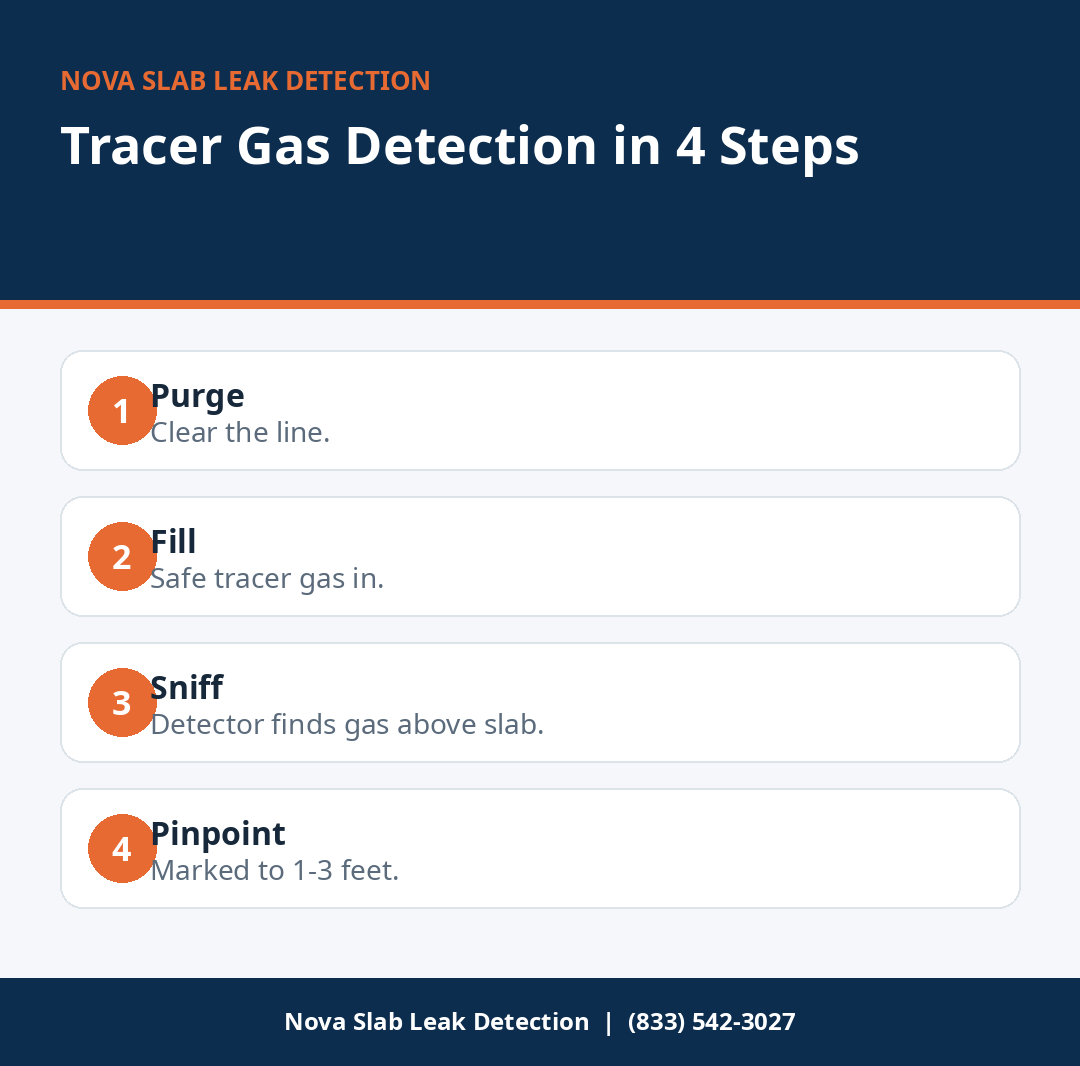
- How Does Tracer Gas Leak Detection Work? A small amount of special gas goes into your water line, and a sensitive probe “sniffs” it out where it escapes.
- When Should You Call for Tracer Gas Leak Detection? Call Nova at (833) 542-3027 when your meter test shows water loss you cannot explain, or when another method has confirmed a leak exists but not its exact location.
- How Much Does Tracer Gas Leak Detection Cost? Professional leak detection runs $150-$500 nationally, up to about $600 for complex homes — national estimates as of 2026.
How Does Tracer Gas Leak Detection Work?
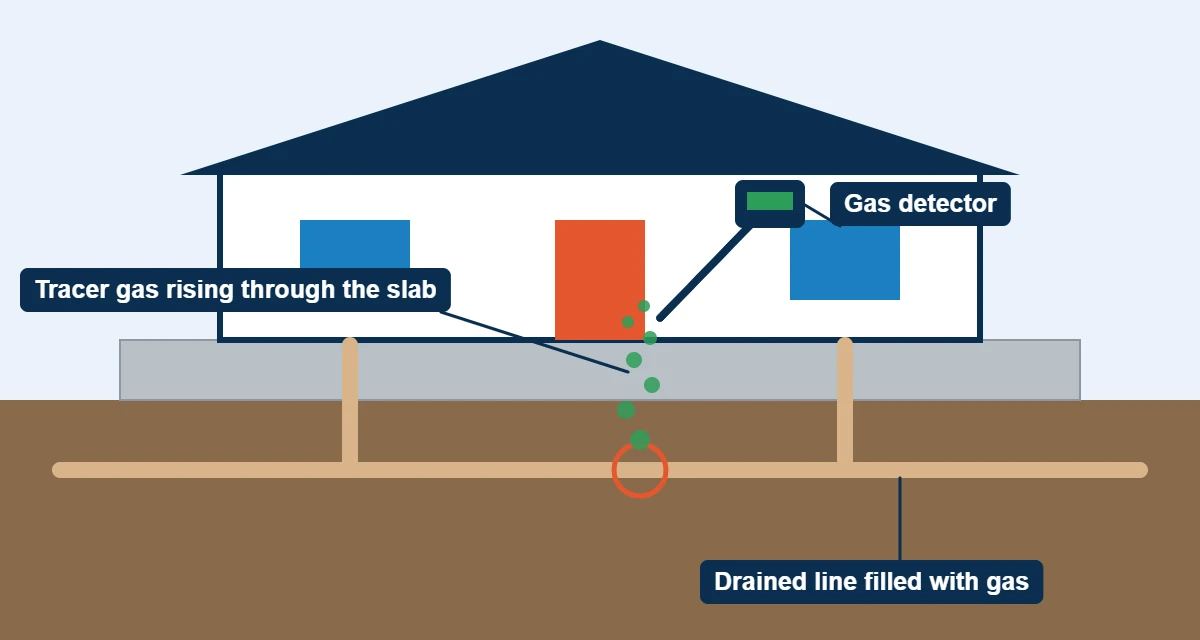
A small amount of special gas goes into your water line, and a sensitive probe “sniffs” it out where it escapes. Tracer gas leak detection works because the gas is lighter and thinner than water, so it rises through soil and concrete pores exactly at the leak point, where the probe detects it. The technician marks that spot.
The process starts by shutting off and draining the suspect line. The technician introduces the tracer gas — either helium or a hydrogen-nitrogen mix — into the empty pipe at low pressure. Then, working in a grid pattern across your floors, the technician sweeps a handheld sniffer probe just above the surface. Where the probe’s reading spikes, the leak is directly below. It is a methodical process, and it is one of the most precise tools in slab leak detection.
Why Does Tracer Gas Find Leaks Other Methods Miss?
Some leaks are simply too small or too well hidden for cameras and microphones. Tracer gas was designed for exactly those cases.
- Pinhole leaks: tiny corrosion holes that release too little water for acoustic leak detection to hear clearly.
- Leaks under thick coverings: where thermal imaging leak detection cannot read through carpet or stone.
- Cold-water lines: which produce no heat signature for a camera to see.
- Multiple leaks: the gas marks each escape point, so a second or third leak is not overlooked.
- Deep or well-insulated pipes: where neither sound nor heat reaches the surface reliably.
In short, when the standard tools narrow the area but cannot finish the job, tracer gas is often the method that closes the gap. Detection usually pinpoints a leak within about 1 to 3 feet.
Is the Tracer Gas Safe in My Home?
Yes. Both gases used are safe for residential work, and this is worth understanding before the visit.
- Helium is completely inert and non-toxic. It is the same gas in party balloons, and it simply floats away and disperses.
- Hydrogen-nitrogen mix is typically about 5 percent hydrogen in nitrogen. At that concentration it cannot burn or explode — it is classified as non-flammable — and both gases are non-toxic.
The gas leaves no residue, causes no damage to pipes or flooring, and clears out of the line as soon as the technician vents it. Pets and children do not need to leave the home. If anyone in your household has respiratory concerns, mention it when you book so our team can note it, but for most homes the visit is entirely routine.
When Do Pros Choose Tracer Gas Leak Detection Over Other Methods?
Tracer gas is not always the first tool out of the truck. Here is how a technician decides.
| Situation | Method usually tried first | When tracer gas takes over |
|---|---|---|
| Suspected hot-water leak | Thermal imaging | Camera image is unclear or inconclusive |
| Suspected supply-line leak | Acoustic listening | Leak sound is too faint or masked by noise |
| Very small or slow leak | Pressure testing to confirm it exists | After confirmation, to find the exact spot |
| Leak under carpet or stone | Acoustic listening | Surface blocks both heat and sound |
| Sewer or drain line leak | Hydrostatic testing plus camera | To pinpoint the break location precisely |
Because the setup takes longer than a camera scan, pros usually reach for tracer gas when faster methods have already narrowed things down — or when the symptoms point to a leak those methods cannot see.
What Happens During a Tracer Gas Leak Detection Visit?
Knowing the steps ahead of time makes the visit less stressful. A typical tracer gas appointment runs like this.
- The technician confirms which line is suspect, often with a quick pressure test first.
- The line is shut off, drained, and connected to the gas equipment.
- Tracer gas is introduced at low, controlled pressure.
- The technician sweeps the sniffer probe across floors in a grid, watching the readings.
- The strongest reading gets marked with tape, and the area is re-checked to rule out drift.
- You receive a written report showing the marked location and recommended next steps.
A full detection visit usually takes 1 to 3 hours. The gas portion itself often takes 45 to 90 minutes, depending on the size of the area being searched.

What Can You Check Yourself Before Tracer Gas Leak Detection?
Tracer gas is a professional-only method, but you can still do useful homework before the appointment.
- Do the water meter test: turn off all water, record the reading, wait 30 minutes, and read it again.
- Listen at night when the house is quiet for hissing or running-water sounds in walls or floors.
- Feel tile floors for warm spots that could point to a hot-water line.
- Write down when symptoms started and whether they are getting worse — the technician will ask.
You cannot run tracer gas yourself — the equipment is specialized and the line must be safely isolated first. But arriving with clear notes shortens the visit.
When Should You Call for Tracer Gas Leak Detection?
Call Nova at (833) 542-3027 when your meter test shows water loss you cannot explain, or when another method has confirmed a leak exists but not its exact location. The phone line is open 24 hours a day, 7 days a week, and calling is free. The same Nova team that finds the leak explains your options and the price before any work begins. Small leaks still waste serious water: EPA WaterSense reports the average household’s leaks can waste more than 9,300 gallons of water a year, according to EPA WaterSense.
How Much Does Tracer Gas Leak Detection Cost?
Professional leak detection runs $150-$500 nationally, up to about $600 for complex homes — national estimates as of 2026. Tracer gas work sometimes sits at the higher end of that range because of the extra setup time and equipment. If the scan confirms a leak, compare your fix options on the slab leak repair page before deciding.
Tracer Gas Leak Detection: Frequently Asked Questions
Services Related to Tracer Gas Leak Detection
- Video Pipe Inspection: A waterproof camera travels inside your drain lines, showing exactly where cracks, breaks or roots are hiding.
- Acoustic Leak Detection: Sensitive microphones hear what your ears cannot — pressurized water escaping under your slab.
- Hydrostatic Testing: Simple water and pressure tests prove whether a leak exists — before anyone touches your concrete.
- Slab Leak Detection: How non-invasive detection finds a leak under concrete, with methods, cost and accuracy.
- Slab Leak Repair: Four proven ways to fix a leak under your slab — and how to pick the right one.
Need Tracer Gas Leak Detection? Call Nova Today
Call any time, day or night. Tell us your ZIP code and what you are noticing, and we will book your visit.