
Slab Leak Detection in Los Angeles, CA — Find the Leak Without Breaking Concrete
A slab leak is a water line leaking under your home’s concrete foundation. One call brings a Nova technician to your door anywhere in Greater Los Angeles — from Long Beach to Glendale, Irvine to Fullerton. Same-day service across LA County and Orange County.
✓ Non-invasive detection ✓ Price before work starts ✓ Greater Los Angeles
Call now if you notice:
- A water bill that suddenly jumped
- Water running when every tap is off
- A warm or damp spot on the floor
- New cracks in floors or walls
- Low water pressure through the house
Two or more signs together usually mean a hidden leak.
50+
cities covered
50 states
plus Washington, DC
24/7
phone line, every day
1–3 ft
typical pinpoint accuracy
What Is a Slab Leak?
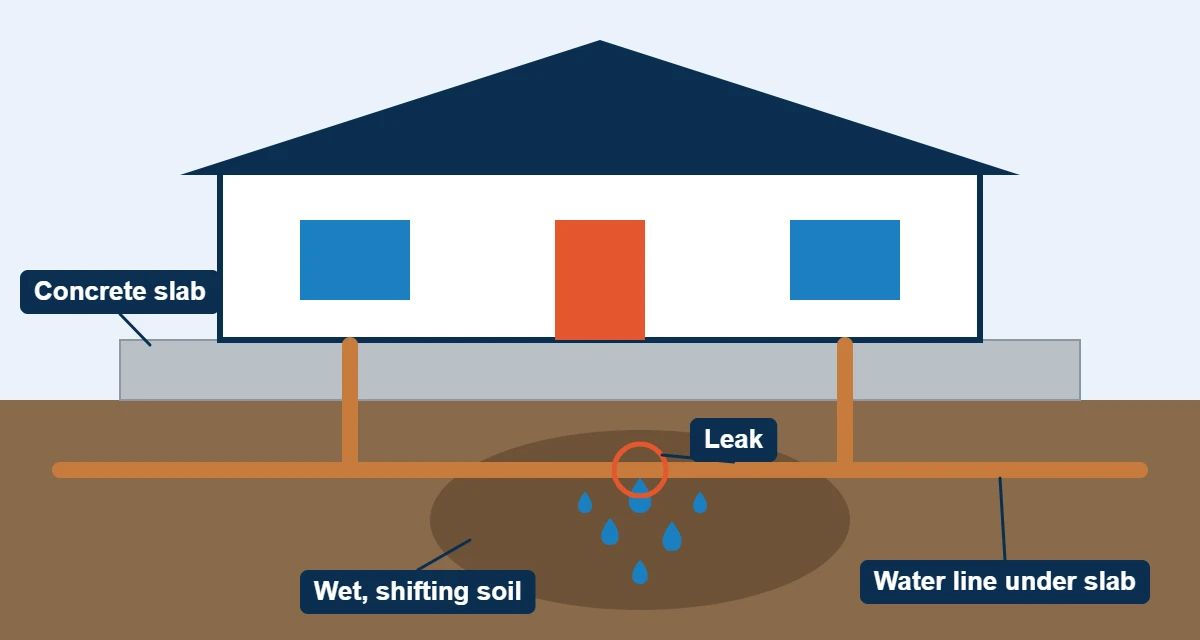
A slab leak is a leak in a water or drain pipe that runs under the concrete slab your home sits on. You cannot see the pipe, so the first clues are indirect: a higher water bill, a warm spot on the floor, or the sound of water running when every tap is off.
Most slab leaks start as a pinhole. Left alone, they soak the soil under the foundation, damage flooring, and feed mold. Slab leak detection finds the exact spot early, without breaking concrete, which keeps the repair smaller and cheaper.
8 Warning Signs of a Slab Leak in Los Angeles Homes
One sign alone can have other causes. Two or more together mean it is time to call.
High water bill
Your bill jumps but your habits have not changed. A pinhole leak can waste thousands of gallons a month.
Running-water sound
Hissing or running water in the floor or walls when every fixture is off.
Warm floor spots
A warm patch on tile or carpet often means a hot-water line is leaking below it.
Cracks in floors or walls
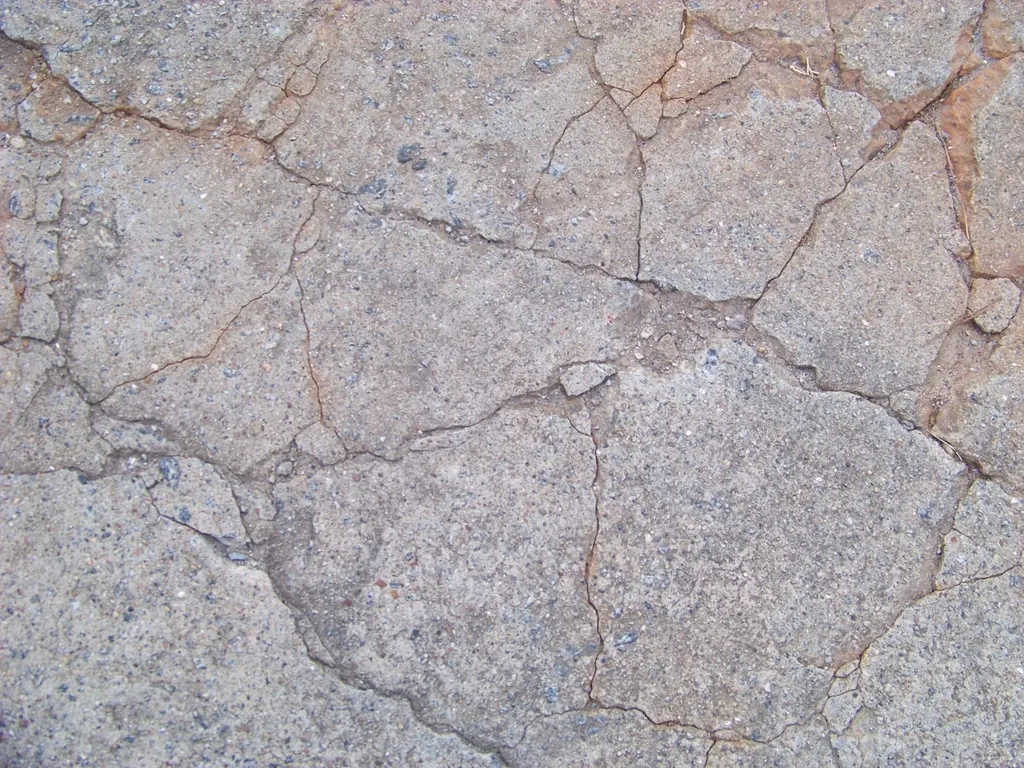
New or widening cracks in tile, flooring, or drywall can follow soil movement from leaking water.
Low water pressure
Water escaping under the slab never reaches your taps, so showers and faucets feel weak.
Mold or musty smell
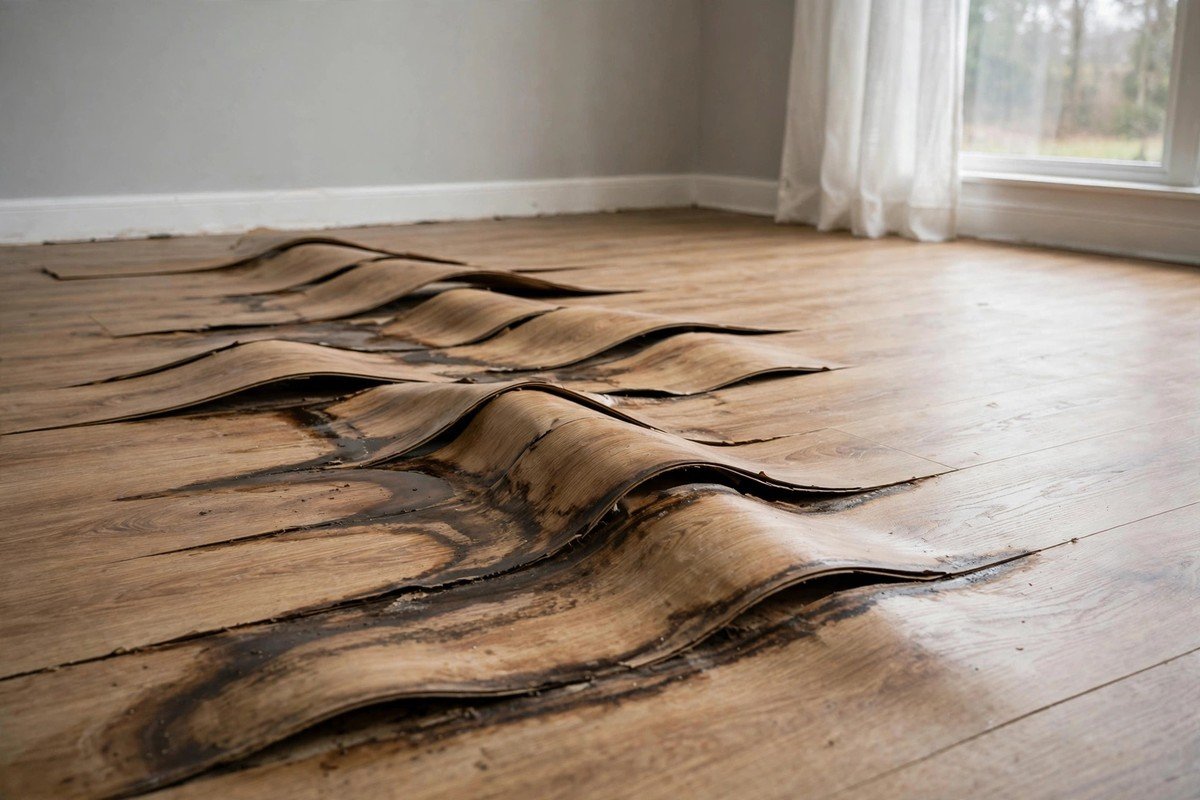
Damp carpet, lifting floors, or a musty odor with no visible source points to hidden moisture.
Meter keeps moving
With every tap off, the dial on your water meter still turns. Water is going somewhere.
Puddles or extra-green grass
Water pooling beside the foundation, or one patch of lawn growing faster than the rest.
What Causes Slab Leaks in Los Angeles?
Most slab leaks come from aging pipe, shifting soil, or water chemistry that wears copper from the inside. They are most common in homes 25 years old or older — and in Greater Los Angeles, expansive clay soil, aging copper pipes in 1950s–1980s homes, and hard water make them especially common. The main causes are:
- Soil movement. Expansive clay swells when wet and shrinks when dry, flexing the slab and the pipes in it.
- Corrosion. Hard, acidic, or alkaline water eats copper over time and causes pinhole leaks.
- Abrasion. Hot-water lines expand and contract, rubbing against concrete or gravel until they wear through.
- Poor installation. Kinked, dented, or badly joined pipe fails years before it should.
- High water pressure. Pressure above about 80 psi stresses joints and fittings every day.
- Age and weather. Copper under a slab typically lasts 20 to 50 years. Hard freezes and earthquakes can break it sooner.
What Should You Do First If You Suspect a Slab Leak?
Confirm the leak with your water meter, limit the damage, then book professional slab leak detection. These steps take about half an hour and cost nothing:
- Run a meter test. Turn off every tap, appliance, and irrigation zone. Note the meter reading, wait 30 minutes, and check again. Any change means water is escaping.
- Check hot versus cold. Close the valve on your water heater and repeat the test. If the meter stops, the leak is on a hot-water line.
- Shut off the main valve if water is surfacing. It is usually at the meter box near the street or where the line enters the house.
- Protect what you can. Move rugs, furniture, and boxes off damp floors, and run a fan or dehumidifier.
- Take photos and keep your water bills. Insurers ask for dated evidence of when the damage started.
- Call for slab leak detection. A marked leak location is what makes an accurate repair quote possible.
Do not break concrete on a guess. Without detection equipment, the wet spot you can see is often several feet from the pipe that is leaking.
When Should You Contact Nova Slab Leak Detection?
Call for slab leak detection as soon as you suspect a hidden leak. The sooner it is located, the less damage and the smaller the repair.
Call right now
- Water is coming up through the floor
- You cannot stop the flow at a fixture
- Floors are hot, wet, or buckling
- The meter is spinning fast with taps off
First: shut off your main water valve. Then call.
Call this week
- Your water bill rose with no change in use
- You hear faint running water at night
- A warm spot or musty smell will not go away
- New cracks are appearing in floors or walls
Slow leaks do damage quietly. Test within days, not months.

Also call if you are buying or selling a home with moisture findings, or you manage a rental or commercial property and need written documentation.
How Slab Leak Detection Works With Nova: 5 Steps

This is what happens from your first call to the finished repair.
1. Call us
Tell us your ZIP code and what you are noticing. It takes about a minute, any hour of the day.
2. We schedule your visit
We book a Nova technician for your address, often for a same-day visit.
3. Non-invasive detection visit
The technician confirms the leak with a pressure test, then pinpoints it with sound, heat, and tracer gas. Most visits take 1 to 3 hours.
4. Options and upfront price
You see where the leak is and get your repair choices explained, with the price, before any concrete is opened.
5. Repair and follow-up
We complete the repair you choose. If something is not right afterward, call us and we will make it right.
Why Early Slab Leak Detection Saves Money
A small leak under a slab causes three kinds of cost at once: wasted water, damaged materials, and a bigger repair later.
- Wasted water. The US Environmental Protection Agency says the average household’s leaks can waste more than 9,300 gallons of water a year, and that 9 percent of homes have leaks wasting 50 gallons or more a day. See the EPA WaterSense leak facts.
- Mold. The EPA advises drying water-damaged areas within 24 to 48 hours to prevent mold growth. A hidden leak keeps flooring and wall bases wet for weeks. See the EPA guide to mold, moisture and your home.
- Foundation and flooring. Water washes out or swells the soil under the slab, which can crack tile, lift wood flooring, and move the foundation.
- Insurance. Many policies cover sudden water damage but exclude damage from a leak that was left to run. Early, documented slab leak detection supports a claim.
Detection is the cheapest part of the whole job. Paying $150 to $500 to know exactly where the leak is usually saves far more than that in avoided demolition.
Which Tools Are Used for Slab Leak Detection?
No single tool works on every pipe, so specialists combine several and compare the readings.
Acoustic listening devices
Ground microphones hear pressurized water escaping the pipe through the concrete.
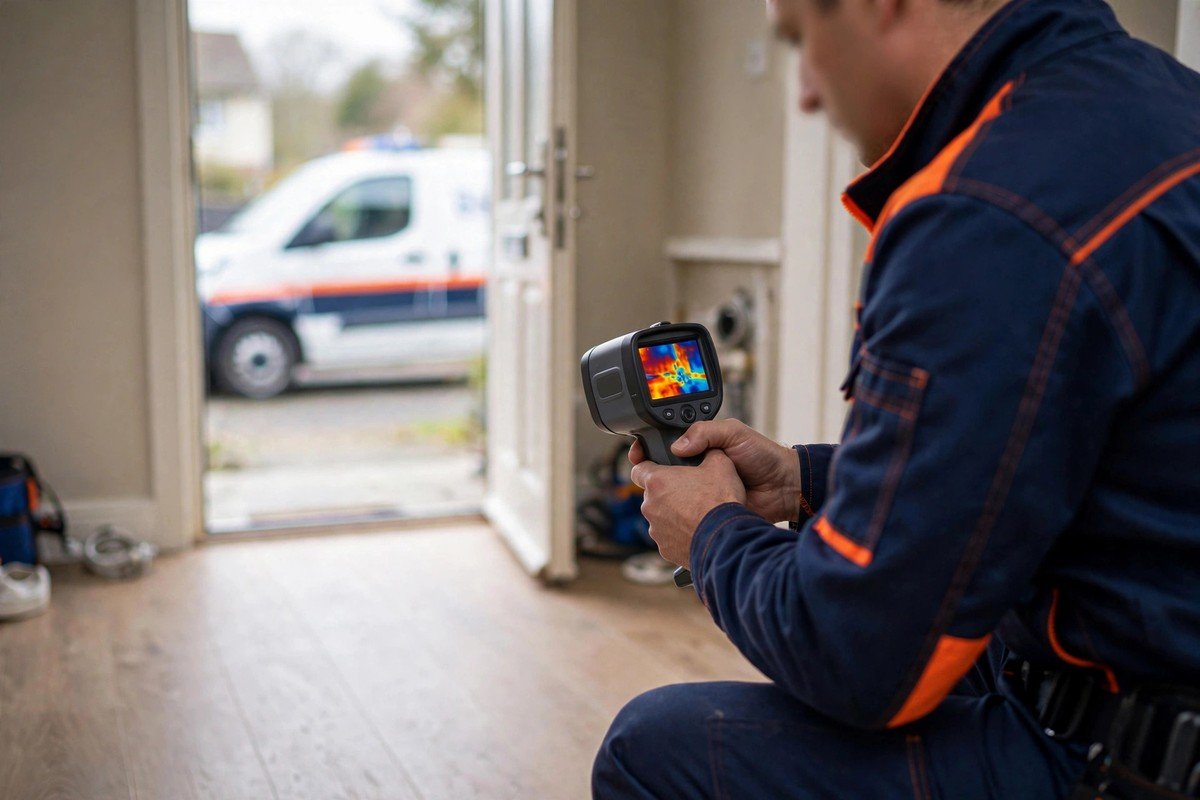
Thermal imaging cameras
Infrared cameras show the warm plume a hot-water leak spreads under the floor.
Tracer gas detectors
A safe helium or hydrogen mix is put in the line and sensed where it rises through the slab.
Pressure test gauges
Each line is isolated and pressurized to prove which one is losing water.
Video inspection cameras
A camera travels through drain lines under the slab to show cracks and root intrusion.
Moisture meters
Measure how far water has spread through flooring and walls, and guide drying afterward.
Pipe and cable locators
Trace where lines run and, in post-tension slabs, help avoid the steel cables.
Amplifiers and correlators
Filter out background noise and compare sound at two points to narrow the spot.
Slab Leak Detection and Repair Services in Los Angeles, CA
From finding the leak to fixing it for good.
Slab Leak Detection
Electronic, non-invasive detection that marks the leak before concrete is touched.
Slab Leak Repair
Spot repair, pipe rerouting, tunneling, or epoxy lining, matched to your pipe and home.
Water Line Leak Detection
Locating and repairing leaks in supply lines in and around the slab.
Sewer Line Leak Detection
Camera inspection and hydrostatic testing for drain lines under the slab.
Whole-Home Repiping
A lasting fix when leaks keep coming back in aging copper or galvanized pipe.
Emergency Leak Detection
Active leak right now? Call any hour and we will get a technician to you as fast as we can.
How Much Does Slab Leak Detection Cost in Los Angeles?
Slab leak detection typically costs $150 to $500 in the US, and up to about $600 for complex homes. Repair cost depends on the method your pipe needs.
These are national estimate ranges as of 2026, not quotes. Your final price depends on your home, your market, and the repair method. We give you the price before work begins.
| Service | Typical US range |
|---|---|
| Leak detection | $150 – $500 |
| Spot repair (direct access) | $1,500 – $4,500 |
| Pipe reroute | $3,500 – $7,000 |
| Tunneling under the slab | $3,500 – $8,000 |
| Epoxy pipe lining | $3,000 – $6,000 |
| Whole-home repipe | $4,500 – $15,000 |
What Happens After Slab Leak Detection? Repair Options Compared
Once slab leak detection has marked the spot, there are five ways to fix it. The right one depends on the age of your pipe, your flooring, and how many leaks you have had.
| Repair method | How it works | Best when |
|---|---|---|
| Spot repair | A small section of slab is opened and the damaged pipe is replaced. | One leak in pipe that is otherwise sound. |
| Reroute | The leaking line is abandoned and a new one is run through walls or the attic. | The leak sits under expensive flooring or the line is aging. |
| Tunneling | Workers dig under the slab from outside to reach the pipe. | You want floors and living space left untouched. |
| Epoxy lining | The inside of the pipe is coated to seal pinholes. | Several small leaks in an accessible line. |
| Whole-home repipe | All supply lines are replaced with new PEX or copper. | Leaks keep returning across the system. |
Ask your technician to price at least two options, and to explain what each means for your floors, your water shutoff time, and your warranty.
Who We Help
Buyers, sellers & agents
Leak detection before closing when an inspection finds moisture.
Slab Leak Detection Across Greater Los Angeles
Our home base is Greater Los Angeles, where our deepest coverage is — 263 cities across Los Angeles, Orange, Ventura, San Bernardino, and Riverside counties. We also serve homeowners in 476 cities across California, Pennsylvania, Colorado, Georgia, and Idaho.
California · Pennsylvania · Colorado · Georgia · Idaho
Popular in Greater Los Angeles: Fullerton · Irvine · Anaheim · Long Beach · Glendale · Pasadena · Santa Ana · Riverside · Downey · Whittier · Burbank · Torrance · Los Angeles. Browse the full list of Los Angeles areas we serve
Why Los Angeles Homeowners Call Nova for Slab Leak Detection
Specialists in slab leaks
Slab leak detection is what we do. Our technicians find the leak first and open concrete only when the repair needs it.
Satisfaction guarantee
If something is not right with your service, call us and we will make it right.
A real answer, any hour
Our phone line is open 24 hours a day, 7 days a week, including weekends and holidays.
Slab Leak Questions Los Angeles Homeowners Ask
Short answers to the questions people ask most before they call for slab leak detection.
Think You Have a Slab Leak? Call Now.
Talk to a real person any time, day or night. Tell us your ZIP code and we will schedule your slab leak detection visit.