
Why Do Slab Leaks Hit Homes in Lomita?
Lomita is a small South Bay city. Its pipes are old. For slab leak detection Lomita California homeowners trust, our techs know the 1920s-to-1960s housing stock that defines this town. Most of the city went up from the 1920s to the 1960s. The 1960s saw the most new builds. Many still have the first pipe under the slab.
Lomita Pines has 1920s Spanish homes. The rest is ranch homes and 1940s cottages. An old home may keep galvanized pipe. Rust eats it from the inside. A 1950s home runs copper. It is past sixty years old. Tiny holes form in old copper.
The ground adds stress. Clay soils here swell and shrink with the seasons. Each shift bends buried pipe a bit more. Hard water lays scale. Scale speeds rust in steel pipe and holes in copper. Street trees send roots toward old joints.
How does clay shift under homes?
Lomita sits on rich clay soil. Wet months swell the clay. Dry months shrink it back.
Each shift bends old pipe. Old copper cracks first. We watch for this stress. We test each joint by sound.
Slab edges lift in wet clay. Lift strains pipe joints. Cracked tile marks the lift. We mark the leak point.
Why does hard water wear pipes?
Basin tap water runs hard. Scale coats old pipe walls. Scale pits copper with time.
Pits grow to pinholes. Pinholes hide for months. We hear them by sound. Warm spots show up late.
Steel pipe rusts in hard water. 1930s homes may hide steel. We test both kinds. We find rust in old steel.
Which Lomita streets leak the most?
Pines homes date to the 1920s. First pipes still run there. We find rust in them.
Narbonne homes are newer. Their copper still ages. We serve the 90717 ZIP. Call us any day.
Do tree roots add strain? Street trees push roots at old joints. Roots wedge into pipe seams. We test where roots crowd lines.
Do roots crack Lomita pipes?
Lomita trees push roots deep. Roots press old joints. Pressed joints crack slow. We test root zones by sound. Call today.
How Do I Know If My Lomita Home Has a Slab Leak?

Watch for these signs.
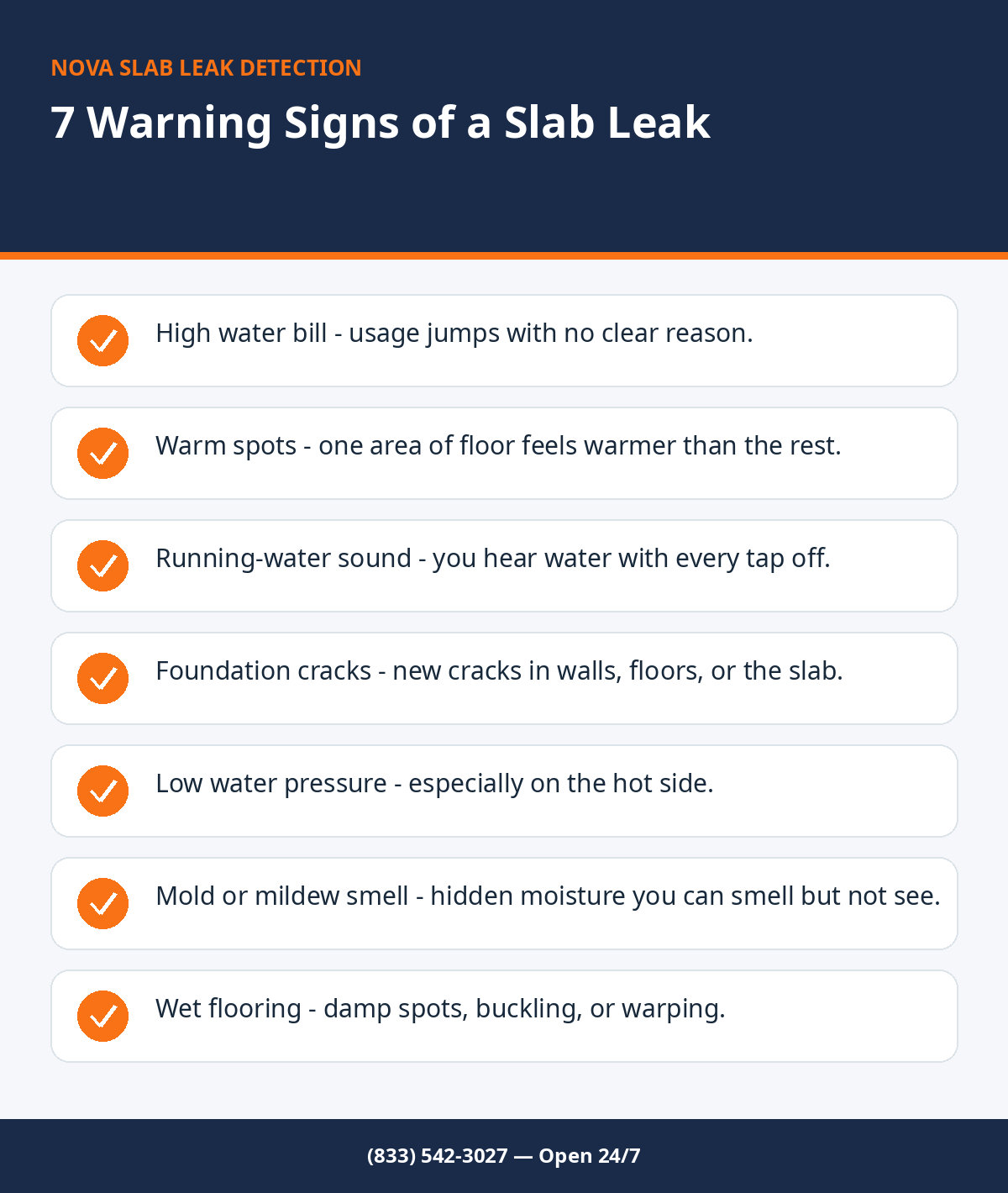
- A warm spot on the floor that will not cool.
- Running water sounds with all taps off.
- A water bill jumps for no clear reason.
- Damp or warped floors near the walls.
- Musty smells by baseboards.
- A meter that runs with all taps off.
- Low pressure at the taps.
Can a 1920s Lomita home get a slab leak? Yes. A new slab patch or new pipe can leak under concrete.
Is a musty smell enough to call? It is a good reason to call. Musty air means trapped water.
Which Lomita Areas Do We Serve?
Lomita is small. We cover each street. These are the spots we see most.
Lomita Pines — 1920s Spanish homes. The galvanized pipe is full of rust.
Central Lomita — 1950s and 1960s ranch homes. Big lots, old copper.
By Lomita Park and the Railroad Museum — Old cottages and ranch homes.
We serve Pacific Coast Highway, Rolling Hills streets, the 90717 ZIP.
Areas and ZIP Codes We Serve in Lomita
All of Lomita. One ZIP code:
90717
Call (833) 542-3027. We answer 24/7.
What Happens During Our Slab Leak Visit in Lomita?
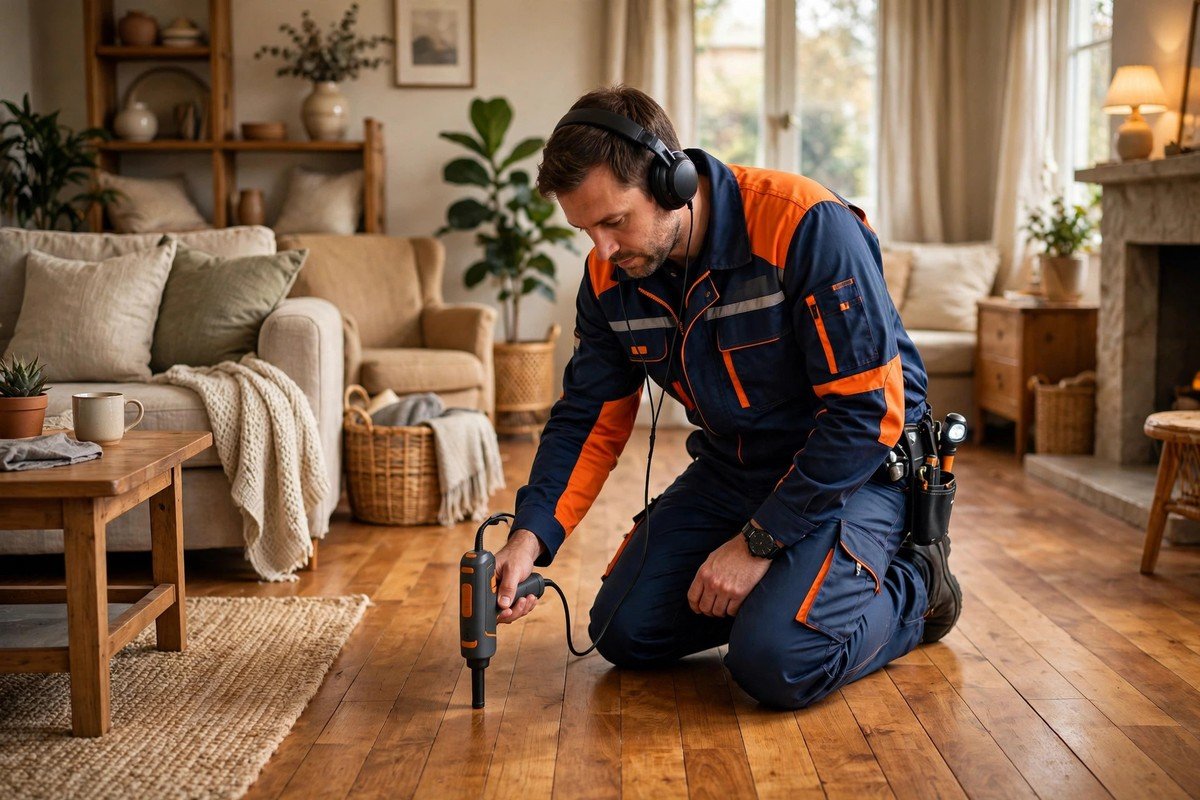
We bring sound gear, a heat camera, tracer gas. Most visits take one to three hours. We break nothing. The steps:
- Confirm — Check the meter, test pressure. This proves a leak and finds the bad line.
- Listen — Sound gear hears water flow.
- Scan — The heat camera spots warm marks from hot leaks.
- Trace — Tracer gas marks the leak point.
- Report — You get a written report in hand. It places the leak at one to three feet. It lists fixes and one firm price.
Can you work around tenants? Yes. We work with owners and renters.
Will you damage my 1920s tile? No. The check is gentle. Plans spare old finishes.
How long will it take? Plan on one to three hours.
What Are the Repair Options for a Slab Leak in Lomita?
We pick the right fix for you. All prices reflect national estimates as of 2026.
- Spot repair — We open a small slab spot and fix the single leak. Spot repair: $1,500 to $4,500 in Lomita. Best for young pipe with one bad spot.
- Pipe reroute — We run new pipe through the walls, attic. Pipe reroute: $3,500 to $7,000 in Lomita. Best for old copper and steel pipe.
- Tunneling — We tunnel in from outside to the pipe. Tunneling: $3,500 to $8,000 in Lomita. It guards old floors.
- Whole-home repipe — We replace each old pipe. Whole-home repipe: $4,500 to $15,000 in Lomita. Good when old pipe fails in more spots.
A Lomita check: $150 to $500. Hard jobs near $600.
Leaks in Lomita cause high water bills and hot spots on floors. Our Lomita repair page and cost guide show next steps.
My home has galvanized pipe. Repair or repipe? Rusted steel pipe stays bad. A repipe or reroute beats patches.
Call (833) 542-3027 now. We serve the city and all of California 24/7.
FAQs
How much does slab leak detection cost in Lomita? A Lomita check runs $150 to $500. That is the national estimate as of 2026. Hard jobs can reach near $600. You get a written report and firm price.
Do you serve Lomita Pines? Yes. All of Lomita, Lomita Pines too.
Can you detect leaks in very old homes? Yes. Our tools read all pipe types, any home age.
My Lomita home was built in 1964. Should I worry? A 1960s home with first copper: peak leak age. A check gives a clear answer.
How long does a visit take? One to three hours for most homes.
Does insurance cover slab leak repairs? Plans vary. Most pay for water harm, not pipe fixes. Check your plan.