
Why Does Redondo Beach Ground Wear Out Pipes?
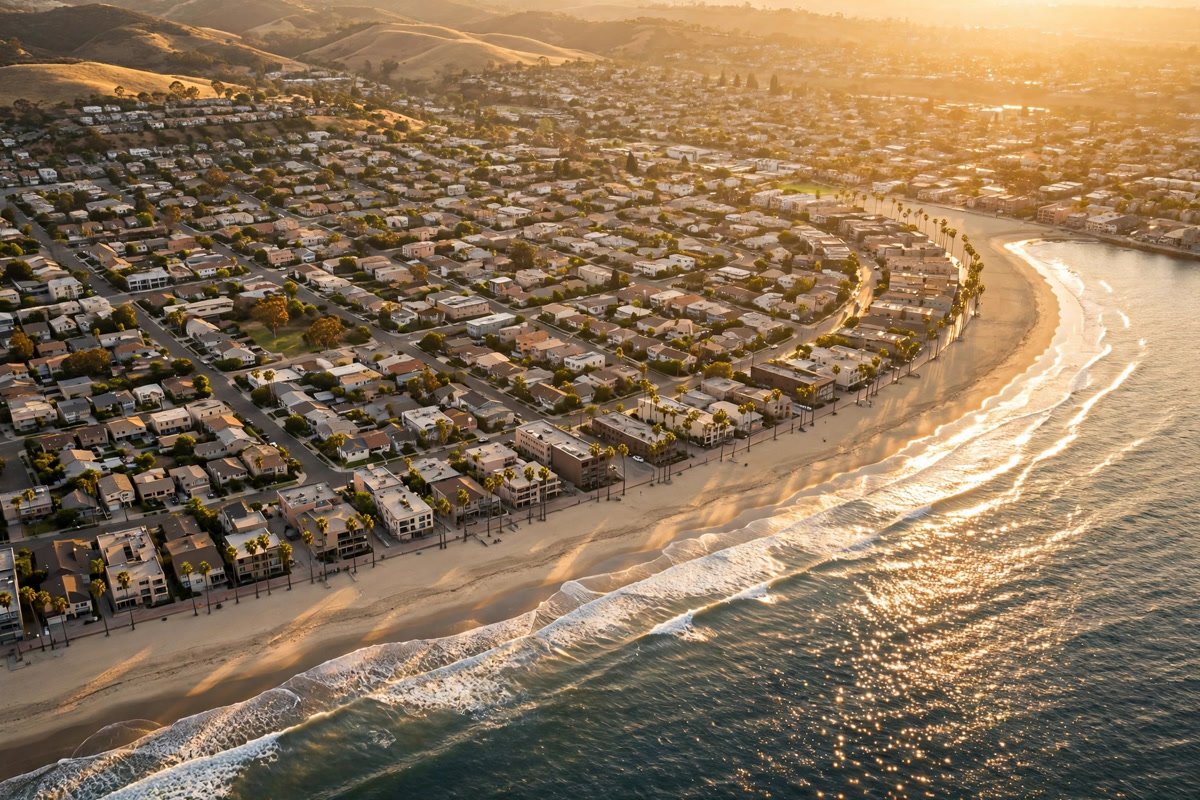
Redondo Beach runs from the port to the Palos Verdes edge. It sits on deep beach sand with a high water table. Homes range from 1920s cottages to new rebuilds. If you need slab leak detection in Redondo Beach, California, the usual culprits are shifting sand, salt air, and old copper in the older homes. Our technicians track these leaks down with pro tools.
Sand defines the risk here. The city’s ground is dune sand. It drains fast and shifts with ease when wet. Leak water can run sideways a long way before any sign shows on the surface. Wet sand settles off-kilter under slabs. It tilts and flexes the concrete a hair at a time. Stiff copper lines soak up that flex as stress. Stressed copper cracks in time at joints and thin spots. Beachfront blocks feel it most. Wind-blown sand never sits still. We know these beach blocks well.
The water table sits high in much of the city. This hits the low blocks of North Redondo and the port zone hardest. High water keeps soil damp near slabs all year. That damp speeds harm on buried metal. It also makes the sand shift more. Homes in the low blocks deal with this nonstop. Sump pumps help indoors but cannot dry the soil around pipes.
Salt air adds strain. It wears out valves, hose bibs, and fittings faster than inland air. That harm creeps into the system at joints. Add hard local water. It scales old lines too. The old copper in a 1950s Redondo home wears from both sides. Ocean air reaches each block here. No home is far from the spray. Sand shifts here all year long.
Old cottages bring one more risk. Many 1920s beach cottages still run first-era pipes. Those lines have sat in damp sand for 100 years. Concrete and sand both wear on copper. Patch jobs over the years left mixed joints. Each mixed joint is a weak spot. We find them leaking in South Redondo’s oldest blocks each year.
Q: Why does earth shift hit joints? A: Joints are the stiffest points. Shift stress lands there first.
Q: Why do some old lines outlast others? A: Soil, water, install quality, and luck all play a part.
What Are the Warning Signs in Redondo Beach?

Slab leaks seldom shout. Sand swallows leak water, so signs stay hid. First signs are often slight. Look out for these:
- A water bill that rises with no added use.
- Warm patches on the floor along the slab.
- Running-water sounds when the house is quiet.
- Damp or stained floors with no clear cause.
- Low water flow in a single bath.
- A moldy smell in one room. — learn how mold from hidden leaks starts.
- Sand that stays dark and damp by the slab edge.
Q: Floor grout looks darker in one area. Could water sit under it? A: Dark grout in one area often marks damp rising from a leak below.
Q: My bill crept up for months. Is that a leak? A: A slow creep with steady use can mean a small leak. Testing proves it.
How Does Our Detection Visit Work in Redondo Beach?
Call (833) 542-3027 with what you found. We send your technician out fast. We start at your water meter. We drive Artesia Blvd each day.
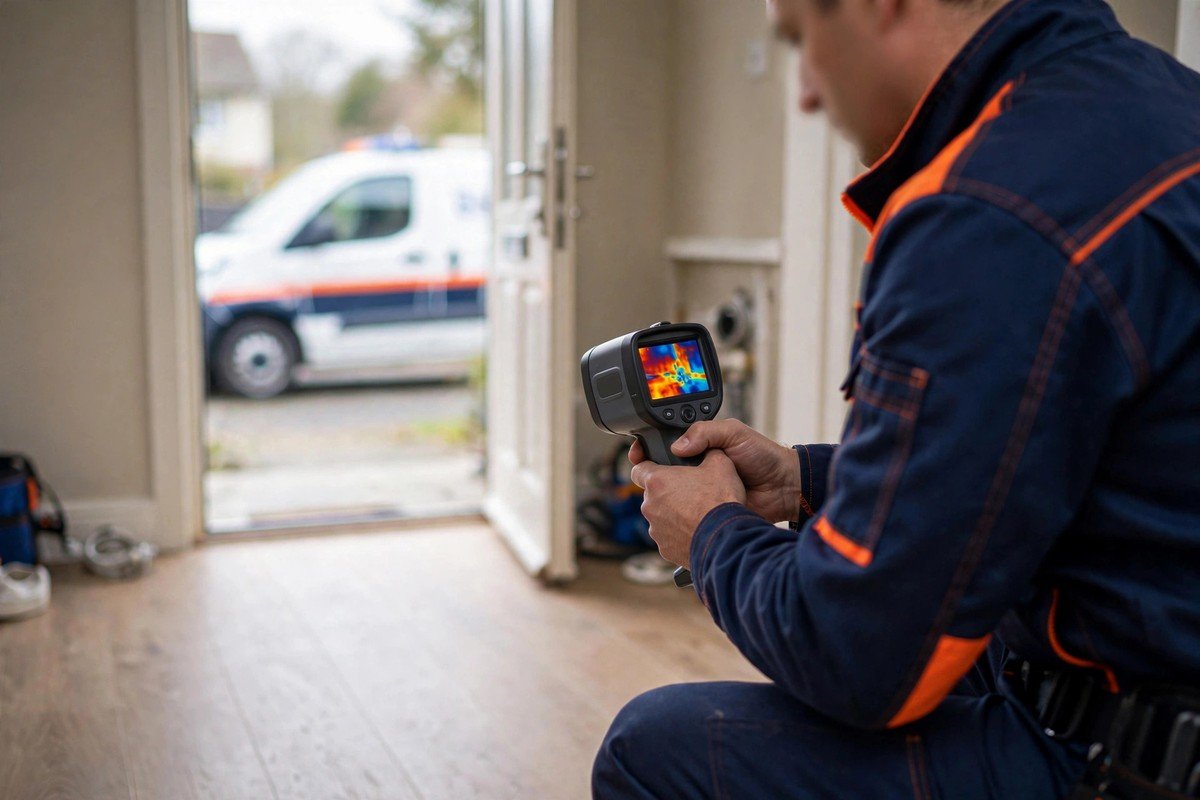
If the dial turns with each tap shut, it proves water is getting out. Fine sound gear zeros in on the hiss of the leak. Thermal scans then chart heat in your floors. Hot-line leaks show warm. Cold-line leaks show cool. When a leak hides well, we add tracer gas to the line. It rises through the slab at the break point. We also check street flow. High flow strains old joints.
We narrow the spot to 1 to 3 feet. Written findings with pics go to you. Expect the trip to last 1 to 3 hours. No concrete is broken to find it.
See how our slab leak detection experts work here.
Q: Can a slab leak hide from all three tools? A: seldom. Three tests cross-check each other. We test near King Harbor too.
What Does Slab Leak Repair Cost in Redondo Beach?
Each case differs. We price it after the visit. All figures here are national estimates as of 2026.
- Detection visit — $150–$500 (complex homes to ~$600)
- Spot repair — $1,500–$4,500. One neat opening swaps out just the bad part.
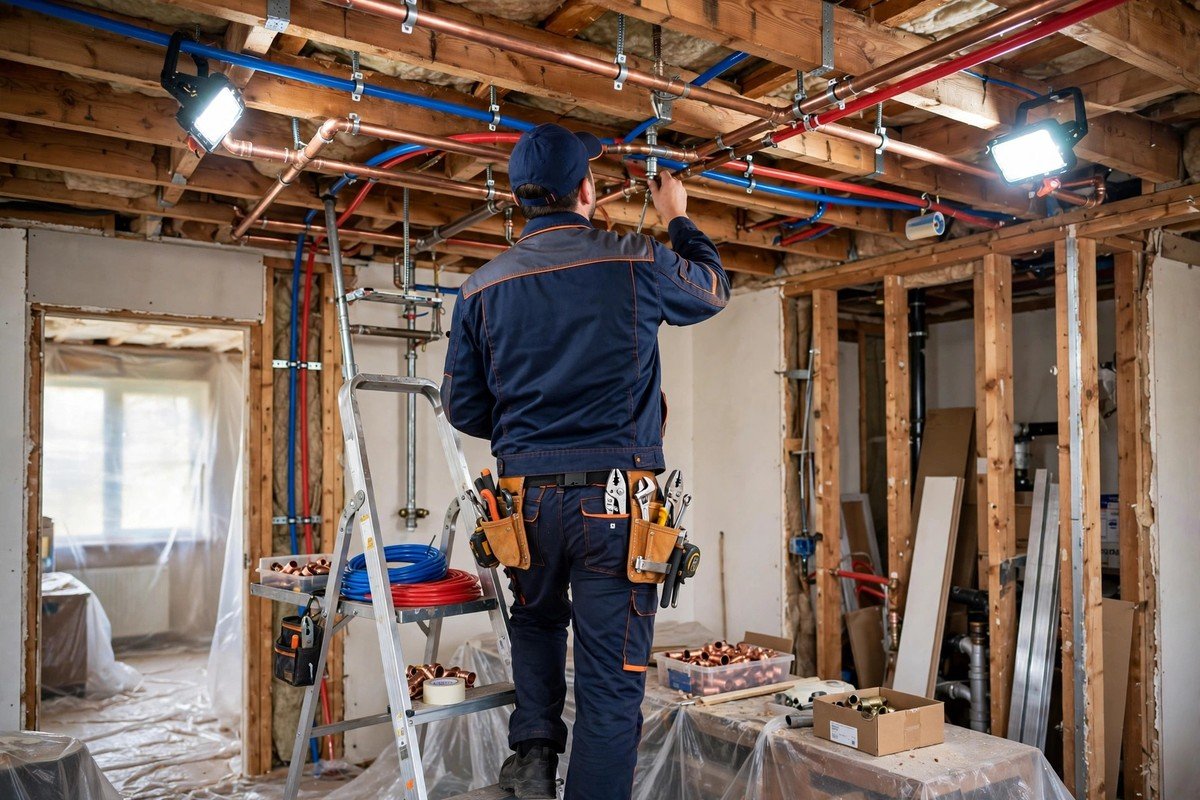
- Pipe reroute — $3,500–$7,000. A new line runs through walls or overhead. The old under-slab line stays put, unused.
- Tunneling under the slab — $3,500–$8,000. The crew digs under from outside. No indoor tear-out.
- Epoxy pipe lining — $3,000–$6,000. The inner seal stops the leak with no dig.
- Whole-home repipe — $4,500–$15,000. One job swaps all the worn-out piping.
Your technician will walk through the fixes with no push at all.
In Redondo Beach, a top pick is a whole-home repipe to end more leaks. Beach cottages with 70-year-old copper suit it well. It is worth a talk with your technician. Reroutes fit hill homes by the Palos Verdes edge. The shifting sand stays out of the picture. See all the options on our slab leak repair options and the cost guide.
Q: How do I stop the next slab leak? A: Fix flow woes, soften hard water, and act on the first sign fast.
Which Redondo Beach Neighborhoods Do We Serve?
We serve the whole city. Redondo Beach folks often get same-day trips. Your technician will call ahead with a set time.
- Riviera Village.
- The Esplanade and beachfront blocks.
- South Redondo zones.
- North Redondo zones.
- The King Harbor marina zone.
- The Artesia Blvd corridor.
- The Torrance Blvd corridor.
South Redondo holds the oldest beach homes. North Redondo sits low with a high water table. See all our cities near Redondo Beach on the California page. We serve Torrance Blvd blocks too.
Areas and ZIP Codes We Serve in Redondo Beach
We serve each Redondo Beach ZIP: 90277 and 90278. The port zone sits low and wet.
FAQs
How much does slab leak detection cost in Redondo Beach?
Plan on $150 to $500, per 2026 national estimates. Complex sites can run to $600. You get the spot in writing with photos.
Will home insurance cover leaks under the slab?
That rests on your plan. Read the fine print. Plans often cover the harm a leak causes but not the pipe fix. Review your plan in Redondo Beach or ask your agent before work starts.
How long will detection take in most homes?
The trip often lasts 1 to 3 hours start to end. The full check — tests, scans, pinpointing — ends in one trip. Written findings come the same day.
Does detection hurt the flooring?
No. Our tools read without touching the face. The slab stays whole unless you okay a repair.
Is sand harder on pipes than clay?
Sand shifts more but drains fast. Clay holds water longer. Both wear pipes out in their own way.
Hear water running when all is off? Call Nova Slab Leak Detection at (833) 542-3027 now for Redondo Beach service. We are on call round the clock. Count on a fast, true find.