
Why Do Mission Hills Homeowners Face Slab Leaks?
Mission Hills is a San Fernando Valley neighborhood of Los Angeles, named for the historic San Fernando Mission. Our technicians do slab leak detection Mission Hills, California homeowners trust, with sound, heat, and gas tools. We track the break fast and set it right.
A water line splitting under the concrete floor is what plumbers call a slab leak. Feed lines in many Mission Hills homes travel through the slab. A split lets water pool under the concrete. Floors lift, mold grows, and slabs crack. Early detection limits the harm. We do this work daily.
Why Does Mission Hills Ground Break Pipes?

Valley clay with a high water table in places sits under this neighborhood. Rain swells the clay; drought shrinks it. Pipes bend at the joints through each swing. Old joints crack.
Two big quakes shook these streets. The 1971 Sylmar quake struck just north, and the 1994 Northridge quake rattled the whole valley. Buried pipes absorbed both jolts. Weak joints cracked a little more each time. Small cracks mature into leaks over years.
The housing stock skews older than much of the valley. Homes near the mission date to the 1930s and 1940s, with mid-century tracts filling the rest. The oldest still carry steel or mixed pipe. City water runs fairly hard. Scale coats the interiors, traps heat, and thins the walls. Two quakes, old pipe, and restless clay make a rough combination.
Q: Did two quakes really damage my pipes? A: Very possibly. Each quake jars buried lines, and weak joints crack a bit further each time.
Q: Do 1930s homes still have original pipe? A: Some do. We find steel and early copper in the oldest blocks, and both wear out.
Q: How does clay soil attack pipes? A: The swell-shrink cycle bends joints. Bent joints eventually split.
Which Mission Hills Neighborhoods Do We Serve?
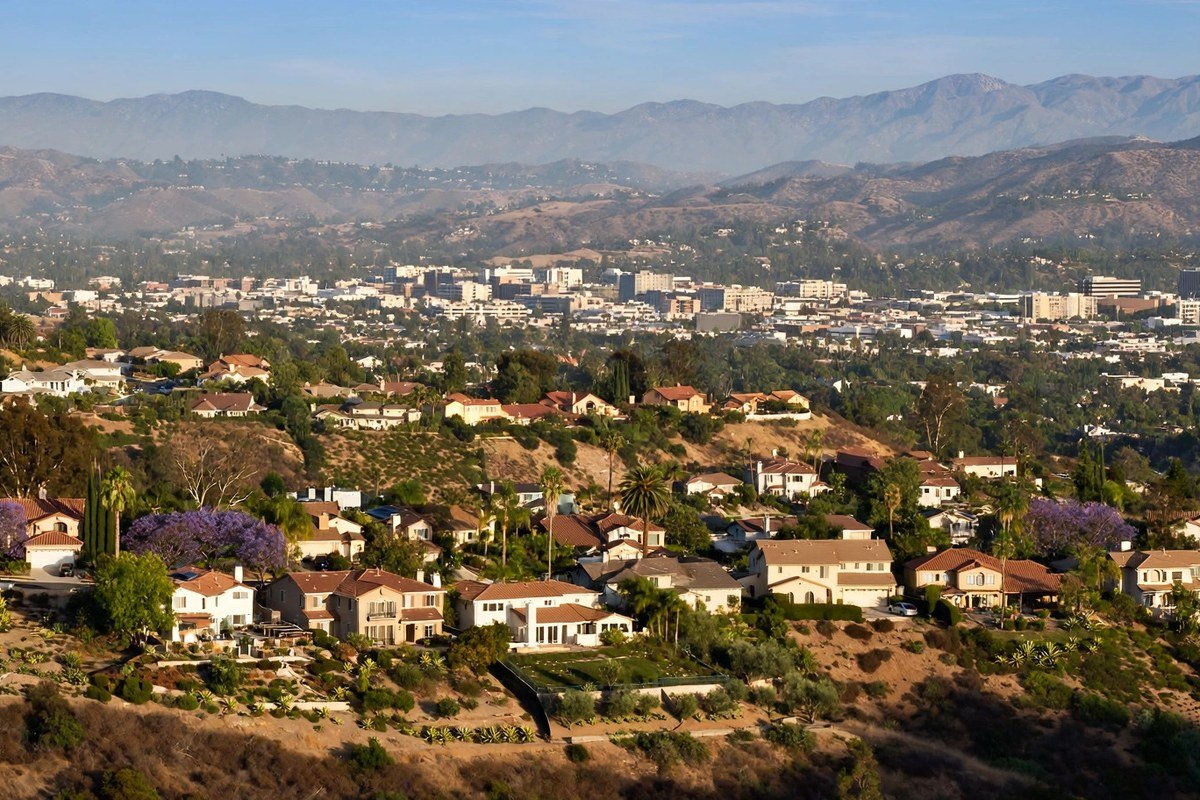
Each Mission Hills street is covered. The oldest homes cluster around the San Fernando Mission grounds. Sepulveda Boulevard blends shops with mid-century houses. Tract homes from the boom years fill the streets near the 405 and 118 interchange. Northern blocks rise to the hills into view lots. Older homes edge San Fernando Mission Boulevard near the historic core. Mission grounds to freeway rims, we reach them all.
Areas and ZIP Codes We Serve in Mission Hills
Mission Hills is a Los Angeles neighborhood we serve in full. Our technicians cover ZIP code 91345, ZIP code 91346, and ZIP code 91395. All three ZIPs sit in our service area. If your home is in any of them, we come out. The phones stay answered around the clock.
What Happens During a Mission Hills Leak Check?
We start at the meter with taps off. A dial that keeps turning tells us water is escaping. Acoustic sensors then cover the slab. Water jetting through a crack hisses, and the sensors catch it through concrete, tile, and wood.
The thermal camera sweeps next. Hot-line leaks glow as warm spots. Cold-line leaks read cool. Older homes with mixed pipe stock map fast under the lens. Whisper-faint leaks get safe tracer gas. It exits at the break, rises to the floor, and our sniffer tracks it. Our mark ends up within one to three feet.
The visit takes one to three hours. We show you the mark on your floor and explain the result. Repair paths come in plain language. You choose the fit for your home and budget. No concrete is cut before detection, and none after without your approved plan.
Q: Can you trace steel-and-copper mixed runs? A: Yes. Our sensors hear leaks in any pipe material. We map the mix as we go.
Check California for the map and thermal imaging leak detection for how it works.
What Does Slab Leak Repair Cost in Mission Hills?
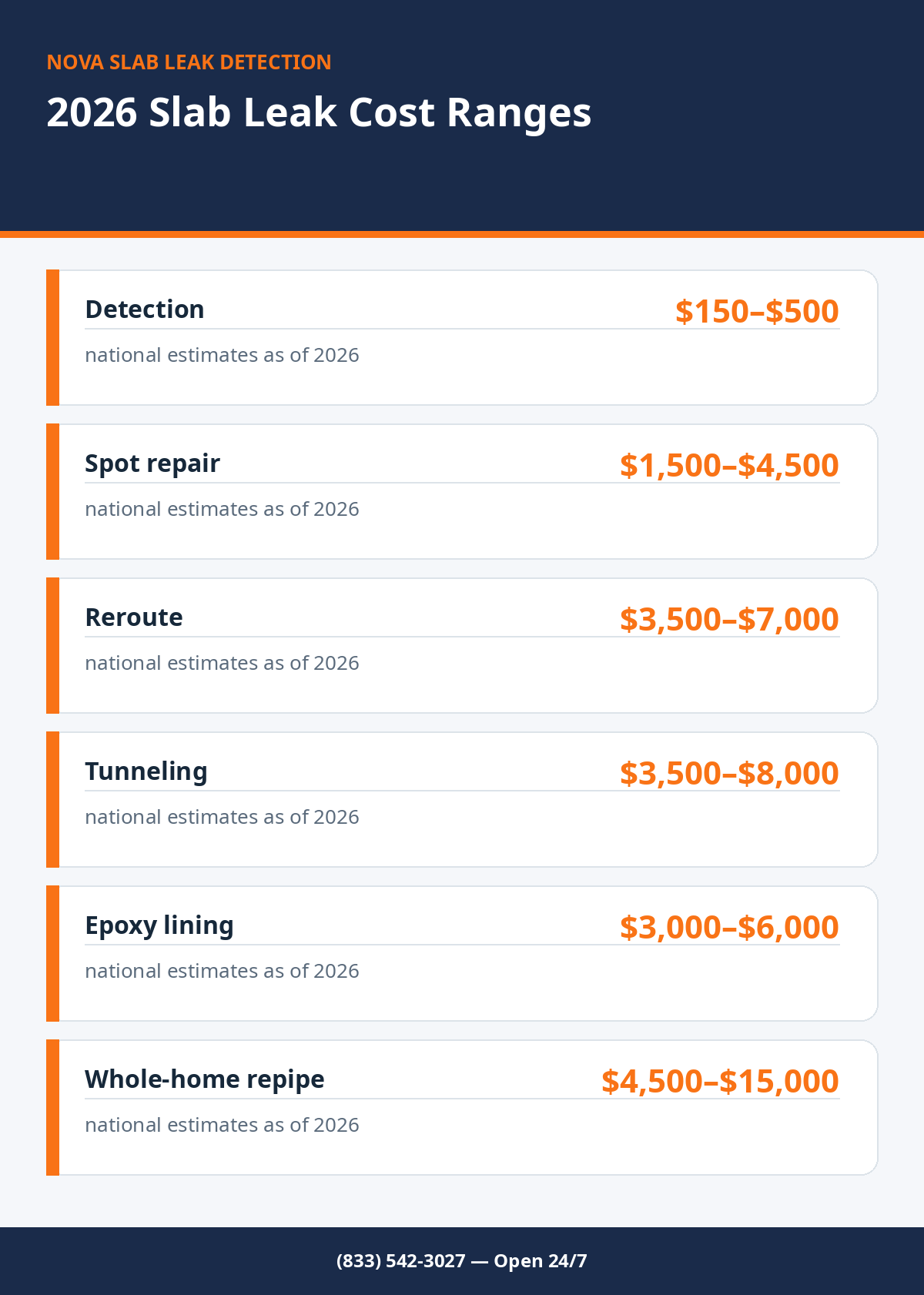
Mission Hills homeowners can work from these national estimates as of 2026:
| Work | National estimate as of 2026 |
|---|---|
| Detection visit | $150–$500, difficult jobs near $600 |
| Spot repair | $1,500–$4,500 |
| Reroute | $3,500–$7,000 |
| Tunneling | $3,500–$8,000 |
| Epoxy lining | $3,000–$6,000 |
| Full repipe | $4,500–$15,000 |
On-site quoting sets the exact figure. A spot repair opens one small part and mends one break. Rerouting suits homes with repeat leaks. Tunneling enters from outside. Epoxy lining fits pipe that still holds shape. A full repipe ends the patch-on-patch loop in the oldest houses. Near the mission, where mixed old pipe fails in waves, repiping often costs less over time.
Our slab leak repair and whole-home repiping pages go deeper. Our cost guide breaks out each price point.
Q: Is repiping worth it in a 1930s house? A: Often. Old mixed pipe fails spot after spot. A repipe guards the home for years.
A bill that jumps without explanation is a classic leak signal. Our high water bill page lists what a spike can mean.
Catching trouble early saves floors and slabs alike. Review the warning signs of a slab leak anytime.
Many Mission Hills homes were built in the 1950s and 1960s with copper lines that are now past their prime.
FAQs
How fast can you get to Mission Hills?
Dispatch runs 24/7. Call (833) 542-3027 and a technician heads out at once, generally same-day.
Do you cover the mission-area blocks?
Yes, from the mission grounds to the freeway rims, each street.
Can quake cracks leak many years later?
Yes. Stress opens slow as soil shifts. We find these leaks weekly.
Can homeowners insurance pay for a slab leak?
Plans vary. Most cover the resulting damage, not the pipe fix. We record everything for your agent.
Do you handle steel pipe?
Yes. Steel, copper, and mixed runs all show up on our sensors.
Which ZIPs does this page include?
We cover 91345, 91346, and 91395 — all three fully.
Need Your Mission Hills Slab Leak Fixed?
A wet floor and a warm patch both call for a check. Reach Nova Slab Leak Detection at (833) 542-3027 for 24/7 Mission Hills service. Your technician is ready.