
Why Do Slab Leaks Hit Homes in San Bernardino?
Old blocks here hold the oldest pipe in the Inland Empire. For slab leak detection San Bernardino California, our techs read old pipe like a book. Arrowhead homes date to 1947. Del Rosa rose from the 1940s on. Northeast Sterling holds 1950s ranch homes. Most pipe here is seventy to eighty.
Soil is on the record. County plans note soft, salty soils in parts of town. They settle when wet. That is just what a slab leak does. Old river soils shift with wet and dry too.
Hard water and quakes add risk. Scale wears copper thin. The town sits near faults. Small ground moves strain stiff pipe and old joints. With so much 1950s pipe, leaks are common.
How does San Bernardino fan soil shift?
Mountain fan soil sits under town. Fan soil mixes sand and gravel. Loose mix shifts a lot.
Uneven ground tilts slabs. Tilt bends buried copper. We check slab level each visit.
The river wash cuts through town. Wash soil drains fast but shifts. We test wash lots with care.
Flood years reshape fan soil fast. New soft spots form fast. We re-test lots after storms.
How hard is local water on pipes?
County tests list 9 grains per gallon. That counts as hard. Mountain minerals lay scale in pipe.
Scale pits copper from within. Pits grow to pinholes. We hear pinhole hiss by sound.
Steel lines rust under scale. Route 66 homes may hide steel. We test both kinds each time.
Summer heat bakes scale hard. Baked scale cracks and shifts. Cracks open fresh copper to pits.
Which San Bernardino blocks leak the most?
Del Rosa dates to the 1940s. Its slabs hold first-run copper. Muscoy adds old ranch pipe.
Steep Verdemont slopes shift most. Slope soil creeps down slow. We test downhill runs with care.
Downtown holds pre-war commercial slabs. Their lines are the oldest in town. We serve 92401 to 92415.
Even 1970s tracts call us. Shifting soil cracks old pipe. We pin each leak to the inch.
Do quakes shake these pipes?
The San Andreas runs through Cajon Pass. The San Jacinto shakes the east side. Both jolt these blocks.
Shaking jolts old joints loose. Loose joints leak slow. We check joints after each shake.
Drought shrinks clay spots too. Shrink plus shake bends pipe twice. Our gear finds the harm fast.
Old pipe felt years of shakes. Each one strains joints more. Call us if bills jump after one. We answer 24 hours a day.
Desert heat wears these pipes too.
Valley heat tops one hundred. Hot air dries soil fast. Dry soil shrinks hard. Shrink bends old pipe.
Old homes bake each summer. Baked joints crack first. We test each joint by sound. Call us at the first warm spot. We come fast.
Which San Bernardino Neighborhoods Do We Serve?


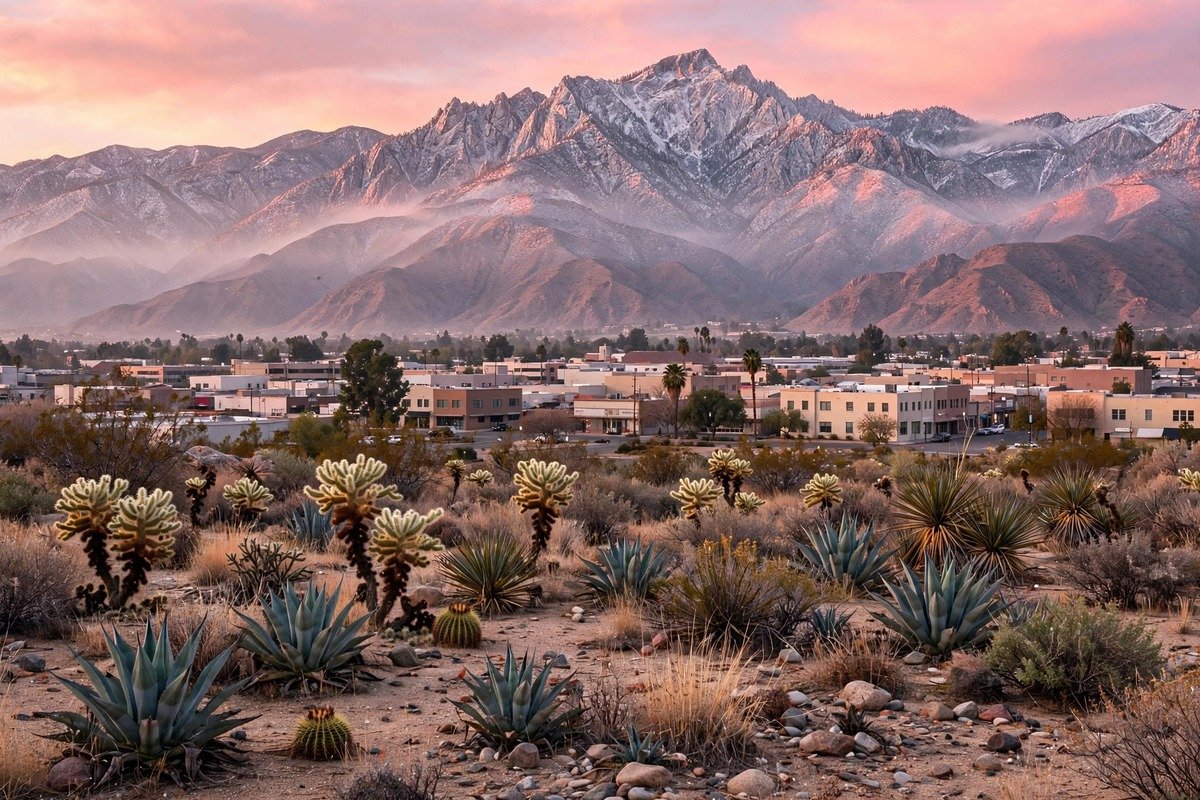
Full coverage. Top areas:
Arrowhead — Homes date to 1947. The oldest pipe in town, steel and first copper.
Del Rosa — Homes from the 1940s on, in the north. Old lines under slabs.
Northeast Sterling — 1950s ranch homes by Harrison Canyon Park.
Shandin Hills — Mixed home styles by the golf club and mountain trails.
We also serve downtown, the University District, and all ten ZIP codes.
Areas and ZIP Codes We Serve in San Bernardino
Ten ZIP codes in all:
92401, 92402, 92404, 92405, 92407, 92408, 92410, 92411, 92415, 92423
Call (833) 542-3027. Our line is open.
What Happens During Our Slab Leak Visit in San Bernardino?
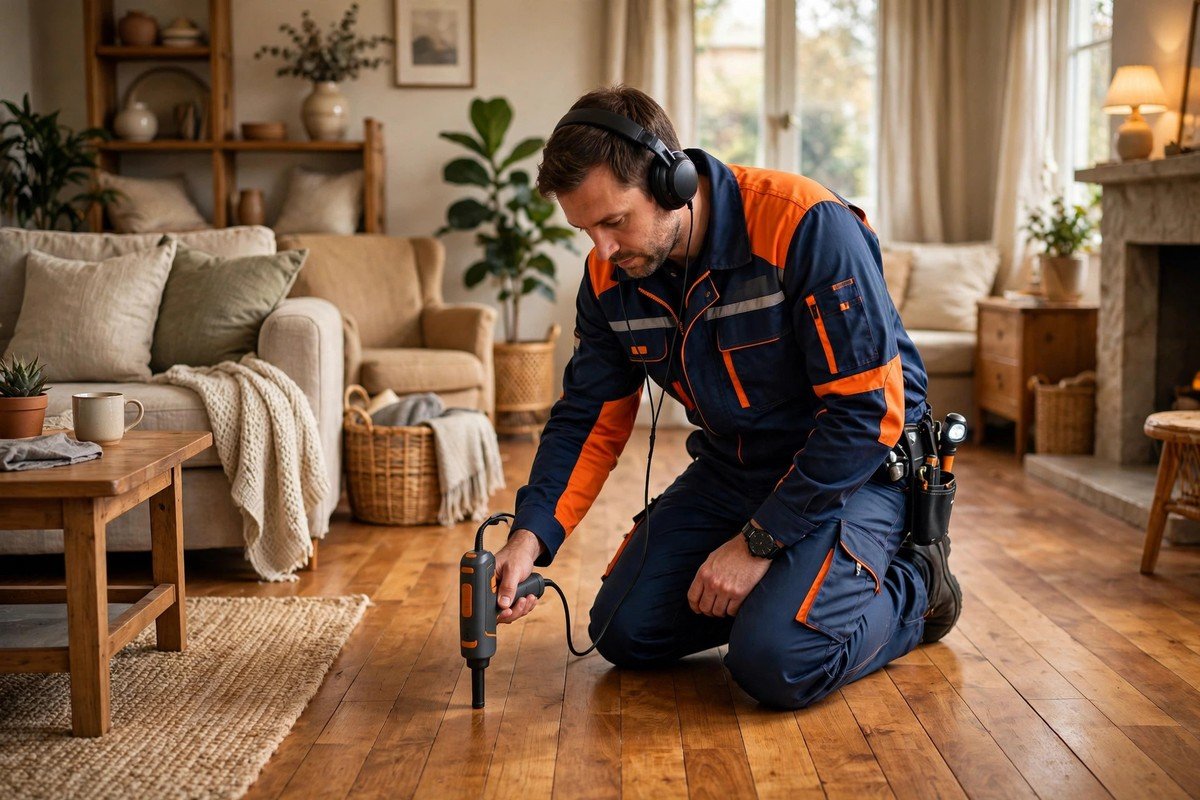
We come with sound gear, a heat camera, tracer gas. Visits run one to three hours for most homes. We break nothing. Your home stays intact. The sequence:
- Check — Meter test, line pressure test. Leak proved. Bad line found.
- Listen — Sound gear hears flow under the slab.
- Scan — Warm marks show on the heat map.
- Trace — Gas pinpoints the leak.
- Report — Written notes mark the leak at one to three feet. Repair fixes and firm prices.
Can soft soil hide my leak? It can shift how water moves. We read results with soil in mind.
Will this harm my home? No. Our visit breaks nothing.
How long on site? Most homes take one to three hours.
Learn our process.
What Are the Repair Options for a Slab Leak in San Bernardino?
We pick the fix that fits. Each price is a national estimate as of 2026.
- Spot repair — Open a small slab spot, fix one leak. Spot repair: $1,500 to $4,500 here. Ideal for young pipe with one bad spot.
- Pipe reroute — New pipe through walls and attic. Pipe reroute: $3,500 to $7,000 here. A solid pick for postwar copper and old steel.
- Tunneling — The pipe is reached from outside by digging. Tunneling runs $3,500 to $8,000. It saves floors.
- Whole-home repipe — Full swap of old pipe. Whole-home repipe: $4,500 to $15,000 here. The smart move for pre-1960 homes.
A local check: $150 to $500. Tough jobs near $600.
Town leaks drive high bills and can crack bases. Our repair crew and cost guide list next steps.
My Arrowhead home is from 1947. What fix works best? At this age, repipe or full reroute. One patch leaves the rest ready to go.
Call (833) 542-3027 now. We serve this town and all of California 24/7.
FAQs
How much does slab leak detection cost in San Bernardino? A local check runs $150 to $500. These rates are national estimates as of 2026. Tough jobs near $600. A report and firm prices are included.
Do you serve Del Rosa and Arrowhead? Yes. Del Rosa, Arrowhead, Shandin Hills, downtown.
Can soil shift cause slab leaks? Yes. Shifting soil strains buried pipe. Soft spots that sink when wet add risk.
My home was built in 1950. Could a leak happen? Around 1950 is top risk. A check settles it.
How long will mine take? Allow one to three hours.
Does insurance cover this? Each plan differs. Most reimburse water harm, not pipe work. Ask your agent.