
Mold Under Slab: Causes, Risks & What to Do
Musty smells with no visible mold. We find the moisture feeding it.
Mold Under Slab: Quick Answers
The short version of this guide to mold under slab:
- How Does Mold Under Slab Growth Start? Mold needs moisture, warmth, and food. A slab leak gives steady moisture for weeks.
- When Should You Suspect Hidden Mold? Suspect it when smells linger daily. Cleaning never kills the odor. Smells grow worse in humid months.
- Why Is Under-Slab Mold Hard to Spot? It grows out of sight. Under pads, behind baseboards, inside wall bases.
Keep reading for the full guide to mold under slab.
How Does Mold Under Slab Growth Start?
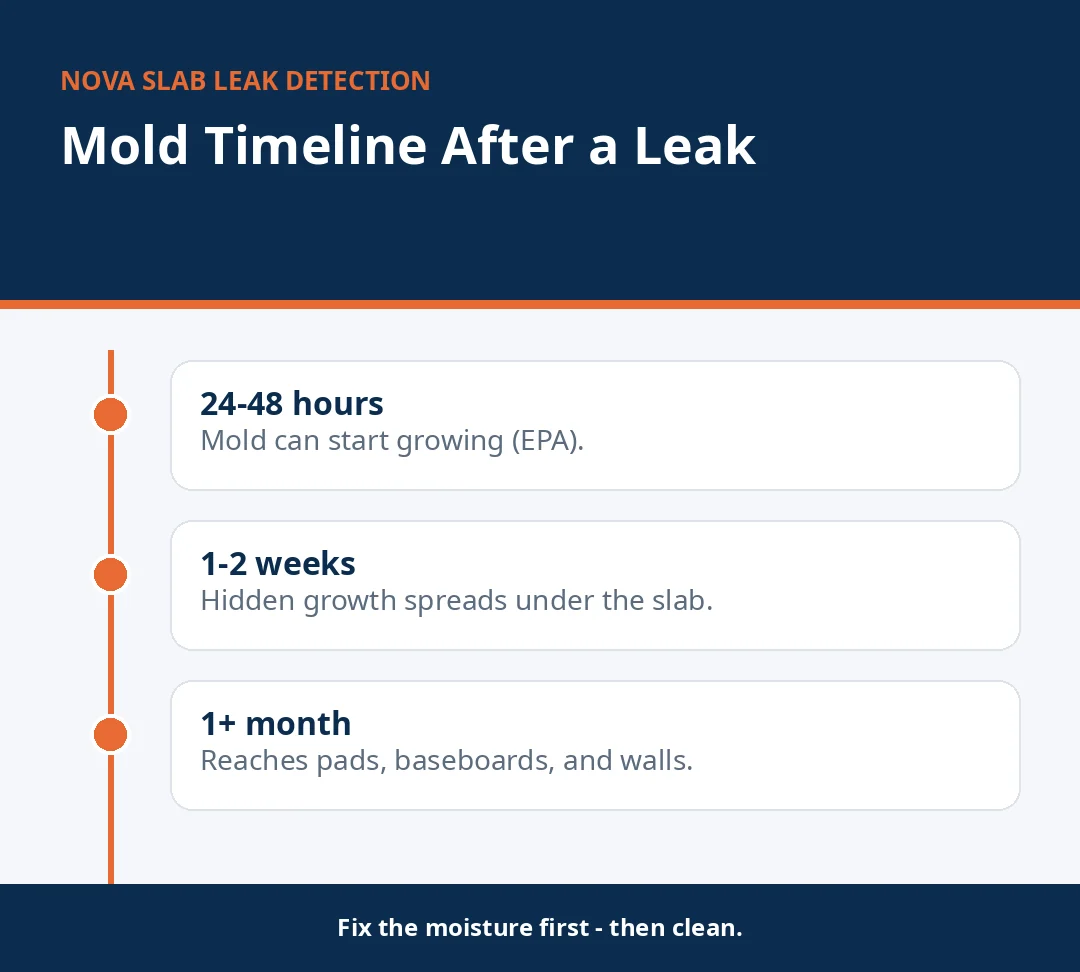
Mold needs moisture, warmth, and food. A slab leak gives steady moisture for weeks. Your home gives warmth all year. Drywall and pad give food. That dampness lets mold under slab leaks grow unseen. Concrete wicks water up. Flooring traps it in. Mold follows fast.
When Should You Suspect Hidden Mold?
Suspect it when smells linger daily. Cleaning never kills the odor. Smells grow worse in humid months. Guests may notice before you do. Your nose adapts to your own home. Trust visitors when they wrinkle theirs.
Can mold grow with no leak at all? Yes. Damp air and old spills cause mold too. But slab leaks are a top hidden driver. Rule them out early.
What Are the Warning Signs?
Watch for these clues as a group:
- Musty or earthy smell near the floor.
- Damp carpet that never dries out.
- Baseboards that stain, swell, or peel back.
- Sniffles that fade when you leave home.
- A water bill creeping upward.
One clue is a hint. Several together mean hidden moisture. Compare with all slab leak warning signs.
Why Is Under-Slab Mold Hard to Spot?
It grows out of sight. Under pads, behind baseboards, inside wall bases. Surface scrubbing never reaches it. Sprays mask odor for a day. It keeps thriving below. Finding the water source beats cleaning stains. Always fix moisture first.
Should I rip things up to look? No. Lift one carpet corner at most. Then stop and call pros. Meters map the rest safely.
What Should You Do About Mold Under Your Slab?
Move fast but stay calm:
- Treat lasting musty smell as real. It means moisture.
- Run fans and a dehumidifier near the zone.
- Skip bleach on big areas. It misses hidden growth.
- Note which rooms smell worst, and when.
- Call us to find and stop the water feed.
The EPA urges fast drying. Aim for 24 to 48 hours. It helps prevent mold (EPA mold guide). Killing the leak comes first.
How Do We Find the Moisture Source?
Our techs map damp zones with moisture meters. Acoustic gear hears the leak that feeds them. Thermal cameras catch cool, wet patches. All three point to the pipe break. We narrow it to about 1 to 3 feet. Most visits take 1 to 3 hours. Our slab leak detection ends the cause. Then mold stays gone.
What About Health Concerns?
Mold hits people in different ways. Some feel nothing at all. Others get itchy eyes or sneezes. Asthma sufferers may react more. We cannot give medical advice. Talk to your doctor with concerns. Our job is to end the moisture. Dry homes grow far less mold.
Must family leave during the work? Rarely needed. We keep work zones tidy and closed. Very sensitive folks may sit the day out.
What Does Fixing the Leak Cost?
We quote on site after detection. Typical national ranges as of 2026:
| Service | Typical range |
|---|---|
| Leak detection visit. | $150–$500. Complex homes run up to ~$600. |
| Spot repair. | $1,500–$4,500. |
| Reroute. | $3,500–$7,000. |
| Tunneling. | $3,500–$8,000. |
| Epoxy lining. | $3,000–$6,000. |
Mold cleanup is a separate trade. Fix the leak first. That stops regrowth. Then cleaners finish the job.
Who Stops the Moisture?
We do. Our technicians find hidden leaks daily. Call (833) 542-3027 any time. We answer 24/7. A real person books your visit fast. Not satisfied when we leave? Call us. We will return and make it right. That is our guarantee.
How Do You Prevent Mold After the Fix?
Dry the zone fully with fans and warmth. Keep indoor humidity in a normal band. Fix each new drip the day you see it. Recheck old trouble spots twice a year. A dry home is a mold-free home. Make dryness a habit.
How soon does the smell fade? Often within days of full drying. Deep pad soak can take a week or two. Check under sinks each month too. Look behind toilets as well. Small drips hide in both spots. Wipe shower grout after use. Run bath fans during showers. These habits starve mold. Dry homes stay clean homes. Start today. Act today.
Can Mold Come Back After Repair?
Yes, if moisture lingers. Drying must finish fully. Fans should run for days. A meter should read dry throughout. Rushing this step invites regrowth.
How do I know it is truly dry? We recheck with meters on request. Dry readings two days apart mean done. Trust tools, not touch.
Keep the area aired after we leave. Watch for odor return. If smells creep back, call us fast. Fast response stops round two.
Mold Under Slab: Frequently Asked Questions
Homeowners often ask us these questions about mold under slab. Each answer is short, and the full detail on mold under slab is in the sections above.
Related Slab Leak Problems
More guides related to mold under slab:
- Pinhole Leaks Copper Pipes: Tiny holes, big trouble. We’ll explain pinhole leaks in plain terms and fix them right.
- Slab Leak After Earthquake: The shaking stopped. Now check your pipes with this calm, simple checklist.
- Slab Leak and Mold Health: Leaks feed mold. Here’s what that may mean for health — and what to do.
- All slab leak problems: Every warning sign, cause and risk in one place.
- Slab Leak Detection: How we find a leak under concrete without breaking it.
Mold Under Slab: Talk to Nova Today
Call any time, day or night. Tell us your ZIP code and what you are noticing, and we will book your visit. Mention mold under slab when you call so we bring the right equipment.