
Is a Slab Leak Lurking in Your Grand Terrace Home?
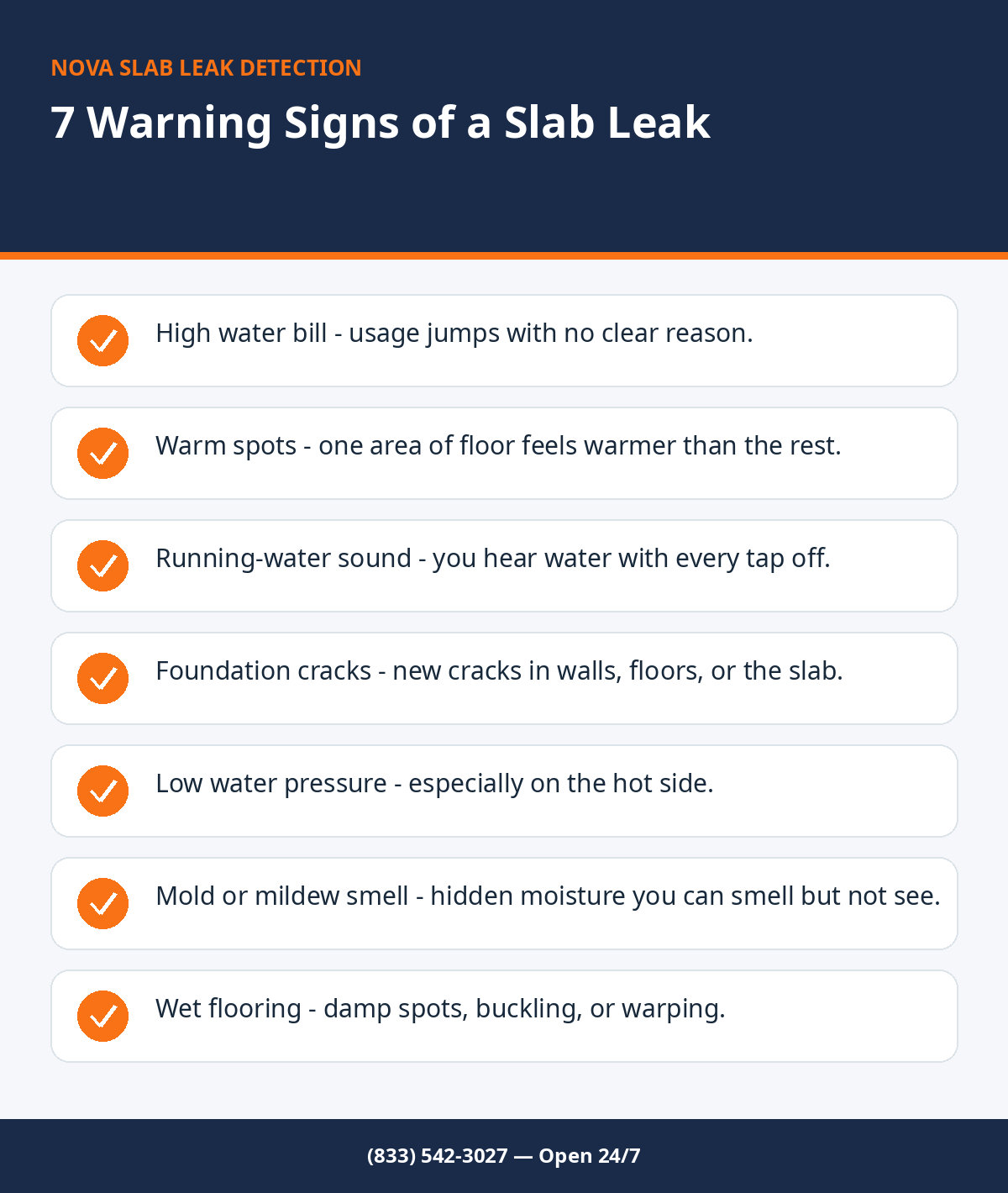
An unexplained jump in your water bill, a warm patch on the floor, or water sounds behind walls can mean you need slab leak detection in Grand Terrace, California. This hillside city’s homes sit on sloping ground that stresses aging pipes. Our technicians find the exact leak fast. Call (833) 542-3027 any time. We answer 24/7.
Grand Terrace nestles against the Blue Mountain hills between San Bernardino and Riverside, in San Bernardino County. The city built out mainly from the 1960s through the 1980s, with homes stepping up the hillsides in terraced tracts. Those homes are now forty to sixty years old. Their first copper supply lines have spent years in hard Inland Empire water.
Hill living is wonderful until the pipes age out. One detection visit, lasting one to three hours, tells you exactly what is happening under your slab and what to do about it.
Why Do Grand Terrace Homes Get Slab Leaks?

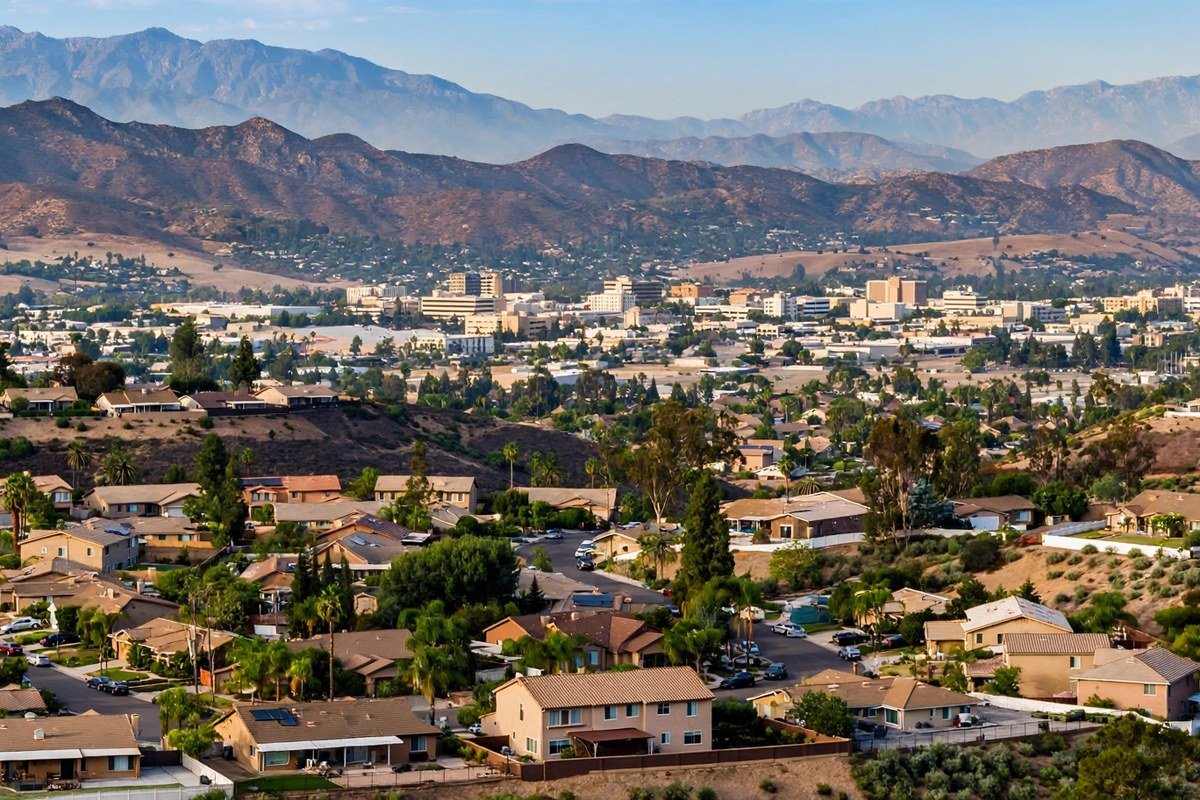
Terraced hill lots are the defining risk. Grand Terrace homes step up the Blue Mountain hills on graded pads, and graded fill settles over the years. As pads settle unevenly, slabs tilt almost imperceptibly and buried pipes take the strain. Retaining walls, drain swales, and slope plantings all change how water shifts across these lots over time. A lot that drained perfectly in 1975 may concentrate water against the foundation today.
The 1960s through 1980s building era puts most Grand Terrace pipe in the forty-to-sixty-year range. That is prime slab leak age for copper in hard water. Inland Empire groundwater runs mineral-heavy, pitting copper interiors year after year. Pinholes form silently. The leak then feeds water into the hill soil around the foundation, which can speed up the very settlement that stresses the pipes. It is a slow feedback loop that ends with a failed line.
Hill drain patterns intensify everything. Storm runoff races down the hills above the town, and winter storms can saturate hill soils fast. Irrigation adds steady moisture through the dry months. The ground around Grand Terrace foundations lives in near-constant moisture flux. Clay pockets in the hill soils swell and shrink with each cycle, working the slab and its embedded pipes like a slow vise.
Heat adds the last push. Inland Empire summers bake the hillsides, drying soils deep. The swing from baked-dry to storm-soaked shifts ground more than either extreme alone. If you see new cracks in walls or tile alongside a rising water bill, treat the combination seriously. See our guide to cracks in the foundation for what to look for.
My home sits on a terraced lot. Does that raise my risk? Terraced and graded lots can settle unevenly over the years, which stresses buried lines. Hill and terrace homes deserve extra attention to the warning signs.
Which Neighborhoods Do We Serve in Grand Terrace?
We serve the whole city of Grand Terrace in San Bernardino County. Our technicians cover the terraced tracts climbing the Blue Mountain hills, the areas around Grand Terrace High School, and the home streets along Barton Road and Mount Vernon Avenue. We also reach the neighborhoods bordering San Bernardino, Colton, and Riverside.
Terraced lots get special attention to grading and drain during our visits. We note how water shifts across your lot and factor it into the diagnosis. Tell us about your lot’s slope when you call. Our California hub lists Grand Terrace alongside each other city in our service zone.
Do you serve the hill streets above Barton Road? Yes, we do. The hill areas are fully in our service zone. We are familiar with their terraced lots.
Areas and ZIP Codes We Serve in Grand Terrace
Grand Terrace is served by one ZIP code:
- Grand Terrace, CA 92313
Each address in 92313 is fully covered with no travel surcharges. We can book same-day visits when slots are open.
What Happens During Our Slab Leak Visit in Grand Terrace?
Your visit takes one to three hours. Your technician starts with questions about signs, bill history, home age, and the lot’s grading and drain. Hill context shapes the search. So on terraced lots, we ask about any slope changes, new cracks, or drain work.
We check through meter observation plus pressure testing. A meter that shifts with everything off confirms escaping water. Pressure-testing the hot and cold lines apart shows which side loses water. In Grand Terrace’s mid-century tracts, the hot-water loop under the main living areas is a common offender.
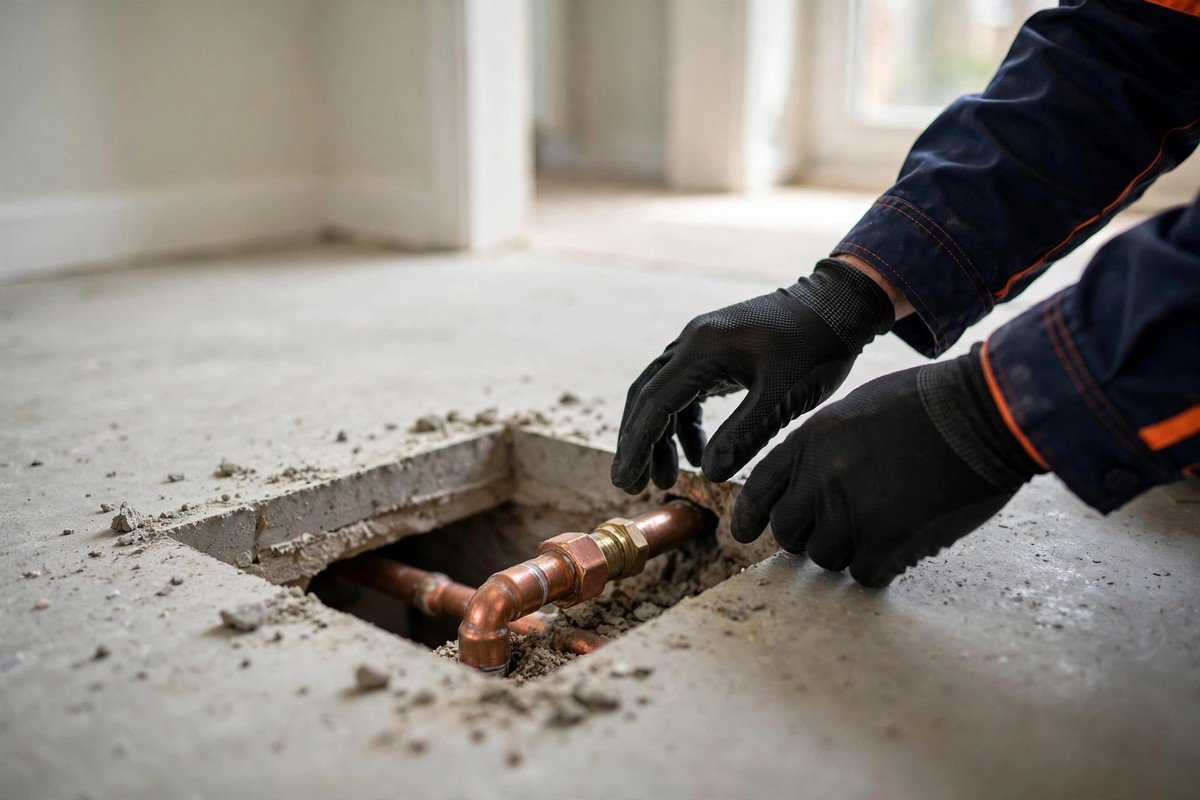
For the search itself, we deploy acoustic sensors, thermal imaging, and tracer gas. We sweep the slab in a grid, listening for escaping water’s hiss and marking the strongest signals. Those spots get a thermal camera scan for heat anomalies. Tracer gas fixes ambiguous cases by revealing the exact escape point. The confirmed leak location is marked within one to three feet for the repair crew. We leave you with a written summary and a clear rundown of repair paths. Detection never hurts your home. See acoustic leak detection and thermal imaging leak detection for more detail..
Will the equipment work on my terraced lot’s slab? Yes, it will. The detection process works the same on flat and terraced slabs. We account for your lot’s grading when interpreting results.
What Are the Slab Leak Repair Options in Grand Terrace?
Terraced Grand Terrace homes often favor reroutes through the attic, which avoid digging near hills entirely. Spot repairs suit single leaks in otherwise sound pipe. National estimates as of 2026:
| Repair option | National estimate as of 2026 | Best for |
|---|---|---|
| Detection visit | $150-$500, complex jobs up to ~$600 | Pinpointing the leak within 1-3 feet |
| Spot repair | $1,500-$4,500 | Single leak, pipe otherwise healthy |
| Pipe reroute | $3,500-$7,000 | Overhead path avoiding slope digging |
| Tunneling | $3,500-$8,000 | Exterior access, interior floors untouched |
| Epoxy lining | $3,000-$6,000 | Inside-out coating for aging lines |
| Whole-home repipe | $4,500-$15,000 | Original 60s-80s systems, repeat leaks |
Our slab leak cost guide explains each choice. For Grand Terrace’s aging systems, compare slab leak repair with whole-home repiping.
Is rerouting better than digging on a terraced lot? Often, yes — a reroute through the attic avoids disturbing graded hills and retaining walls. Your technician will recommend the safest effective choice for your lot.
FAQs
How much does detection cost in Grand Terrace?
As of 2026, national estimates put detection at $150-$500, with hard jobs near $600. You get the exact leak location and a written summary of choices.
Can a slab leak damage my retaining wall?
Escaping water can saturate hill soil and add pressure behind retaining walls. If a wall near a suspected leak shows new shifting, mention it during your visit.
Do you offer evening visits in Grand Terrace?
Yes, we do. We run 24/7, so evenings, weekends, and holidays are all available. Call (833) 542-3027 any time.
Will hard water keep making leaks here?
Hard water keeps attacking remaining old pipe after any single repair. If your system is past fifty with many leaks, a repipe often saves money over time.
Does home insurance pay for slab leak repairs?
Resulting water damage is commonly covered. Pipe repair coverage depends on your plan. Read your plan documents or check with your agent, since terms vary.
What should I watch for on a terraced lot?
New cracks in walls or tile. Doors that start sticking. Any change in how water drains across your lot. Combined with a rising bill, these point to trouble under the slab.
—
Grand Terrace slab leak worries? Contact Nova Slab Leak Detection at (833) 542-3027. Our own technicians understand hill homes and answer 24/7.