
Why Does Monsoon Rain Hurt Slabs So Fast?
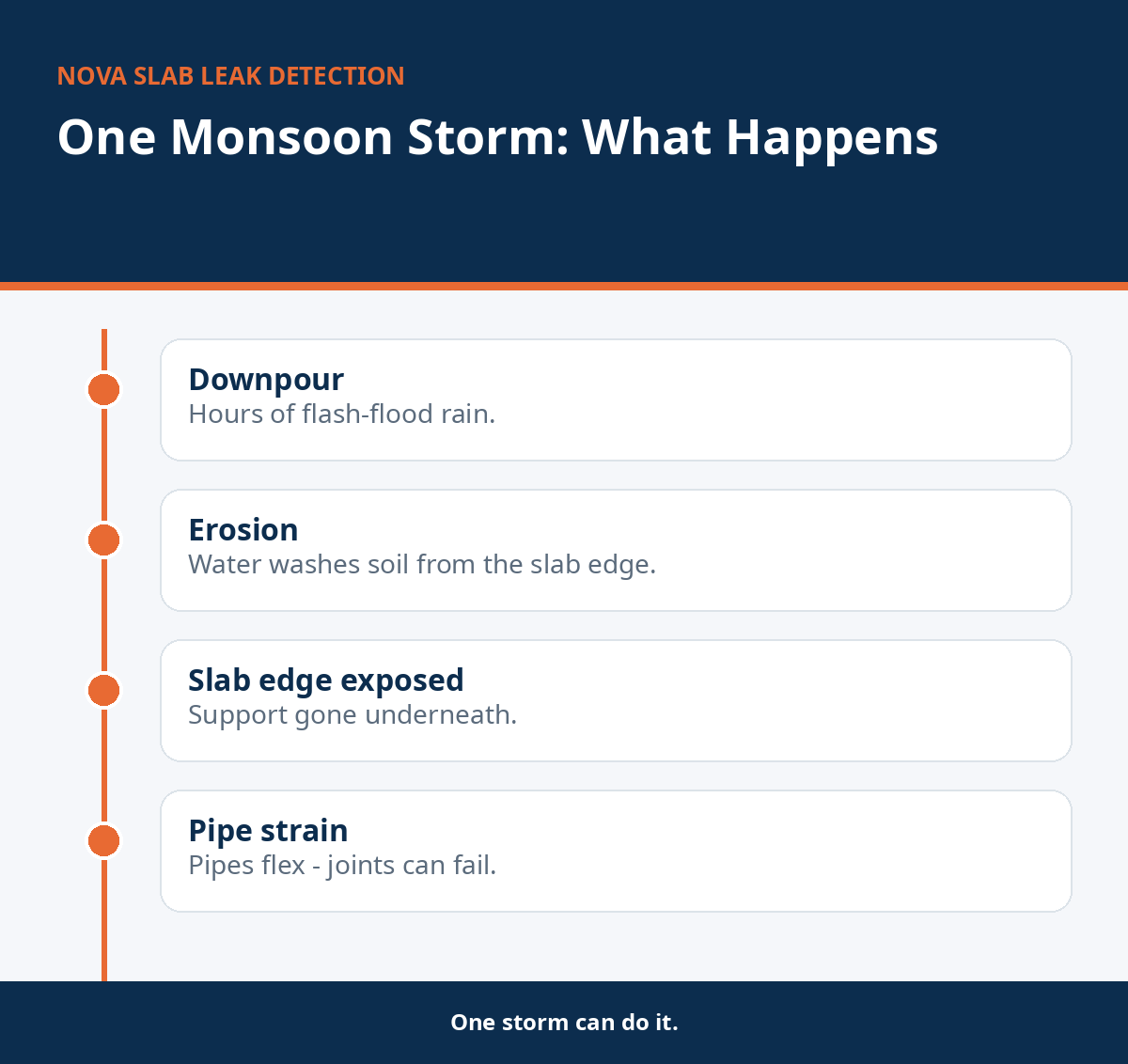
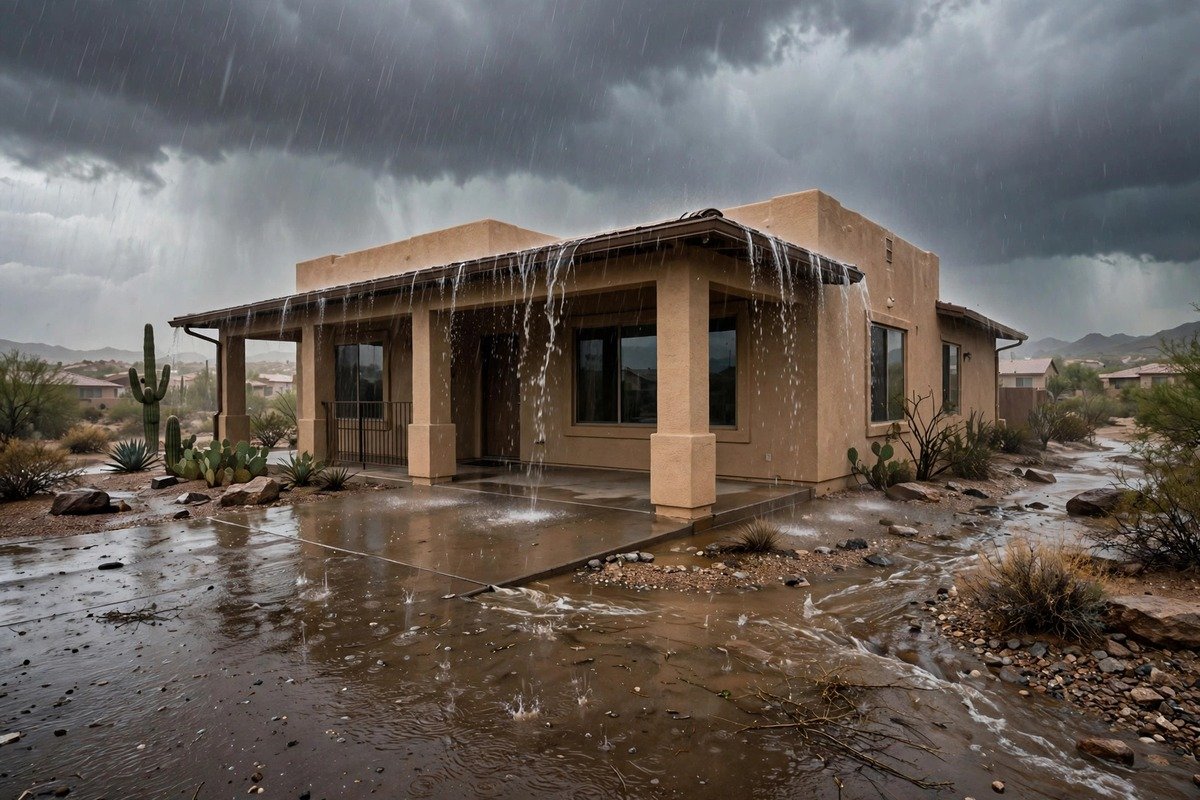
Desert soil bakes hard all spring. Then monsoon storms dump months of rain in hours. A monsoon slab leak starts when flood water washes soil out from under your slab edge, leaving concrete with no support so it tilts and strains the pipes below. Speed is the threat. Harm that takes a full season elsewhere can strike in one storm.
This article sits inside our seasonal slab leak guide. Read on for what to know and what to check.
How Does Fast Water Wash Soil From Under Your Slab?
Dry desert soil cannot drink a fast downpour. Water sheets off the hard ground. It races to the low point, which is often your base. Fast water cuts ruts along the slab edge. It washes support soil out from under the concrete.
The slab edge ends up hanging in air. Concrete holds up well in the middle. It holds up poorly at a bare edge. It tilts or cracks. The pipe just below it bends with the shift. Joints take the hit first.
Why is monsoon worse than a normal rainy spell?
Normal rain soaks in over days. Monsoon rain hits baked ground at flood speed. The washout is fast and local. The slab moves on one side only. One-sided shifts bend pipes the hardest.
When Does Monsoon Risk Peak?
Monsoon season runs June through September. The worst storms tend to hit in July and August. But dates are just a guide. One early or late storm can do the same harm.
Risk spikes with each storm, not with the season as a whole. Watch for these signs.
- Hot afternoon storm cells — monsoon storms build fast in the heat.
- Storms on back-to-back days — the second storm hits soil the first one loosened.
- Flash flood alerts — if streets flood, soil is moving too.
Should I check after each monsoon storm?
Yes, after the heavy ones. Walk the slab edge once water drains. It takes five minutes. It can catch washout before the next storm widens it.
Where Does Monsoon Hit Slab Homes Hardest?
Arizona and New Mexico sit in the heart of monsoon land. Phoenix, Tucson, and Albuquerque all see the same loop. Dry heat, then fierce storms that drop inches of rain in an hour.
Some homes face more risk than rest. Homes at the base of slopes catch runoff. Homes with flat grades let water pond at the base. Homes on loose fill wash out faster than homes on hard caliche.
Can monsoon storms reach past Arizona and New Mexico?
Yes. Monsoon damp pushes into West Texas, south Nevada, and parts of south Utah and Colorado. Storms run weaker there. Flash floods still move soil.
Who Should Watch Most Closely in Monsoon Season?
Three groups should check first after each big storm.
- Homes near washes, slopes, or low spots — runoff piles up there.
- Homes with poor grades — water that ponds at the slab edge washes fastest.
- Owners of older homes — worn pipes and joints break first under fast shifts.
If your home sits in a runoff path, fix your grade before the season. Moving water past the house is the best shield there is.
How Can You Spot Monsoon Damage to Your Slab?
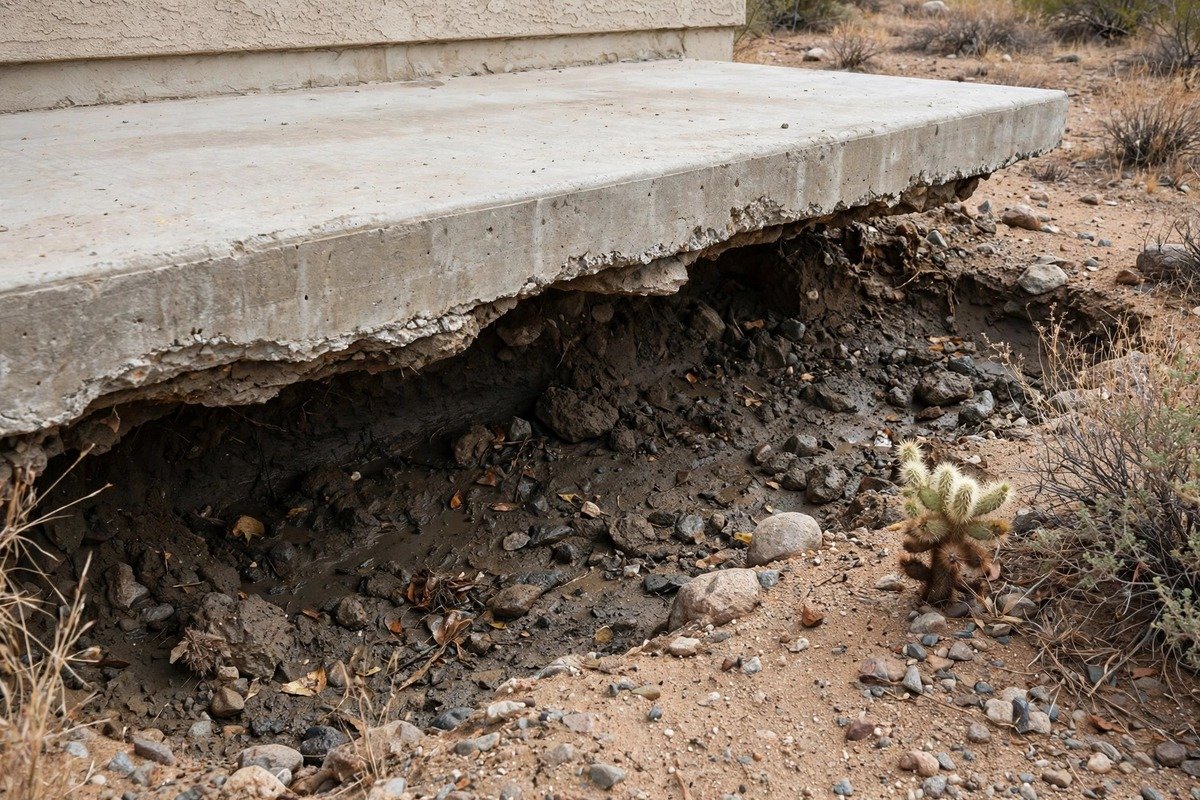
Monsoon harm leaves clear marks at the slab edge. After a heavy storm, walk the full base of your home. Look for these signs.
| Sign | What it may mean |
|---|---|
| Soil washed from the slab edge | Lost support under the concrete |
| New cracks in the slab edge or near walls | The slab has moved |
| Water stains on the slab face | Water stood at the base |
| Damp carpet or a musty smell inside | Water may sit under the slab |
| Warm spots on the floor | A hot water line may have burst |
| A jumping water bill | A hidden leak wastes water |
Pair the walk with a meter test. Turn off all water. Wait two hours. Read the meter. If it moved, call us.
How does monsoon harm differ from drought harm?
Drought pulls soil back slow over months. Monsoon washes it out in hours. Drought shows as shrink cracks. Monsoon shows as washed ruts and a slab edge with air under it.
How Do We Find Leaks After Monsoon Floods?
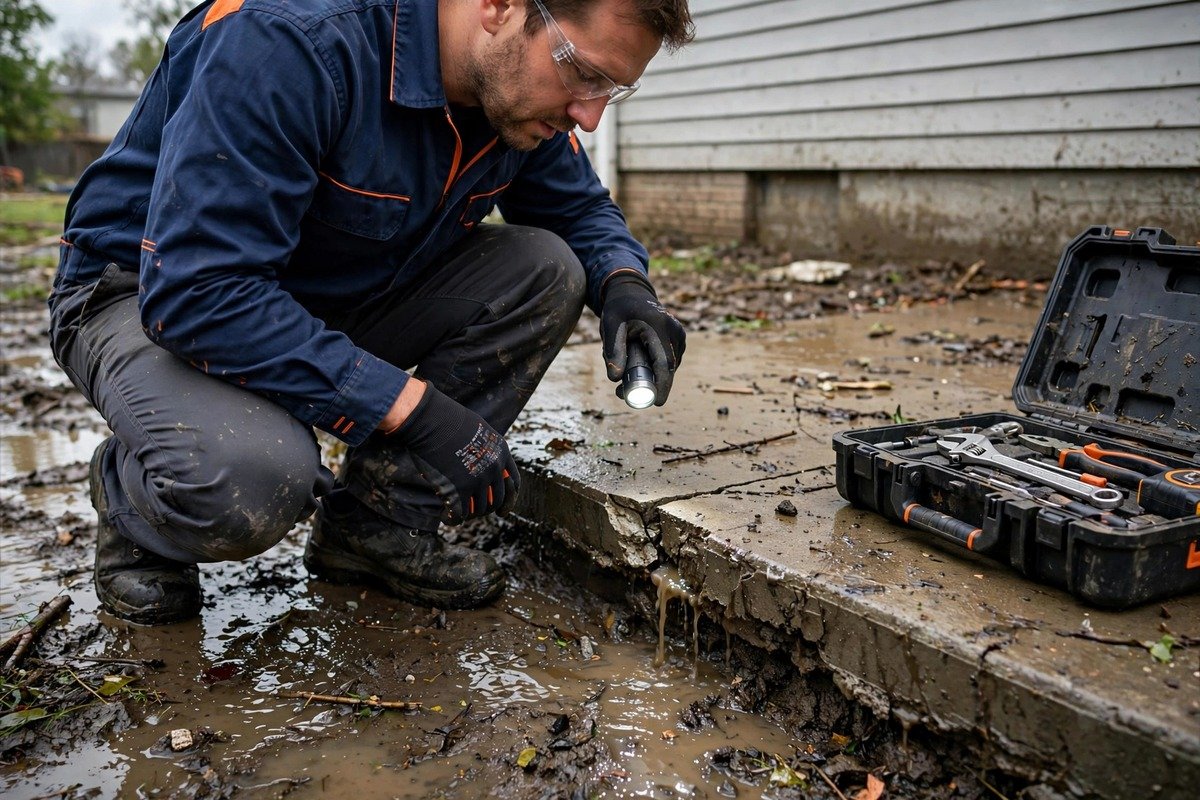
Our technicians serve Arizona, New Mexico, and all 50 states plus D.C. We answer 24/7 through monsoon season. We trace flood leaks with sound gear, pressure tests, and heat scans. The visit runs one to three hours. We narrow the leak spot to about one to three feet. A detection visit costs $150–$500 (national estimates as of 2026).
Your technician will also check how the storm moved your soil. Lost support under the slab shapes the fix. Compare all options and prices in our cost guide. Dry heat brings the flip side of this risk — see our summer drought guide.
Can you find a leak while the ground is still mud?
Yes. Our gear hears the leak itself, not the wet soil. Mud does not block us. There is no need to wait.
FAQs
How fast can one storm harm my slab?
One fierce downpour can wash out enough soil to bare a slab edge in hours. Most harm comes from a few of the worst storms, not from the full season of rain.
What should I do right after a flash flood?
Stay safe first and keep clear of fast water. Once it drains, walk the slab edge. Run the meter test. Take photos of washout or cracks. Then call for a check if anything looks wrong.
Does insurance pay for monsoon slab leaks?
It shifts by plan. Sudden storm harm is often paid, but the pipe fix often is not. Flood harm needs a separate flood policy. Check your plan or agent, and take photos.
Can good grades shield my slab from monsoons?
Yes. Soil that tilts away from the base sends storm water past the house. It is the best shield against washout and slab shift.
Are monsoon leaks worse at night?
Storms often hit late in the day, and harm can run unseen all night. A morning walk of the slab edge after each big storm catches what dark hid.
Will one bad season keep hurting my home for years?
It can. Washed soil does not grow back, and a tilted slab keeps straining pipes until fixed. After the next big storm, walk your slab edge and run the meter test. If anything looks wrong, call (833) 542-3027 — we are open 24/7.