
How Does Summer Drought Cause Slab Leaks?
Long dry spells pull water from the soil under your home. A summer drought slab leak starts when shrunken soil lets the slab sink and shift, forcing pipes to bend until a joint or worn spot breaks. Clay soil shrinks the most. Once it pulls back, pipes lose support and start to move.
This guide page belongs to our seasonal slab leak guide. Read on for the why, the when, and the warning signs.
Why Does Dry Soil Threaten Pipes Under Your Slab?
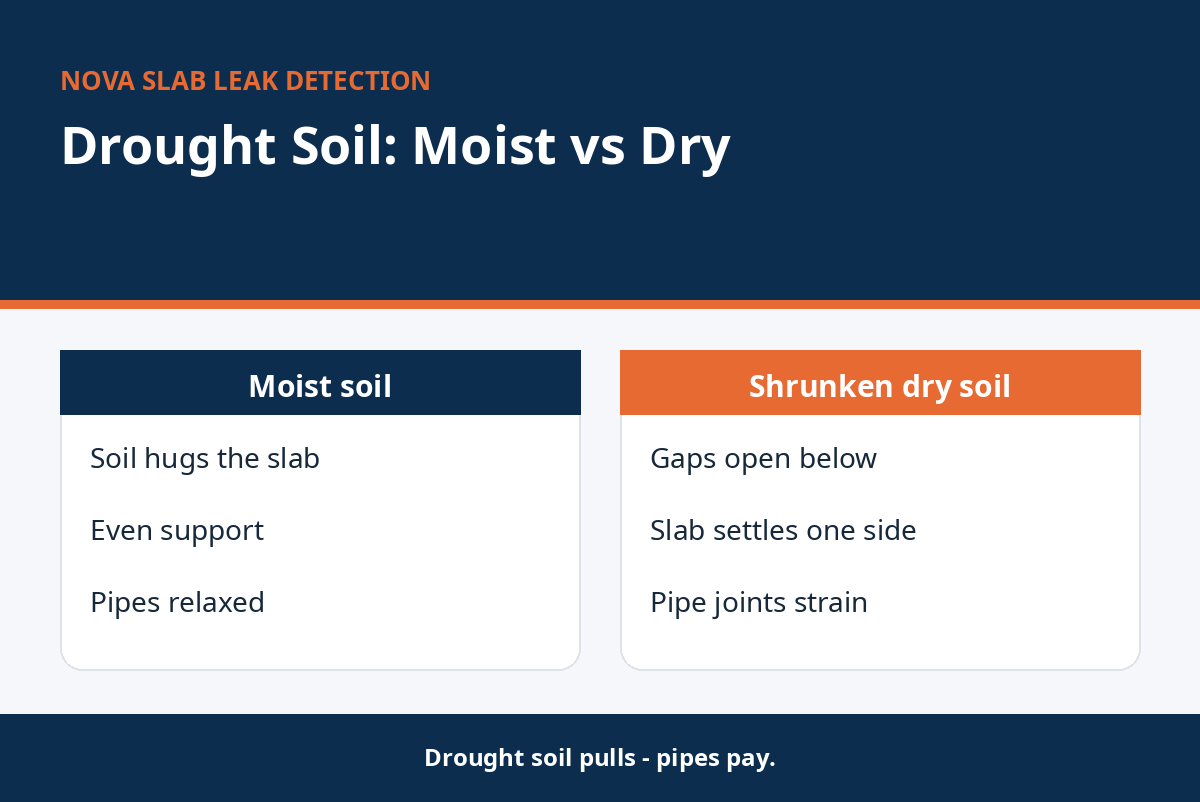
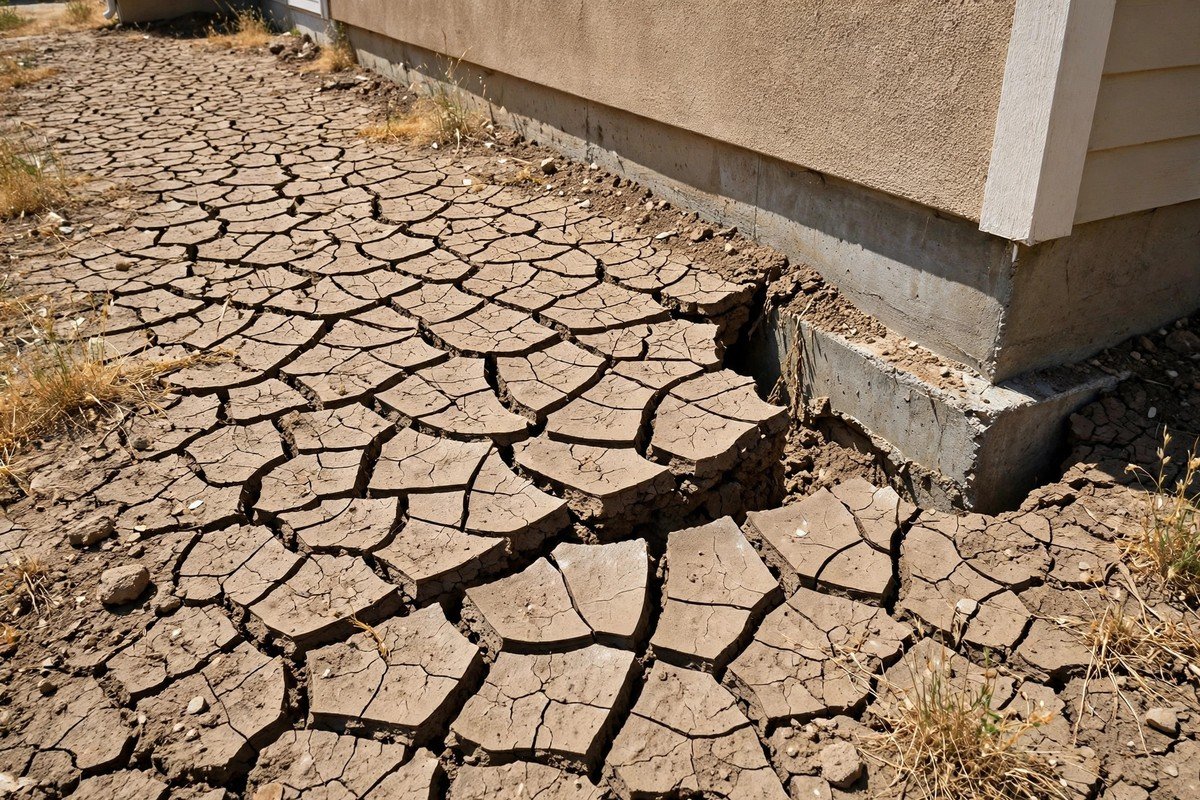
Clay soil swells when wet. It shrinks when dry. A long hot summer can pull inches of support out from under your slab. When one side sinks even a bit, pipes bend at the joints. Old pipes do not bend well. They crack or pull apart.
Tree roots make it worse. Thirsty trees drink from the soil near your slab. That soil dries first. If big trees stand close to your home, watch that side most.
Why does drought hurt older homes more?
Old pipes are thin from years of wear. They have less metal left to bend. A small shift that new pipe would take can crack old pipe.
When in Summer Is the Risk Highest?
Risk peaks late in the season. Early summer soil still holds spring water. By late summer the ground is at its driest. The slab has had months to sink.
Watch for these timing clues.
- After a heat wave — long hot spells dry soil fast.
- After weeks with no rain — the longer the dry spell, the deeper the shrink.
- When cracks pop up fast — new wall or floor cracks in late summer often trace back to soil shift.
Bills jump now too. The leak wastes water. Summer watering hides it. Check your bill next to the same month last year.
Does the risk end when rain comes back?
Not at once. Fast rain on shrunken soil swells it quick. That swell can crack a slab that just sank. The change back to wet can hit as hard as the drought.
Where Does Drought Hit Slab Homes Hardest?
Texas leads the risk list. Much of the state sits on clay that shrinks hard in drought. Arizona, Nevada, and California share the pattern. Hot summers. Long dry spells. Soils that move as they lose water.
Risk shifts even within a state. Homes on clay face far more shift than homes on sand. Homes with big trees near the base face faster local drying. Your county office can tell you your soil type if you are not sure.
Can drought hurt slab homes outside these states?
Yes. Any long dry spell can shrink clay soil. The four states above just get it most and worst.
Who Should Watch Most Closely in Drought?
Three groups should stay alert each dry summer.
- Owners of homes past 25 years — worn pipes bend the least.
- Homes with copper pipe under the slab — copper is stiff, and thin spots crack under strain.
- Homes with big trees near the base — roots dry the soil in patches, which tilts the slab.
If you fit any of these, a late-summer check is cheap cover. Our slab leak detection service finds hidden leaks before they grow.
How Can You Spot a Drought-Driven Slab Leak?
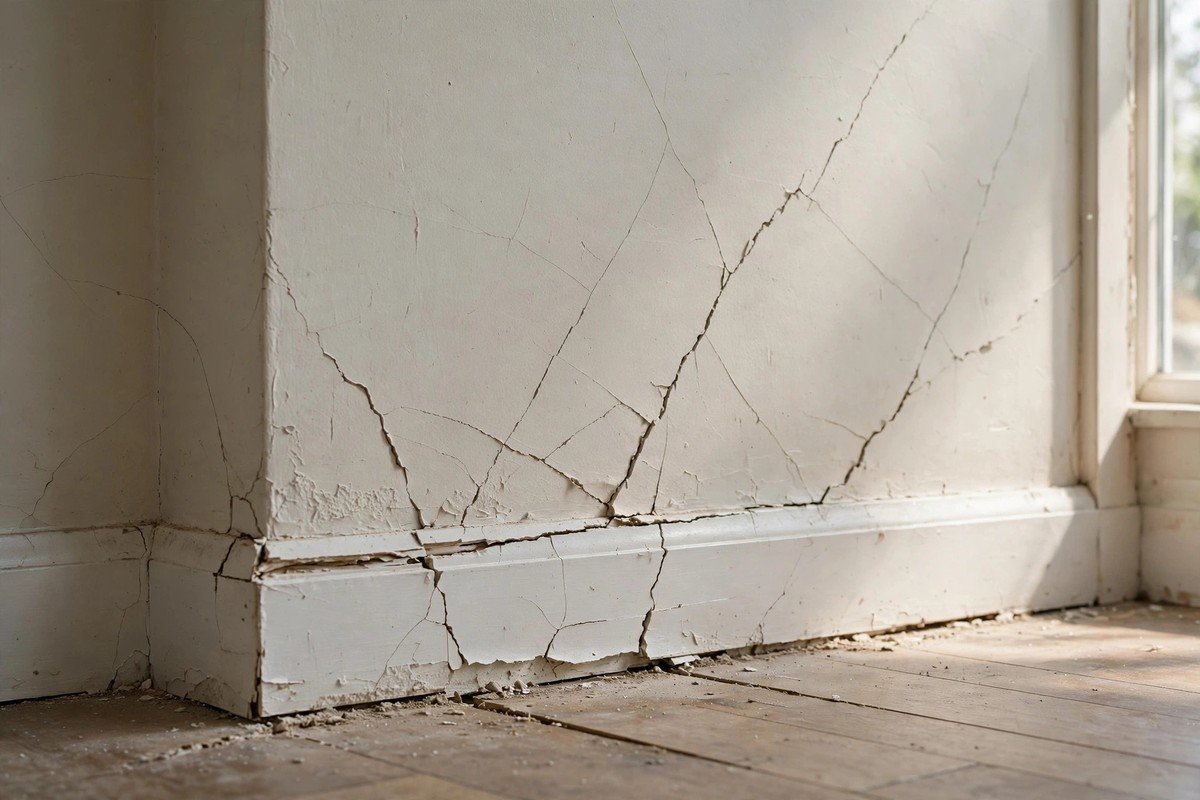
Drought leaks show the classic signs, often right after the soil moves. Walk your home and yard in late summer. Look for these.
- New cracks in walls, floors, or the slab edge that were not there in spring.
- Warm spots on the floor, which point to a hot water line leak.
- Damp carpet or a musty smell in one room.
- Running water sounds when all taps are off.
- A water bill that jumps with no change in use.
Pair what you see with a meter test. Turn off all water. Wait two hours. Read the meter again. If it moved, water is getting out.
Should renters watch for these signs too?
Yes. Renters can spot the signs and should tell the owner fast. Leaks grow while they hide. Early word saves all sides money.
How Do We Find a Leak Caused by Drought?

Our technicians trace drought leaks like any hidden leak. We use sound gear, pressure tests, and heat scans. The visit lasts one to three hours. We trace the leak to within about one to three feet. A detection visit runs $150–$500, national estimates as of 2026.
We also read the soil story. If drought moved your slab, your technician will say what that means for the fix. A spot repair fits sound pipe. If the whole run is worn and the soil keeps moving, a reroute may cost less over time. See all prices in our cost guide. Monsoon storms bring the flip side of this risk — read our monsoon season guide if you live in Arizona or New Mexico.
Can a drought leak seal itself when rain comes?
No. A cracked pipe stays cracked. Wet soil may slow the leak for a while. It never seals the break. Waiting only adds harm and cost.
FAQs
How do I tell drought cracks from a slab leak?
Drought alone cracks walls with no water signs. A leak adds damp spots, warm floors, running water sounds, or a bill jump. Both can show at once, so check for water signs with each new crack.
Will watering near my base stop slab leaks?
Even moisture can slow soil shrink, but it cannot fix a cracked pipe. Water the soil, not the slab, and keep it even. If a leak has started, only a repair stops it.
Are drought slab leaks paid by insurance?
At times the water harm is paid, but the pipe fix is often left out. Drought itself is rarely a named cause. Check your plan or agent, and take photos before you call.
How fast can drought crack a pipe?
It shifts. Some leaks follow one brutal summer. Others build over dry years as the slab sinks a bit more each season. Late summer is when most of them show.
Should I get a check each summer?
If your home is old, sits on clay, or has big trees near it, a yearly late-summer visit is smart. One visit costs far less than a leak that runs for months.
Does drought harm sewer lines too?
Yes. Shifting soil can crack sewer lines under the slab too, so slow drains or sewer smells after a dry summer earn a check. Walk your home this week and run the meter test. If anything looks off, call (833) 542-3027 — we are open 24/7.