
Why Does Heavy Rain Stress Pipes Under Your Slab?
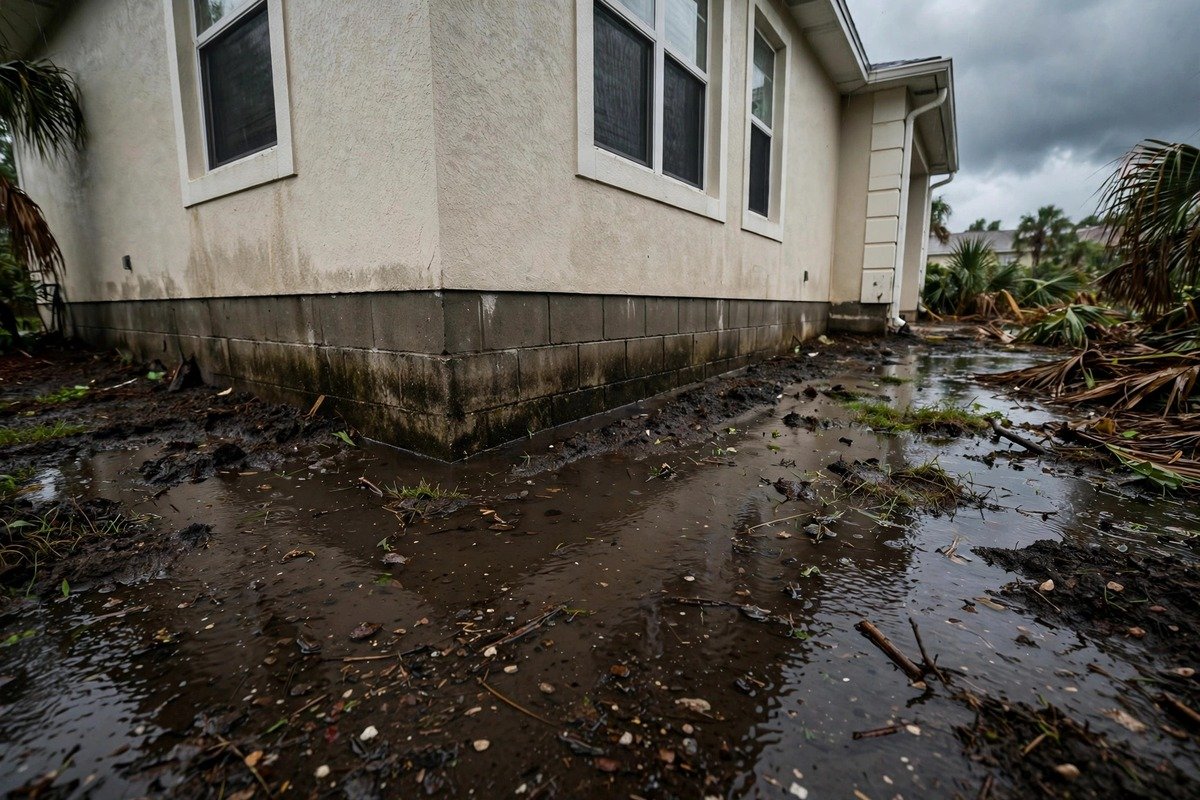
Weeks of rain soak the soil until it can hold no more. A hurricane season slab leak forms when swollen, soaked soil pushes and shifts under your slab, forcing buried pipes to bend until a joint or weak spot breaks. Ponded water adds weight at the base. Storm debris can also strike bare lines near the home.
You are reading part of our seasonal slab leak guide. Read on for storm checks and next steps.
What Three Forces Hit Your Pipes in a Storm?
Three forces work at once. First, soaked clay swells and lifts parts of the slab. Uneven lift bends pipes. Second, water piled at the base presses in from the sides. That push can shift lines where they enter the home.
Third, fast floods wash soil from slab edges in hours. A slab edge with no soil under it can tilt. Tilted slabs crack pipes.
Why is soaked soil worse than just wet soil?
Wet soil still drains. Soaked soil is full and heavy. It pushes out and up. That extra push moves slabs and strains pipes.
When Does Storm-Season Risk Peak?
Storm season runs June through November. The worst storms tend to hit in August, September, and October. But you do not need a named storm to face risk. Long rainy spells soak soil just as well.
The risk comes in three waves.
- During the storm — floods and debris can break lines outright.
- The weeks after — soil stays soaked long after rain stops, and swelling peaks then.
- The dry-down — as soaked soil dries at last, it can sink in patches and strain pipes again.
Should I check after each big storm?
Yes. Even a storm that misses your home can dump rain on your soil. A quick check after each heavy rain is the safe habit.
Where Does Storm Season Hit Slab Homes Hardest?
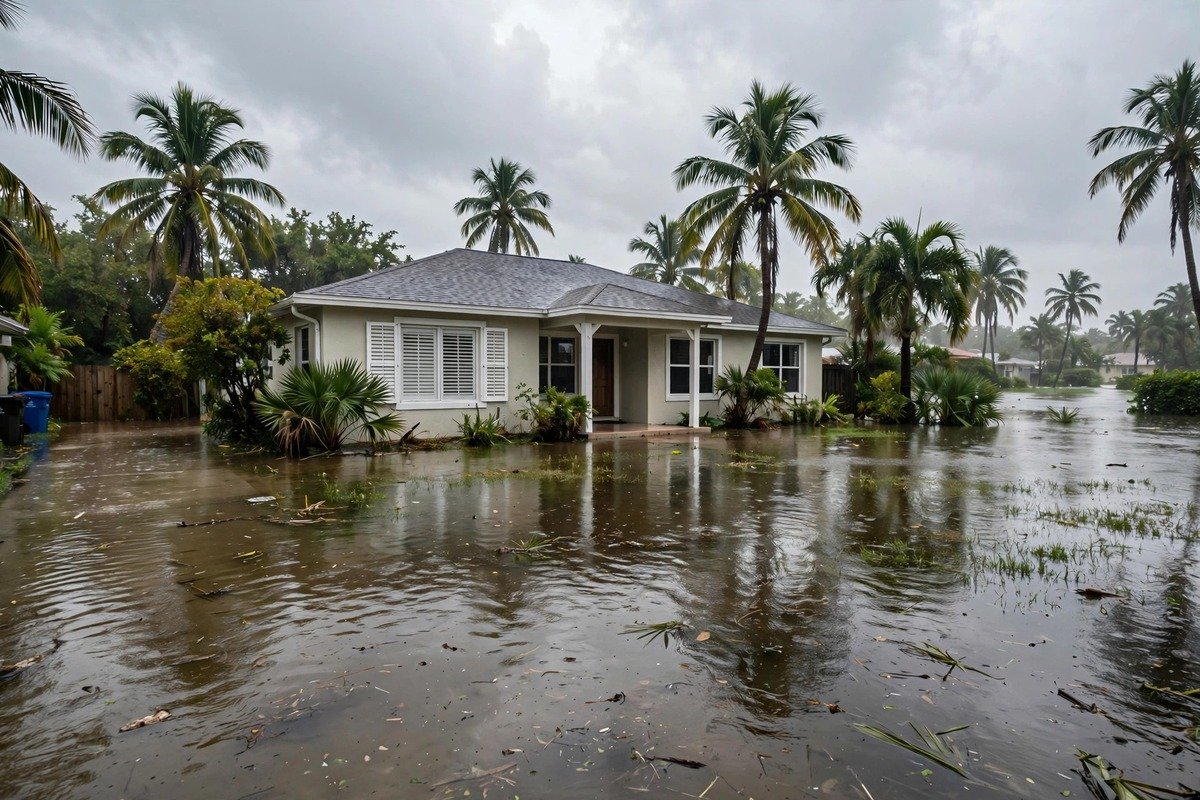
Florida faces the most storm-season risk. The season is long. Flat land holds water. The Gulf Coast and Louisiana share the pattern. Heavy seasonal rain. High water tables. Soils that swell when soaked.
Low homes face more risk. Water runs to the low point. Homes at the base of a slope stay soaked longest. Homes with poor drains soak fast too. Gutters that dump at the base and yards that tilt toward the house both feed the problem.
Do inland homes face storm-season leaks?
Yes. Storm systems push far inland with heavy rain. Soaked soil does not care how far you are from the coast.
Who Should Watch Most Closely During Storm Season?
Four groups should check first after heavy rain.
- Owners of older homes — worn pipes and joints give way first.
- Homes in low or flood-prone spots — standing water adds push.
- Homes with past slab leaks — old fix spots and aging runs break first.
- Homes with poor drains — short spouts and flat grades keep water at the base.
If a storm just passed and you fit one of these, run the checks below this week.
How Can You Check Your Home After a Storm?
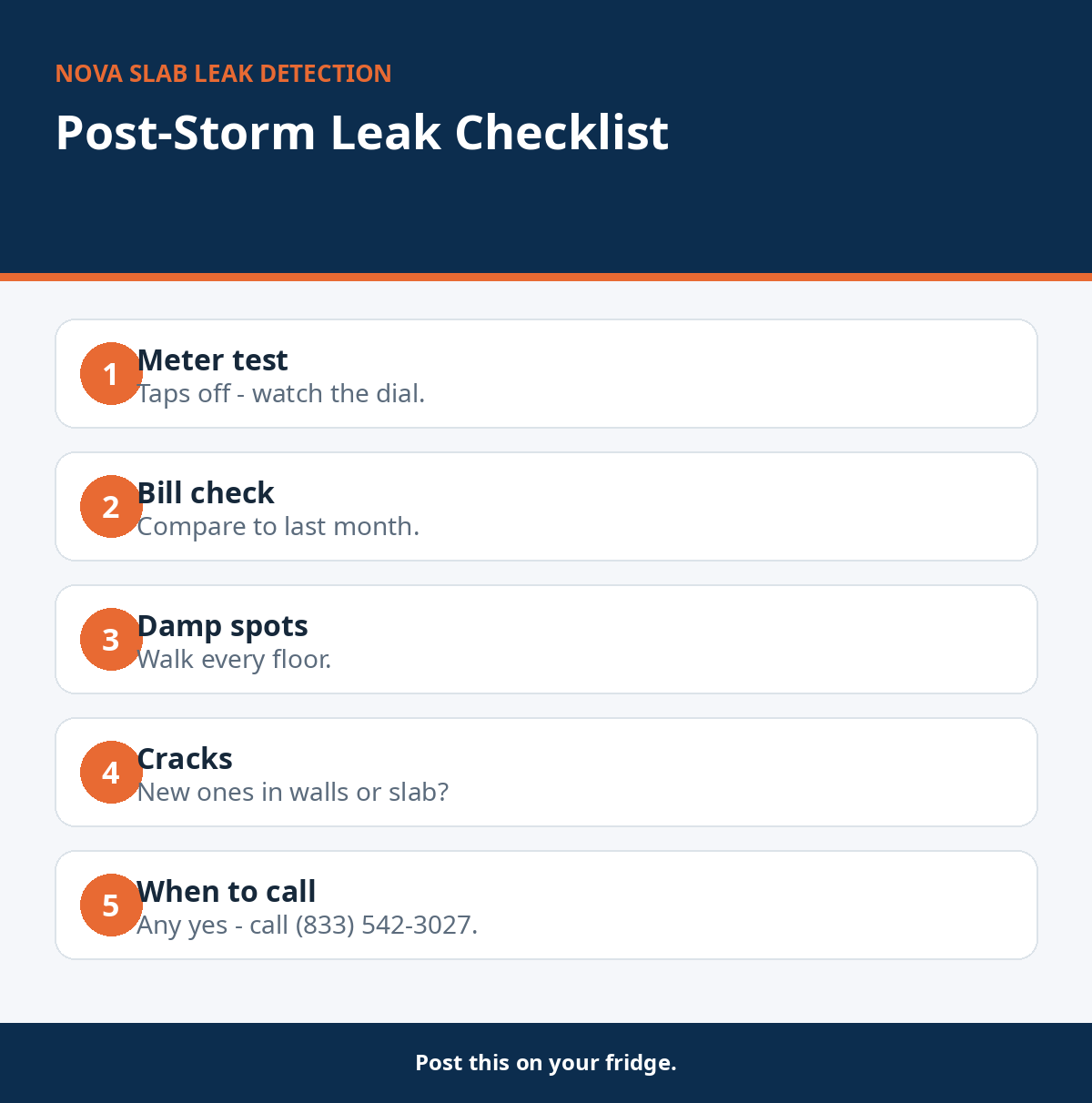
Once the water drains and it is safe to walk out, run this check.
- Read your water meter. Turn off all water. Wait two hours. Read it again. If it moved, you have a leak.
- Check your water bill. A jump with no change in use is a classic sign.
- Walk the floors. Feel for warm spots, damp areas, and new cracks.
- Sniff for must. A damp, earthy smell in one room points to water under the slab.
- Listen at night. Water sounds with all taps off mean water is moving.
- Look at the slab edge. New cracks or washed-out soil need a closer look.
If any check fails, call us before the next rain. A small leak found now beats a big one found in fall.
What if my bill jumps but I see no damp spots?
That is common. Most slab leaks hide at first. Lost water is the only sign. A meter test and a detection visit find what eyes miss.
How Do We Check Your Home After a Storm?
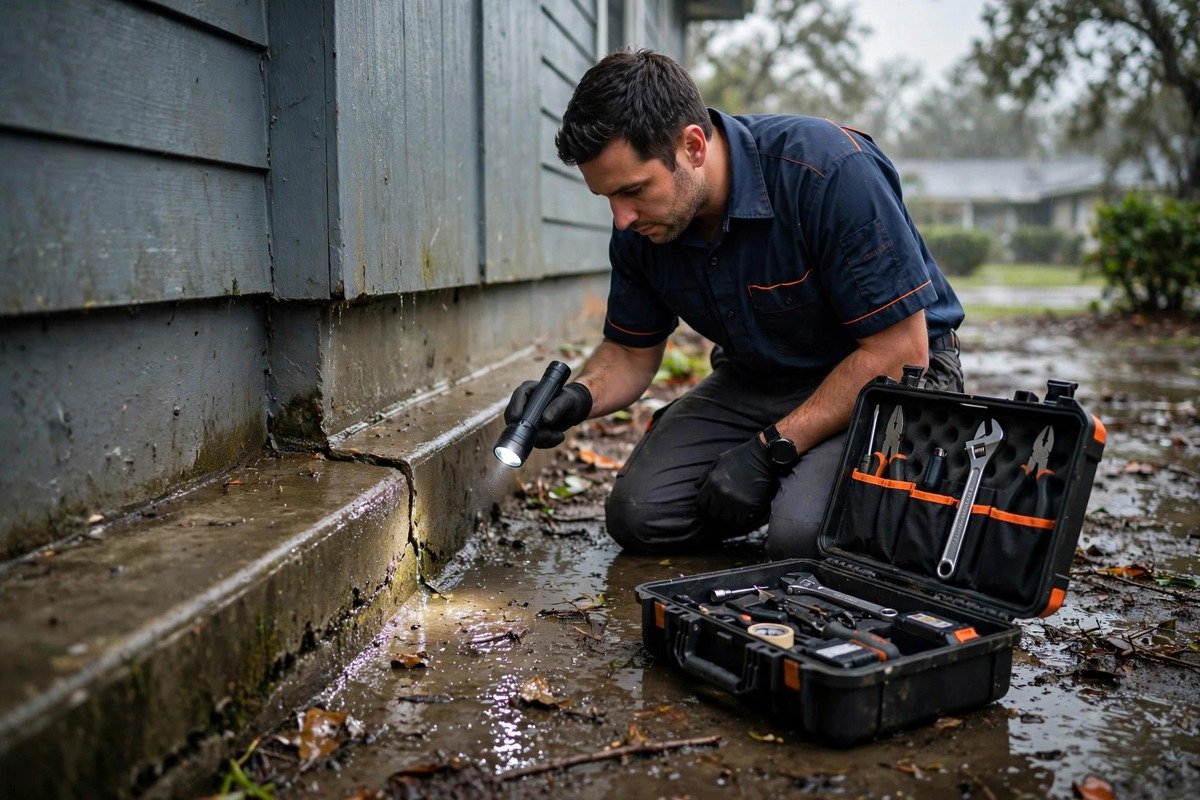
Our technicians come to you in Florida, the Gulf states, Louisiana, and all 50 states plus D.C. We trace storm leaks with sound gear, pressure tests, and heat scans. Plan on one to three hours for the visit. We pin the leak down to about one to three feet. Detection is priced at $150–$500 as national estimates as of 2026.
Your technician will also say if the storm moved your soil. That shapes the fix choice. See all options and prices in our cost guide. You can reach us by phone any time. For the flip side of storm risk, see our monsoon season guide.
Can you find a leak if the yard is still wet?
Yes. Our gear hears the leak itself, not the damp ground. Wet yards do not block us. Do not wait for things to dry out.
FAQs
How soon after a storm should I check for a slab leak?
As soon as it is safe and water is back on. Run the meter test first. Soil stays soaked for weeks, so early checks catch leaks before harm spreads.
Can floodwater cause a slab leak on its own?
Yes. Standing water presses on the base and washes soil from slab edges. Even with no wind harm, a flooded yard can set up a leak.
Does home insurance pay for storm slab leaks?
It shifts by plan. Sudden storm harm is often paid, while slow leaks and the pipe fix often are not. Flood harm needs its own flood plan. Check your plan or agent.
Should I shut off water if I leave for a storm?
If you leave town for a big storm, shutting the main valve is smart. It stops a leak from running for days. Show each adult where the valve sits.
Can storm debris break a slab pipe?
Debris tends to hit bare lines near the home, not pipes under the slab. But a hard hit near the base can shift soil and strain the buried line where it enters.
Do I need a check if my home took no harm?
Yes, if the rains were heavy — many storm leaks come from soil swell alone, with no mark on the home. If your meter moves or your bill jumps, call (833) 542-3027. We are open 24/7.