
Why Does Crestline Get Slab Leaks?
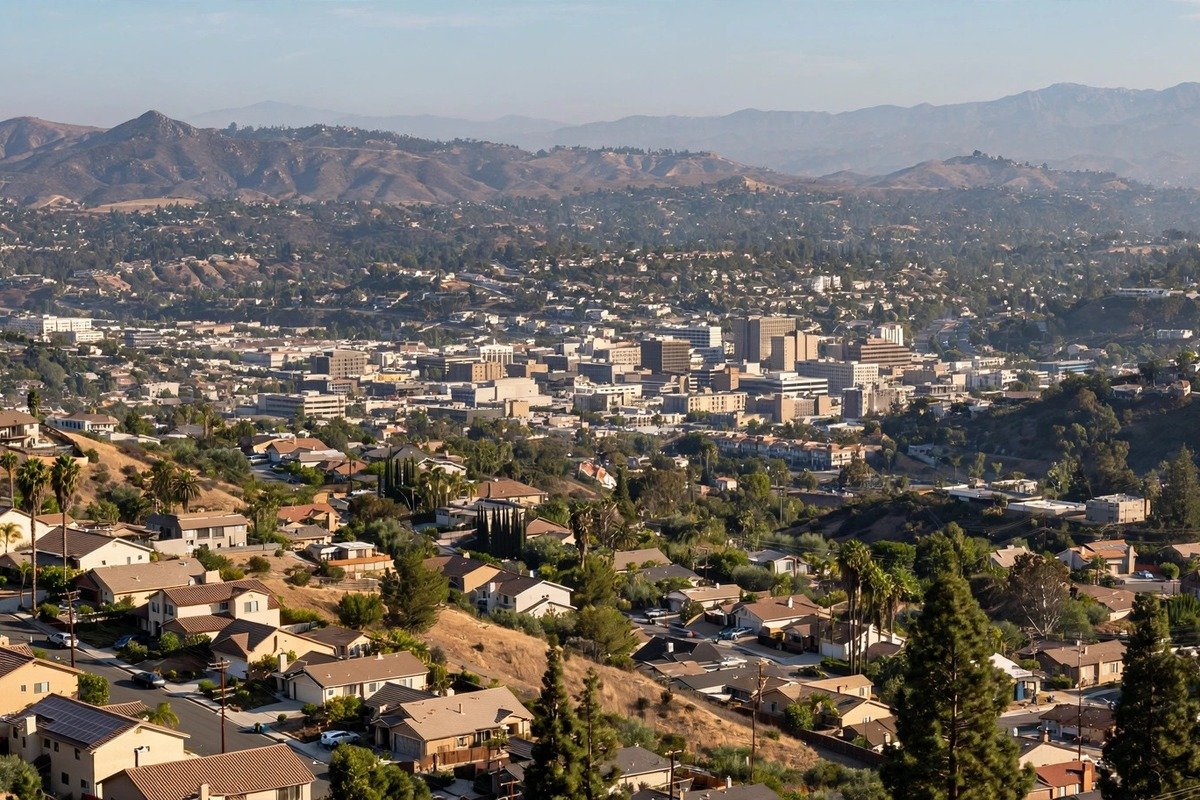
Crestline is a mountain community in the San Bernardino Mountains. Lake Gregory sits at its heart. Winters bring snow, ice, and long freezing spells. Homes run from old cabins to newer builds. Our technicians serve Crestline, California homeowners with acoustic, thermal, and tracer gas tools. We mark the break point for a small fix.
A slab leak is a cracked water line under the concrete floor. Many Crestline homes run supply lines through the slab. A break lets water soak the earth below. It can heave floors, rot framing, and grow mold in walls. A fast check guards your mountain home.
What Breaks Pipes Under Crestline Slabs?

Long freezes are the top driver. Crestline winters last for months. Night after night falls below freezing. Water in pipes swells as it freezes. That force can split copper walls and pop joints. Spring thaw shifts the ground once more.
Old housing is the second driver. Cabins and homes built decades back still stand across the community. Their pipes run thin from years of freeze stress. One harsh winter can end a line that held for years. Age and cold make a hard pair.
Mountain soil is the third cause. The ground here runs rocky and rough. Frost heave lifts soil in winter, and thaw drops it back in spring. That shift bends buried pipes. Joints loosen first. A loose joint leaks when water pressure returns.
Q: How long can freeze season last here? A: Months — Nightly freezes run all winter long. That is a long spell of stress on every buried line.
Q: Do newer homes still risk leaks? A: Less so, but yes — Bad pipe work or one deep freeze can break newer lines too.
Q: What is frost heave? A: Frozen ground swells and lifts. Thaw drops it back down. That up-and-down bends pipes.
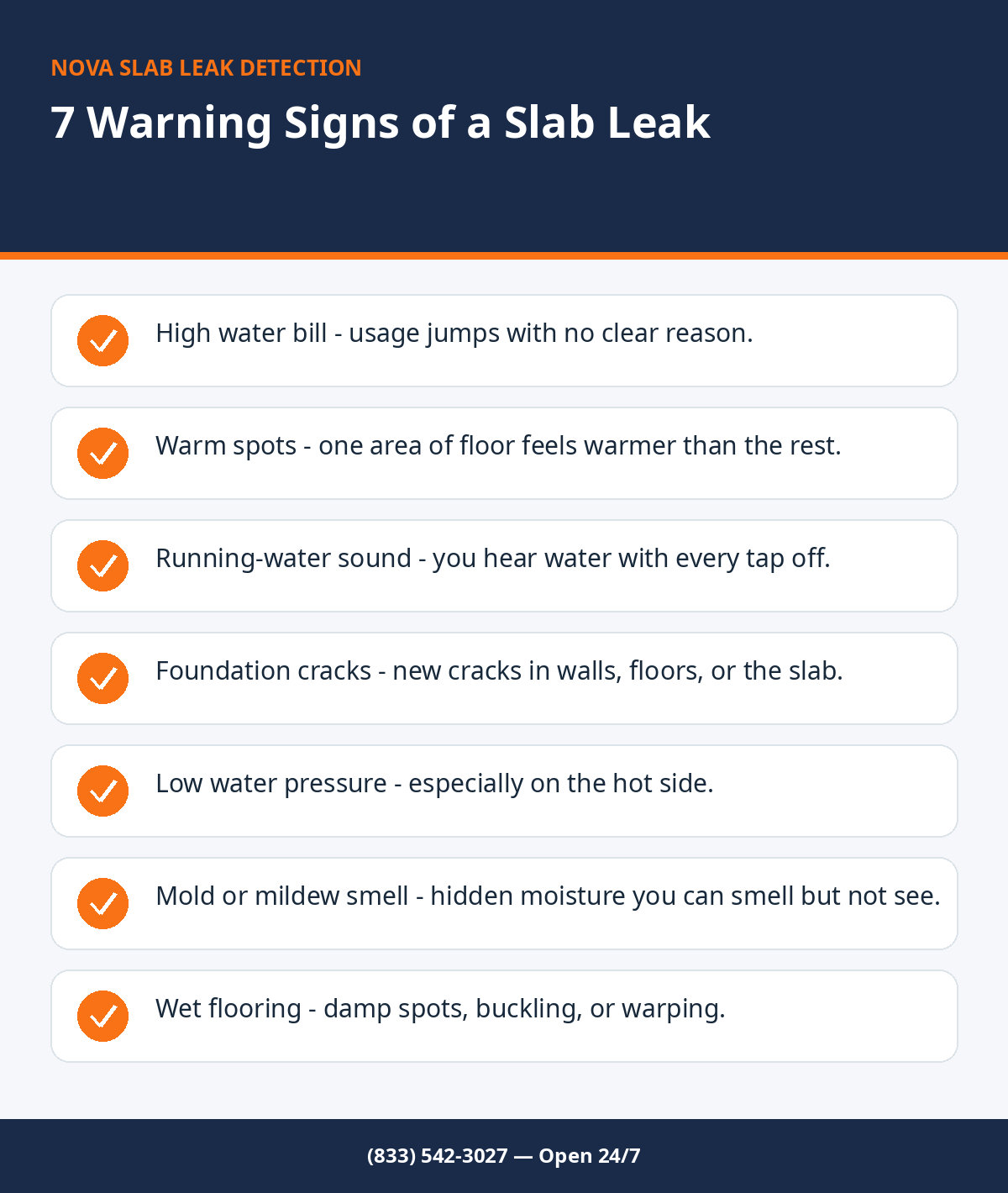
See the warning signs of a slab leak for your mountain home.
What Are the Warning Signs in Crestline?
Warm floor spots are a key sign. A hot line leaking under the slab heats the concrete. Walk barefoot on tile or wood. A warm patch that stands out deserves a check.
Water bills catch slow leaks. A high water bill with normal use shows lost water. Mountain homes left empty in winter can leak for months, so check bills even from far off.
Watch for damp and odor. Water under the slab seeps into walls and floors. A musty smell in a shut home often means trapped damp. Stained concrete or warped boards show up later. Early action keeps the fix small.
How Do Our Technicians Spot a Leak in Crestline?
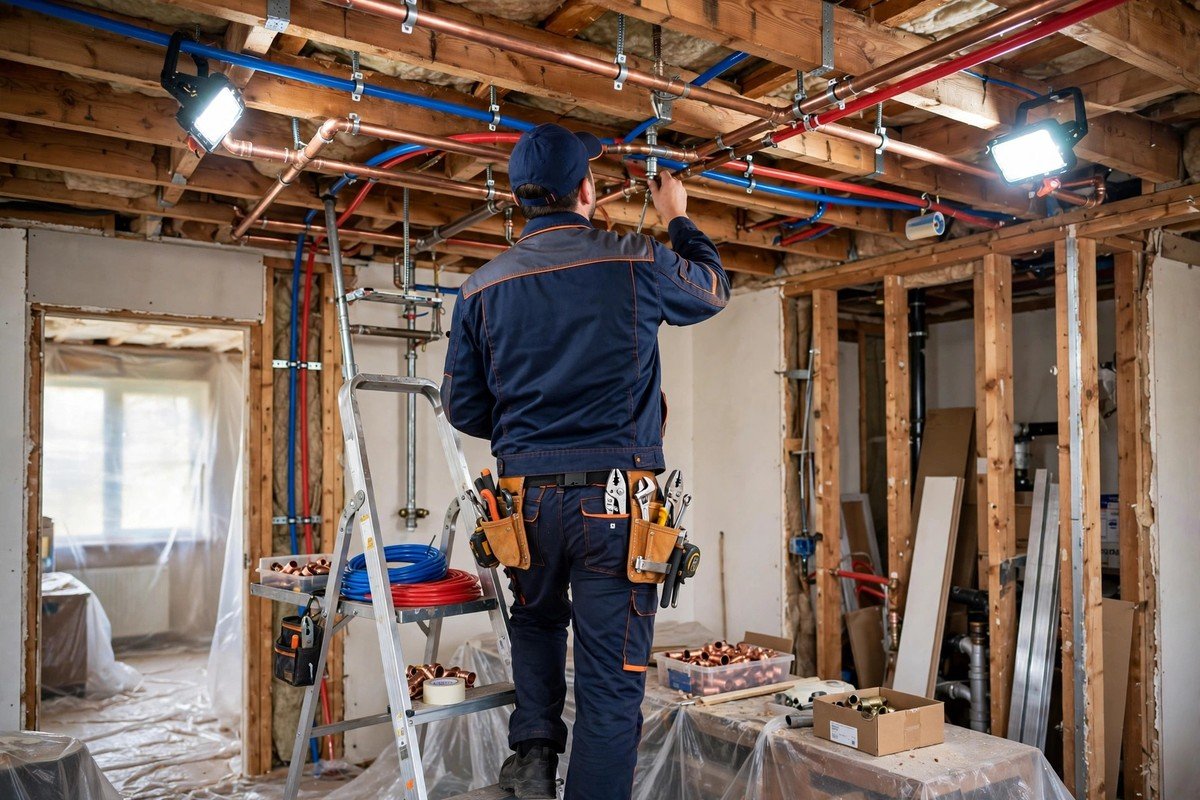
Your technician starts at the meter or tank. Fixtures go off house-wide. If the gauge still moves, water is leaking out. We split hot and cold lines for the next tests.
Sound comes next. Floor sensors hear the hiss of water under the slab, and we close in where the sound peaks. A thermal camera sweeps hot lines after that. The leak shows as a warm shape on screen.
Cold lines get tracer gas. We drain the line and add the safe gas. It slips out at the break and rises through the concrete, and our sniffer tracks it from above. We chalk the spot within one to three feet of the true break.
Plan for one to three hours. We work with your home’s layout. You get a clear mark and a fix plan. Read up on thermal imaging leak detection on our site.
What Will Slab Leak Repair Cost in Crestline?
Start with the low-cost step: detection. It goes $150 to $500 on national estimates as of 2026, with hard cases near $600. Then the fix:
- Spot repair, $1,500 to $4,500: one section mended through a small floor cut.
- Reroute, $3,500 to $7,000: new pipe through walls or attic, out of the cold ground.
- Tunneling, $3,500 to $8,000: dug under the slab from outside.
- Epoxy lining, $3,000 to $6,000: sealed from the inside.
- Whole-home repipe, $4,500 to $15,000: old lines swapped out for good.
Q: Which fix beats mountain winters? A: A reroute through heated space is the best pick. Pipes stay warm and out of the frozen slab.
Q: Can you work here in winter? A: Yes — We serve Crestline all year and book with mountain weather in mind.
Our cost guide lays out each choice.
Which Crestline Areas Do We Serve?
We serve all of Crestline. Homes by Lake Gregory are in our reach. We drive the streets on Highway 18 and Highway 138. The Valley of Enchantment side gets the same care. Each home in the 92325 ZIP is in our service area.
FAQs
Should I drain my pipes for winter?
For empty homes, yes — but slab lines will not drain fully, so a fall check finds weak lines first.
Can a leak freeze and hide?
A leak keeps flowing, so it rarely freezes shut. It keeps harming the slab all winter.
Do you come up in snow season?
Yes — We serve Crestline in all seasons and plan with road conditions in mind.
Is freeze damage covered by insurance?
It varies. Some plans pay for a sudden break, not for worn pipes. Read your plan.
Why is one floor spot warm?
A hot line leaking under the slab is the usual cause. Our thermal camera proves it in minutes.
How do I stop the next leak?
Keep heat on low in winter and wrap bare lines. A reroute out of the slab gives the most lasting fix.
Areas and ZIP Codes We Serve in Crestline
We serve all of Crestline, California, in ZIP code 92325. That spans the Lake Gregory area, the Highway 18 and 138 corridors, the Valley of Enchantment side, and each mountain street in the community.
A warm patch or a rising bill needs a quick check. Call Nova Slab Leak Detection at (833) 542-3027 any time, day or night. Our own technicians do the work. Read up on slab leak repair and acoustic leak detection. Or browse our California coverage.