
Warm Spots on Floor Slab Leak: What They Mean & What to Do
One patch of floor feels warm for no reason. We find the leak under it fast.
Warm Spots on Floor: Quick Answers
The short version of this guide to warm spots on floor:
- Why Does a Slab Leak Make the Floor Warm? Hot water lines run under your slab. They feed showers and sinks. When one cracks, hot water pools on concrete.
- When Should You Test a Warm Spot? Test it the day you notice it. Walk the area barefoot morning and night.
- Where Do Warm Spots Show Up Most? They show most on tile, stone, and laminate. These pass heat well. You feel the change fast.
Keep reading for the full guide to warm spots on floor.
Why Does a Slab Leak Make the Floor Warm?
Hot water lines run under your slab. They feed showers and sinks. When one cracks, hot water pools on concrete. Heat rises through the floor above. That steady warmth underfoot marks a warm spots on floor slab leak case. The spot stays warm with heat off. It does not cool overnight.
When Should You Test a Warm Spot?
Test it the day you notice it. Walk the area barefoot morning and night. Note if warmth fades or holds. A spot warm for days needs a closer look. Do not wait for more damage first.
Can sunlight cause a false alarm? Yes. Sun through glass warms one patch. Check at night or on gray days. True leak warmth ignores weather.
Where Do Warm Spots Show Up Most?
They show most on tile, stone, and laminate. These pass heat well. You feel the change fast. Carpet hides warmth instead. Leaks under carpet stay secret longer. Spots often sit near baths and kitchens. Hot lines run there. Wood may cup near the warm zone.
What Does Warm Spots on Floor Slab Leak Mean for Your Pipes?
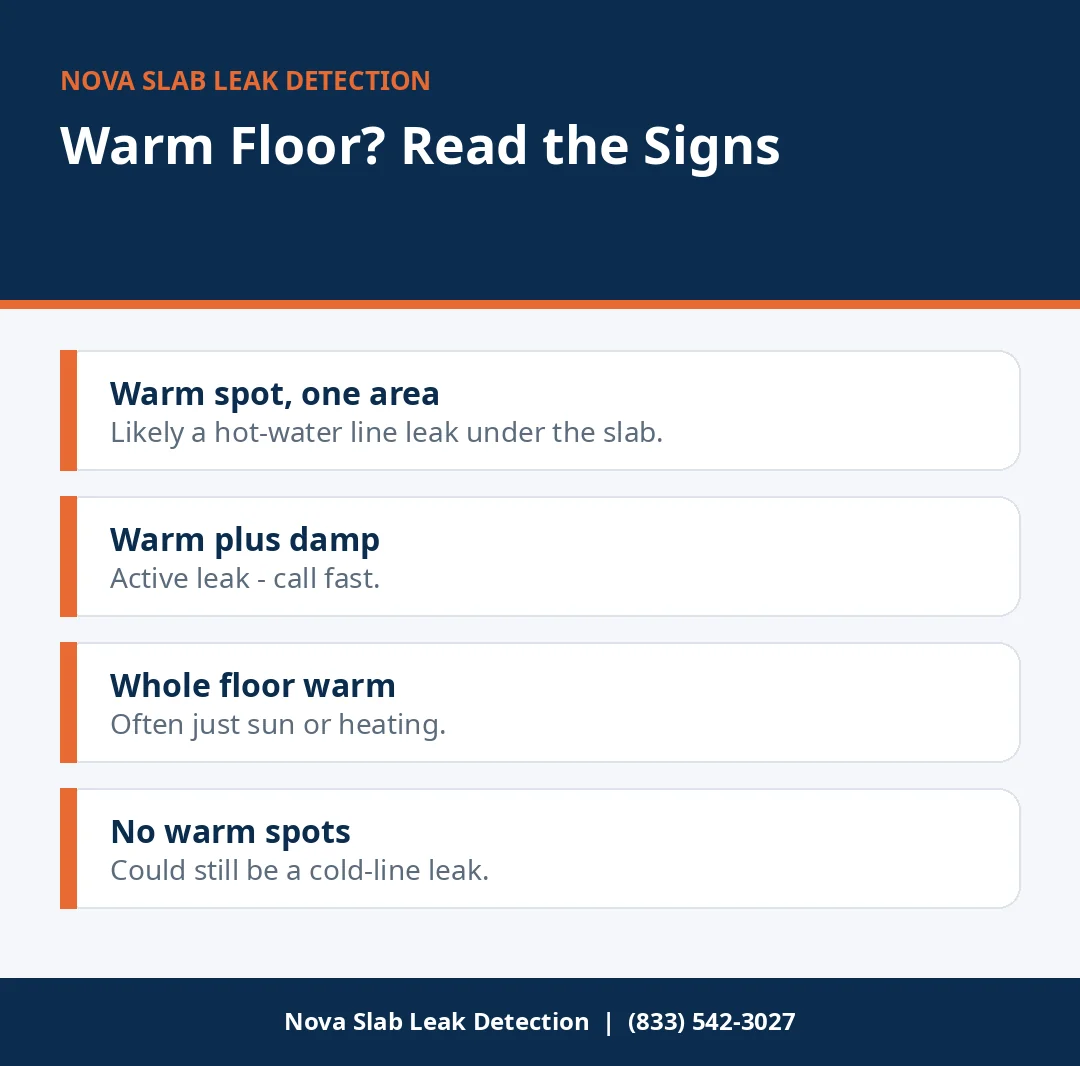
It means a hot water line leaks under pressure. Hot lines fail more than cold in many homes. Heat expands pipe and stresses joints. Hard water wears copper from inside too. The result is a pinhole that grows.
Is the leak always right below the spot? Close, but not exact. Heat spreads through concrete. Our gear narrows it to about 1 to 3 feet.
How Can You Check at Home?
Do this simple check tonight:
- Turn off your water heater for two hours. Use no hot water.
- Walk the suspect area barefoot after.
- If still warm, the heat is not from use.
- Mark the warm zone edges with tape.
- Note the size. Growth means active leak.
This test is not proof. But it is strong evidence. It also helps our techs on arrival.
How Do We Confirm a Warm Spot Is a Leak?
Our techs bring thermal cameras and listening gear. The camera maps heat in seconds. The gear hears water under concrete. Together they pinpoint the break fast. Most visits take 1 to 3 hours. Our slab leak detection finds the source without guesswork.
Will you tear up my whole floor? No. We open one small area over the leak. Most jobs need a single neat cut.
What Other Signs Come With Warm Spots?
Listen for running water with taps off. Watch your water bill for sudden spikes. Check carpet edges near the warm zone. Your heater may run more often. One sign is a hint. Two or more point to a leak. See all slab leak warning signs.
What Does a Warm Spot Leak Repair Cost in 2026?
We quote each job on site after detection. These are national estimates as of 2026:
| Service | Typical range |
|---|---|
| Leak detection visit | $150–$500 (up to ~$600 for complex homes) |
| Spot repair | $1,500–$4,500 |
| Reroute | $3,500–$7,000 |
| Epoxy lining | $3,000–$6,000 |
| Whole-home repipe | $4,500–$15,000 |
One hot-line leak is often a spot fix or reroute. We explain each choice plainly.
Who Fixes Warm-Spot Leaks?
We do. Our team handles hot-line leaks weekly. Call (833) 542-3027 any time. We answer 24/7. You talk to a real person. We set your visit fast. If anything is not right after the repair, call us back. We will make it right. That is our guarantee.
Should I turn off the heater while I wait? You can set it to pilot or vacation mode. That slows the leak. It also saves energy.

Can Warm Spots Ruin Your Floor?
Yes, given time. Heat and damp loosen tile glue. Laminate swells at the seams. Grout cracks and stains. Wood cups and warps. Harm grows while the leak runs.
Which floors suffer most? Laminate and wood suffer most. They drink moisture fast. Tile bears up best, but grout still fails.
Act early and you may save the floor. Wait long and you pay for floors too. Quick fixes guard more than pipes. Snap photos of the warm zone now. They aid any claim later. They show our techs change over time.
How Do You Prevent the Next Hot-Line Leak?
You cannot stop each leak. But you can cut risk. Keep heater temps near 120 degrees. High heat stresses pipes more. Soften very hard water if you have it. Fix small plumbing issues early. Care now beats crisis later. Walk your home barefoot each season. Feel for new warm patches. Early finds save big money. Keep our number saved in your phone.
Warm Spots on Floor: Frequently Asked Questions
Homeowners often ask us these questions about warm spots on floor. Each answer is short, and the full detail on warm spots on floor is in the sections above.
Related Slab Leak Problems
More guides related to warm spots on floor:
- Water Meter Test: Your water meter can reveal a hidden leak in 10 minutes. Here’s the simple test our techs trust.
- Will Slab Leak Fix Itself: Short answer: no. Here’s the honest breakdown of why waiting always costs more.
- Can You Shower with Slab Leak: Showering is often fine short term. Here’s when to stop and what to do.
- All slab leak problems: Every warning sign, cause and risk in one place.
- Slab Leak Detection: How we find a leak under concrete without breaking it.
The EPA estimates the average household’s leaks can waste more than 9,300 gallons of water a year (EPA WaterSense), which is why warm spots on floor is worth acting on early.
Warm Spots on Floor: Talk to Nova Today
Call any time, day or night. Tell us your ZIP code and what you are noticing, and we will book your visit. Mention warm spots on floor when you call so we bring the right equipment.