
Why Does Lucerne Valley Get Slab Leaks?
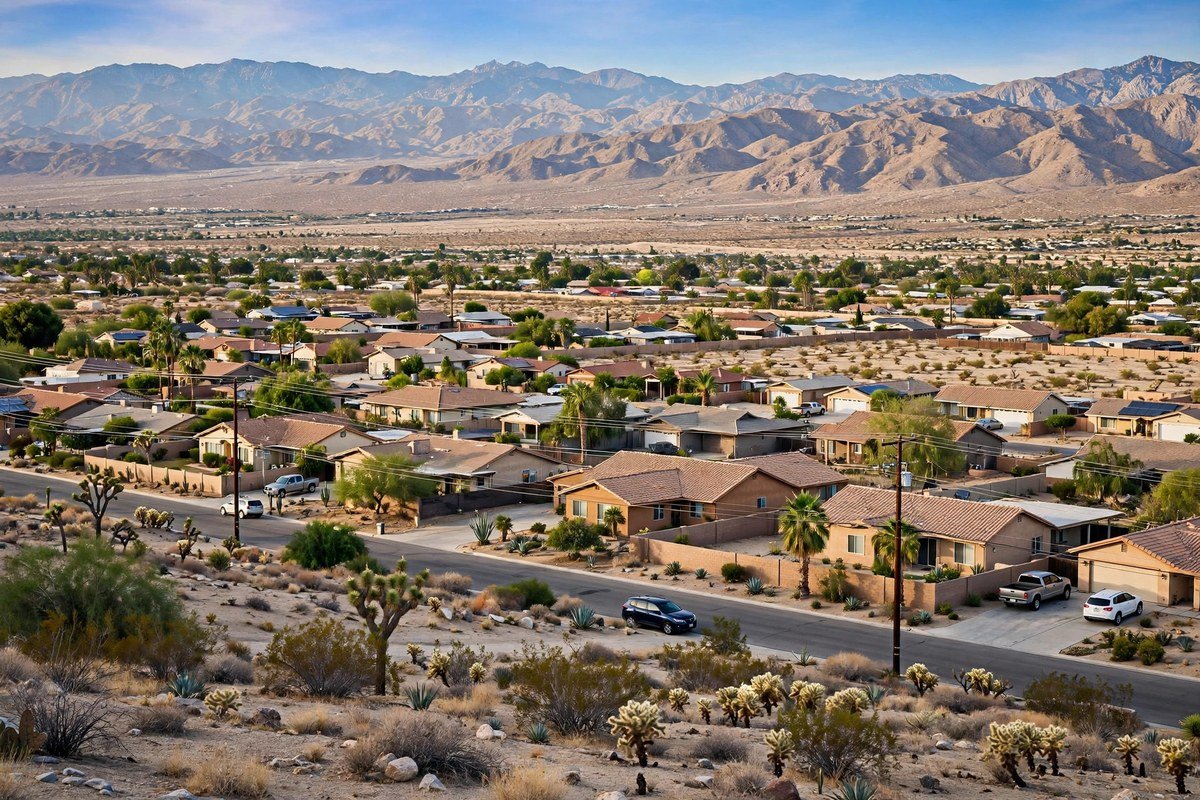
Lucerne Valley is a rural desert valley in the High Desert, a wide open basin of homes, ranches, and small farms. Homes here are spread out, many on well water. Summers blaze with heat, and winters bring cold nights. Our technicians do slab leak detection Lucerne Valley, California folks trust, with sound, heat, and gas tools. We mark the break site within a few feet.
A slab leak is a broken pipe under your concrete floor. Lucerne Valley homes run supply lines through the slab. A break lets water soak the dry desert earth below. It can crack the slab, warp floors, and waste precious well water. A fast check keeps a small break from getting worse.
What Breaks Pipes in Lucerne Valley?
Hard well water is the top root. Valley wells pull hard water. Scale coats copper pipes from the inside. It traps heat and thins pipe walls. Thin walls get pinholes. Rural well systems see this pattern often.
Extreme desert heat is the second root. Summer temperatures bake the valley floor for months. The ground dries and shrinks. Parched soil shrinks away from the slab edge. The concrete loses support and cracks. Cracks let pipes shift and joints loosen.
Temperature swings are the third factor. Scorching days swing to cold nights in winter. The soil expands and shrinks with each cycle. That motion bends buried pipes. Joints take the worst of it year after year.
Q: Does well water damage pipes faster? A: It can. Heavy minerals form scale in copper. Scale traps heat and thins walls. Pinholes follow.
Q: Can desert heat crack a slab? A: Yes. Baked soil shrinks away from the slab. Unsupported concrete cracks and shifts.
Q: Do hot-cold swings hurt pipes? A: Yes. Soil that swells and shrinks bends buried lines, and joints fail first.
See the warning signs of a slab leak for rural desert homes.
What Are the Warning Signs in Lucerne Valley?
Warm floor patches are a clear sign. A hot water line leak under the slab heats the concrete. Walk barefoot across tile. A warm spot that stands out calls for a check.
Watch your well system. A pump that cycles more often with normal use means water leaks. On metered water, a high water bill signals a hidden leak. Either trend tells the tale.
Hear and look. A hiss under the floor with all fixtures off means water is moving somewhere hidden. Damp baseboards, musty odors, or loosening tile are more clues. Any of these signs means a call is due.
How Do Our Technicians Pinpoint a Valley Leak?
Your technician begins at the meter or well pressure tank. We turn all water off. A meter that still moves proves a leak. Hot and cold lines are tested one by one.
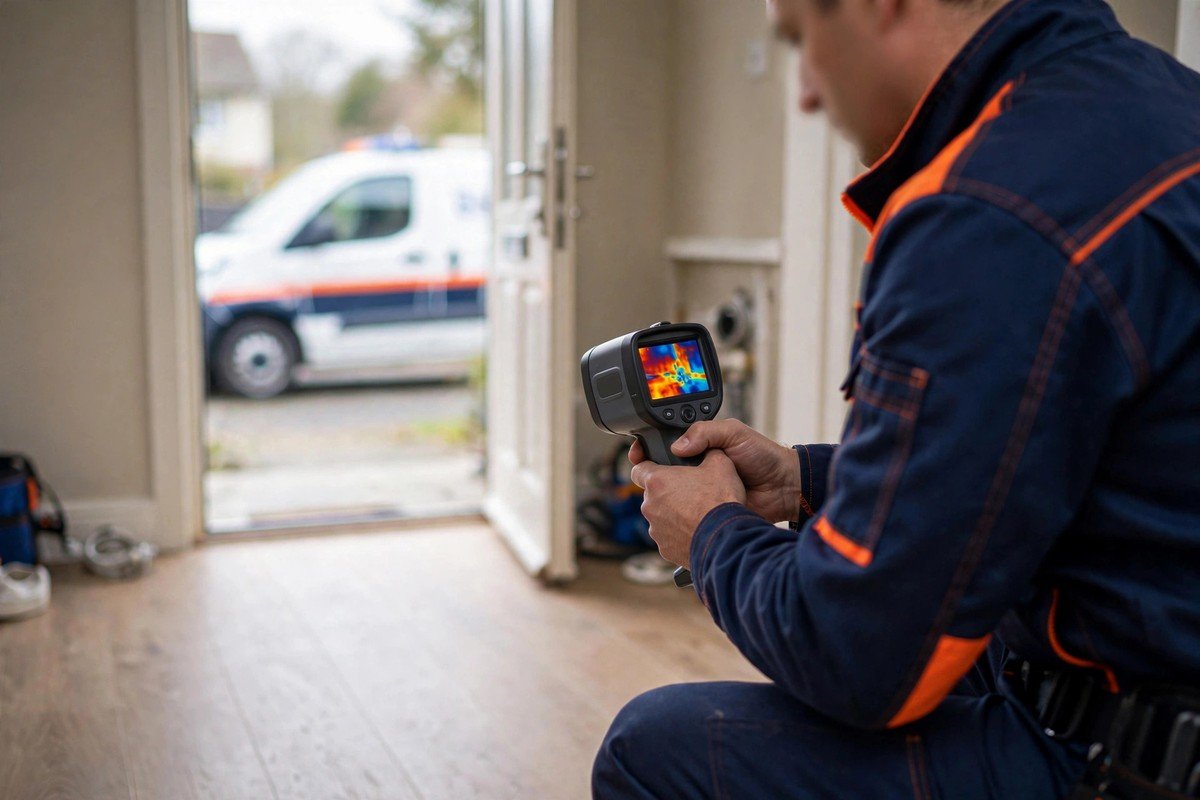
Then we hear. Floor sensors pick up the hiss of water under the slab. We close in on the strongest signal. A thermal camera checks hot lines next. The leak appears as a warm blotch on the display.
Tracer gas finds cold-line breaks. We empty the line and charge it with safe gas. Gas leaks through the break and rises through the slab. Our sniffer follows from above. We chalk the floor within one to three feet of the actual break.
Allow one to three hours for the check. We keep things tidy and show each finding. You see the proof before we leave. Learn more about thermal imaging leak detection on our site.
What Does Slab Leak Repair Cost in Lucerne Valley?
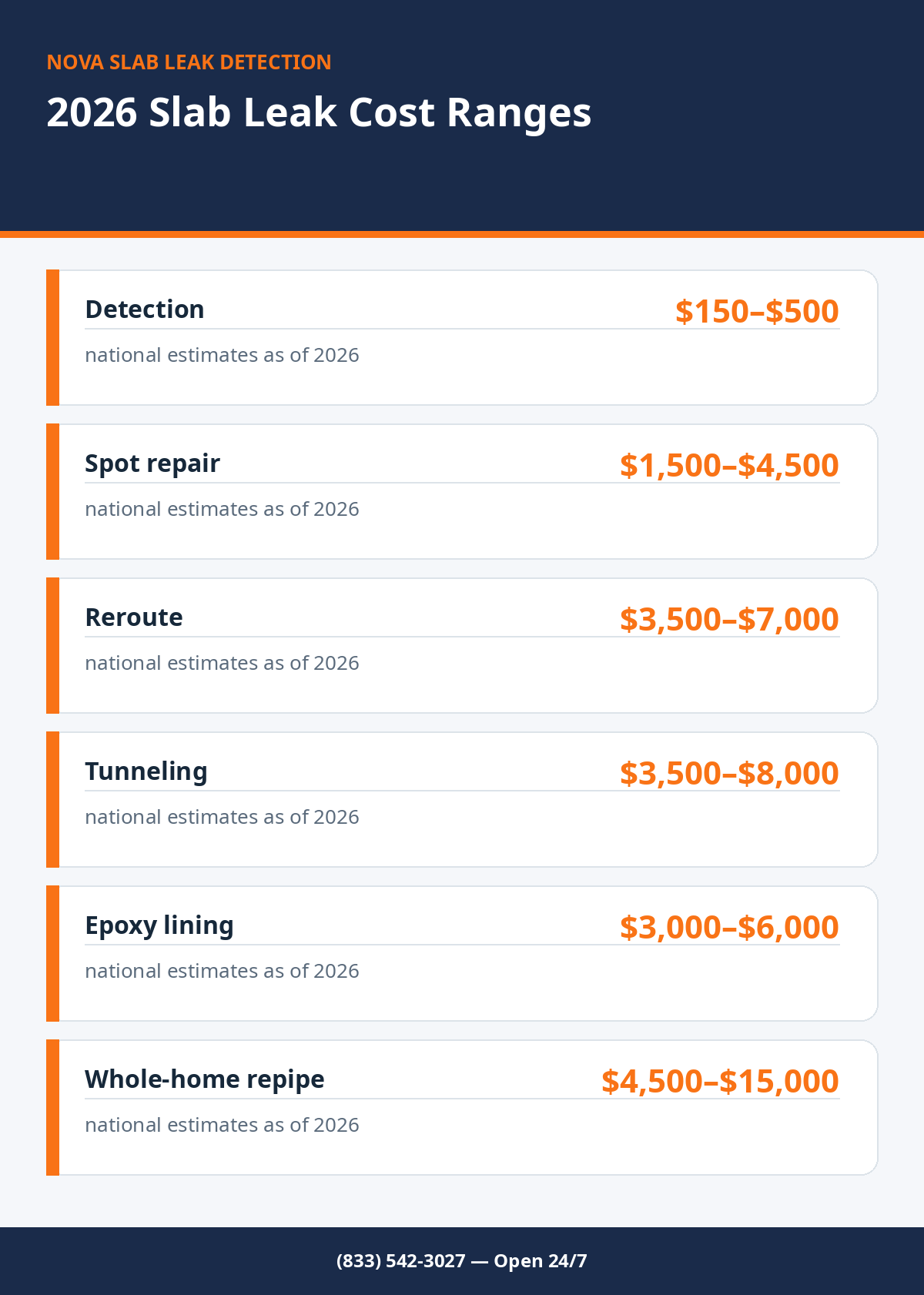
Start with detection at $150 to $500 on national estimates as of 2026, near $600 for hard cases. Then choose a fix.
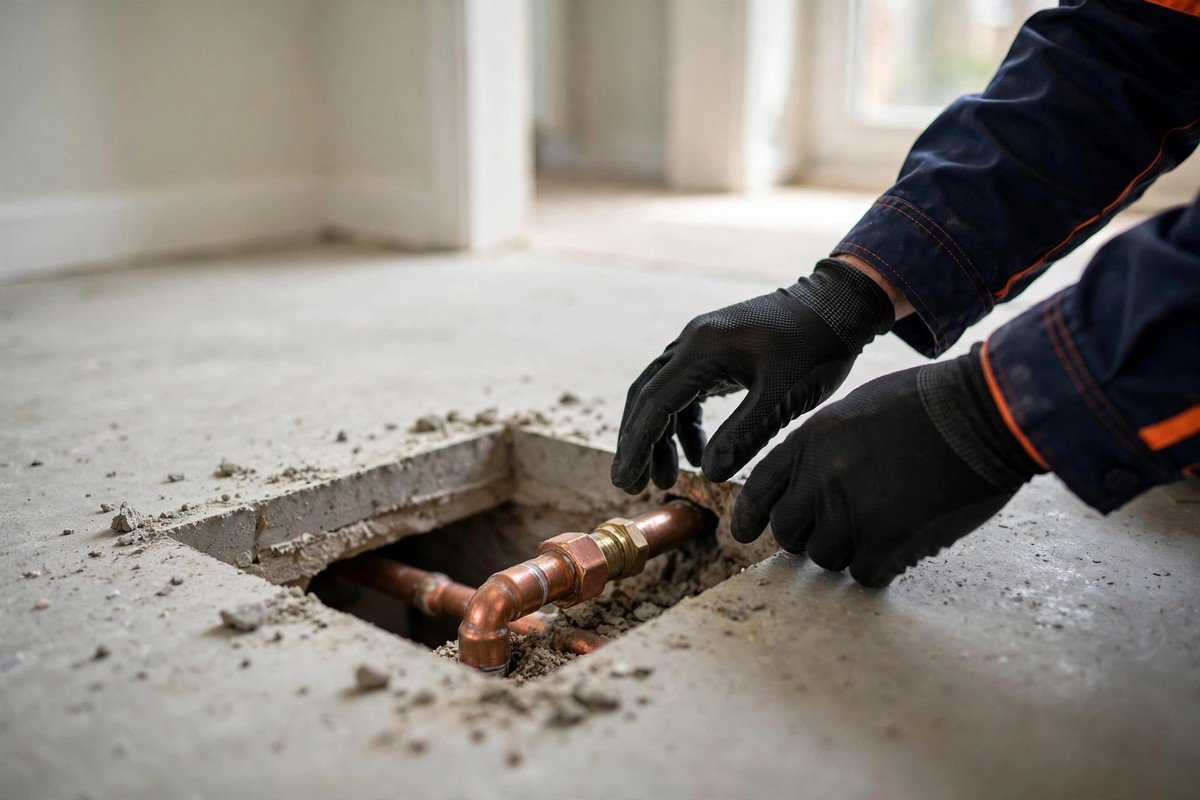
- Spot repair ($1,500 to $4,500): fixes one part through a small floor cut.
- Reroute ($3,500 to $7,000): new pipe through walls or the attic.
- Tunneling ($3,500 to $8,000): under the slab from outside.
- Epoxy lining ($3,000 to $6,000): seals the pipe from the inside.
- Whole-home repipe ($4,500 to $15,000): swaps old lines for good.
Q: Which fix guards my well pump? A: Any fix that stops the leak helps. A constant leak overworks the pump. A repipe ends repeat leaks for good.
Q: Should I filter my well water? A: Many valley folks add softening or filtration. It slows future scale but won’t fix thin pipes.
Compare each choice in our cost guide.
Which Lucerne Valley Areas Do We Serve?
We serve all of Lucerne Valley. Homes on Highway 18 are served. We reach the rural homes off Old Woman Springs Road. The valley floor ranches get the same pro check. The streets to Johnson Valley get it too. Each home in the 92356 ZIP is in our area.
FAQs
How far into the valley do you travel?
All of it. We serve each part of Lucerne Valley, including the spread-out rural homes.
How long will the visit last?
Plan on one to three hours for most homes. You get answers from the same check.
Can tile hide a leak from your tools?
Yes. Our gear works through tile, wood, laminate, and carpet. Your floors stay untouched during detection.
Does homeowners insurance cover this?
Each plan is different. Most pay for water damage but not the pipe fix work. Check what yours says.
Will a leak hurt my well?
A constant leak forces the pump to run nonstop. That wears out the pump and wastes water. Finding it fast guards both.
What causes low water pressure on a well?
A hidden leak can steal pressure. So can a tired pump or scaled pipes. We test during the check.
Areas and ZIP Codes We Serve in Lucerne Valley
We serve all of Lucerne Valley, California, in ZIP code 92356. That covers the Highway 18 area, the Old Woman Springs Road homes, the valley floor ranches, the streets to Johnson Valley, and each home in the valley.
Your well pump will thank you. Call Nova Slab Leak Detection at (833) 542-3027 any time you need us. Our own technicians do the work. Learn about slab leak repair and acoustic leak detection, or browse our California service area.