
Why Do Slab Leaks Happen in Universal City?
Universal City is an unincorporated community in the Santa Monica Mountains hills, best known for Universal Studios. Homes here are mostly apartments, flats, and townhouses packed close together. Our technicians serve Universal City, California residents with acoustic, thermal, and tracer gas tools. We find the leak without guesswork.
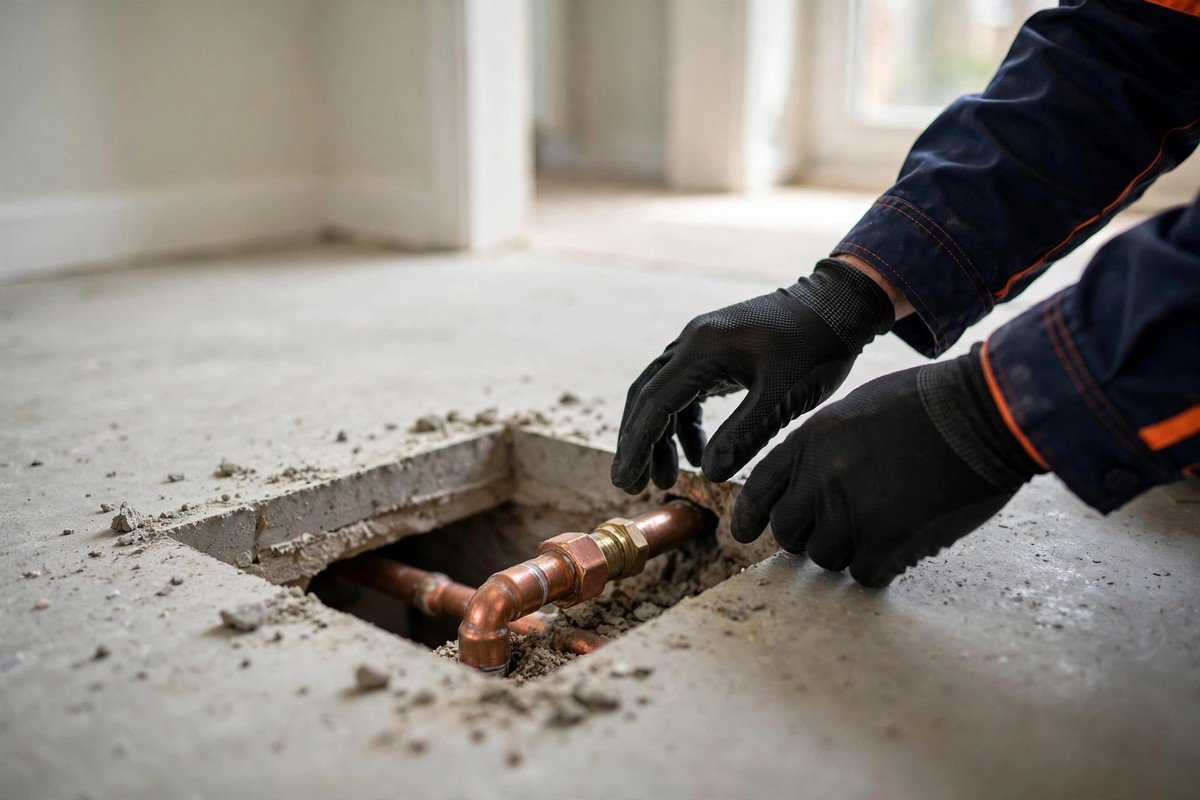
A slab leak is a broken water line under a concrete slab. In Universal City, shared walls and stacked floors make leaks tricky. One unit’s leak can stain a neighbor’s ceiling. Water under the slab can also weaken shared slabs. An exact leak check guards the whole building, not just one unit.
What Makes Universal City Buildings Vulnerable?
Dense construction is the first factor. Flats and apartments share supply lines that run long distances through slabs. More pipe means more joints. Each joint is a possible leak point. When one part fails, water can drive far before it shows.
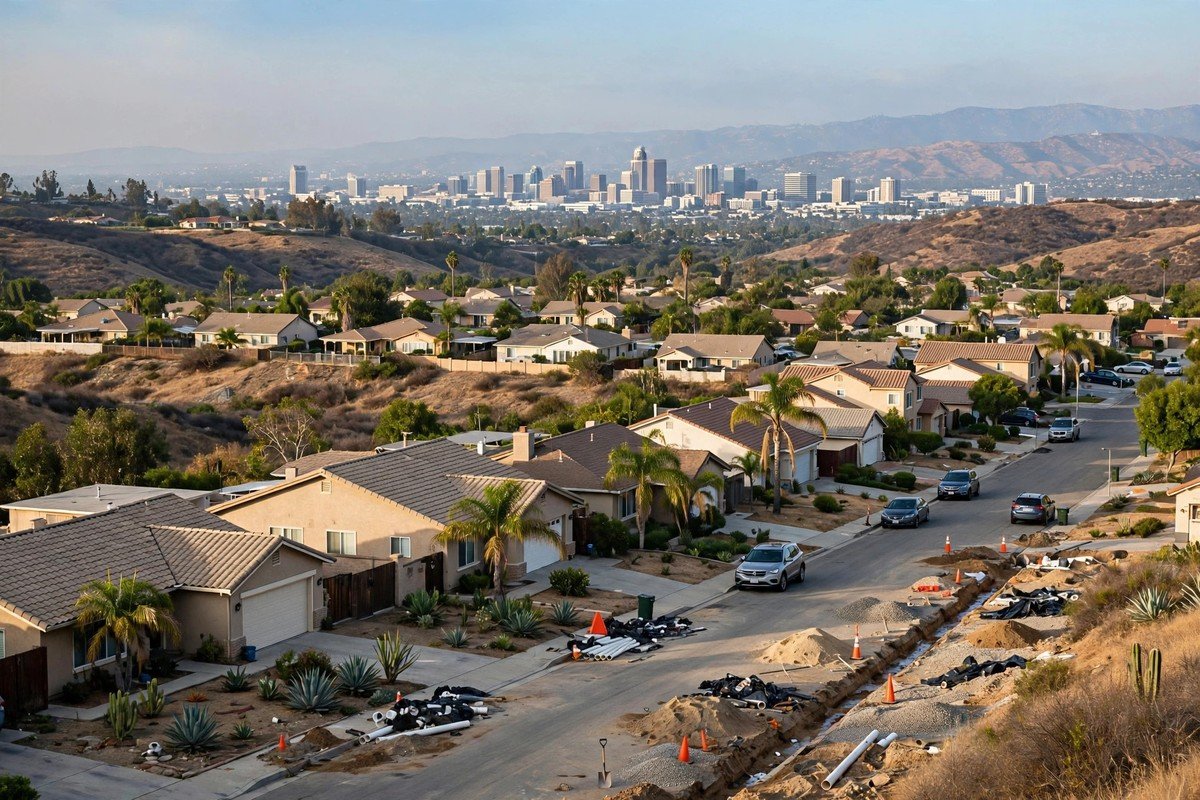
Hill grading is the second factor. Much of Universal City was carved from mountain slopes. Fill soil settles over time. As fill settles, pipes buried in it bend and stress. The ground here also shifts during earthquakes. Even small shifts crack rigid pipe joints.
Building age rounds out the list. Many complexes went up in the 1970s and 80s. Copper lines from that era now face pinhole leaks. Water pressure in tall buildings runs high on lower floors. High pressure plus old pipe is a rough mix.
Q: Can a slab leak in one unit hurt the neighbor? A: Yes — Water drives on the slab and can stain walls or ceilings next door. Finding it fast guards everyone.
Q: Why do hill buildings leak more? A: Fill soil settles. Sinking bends buried pipes. Bent pipes crack at joints.
Q: Is high water pressure a problem? A: It can be. Lower floors in tall buildings see higher pressure. That stress wears old pipes faster.
Read the warning signs of a slab leak for your building.
What Are the Warning Signs in Universal City Buildings?
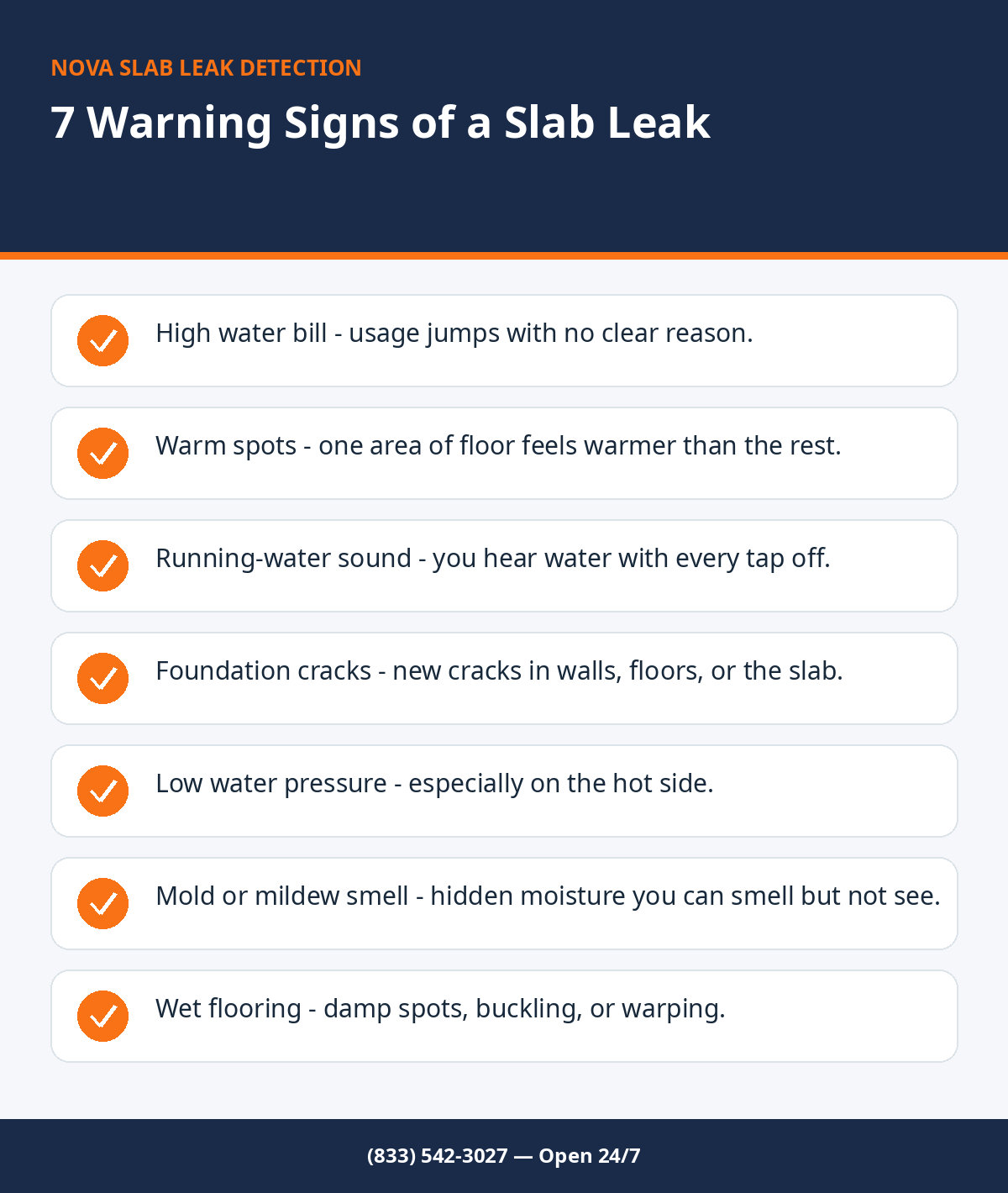
A warm floor is a top clue. A hot water line leaking under the slab heats the floor above. Walk your rooms barefoot. A hot patch that stands out is worth a check.
Watch for damp baseboards and musty odors. Water under the slab wicks up into walls. Paint may bubble. Carpet edges may feel damp. If a neighbor below reports a ceiling stain, your slab line could be the source.
Track your water bill. In a condo, compare with similar units. A bill that runs high with normal use points to a hidden leak. A high water bill is one of the most common first signs we see.
How Do We Find a Slab Leak in a Condo?
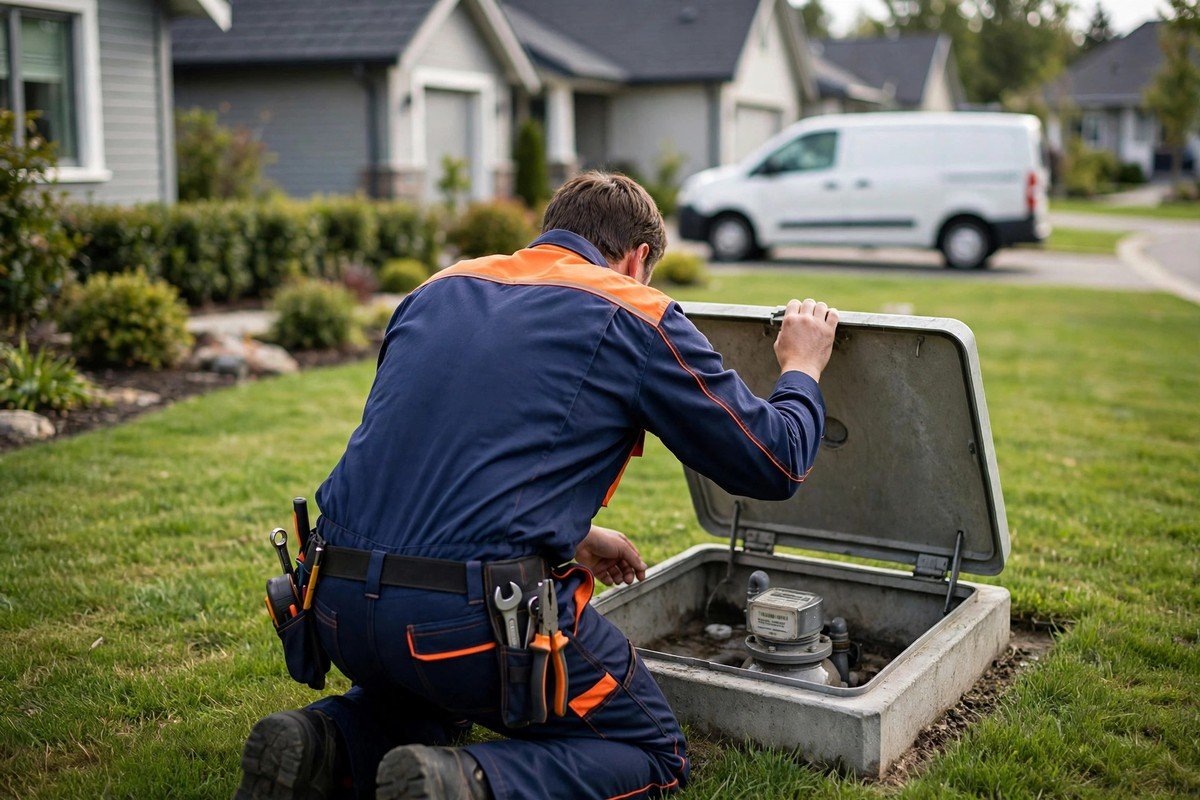
Your technician opens at the building meters. We cut off your unit and shut its fixtures off. If your meter still advances, the leak sits in your lines. We then split the search between hot and cold.
We hear next. Acoustic sensors on the floor catch the hiss of water under the slab. We narrow the sound to its peak. A thermal camera sweeps hot lines, where a leak appears as a warm patch.
For cold lines we use tracer gas. The drained line takes a safe gas fill. Gas exits at the break and rises through the concrete. Our sniffer tracks it from above. We chalk the floor within one to three feet of the real break.
The check runs one to three hours. We keep noise down for neighbors. You leave with a clear mark and a fix plan. See our water line leak detection work for the full process.
What Are the Repair Options and Their Costs?
Detection costs less than the fix. On national estimates as of 2026, a leak check runs $150 to $500, with hard layouts near $600. Fix pricing:
| Repair | National estimate, 2026 |
|---|---|
| Spot repair | $1,500 to $4,500 |
| Reroute | $3,500 to $7,000 |
| Tunneling | $3,500 to $8,000 |
| Epoxy lining | $3,000 to $6,000 |
| Whole-home repipe | $4,500 to $15,000 |
A spot repair mends one part through a small cut. A reroute bypasses the slab with a new overhead line. Tunneling goes under the slab from outside. Epoxy lining seals the pipe inside. A repipe swaps the old system.
Q: Who pays in a condo, me or the HOA? A: It depends on your HOA rules. Lines in your unit are often yours. Ask your HOA before work starts.
Q: Which fix disturbs neighbors least? A: A reroute through your own walls often disturbs neighbors least. No floor demolition is needed.
Our cost guide explains each choice in full.
Which Parts of Universal City Do We Serve?
We serve all of Universal City. Apartment and condo complexes on Lankershim Boulevard are a big part of our work. We reach the hill streets off Barham Boulevard. Homes near the studio lots and CityWalk get the same fast work. The townhouse blocks on Cahuenga Boulevard are served too.
FAQs
Do you work in condos and apartments?
Yes — We find slab leaks in flats, apartments, and townhouses. We coordinate with building access needs.
Will the HOA need to approve the work?
Often yes — for common areas, we give you a clear written plan to share with your HOA.
Can you find a leak between floors?
Yes — Our tools trace water paths through slabs and walls. We find the source, not just the stain.
How long does a condo detection take?
It takes one to three hours for most units. Larger or hard layouts can take a bit longer.
Does insurance cover condo slab leaks?
Plans change. HOA master plans and your own plan may each cover parts. Check both.
What if my water pressure is low?
A hidden leak can drop pressure. We can test whether a leak is the cause during the check.
Areas and ZIP Codes We Serve in Universal City
We serve all of Universal City, California, in ZIP code 91608. That covers the Lankershim area, the Barham Boulevard hills, the studio-area complexes, and each condo and townhouse block in the area.
Worried about a leak in your unit? Call Nova Slab Leak Detection at (833) 542-3027 right away. Our own technicians do the work, 24/7. Learn about thermal imaging leak detection and slab leak repair on our site, and view our California coverage.