
How Long Can Slab Leak Go Unnoticed? Timelines & Risks
Slab leaks can hide for months. Here’s why — and how we find them.
How long can slab leak go unnoticed? Quick Answers
The short answer to “how long can slab leak go unnoticed”:
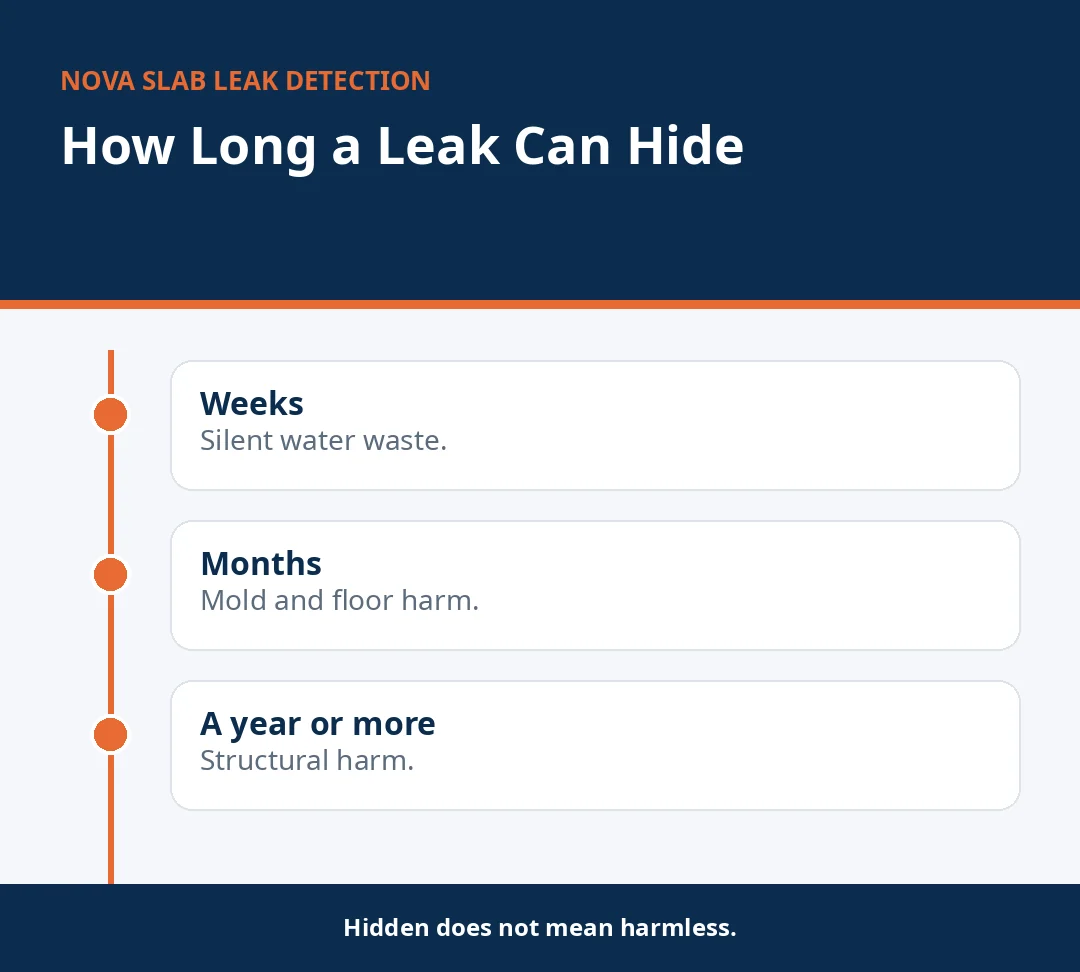
- How Long Can a Slab Leak Go Unnoticed? Weeks to months is common. Some leaks hide for over a year. How long can slab leak go unnoticed depends on the leak size, the soil type, and how closely you watch your bills and floors.
- Why Do Slab Leaks Stay Hidden So Long? Three things hide them. First, the slab itself. Concrete blocks sight and sound.
- What Makes One Leak Get Found Sooner? Big leaks show fast. A burst line floods in days. Hot water leaks show faster than cold ones.
Keep reading for the full guide to how long can slab leak go unnoticed, or jump to the common questions on how long can slab leak go unnoticed at the end.
How Long Can a Slab Leak Go Unnoticed?
Weeks to months is common. Some leaks hide for over a year. How long can slab leak go unnoticed depends on the leak size, the soil type, and how closely you watch your bills and floors. Small leaks whisper. Big leaks shout. Most start as whispers.
Can a slab leak hide for a whole year? Yes. Slow leaks under thick slabs can run for many months. The signs stay small until harm spreads.
Concrete is a great hiding place. Water pools below it. Soil drinks some of it. Floors may look fine for a long time. By the time you see harm, the leak is old.
Why Do Slab Leaks Stay Hidden So Long?
Three things hide them. First, the slab itself. Concrete blocks sight and sound. Second, the soil. Sandy soil drains water away fast. Clay holds it but spreads it thin. Third, slow flow. A pinhole leak may lose only gallons a day.
Small leaks are too quiet to hear through concrete. You may only hear big ones.
Daily life masks the signs too. A warm floor feels nice in winter. A small bill rise looks like a rate hike. Musty smells get blamed on weather. Each clue seems small alone.
What Makes One Leak Get Found Sooner?
Big leaks show fast. A burst line floods in days. Hot water leaks show faster than cold ones. Warm floors are hard to miss. Homes with hard floors show stains sooner than carpeted ones.
Attentive owners find leaks first. People who read the meter monthly catch jumps early. Barefoot walkers feel warm spots. Pet owners notice pets drawn to warm floors. Habits matter as much as luck.
Flooring type changes the timeline. Tile and wood show harm fast. Thick carpet can hide dampness for months.

Where Do Hidden Leaks Do the Most Harm?
Under living areas, harm spreads wide. Water creeps across the slab. It wets many rooms at once. Under baths, harm stays local but rots the subfloor. Near slab edges, water can wash out soil. That can let the slab settle.
A hot water line leak is the worst kind. It wastes energy nonstop. It also breeds mold faster in warm dampness.
Long-hidden leaks often need bigger fixes. A small spot repair may no longer work. Reroutes or lining may fit better. Early finds keep options open.
When Should You Start Looking?
Start now if any sign is present. A bill jump of 20% or more is a red flag. Warm spots, damp smells, or running-water sounds all count. Do not wait for proof. Proof often means harm.
Should I check if I have no signs? A yearly meter test is smart. It takes ten minutes. Our water meter test guide shows how.
Older homes deserve extra watch. Copper from the 1970s to 1990s is now aging out. Hard water speeds the wear. If your home is 20-plus years old, test twice a year.
Who Is Most at Risk of a Long-Hidden Leak?
Owners of older slab homes top the list. So do owners with hard water. Homes on shifting clay hide leaks well. Rental owners who live far away miss signs for months. Vacation homes can leak all season unseen.
New homes get hidden leaks too. New slabs hide flaws just as well. See our page on slab leaks in new construction.
Snowbirds face a special risk. A leak can run all winter while you are away. Ask someone to check the home monthly. Or shut the main valve when you leave.

How Do We Find a Leak You Cannot See?
We bring tools made for this. Acoustic gear hears water through concrete. Pressure tests show which line leaks. Cameras confirm the spot. Thermal scans find warm wet areas.
How long does the visit take? Most take one to three hours. We find most leaks within a few feet.
You do not need to tear up floors to look. Call (833) 542-3027. We are open 24/7. Our technicians pinpoint the leak first. Then we fix it. Learn about slab leak detection.

How Long Can Slab Leak Go Unnoticed Before Mold Grows?
Mold can start in days once things stay damp. But visible mold may take weeks. A leak that runs unnoticed for a month or more has a high chance of mold somewhere. You may smell it before you see it.
This is why speed matters. A one-week leak is a plumbing job. A six-month leak is a plumbing plus mold plus flooring job. The bill grows with time.
Can mold hide as long as the leak? Yes. Mold loves dark damp spots. Under flooring and behind baseboards are prime spots.
What Raises the Risk of a Late Find?
Ignoring the water bill is number one. Skipping yearly checks is number two. Thick carpet over the slab hides dampness. Slab homes with no basement give water nowhere to show. Busy lives mean missed clues.
Fight back with habits. Read the meter monthly. Walk barefoot sometimes. Sniff for musty spots. Act on small signs fast. Browse every slab leak problem we find and fix. And track what harm time can do on our slab leak water damage timeline page. A high bill is often the first clue — see high water bill for what a spike means.
How long can slab leak go unnoticed? More Questions Answered
Homeowners often ask us these questions about how long can slab leak go unnoticed. Each answer is short, and the full detail on how long can slab leak go unnoticed is in the sections above.
Related Slab Leak Problems
More guides related to how long can slab leak go unnoticed:
- Low Water Pressure: Showers turned weak all of a sudden. We find the cause and restore full flow.
- Mold Under Slab: Musty smells with no visible mold. We find the moisture feeding it.
- Pinhole Leaks Copper Pipes: Tiny holes, big trouble. We’ll explain pinhole leaks in plain terms and fix them right.
- All slab leak problems: Every warning sign, cause and risk in one place.
- Slab Leak Detection: How we find a leak under concrete without breaking it.
The EPA estimates the average household’s leaks can waste more than 9,300 gallons of water a year (EPA WaterSense), which is why how long can slab leak go unnoticed is worth acting on early.
How long can slab leak go unnoticed? Ask Nova Today
Call any time, day or night. Tell us your ZIP code and what you are noticing, and we will book your visit.