
Water Meter Test Slab Leak: A 10-Minute DIY Check
Your water meter can reveal a hidden leak in 10 minutes. Here’s the simple test our techs trust.
Water Meter Test: Quick Answers
The short version of this guide to water meter test:
- How Does a Water Meter Test Slab Leak Check Work? A water meter test slab leak check is simple. Your meter tracks every drop that enters your home.
- Why Is This Test So Useful? It is free. It is fast. And it is honest. Meters do not guess. They measure real flow.
- What Do You Need Before You Start? Almost nothing. You need access to your meter. Most sit near the curb in a ground box.
Keep reading for the full guide to water meter test.
How Does a Water Meter Test Slab Leak Check Work?
A water meter test slab leak check is simple. Your meter tracks every drop that enters your home. If the meter moves while no water is in use, you have a leak somewhere. Our techs trust this test. It takes ten minutes. It needs no tools.
The logic is plain. No taps open means no flow should show. Any movement means water is escaping. It could be a toilet flapper. It could be a slab line. The test tells you to dig deeper.
Why Is This Test So Useful?
It is free. It is fast. And it is honest. Meters do not guess. They measure real flow. A failed test turns a hunch into proof. That proof helps you act early. Early action saves floors, walls, and money. If your bill jumped, see our high water bill guide too.
Small leaks waste shocking amounts of water. The EPA notes that household leaks can waste thousands of gallons a year (EPA WaterSense). A ten-minute test can catch that waste early.
What Do You Need Before You Start?
Almost nothing. You need access to your meter. Most sit near the curb in a ground box. You may need a screwdriver to lift the lid. A phone camera helps too. Snap the dial before and after.
Pick a quiet window of time. No laundry running. No sprinklers on. Tell everyone in the home. No flushing for the next hour or two.
What Are the Steps of the Test?
Follow these five steps in order. Do not skip the waiting period. Patience makes the test work.
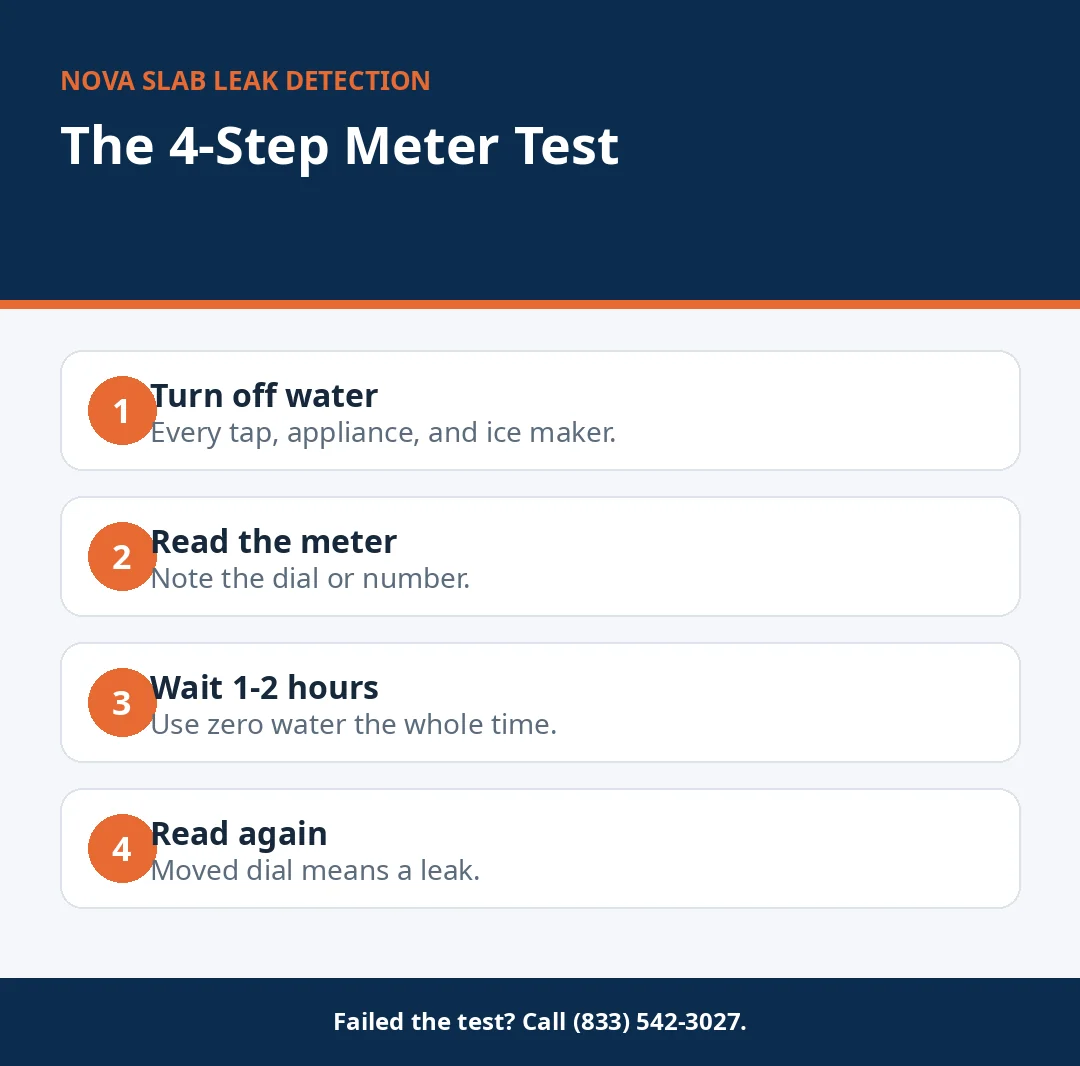
- Turn off every tap, appliance, and hose. Ice makers and sprinklers count too.
- Find your meter box and lift the lid. Brush off dirt so you can read the dial.
- Write down the numbers or snap a clear photo. Note the small leak indicator triangle if yours has one.
- Wait one to two hours. Use no water at all during this time.
- Read the meter again. Compare with your photo. Any change means water flowed.
What if my meter is hard to find? Check near the street or sidewalk. Look for a round or square ground lid. Your water bill may show a meter number to match.
When Is the Best Time to Run It?
Run it when the house is still. Early morning works well. Late night works too. Avoid laundry days. Avoid watering days. The test needs a true zero-use window.
Run it the moment you suspect trouble. High bill? Warm floor? Strange sounds? Do the test that day. Waiting never helps a leak.
What Do the Results Mean?

No movement means no active leak right now. That is good news. But retest if signs persist. Some leaks are slow or come and go.
Movement means water is escaping. The bigger the move, the bigger the flow. A spinning dial means a large leak. Call us right away in that case.
Can I test at night? Yes. Night is ideal. The house is quiet. No one needs water.
Does a Slow Meter Creep Still Count?
Yes. Even a tiny creep matters. Slow leaks still waste water daily. They still damage slabs over time. Do not ignore a small change.
What If the Meter Spins but You See No Water?
That is the classic hidden leak. Water is leaving the pipes underground. It may pool under the slab. It may drain into soil unseen. No visible water does not mean no leak. This is exactly when slab lines are suspect.
Check toilets first. A bad flapper is the most common culprit. Put food dye in the tank. If color hits the bowl, you found it. No dye movement? Think slab.
Who Should You Call After a Failed Test?
Call us. Our technicians take it from there. We confirm the leak with pro gear. We find its exact spot. You can reach us at (833) 542-3027, day or night.
Bring your meter photos to the visit. They help us a lot. We will retest on arrival. Then we track the leak down.
Will you retest on arrival? Yes. We run our own checks. Your photos guide us.

How Do We Confirm What the Meter Found?
We start with pressure tests on each line. Then we listen with acoustic gear. Warm spots get a thermal scan. Most leaks are pinned within about 1–3 feet. A full visit often takes 1–3 hours.
National estimates as of 2026 put a detection visit at $150–$500. Complex homes can reach about $600. Our satisfaction guarantee backs every visit. If something isn’t right, call us. We’ll make it right.
Can This Test Miss a Leak?
Sometimes. Very slow leaks may not move the dial in one hour. Leaks past the meter only — like a hose bibb — still show, so that helps. Outdoor irrigation leaks show too.
Should I run the test more than once? Yes, if signs persist. Try a longer wait next time. Three hours beats one for slow seeps. Still unsure? Let our team take over.
Learn more in our slab leak detection guide. Or browse all plumbing problem guides for your symptoms.
Water Meter Test: Frequently Asked Questions
Homeowners often ask us these questions about water meter test. Each answer is short, and the full detail on water meter test is in the sections above.
Related Slab Leak Problems
More guides related to water meter test:
- Will Slab Leak Fix Itself: Short answer: no. Here’s the honest breakdown of why waiting always costs more.
- Can You Shower with Slab Leak: Showering is often fine short term. Here’s when to stop and what to do.
- Cracks in Foundation: A crack caught your eye. We tell you if it’s cosmetic or a real problem.
- All slab leak problems: Every warning sign, cause and risk in one place.
- Slab Leak Detection: How we find a leak under concrete without breaking it.
Water Meter Test: Talk to Nova Today
Call any time, day or night. Tell us your ZIP code and what you are noticing, and we will book your visit. Mention water meter test when you call so we bring the right equipment.