
Slab Leak in Winter: Why Cold Weather Raises the Risk
Cold snaps are hard on pipes. Here’s why winter raises slab leak risk — and how to stay ahead.
Slab Leak in Winter: Quick Answers
The short version of this guide to slab leak in winter:
- Why Does Slab Leak in Winter Risk Rise? Slab leak in winter shocks lots of owners. Cold won’t just nip hose taps.
- How Does Cold Treat Sunk Pipes? Frost shoves dirt hard. Ice in soil swells as it forms. That swell hugs pipes tight.
- What Are the Cold-Month Warn Signs? Watch old signs with a frost twist. Bills that jump in deep cold. New warm zones on floors.
Keep reading for the full guide to slab leak in winter.
Why Does Slab Leak in Winter Risk Rise?
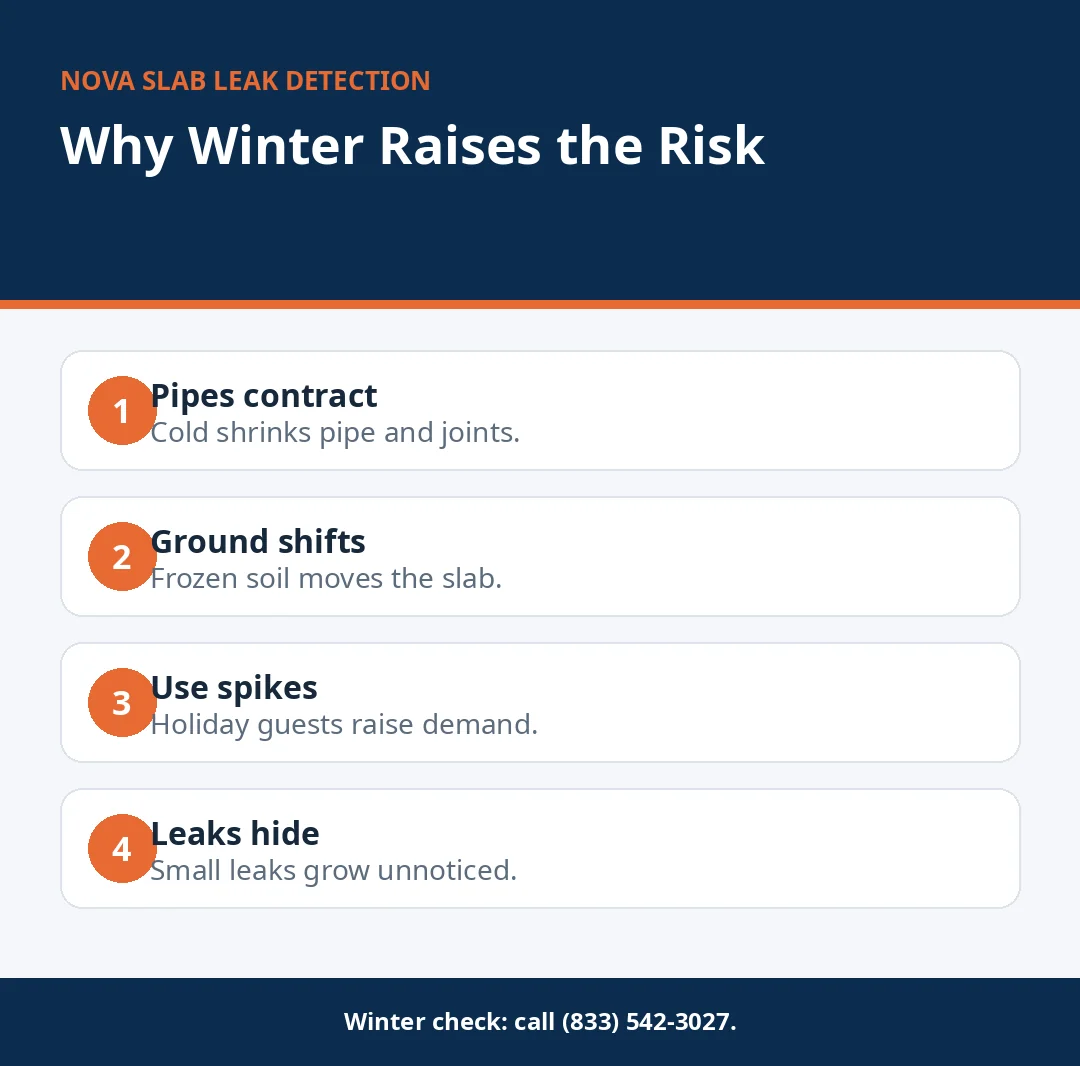
Slab leak in winter shocks lots of owners. Cold won’t just nip hose taps. Frost makes dirt heave and grip sunk pipes, which can split weak lines. Our team works all winter. We find cold leaks fast. We mend them right.
Pipes shrink a touch in cold. Metal draws in a bit. That tug strains each joint. Weak joints may let go.
How Does Cold Treat Sunk Pipes?
Frost shoves dirt hard. Ice in soil swells as it forms. That swell hugs pipes tight. Thaws let go, then frost grips anew. Each round strains joints more.
Do deep pipes freeze through? Rarely do. Depth shields them well. But the churn round them still bites. Slab-edge lines bear the worst.
Why Do Thaw Rounds Hurt Most?
One frost is one shove. Ten rounds are ten shoves. Each works joints loose. Late cold snaps break the most.
What Are the Cold-Month Warn Signs?
Watch old signs with a frost twist. Bills that jump in deep cold. New warm zones on floors. Night hums of flow. Damp near outer walls.
Why do signs lag past the thaw? Ice can choke a small rip. Thaw frees the stream. The leak “shows” days past the cold night.
| Sign | Cold-month twist |
|---|---|
| Bill jumps | Right past first thaw |
| Warm floor zones | Hot-line break |
| Night hums | Ice moved a joint |
| Damp by outer walls | Frost heave at work |
When Is the Risk at Its Peak?
The first hard frost each fall. Long runs far past freeze. Fast thaws past deep cold. First frost hits unprepared pipes. Later cold finds the weak ones.
Empty homes face more risk. No heat means cold pipes. Low thermostats invite trouble. Keep some warmth on each day.
Where Do Cold Leaks Start?
Slab rims by outer walls. Runs that feed hose taps. Pipes in cold sheds. Spots where frost meets pipe head-on.
Sunk mains can split too. Dirt heave drives it. The rip may sit far from frost. Our gear tracks it true.
Who Should You Ring for a Cold Leak?
Ring us. Our techs chase cold leaks each year. We find them fast in any cold. We mend them right the first time. Call (833) 542-3027 before the next cold snap.
Wait till spring? Don’t. Cold leaks won’t pause. Flow keeps washing dirt away. Harm mounts all season.
How Can You Guard Pipes in Snaps?
Wrap bare pipes now. Foam tubes are cheap and quick. Plug gaps where frost creeps in. Drip room taps a bit in hard frost.
Keep heat up when you travel. Hold mid-50s at least. Crack shut doors on outer walls. Small steps fend big breaks.
What If Your Pipes Freeze Up?
Move with care. No torch, no flame, ever. Warm slow with a blow dry. Start at the tap, work back.
No flow at all? Crack the tap a hair. Ring us at once. Frost lines can pop as they thaw. Quick aid halts the flood.
Think leak back of the frost? Run the water meter test post-thaw. Read slab leak detection for next moves. More plumbing problem guides wait here.
Checks cost $150–$500 most places. That is per national estimates as of 2026. Our work has our guarantee. If it isn’t right, call us. We’ll make it right.
What Should Renters Do in a Cold Snap?
Tell your landlord fast if pipes act odd. You still live there, so stay warm. Keep heat at safe levels. Drip taps as asked. Don’t try big fixes yourself. Log each issue with dates. Photos help your case.
Read your lease on heat rules. Some set minimum temps. Follow them to the letter. Ask before you drip all night. Most landlords say yes. If a pipe bursts, call your landlord first. Then call us if they send us. We work with renters often. Know your main shutoff too. Speed saves their home and your stuff. Cold is no one’s fault. Quick word fixes it fast. Stay in touch through the fix.
How Do You Find a Leak Under Snow or Ice?
Look for melt spots first. Warm leaks melt snow above. Bare patches in white yards hint heat. Check where snow melts oddly fast. Indoors, trust the usual signs. Warm floors don’t lie.
Don’t dig through ice yourself. You may hit a line. Mark the spot with a cone. Call us to dig safe. Our gear works in all weather. Cold won’t stop our team. We find winter leaks each year. One call starts the hunt. After we mark it, we plan the fix. Small digs beat big ones. You will know each step. Snow hides, but heat reveals.
Slab Leak in Winter: Frequently Asked Questions
Homeowners often ask us these questions about slab leak in winter. Each answer is short, and the full detail on slab leak in winter is in the sections above.
Related Slab Leak Problems
More guides related to slab leak in winter:
- Slab Leak Insurance Coverage: Insurance and slab leaks get confusing fast. Here’s the plain version — and what to ask first.
- Slab Leak New Construction: New homes can leak too. Here’s why it happens and how we fix it fast.
- Slab Leak Radon Risk: A leak doesn’t make radon. But cracks can let it in. Here’s the calm truth.
- All slab leak problems: Every warning sign, cause and risk in one place.
- Slab Leak Detection: How we find a leak under concrete without breaking it.
The EPA estimates the average household’s leaks can waste more than 9,300 gallons of water a year (EPA WaterSense), which is why slab leak in winter is worth acting on early.
Slab Leak in Winter: Talk to Nova Today
Call any time, day or night. Tell us your ZIP code and what you are noticing, and we will book your visit. Mention slab leak in winter when you call so we bring the right equipment.