
Slab Leak Radon Risk: What’s Real & What’s Not
A leak doesn’t make radon. But cracks can let it in. Here’s the calm truth.
Slab Leak Radon Risk: Quick Answers
The short version of this guide to slab leak radon risk:
- Does a Slab Leak Cause Radon? No. A slab leak does not create radon. The slab leak radon risk question comes from a mix-up: water leaks and radon both use cracks, but the leak does not make the gas.
- What Is Radon, in Plain Terms? Radon is a gas from the ground. It forms as rock and soil break down. It can seep into homes through cracks.
- Why Do People Link the Two? Both involve the slab. A leak means water under concrete. Radon means gas through concrete.
Keep reading for the full guide to slab leak radon risk.
Does a Slab Leak Cause Radon?
No. A slab leak does not create radon. The slab leak radon risk question comes from a mix-up: water leaks and radon both use cracks, but the leak does not make the gas. Radon comes from soil. It is natural. It has nothing to do with your pipes.
Should I panic about radon if I have a leak? No. Stay calm. Fix the leak. Then test for radon if you want peace of mind.
Fear spreads fast online. Some sites link every home issue to radon. The facts are calmer. Keep reading for the plain truth.
What Is Radon, in Plain Terms?
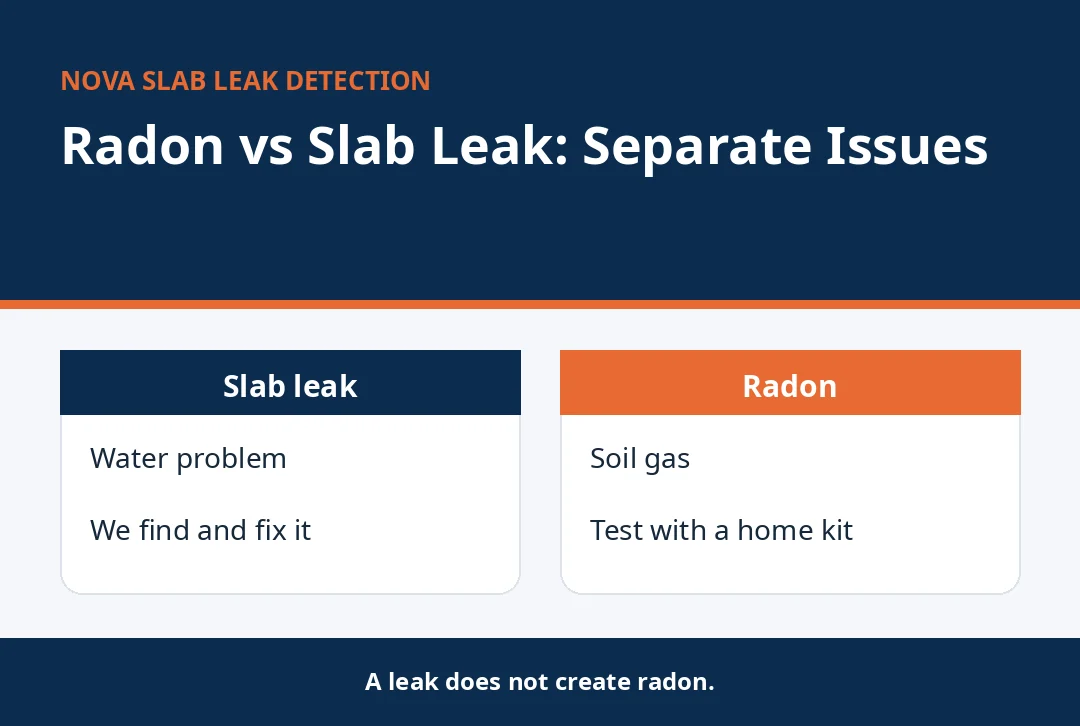
Radon is a gas from the ground. It forms as rock and soil break down. It can seep into homes through cracks. You cannot see or smell it. Only a test finds it.
Many homes have some radon. Levels vary by area and home. The only way to know yours is to test. Testing is cheap and simple.
Radon shows up in homes across the country. But levels differ a lot house to house.
Why Do People Link the Two?
Both involve the slab. A leak means water under concrete. Radon means gas through concrete. People hear “under the slab” and join the dots. The dots do not join.
There is no known link. A leak does not raise or lower radon. They are separate issues.
Cracks are the real shared factor. The same cracks that let water in can let soil gas in. Fixing the leak helps water. It does not test for gas.
Where Does Radon Enter a Home?
Through gaps in the foundation. Cracks in the slab are one path. Gaps around pipes are another. Sump pits and crawl spaces can admit it too. Any opening to soil is a door.
Sealing helps but is not a full fix. Proper radon control may need a vent system.
A leak repair may seal some gaps as a side effect. But do not count on it for radon. Test instead.
When Should You Test for Radon?
Test any time you want to know. There is no bad time. Many owners test when buying a home. Others test during repairs. A leak repair is a fine reminder, not a warning.
Do I need to test right now? Not urgently. Radon is a long-term concern. A simple test over a few days gives answers.
Do the leak first. Water harms homes fast. Radon is slow. Handle the urgent job, then the slow one.
Who Should Test?
Any homeowner can test. Renters can ask landlords. Test kits are sold in stores and online. They are simple to use. You set one out for a few days. Then you mail it or read it.
Can I test it myself? Yes. DIY kits are made for homeowners. Pros also offer testing.
If a test shows high levels, a radon pro can suggest fixes. That is a separate trade from leak repair. We handle the leak. They handle the gas.
How Do You Test for Radon?
Buy a short-term kit. Place it in the lowest lived-in room. Leave it for two to seven days. Keep windows shut as directed. Then read or mail it per the kit’s steps.
Kits are low cost, often under $30. Pro tests cost more but are thorough.
Retest if you change the home a lot. New cracks or new systems can shift levels. One test is a snapshot, not forever.
What Does Slab Leak Radon Risk Mean for Your Home?
It means two jobs, not one. Job one: fix the leak. Job two, if you choose: test for radon. Slab leak radon risk is low on its own — the smart move is fixing water damage now and testing for gas on your own schedule.
Do not let radon fear delay leak repair. Water ruins floors in weeks. Mold grows in days. Those are sure harms. Radon is a maybe. Handle the sure thing first.
How Do We Fix the Leak Itself?
We find it, then we fix it. Our technicians use listening gear and cameras. Most visits take one to three hours. We find most leaks within a few feet.
Will fixing the leak seal radon out? Not reliably. It fixes water. Test separately for gas.
Call (833) 542-3027. We are open 24/7. One call starts the fix. See all slab leak problems we solve. If anything is not right after, call us. We make it right. Learn about slab leak detection. If your slab shows cracks, read our cracks in foundation guide too. Questions? Reach us on our contact page.
Slab Leak Radon Risk: Frequently Asked Questions
Homeowners often ask us these questions about slab leak radon risk. Each answer is short, and the full detail on slab leak radon risk is in the sections above.
Related Slab Leak Problems
More guides related to slab leak radon risk:
- Slab Leak Renting Landlord: Renting with a slab leak? Here’s who usually pays and what to do first.
- Slab Leak Smell: Musty, earthy, or just off? Your nose may catch a slab leak before your eyes do.
- Slab Leak vs Sewer Leak: Water under your slab — but from which pipe? We tell supply from sewer fast.
- All slab leak problems: Every warning sign, cause and risk in one place.
- Slab Leak Detection: How we find a leak under concrete without breaking it.
The EPA estimates the average household’s leaks can waste more than 9,300 gallons of water a year (EPA WaterSense), which is why slab leak radon risk is worth acting on early.
Slab Leak Radon Risk: Talk to Nova Today
Call any time, day or night. Tell us your ZIP code and what you are noticing, and we will book your visit. Mention slab leak radon risk when you call so we bring the right equipment.