
Slab Leak High Water Bill: Why Your Bill Spiked & What to Do
Your bill jumped for no clear reason. We find the leak fast and fix it right.
High Water Bill: Quick Answers
The short version of this guide to high water bill:
- Why Does a Slab Leak Raise Your Bill? A slab leak is a break in a water line under your concrete slab. Water flows out day and night.
- When Should a High Bill Worry You? One high bill can have many causes. Guests can raise usage. New sod needs lots of water.
- Where Does the Wasted Water Go? It soaks into the soil under your slab. It never reaches a drain. It never waters your lawn.
Keep reading for the full guide to high water bill.
Why Does a Slab Leak Raise Your Bill?
A slab leak is a break in a water line under your concrete slab. Water flows out day and night. That nonstop flow is why a slab leak high water bill climbs even when your habits stay the same. Your meter spins around the clock. The leak never pauses.
When Should a High Bill Worry You?
One high bill can have many causes. Guests can raise usage. New sod needs lots of water. A running toilet wastes gallons daily. Worry sets in when no cause fits. Compare this bill to the same month last year. If usage jumped and nothing changed, look deeper.
Is a 20% jump enough to act? Yes. A sudden jump with no new usage deserves a quick check. Small leaks run all day and night.
Where Does the Wasted Water Go?
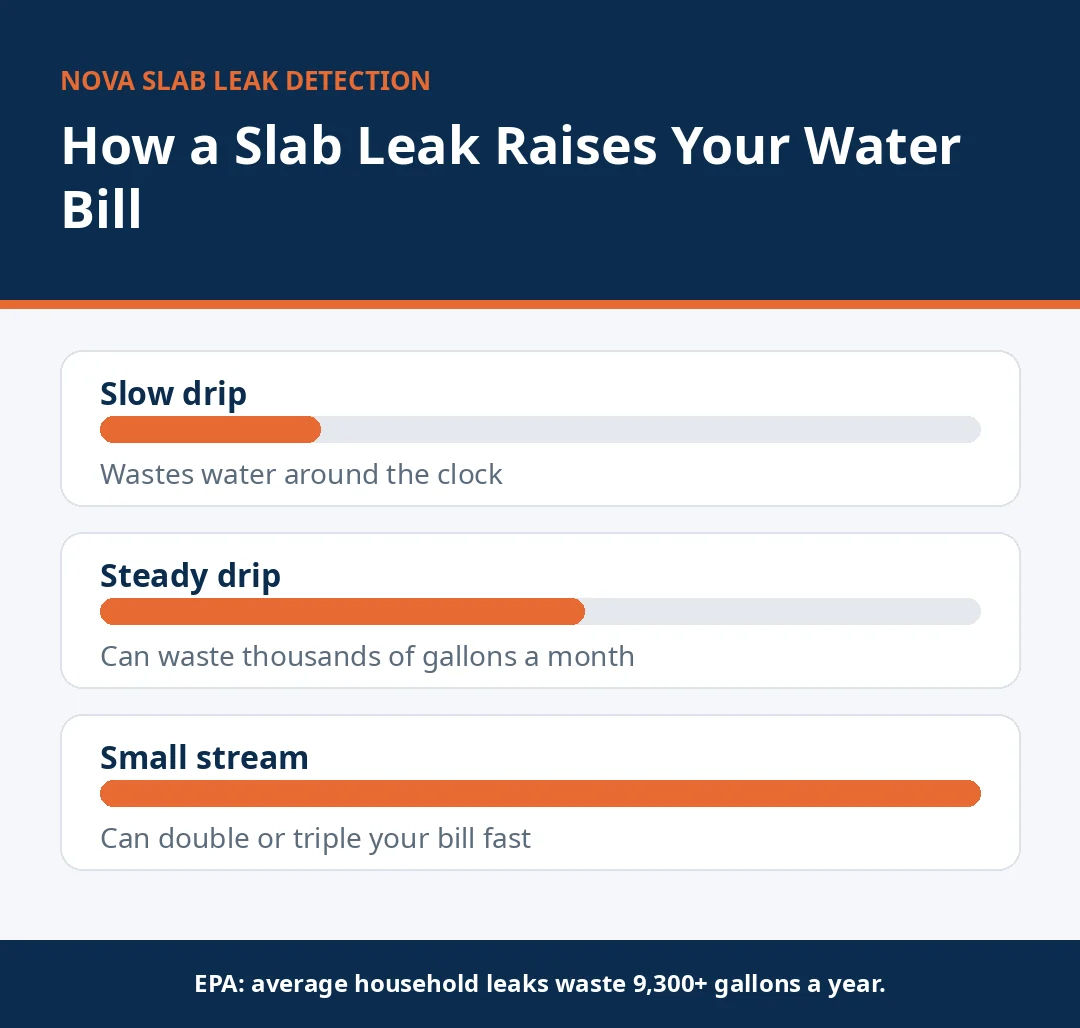
It soaks into the soil under your slab. It never reaches a drain. It never waters your lawn. You pay for each gallon. You enjoy none of it. The EPA says the average home can waste over 9,300 gallons a year to leaks (EPA WaterSense). A slab leak can waste far more. It never stops flowing.

What Does Slab Leak High Water Bill Mean for Your Home?
It means pressurized water is escaping below your foundation. Left alone, it can erode soil. It can damage flooring from below. It can feed mold growth over time. The bill is often the first clue. Many owners spot the spike months before they see damage.
Can the bill spike before other signs show? Often, yes. Water under a slab hides well. The meter catches what eyes miss.
How Can a Meter Test Confirm a Leak?
Try this ten-minute test first:
- Turn off each faucet, appliance, and hose bib.
- Find your water meter near the curb.
- Note the reading or mark the dial.
- Wait 30 minutes. Use no water at all.
- Check the meter again. Movement means flow somewhere.
Does a spinning meter always mean a slab leak? No. It means a leak exists somewhere. Toilets and outdoor lines are common causes. But if fixtures test fine, under-slab lines move up the list.
What Other Signs Point to a Slab Leak?
Watch for warm spots on the floor. Listen for water sounds with taps off. Look for damp carpet or warped boards. Check for cracks that seem to grow. One sign is a hint. Two or more mean call soon. Read about warm floor spots and phantom water sounds. Browse all slab leak warning signs too.
How Do We Find the Leak?
Our technicians use acoustic listening gear and line tracing. We narrow the break to a small zone. That zone is about 1 to 3 feet wide. Most visits take 1 to 3 hours. You get a clear answer the same day. Then we walk you through fix options and costs. Our slab leak detection is built for speed and care.
Do you have to break the floor to find it? No. Detection is non-invasive. We open concrete only at the exact spot, with your okay.
What Does a High Bill Leak Repair Cost in 2026?
Each home is different. We quote each job on site. These are national estimates as of 2026:
| Service | Typical range |
|---|---|
| Leak detection visit | $150–$500 (up to ~$600 for complex homes) |
| Spot repair | $1,500–$4,500 |
| Reroute | $3,500–$7,000 |
| Tunneling | $3,500–$8,000 |
| Epoxy lining | $3,000–$6,000 |
| Whole-home repipe | $4,500–$15,000 |
We give a firm quote before work starts. No surprises. No pressure.
Will fixing the leak drop my bill fast? Yes. Once sealed, usage returns to normal. Most owners see it on the next bill.
Who Should You Call for a Suspected Slab Leak?
Call us. Our team finds and fixes slab leaks daily. We answer 24/7 at (833) 542-3027. You talk to a real person. We book your visit fast, often same day. If our work is not right, one call brings us back. We make it right. That is our guarantee.
How Can You Keep Bills Low After the Fix?
Read your meter once a month. Note the trend over time. Fix dripping faucets fast. Know where your main shutoff is. Small habits catch big problems early. If a bill spikes again, you know the test. You also know who to call.
Should I shut off water while I wait? Only if you see active flooding. Else keep water on for testing. We will guide you by phone.
High Water Bill: Frequently Asked Questions
Homeowners often ask us these questions about high water bill. Each answer is short, and the full detail on high water bill is in the sections above.
Related Slab Leak Problems
More guides related to high water bill:
- How Long can Slab Leak go Unnoticed: Slab leaks can hide for months. Here’s why — and how we find them.
- Low Water Pressure: Showers turned weak all of a sudden. We find the cause and restore full flow.
- Mold Under Slab: Musty smells with no visible mold. We find the moisture feeding it.
- All slab leak problems: Every warning sign, cause and risk in one place.
- Slab Leak Detection: How we find a leak under concrete without breaking it.
High Water Bill: Talk to Nova Today
Call any time, day or night. Tell us your ZIP code and what you are noticing, and we will book your visit. Mention high water bill when you call so we bring the right equipment.