
Hearing Running Water Slab Leak: What That Sound Means
You hear water, but nothing is on. We track that sound to its source.
Hearing Running Water: Quick Answers
The short version of this guide to hearing running water:
- Why Do You Hear Water When Nothing Is On? Pipes should fall silent when taps close. A slab leak keeps water moving under force.
- When Is the Sound a Red Flag? It is a red flag when new and constant. Normal pipes tick as they cool.
- Where Should You Listen First? Start in the quietest rooms, late at night. Press your ear to floors near baths.
Keep reading for the full guide to hearing running water.
Why Do You Hear Water When Nothing Is On?
Pipes should fall silent when taps close. A slab leak keeps water moving under force. That flow hums or hisses through concrete. That phantom noise marks a hearing running water slab leak problem. Floors and walls carry sound well. You hear it best at night. The house is quiet then.
When Is the Sound a Red Flag?
It is a red flag when new and constant. Normal pipes tick as they cool. Valves may knock once when shut. A leak sound does not stop. It runs for hours with no pattern. Heard daily in one spot, it needs a check.
Could it be the water heater? Heaters sound off while heating. Then they go quiet. Nonstop sound points elsewhere.
Where Should You Listen First?
Start in the quietest rooms, late at night. Press your ear to floors near baths. Check walls that hide supply lines. Try the water heater closet too. Note where sound peaks. That spot steers our search.
What Does Hearing Running Water Slab Leak Sound Like?
Owners describe it many ways. A hiss hints at a small, high-force spray. A rush suggests a larger break. A dull roar can mean a fully split line. Sound often grows at night. Street pressure climbs after dark. Any constant water noise with taps off needs a check.
Must the sound come from under the slab? Not always. Toilet flappers can trick you. Outdoor lines can too. But floor-level sound with dead fixtures points down.
How Can You Rule Out Simple Causes?
Do this quick sweep:
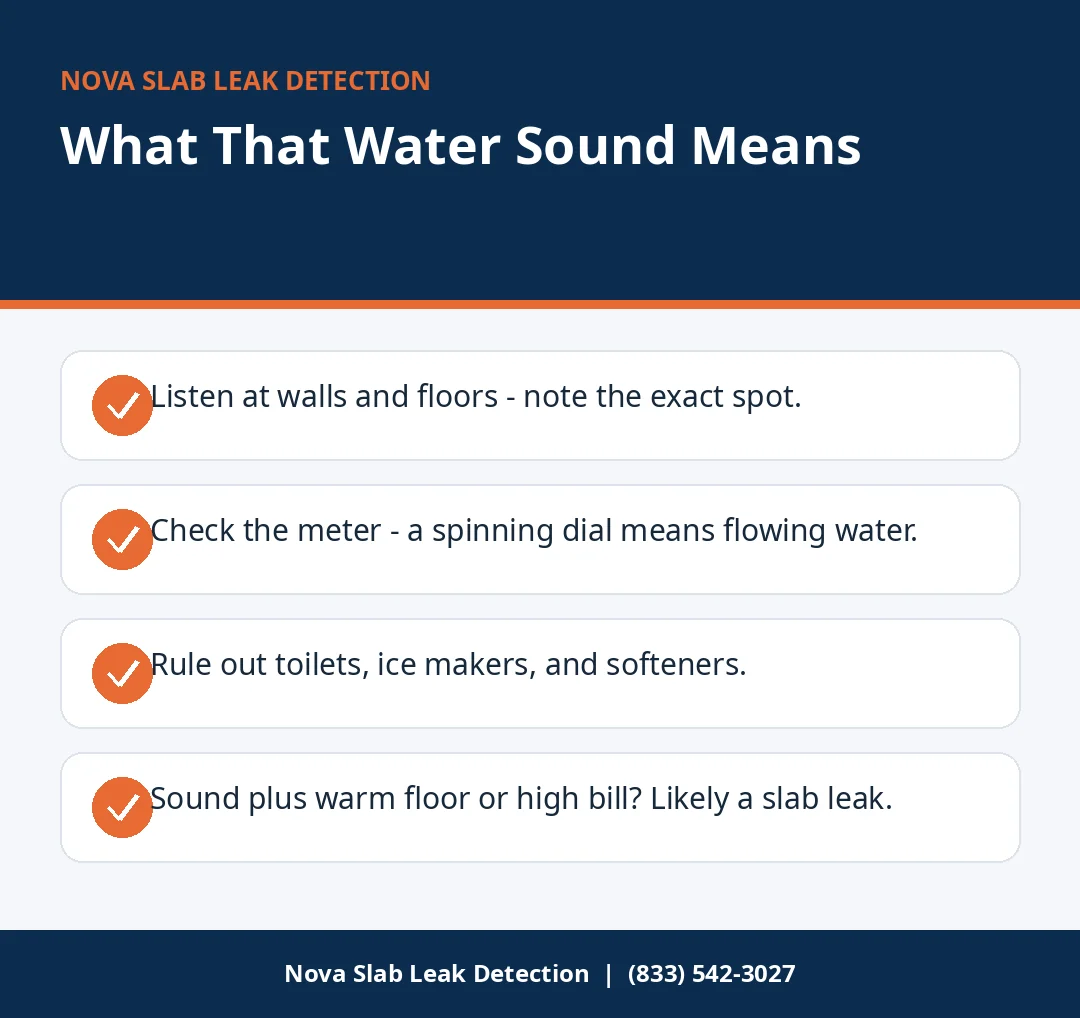
- Test each toilet. Drop food color in the tank. Wait 15 minutes. Bowl color means a bad flapper.
- Shut the ice maker and filter supply valves.
- Listen at the heater. Note if sound cycles or runs on.
- Run the meter test. All water off 30 minutes. Then read the meter.
- Walk barefoot to feel for warm spots.
If fixtures pass yet sound stays, call us. The sweep takes twenty minutes. It saves guesswork later.
How Do We Track the Sound?
Our techs use pro acoustic gear. Far beyond a stethoscope. We scan floors and walls for peak sound. The loudest point marks the zone. We refine it to about 1 to 3 feet. Line tracing names the exact pipe. Most visits take 1 to 3 hours. Our slab leak detection turns vague noise into a set spot.
Does the noise harm pipes more? The noise itself is harmless. But the leak erodes soil and wastes water daily.
What Other Signs Come With the Sound?
A rising water bill is the top partner. Warm floor patches hint at hot-line breaks. Damp carpet edges may follow. Musty smells can join in. Low tap pressure may appear. Match yours to all slab leak warning signs.
What Will the Fix Cost?
We quote on site once we find the break. These are national estimates as of 2026:
| Service | Typical range |
|---|---|
| Leak detection visit | $150–$500 (up to ~$600 for complex homes) |
| Spot repair | $1,500–$4,500 |
| Reroute | $3,500–$7,000 |
| Tunneling | $3,500–$8,000 |
| Epoxy lining | $3,000–$6,000 |
You approve the price before we start. No surprises. No pressure tactics.
Who Finds Mystery Water Sounds?
We do. Our team tracks pipe noise weekly. Call (833) 542-3027. We answer 24/7. A real person books your visit fast, often same day. Anything less than perfect? Call us back and we will fix it. That is our guarantee.
Should I record the sound? Yes, if you can. A phone clip helps us bring the right gear. Share details on the call.

What Should You Tell Us When You Call?
Have these notes ready. They speed your visit a lot.
- Where the sound peaks in the home.
- When you first heard it, and if it changed.
- Your meter test result, if you ran one.
- Whether hot, cold, or both taps run weak.
- Any damp spots, smells, or bill spikes.
Must I know my pipe layout? No. We map it on site. Your notes on sound are enough.
The more you share, the faster we find it. Ten minutes of notes can save an hour. Keep any sound clips handy. Play one for us on the call. It tells our techs which gear to pack.
How Do You Keep Pipes Quiet?
Fix drips the week they start. Keep pressure in a safe range. Insulate pipes at concrete crossings. Act on small leaks before they grow loud. Learn the warning signs for next time. Quiet pipes are happy pipes. Note each odd sound in a phone memo. Dates help us track change over time.
Hearing Running Water: Frequently Asked Questions
Homeowners often ask us these questions about hearing running water. Each answer is short, and the full detail on hearing running water is in the sections above.
Related Slab Leak Problems
More guides related to hearing running water:
- High Water Bill: Your bill jumped for no clear reason. We find the leak fast and fix it right.
- How Long can Slab Leak go Unnoticed: Slab leaks can hide for months. Here’s why — and how we find them.
- Low Water Pressure: Showers turned weak all of a sudden. We find the cause and restore full flow.
- All slab leak problems: Every warning sign, cause and risk in one place.
- Slab Leak Detection: How we find a leak under concrete without breaking it.
The EPA estimates the average household’s leaks can waste more than 9,300 gallons of water a year (EPA WaterSense), which is why hearing running water is worth acting on early.
Hearing Running Water: Talk to Nova Today
Call any time, day or night. Tell us your ZIP code and what you are noticing, and we will book your visit. Mention hearing running water when you call so we bring the right equipment.