
Slab Leak and Mold Health: What to Know & When to Get Help
Leaks feed mold. Here’s what that may mean for health — and what to do.
Slab Leak and Mold Health: Quick Answers
The short version of this guide to slab leak and mold health:
- Can a Slab Leak Make Mold Grow? Yes. Moisture feeds mold. The slab leak and mold health link is simple: a leak keeps things damp, and damp places grow mold.
- Why Does Mold Love Slab Leaks? Mold needs three things. Moisture, warmth, and food. A slab leak gives all three.
- When Does Mold Start? Fast. Mold can start within days of steady dampness. Visible patches may take weeks.
Can a Slab Leak Make Mold Grow?
Yes. Moisture feeds mold. The slab leak and mold health link is simple: a leak keeps things damp, and damp places grow mold. Mold can start in days. It hides under floors and behind trim. Fast action keeps growth small.
Does every slab leak grow mold? Not every one. But long dampness makes mold likely. Warm leaks grow it fastest.
We are not doctors. We fix leaks. For health questions, see a doctor. What we can do is stop the moisture fast. Dry homes grow far less mold.
Why Does Mold Love Slab Leaks?
Mold needs three things. Moisture, warmth, and food. A slab leak gives all three. Water soaks wood and drywall. Warm lines heat the damp spot. Dust and wood feed the growth.
No light or air reaches under a slab. Dark damp spots are mold’s favorite home.
Carpet over a slab is prime ground. Padding holds water for weeks. Tile grout can harbor it too. Any damp hidden space works.

When Does Mold Start?
Fast. Mold can start within days of steady dampness. Visible patches may take weeks. Smell often comes first. A musty odor means growth is likely near.
How soon should I act? Right away. Each damp day raises the odds. A week-old leak is far safer than a month-old one.
Do not wait for black patches. By then it has spread. Early drying stops most growth. The EPA’s brief guide on mold and moisture explains the basics well.
Where Does the Mold Hide?
Under flooring is spot one. Behind baseboards is spot two. Inside wall bases near the leak is spot three. Under cabinets and vanities too. Anywhere water wicked and air can’t reach.
Mold can hide with no smell early on. But most growth smells musty as it spreads. Check under sinks too, since leaks often start near wet rooms.
You may never see it. Pros find it with meters and scopes. If your home smells off after a leak, get it checked.
Who May Feel It Most?
Some people react more. Kids and older adults can be sensitive. People with asthma or allergies may notice it sooner. Those with weak immune systems should take extra care.
What might people notice? Some report sneezing, coughs, or itchy eyes near mold. Others feel nothing. Reactions vary a lot.
We cannot say what mold will do to you. Only a doctor can judge your health. If you feel ill and suspect mold, see a doctor. Then call us to kill the moisture source.
How Do You Cut the Risk?
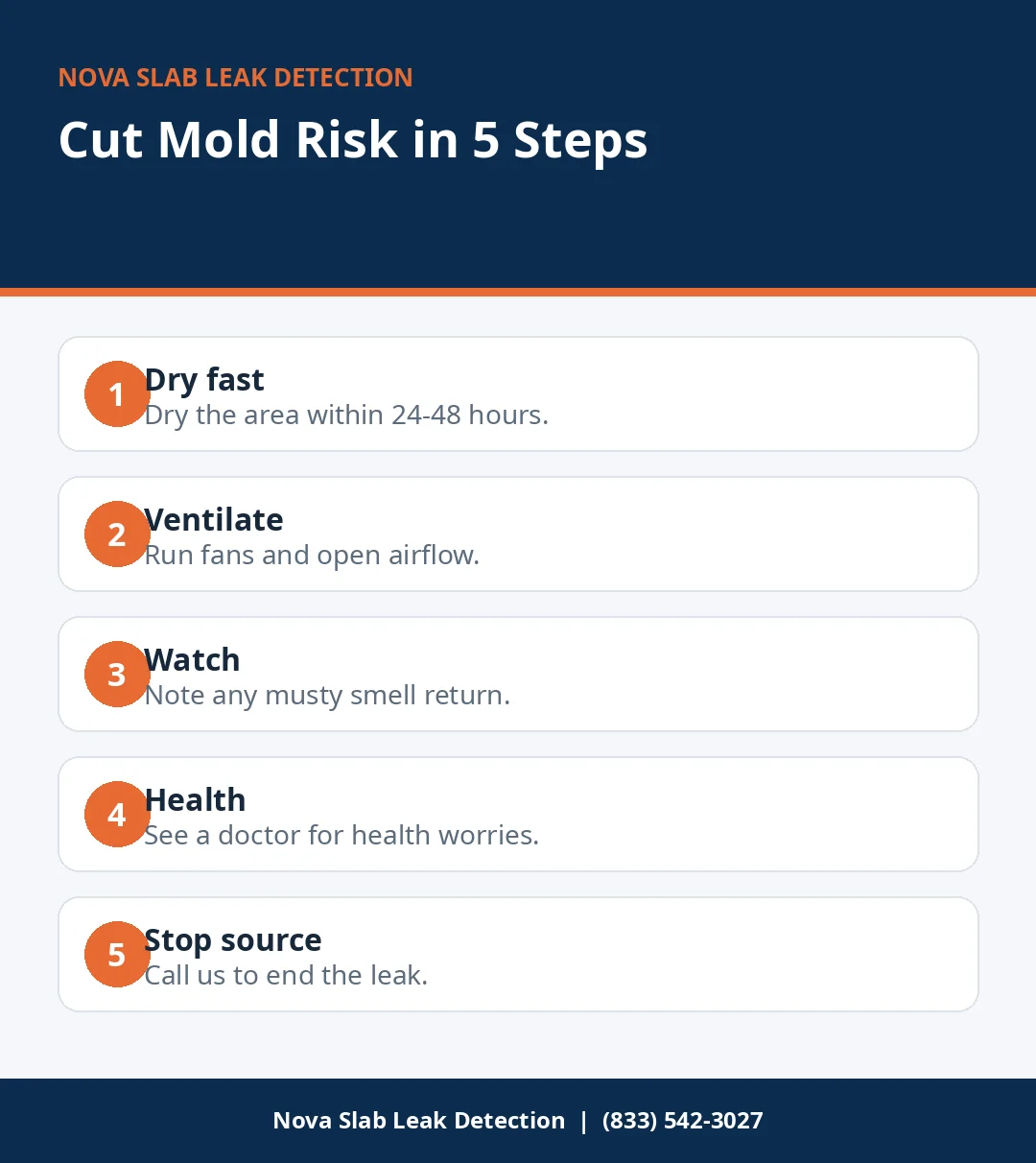
Dry fast. Fix the leak first — no drying wins while water flows. Then run fans on damp areas. Pull up wet rugs. Open baseboards if pros advise it.
Small surface spots can be cleaned per EPA guidance. Big or hidden growth needs pros.
Do not just spray and hope. Dead mold can still bother some people. Removal plus drying is the real fix. Our team stops the water. Then drying can truly work. Wet padding holds water longest, so pros often pull it fast.

What Does Slab Leak and Mold Health Mean for Your Family?
It means act fast and stay calm. For slab leak and mold health, speed is the best medicine you control: fix the leak, dry the area, and see a doctor about any symptoms. Fear helps nothing. Action helps a lot.
Keep kids and pets off damp spots. Do not let them play near musty areas. Ventilate the home while it dries. Watch for new odors after repair.
When is it time to leave the house? Rarely for mold alone. Severe cases with heavy growth may merit a short stay elsewhere. Ask your doctor.
How Fast Should You Act?
Today. Call (833) 542-3027. We are open 24/7. Our technicians find the leak in hours. We fix it. Moisture stops. Drying starts.
Detection takes one to three hours. Most fixes take a day or two.
Every damp day grows risk. Do not research for a week. One call starts it all. Explore all slab leak problems we handle. Learn about slab leak detection. Read mold under the slab for growth details. If you smell trouble, our slab leak smell guide helps too. And our guarantee stands behind the work.
Slab Leak and Mold Health: Frequently Asked Questions
Homeowners often ask us these questions about slab leak and mold health.
Related Slab Leak Problems
More guides related to slab leak and mold health:
- Slab Leak in Winter: Cold snaps are hard on pipes. Here’s why winter raises slab leak risk — and how to stay ahead.
- Slab Leak Insurance Coverage: Insurance and slab leaks get confusing fast. Here’s the plain version — and what to ask first.
- Slab Leak New Construction: New homes can leak too. Here’s why it happens and how we fix it fast.
- All slab leak problems: Every warning sign, cause and risk in one place.
- Slab Leak Detection: How we find a leak under concrete without breaking it.
Slab Leak and Mold Health: Talk to Nova Today
Call any time, day or night. Tell us your ZIP code and what you are noticing, and we will book your visit. Mention slab leak and mold health when you call so we bring the right equipment.