
Thermal Imaging Leak Detection Under Concrete Slabs
Infrared cameras reveal hidden hot-water leaks beneath your slab — before any concrete is cut.
Thermal Imaging Leak Detection: Quick Answers
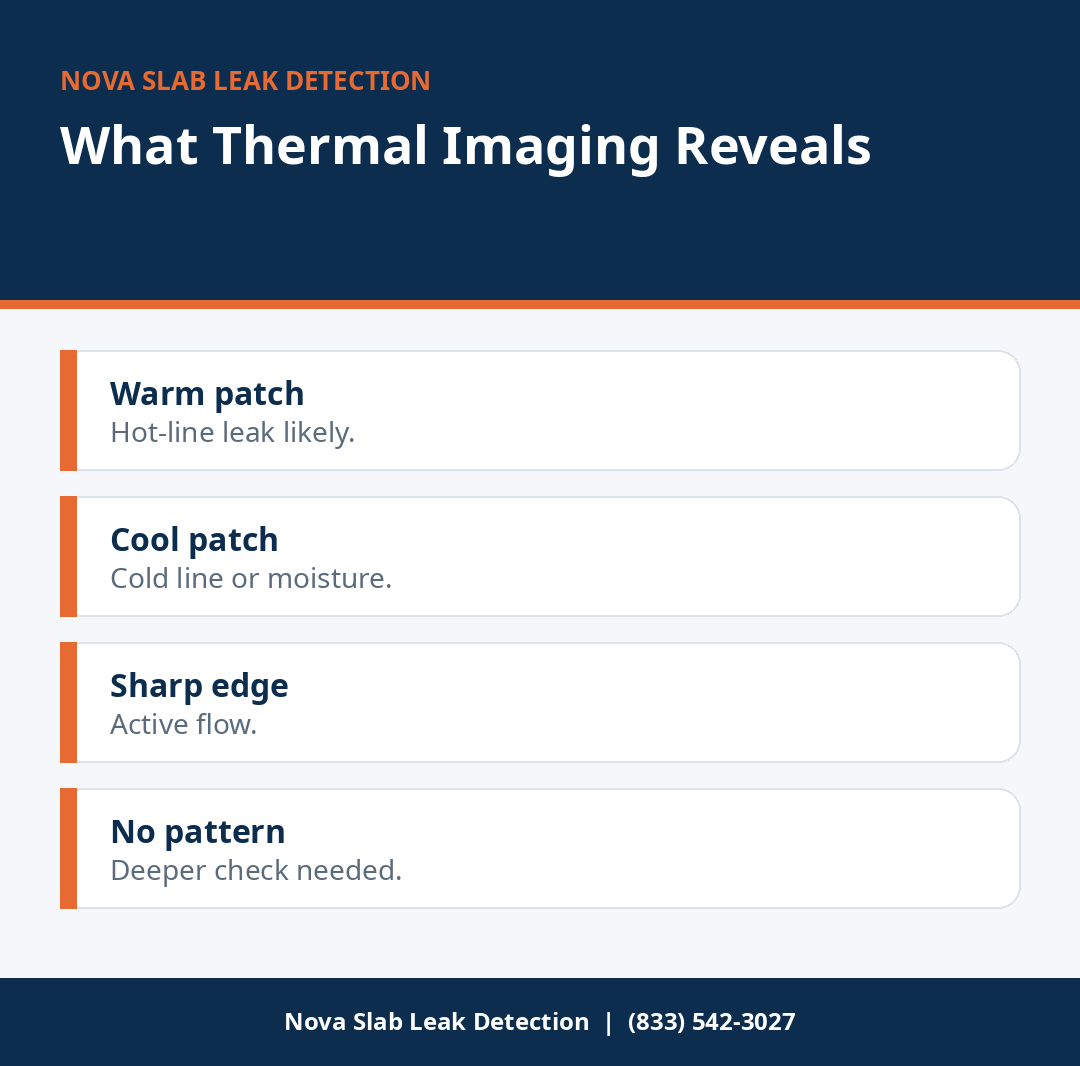
- How Does Thermal Imaging Leak Detection Work? A thermal imaging camera reads surface temperatures and turns them into a color picture of heat.
- What Are the Limits of Thermal Imaging Leak Detection? No single tool finds every leak, and an honest pro will tell you that.
- When Should You Call for Thermal Imaging Leak Detection? Call Nova at (833) 542-3027 if you find a warm floor spot plus a spinning water meter, damp flooring, or a musty smell with no visible source.
- How Much Does Thermal Imaging Leak Detection Cost? Professional leak detection runs $150-$500 nationally, up to about $600 for complex homes — national estimates as of 2026.
How Does Thermal Imaging Leak Detection Work?
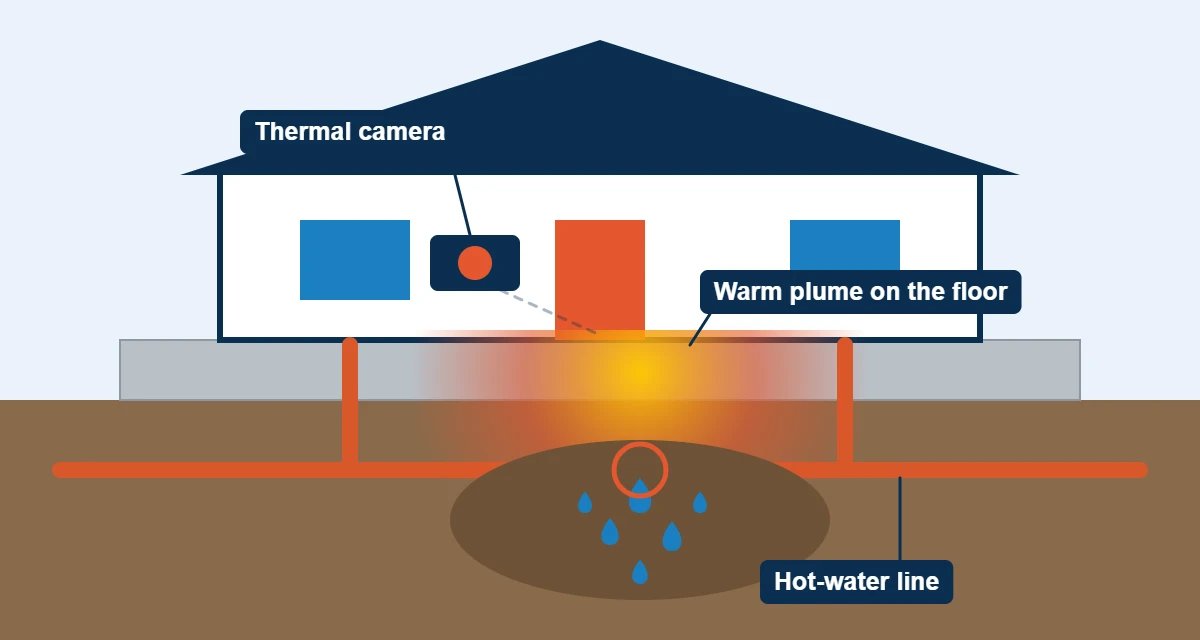
A thermal imaging camera reads surface temperatures and turns them into a color picture of heat. Thermal imaging leak detection works because hot water escaping under your slab warms the concrete and flooring above it, creating a warm pattern the camera can see. Cool areas appear blue or purple, while warm areas glow yellow, orange, or red.
Your technician walks slowly through your home holding the camera, watching the live image for unusual warm shapes on the floor. When a suspicious pattern appears, the technician marks the spot with painter’s tape and checks it against a second method, such as acoustic leak detection, before recommending any next step. Nothing is drilled, cut, or damaged during the scan itself. It is one of the fastest, least invasive tools in modern slab leak detection.
When Does Thermal Imaging Leak Detection Work Best?
Thermal imaging earns its keep in specific situations. It is the first tool many pros reach for when the clues point to a hot water line.
- Hot water supply leaks: the strongest use case, since escaping hot water creates a clear heat signature.
- Leaks under tile, vinyl, or laminate: hard surfaces transfer heat well and give readable images.
- Narrowing the search area: a quick whole-home scan tells the technician where to focus more precise equipment.
- Checking a repair: after a fix, a second scan can confirm the warm pattern is gone.
What Are the Limits of Thermal Imaging Leak Detection?
No single tool finds every leak, and an honest pro will tell you that. Thermal imaging has real limits you should know about.
- Cold-water leaks produce little or no heat signature, so the camera may miss them entirely.
- Thick carpet, rugs, and some stone floors insulate the surface and mask the temperature below.
- Radiant floor heating, sun-warmed floors, and nearby appliances create warm patches that look like leaks but are not.
- Very deep leaks or well-insulated pipes may not warm the surface enough to register.
The plain truth: thermal cameras cannot see through every flooring type equally well. That is why a careful pro never relies on the camera alone — it is always paired with listening equipment, pressure testing, or tracer gas leak detection to confirm.
What Will You See During a Thermal Imaging Scan?
The scan itself is quiet and undramatic, which surprises most homeowners. The technician moves from room to room holding a device about the size of a camcorder, watching its screen while sweeping it across the floor. On the display you will see your floor rendered in rainbow colors, shifting as the camera moves.
If a leak pattern shows up, you will see it too — typically a round or spreading blob of yellow and red against cooler blues. The technician will mark the outline with tape, take a photo of the screen for the report, and explain what the pattern suggests. The whole scan of an average home takes 20 to 45 minutes, and a full detection visit usually takes 1 to 3 hours. Detection usually pinpoints a leak within about 1 to 3 feet.
Why Is Thermal Imaging Paired With Acoustic Listening?
Pros rarely use thermal imaging alone. The standard pairing is thermal imaging plus acoustic listening, because each covers the other’s blind spots.
| Method | What it senses | Best for | Main limit |
|---|---|---|---|
| Thermal imaging | Surface heat patterns | Hot-water line leaks | Misses cold-water leaks |
| Acoustic listening | Sound of escaping water | Pressurized supply lines, hot or cold | Struggles with background noise |
| Tracer gas | Gas escaping at the leak point | Tiny or deeply hidden leaks | Slower and more involved |
| Moisture mapping | Damp areas in flooring and walls | Showing how far damage spread | Finds damage, not the source |
When the camera and the listening equipment agree on the same spot, confidence is high and the repair plan can move forward without guesswork. If they disagree, the technician keeps testing instead of cutting concrete — which is exactly what you want. Moisture readings from moisture mapping can add a third layer of confirmation.
What Can You Check Yourself Before Thermal Imaging Leak Detection?
Before you call, a few simple checks can tell you whether a professional scan is worth scheduling.
- Walk barefoot slowly across tile or hard floors and feel for patches that are warmer than the surrounding floor.
- Turn off every faucet and appliance, write down your water meter reading, wait 30 minutes without using water, and read it again. Movement means water is escaping somewhere.
- Look for damp spots, buckling wood, lifting tile, or a musty smell near the warm area.
- Note which rooms feel warm and when you first noticed it — your technician will ask.
These checks cannot confirm a slab leak, but they give the technician a head start and help you describe the problem clearly.
When Should You Call for Thermal Imaging Leak Detection?
Call Nova at (833) 542-3027 if you find a warm floor spot plus a spinning water meter, damp flooring, or a musty smell with no visible source. The phone line is open 24 hours a day, 7 days a week, and calling is free. Our technicians do the work, explain what they find, and give you the price up front.
How Much Does Thermal Imaging Leak Detection Cost?
Professional leak detection runs $150-$500 nationally, up to about $600 for complex homes — national estimates as of 2026. Thermal imaging is usually part of that visit, not a separate charge. Compare that with the water a hidden leak wastes: according to EPA WaterSense, the average household’s leaks can waste more than 9,300 gallons of water a year, and 9 percent of homes have leaks wasting 50 gallons or more a day, according to EPA WaterSense. If detection confirms a leak, your repair options are explained on the slab leak repair page.
Thermal Imaging Leak Detection: Frequently Asked Questions
Services Related to Thermal Imaging Leak Detection
- Tracer Gas Leak Detection: A safe, non-flammable gas mix pinpoints tiny slab leaks that other methods miss.
- Video Pipe Inspection: A waterproof camera travels inside your drain lines, showing exactly where cracks, breaks or roots are hiding.
- Acoustic Leak Detection: Sensitive microphones hear what your ears cannot — pressurized water escaping under your slab.
- Slab Leak Detection: How non-invasive detection finds a leak under concrete, with methods, cost and accuracy.
- Slab Leak Repair: Four proven ways to fix a leak under your slab — and how to pick the right one.
Need Thermal Imaging Leak Detection? Call Nova Today
Call any time, day or night. Tell us your ZIP code and what you are noticing, and we will book your visit.