
Foundation Settling vs Slab Leak: How to Tell the Difference
All homes settle a little. We’ll show you when it’s normal — and when it’s a leak.
Foundation Settling vs Slab Leak: Quick Answers
The short version of this guide to foundation settling vs slab leak:
- How Can You Tell Foundation Settling vs Slab Leak Damage Apart? A foundation settling vs slab leak question comes up in almost every older home.
- Why Do New Homes Settle? Fresh soil packs down. The slab cures and shrinks a bit. Wood framing dries and shifts.
- What Does Normal Shifting Look Like? Hairline cracks are the classic sign. They run thin and straight. They often sit above doors and windows.
Keep reading for the full guide to foundation settling vs slab leak.
How Can You Tell Foundation Settling vs Slab Leak Damage Apart?
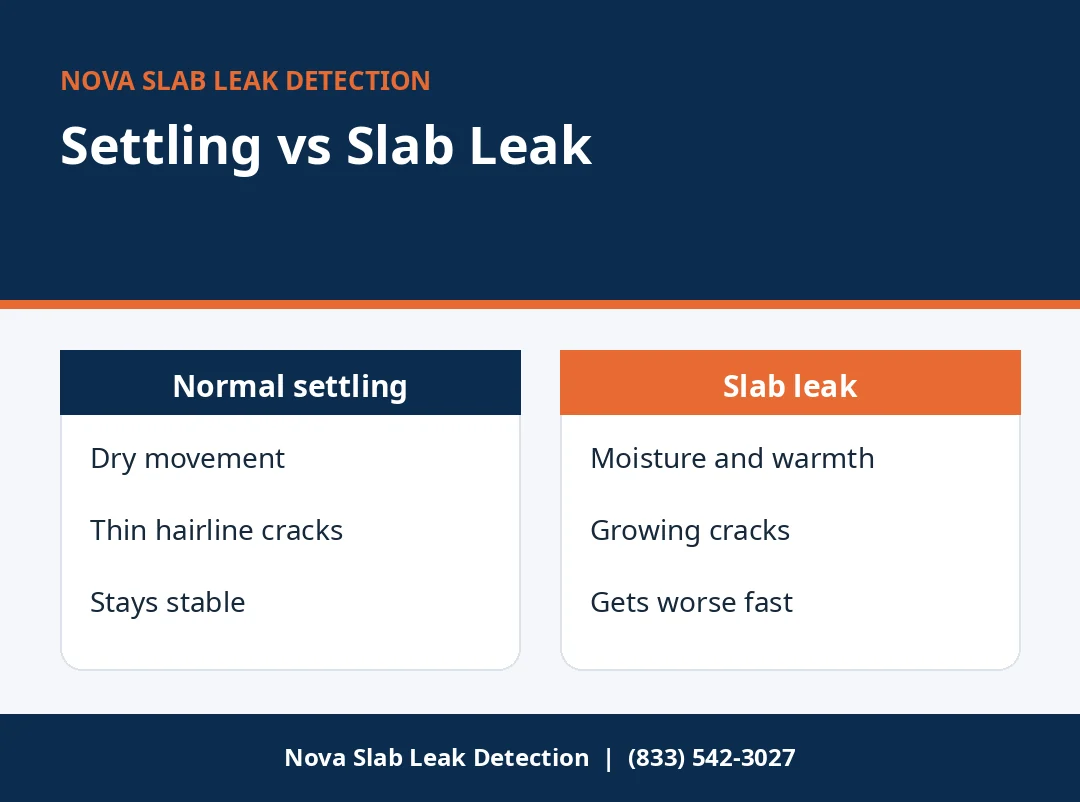
A foundation settling vs slab leak question comes up in almost every older home. Both can crack walls and shift floors. The key difference is water: settling is dry movement, while a slab leak adds moisture, warmth, or running-water sounds. Our technicians test for both. We tell you which one you have. Then we fix the real problem.
Use this quick chart. Match what you see at home.
| Sign | More like settling | More like a slab leak |
|---|---|---|
| Cracks | Thin, even, mostly cosmetic | Wide, jagged, or growing fast |
| Floors | Slow slopes over years | Warm spots or sudden dips |
| Water bill | Normal | Unexplained spike |
| Sounds | Silent | Water running with taps off |
| Dampness | Dry | Damp carpet or baseboards |
Patterns beat single clues. Two or more leak signs? Get a pro test soon.
Why Do New Homes Settle?
Fresh soil packs down. The slab cures and shrinks a bit. Wood framing dries and shifts. A bit of shift in year one is normal. Builders plan for it. Most of it stops within a couple of years.
Think of it like new shoes breaking in. Small shifts are fine. Big ones that last are not. Keep an eye on changes after year two.
How long does settling last? Most ends in two years. Moves past that need eyes on them.
What Does Normal Shifting Look Like?
Hairline cracks are the classic sign. They run thin and straight. They often sit above doors and windows. Floors may slope a touch. Doors might stick in one season and free up in the next.
How thin is “hairline”? About the width of a credit card edge or less. Wider than that deserves a closer look. Growing cracks always deserve one.
Should I Worry About Stair-Step Cracks in Brick?
Small stair-steps can be normal shift. Big shifted ones are not. If one side sits higher, call us. We will check it in person.
What Signs Point to a Slab Leak Instead?
Moisture is the giveaway. Damp carpet with no spill source. Baseboards that swell or stain. A musty smell near the floor. Warm patches on tile or wood.
Sound matters too. Hear water running at 2 a.m.? No tap is on? That is a red flag. So is a water bill that jumps for no reason. Learn how slab leak detection confirms each of these signs.
When Do Shifts Become a Problem?
Shifts turn bad when they keep going. Doors that stuck last year and still stick now. Cracks that widen month by month. Floors with new slopes. Constant shifting is never “just settling.” Get it checked. Don’t wait.
Sudden change is another trigger. A crack that appears overnight after a storm. A floor that dips in weeks, not years. Fast change means active forces. Water is often one of them.
Where Do Shift Cracks Appear Most?
Corners of doors and windows top the list. These are stress points in every wall. Exterior stucco or brick may show stair-steps. Garage floors often crack early too.
Slab leak damage shows up lower. Think baseboards, floor tile, and slab edges. Water stains creep upward from the floor. Shift cracks tend to start high on walls.
Who Should Judge Your Foundation?
We will. Our techs see both each day. We know dry shifts when we see them. We know leak damage too. Our line is open 24/7 at (833) 542-3027.
A pro eye beats months of worry. One visit gives you facts. Then you can plan with confidence.
Is the visit worth it if it’s just settling? Yes. Certainty beats worry. One check ends doubt.

How Do We Test for a Leak Under the Slab?
We run the water meter test first. Then we pressure-test each line. Sound gear hears through the slab. Thermal scans find warm spots. Most leaks are located within about 1–3 feet. Visits often take 1–3 hours.
If tests show no leak, we say so plainly. Then we explain the shifts. Honest answers are our rule.
Can Shifting and a Leak Happen Together?
Yes. And each can worsen the other. Shifting soil can stress sunk pipes. Leaking water can wash out soil. That washed soil lets the slab sink more.
Which came first? Often we can tell from the pattern. Either way, we fix the leak first. Then we advise on the foundation. Stopping water stops the cycle.
In national estimates as of 2026, detection costs $150–$500. Our satisfaction guarantee covers every visit. If something isn’t right, call us. We’ll make it right. See all plumbing problem guides for more help.
Foundation Settling vs Slab Leak: Frequently Asked Questions
Related Slab Leak Problems
More guides related to foundation settling vs slab leak:
- Hearing Running Water: You hear water, but nothing is on. We track that sound to its source.
- High Water Bill: Your bill jumped for no clear reason. We find the leak fast and fix it right.
- How Long can Slab Leak go Unnoticed: Slab leaks can hide for months. Here’s why — and how we find them.
- All slab leak problems: Every warning sign, cause and risk in one place.
- Slab Leak Detection: How we find a leak under concrete without breaking it.
The EPA estimates the average household’s leaks can waste more than 9,300 gallons of water a year (EPA WaterSense).
Foundation Settling vs Slab Leak: Talk to Nova Today
Call any time, day or night. Tell us your ZIP code and what you are noticing, and we will book your visit. Mention foundation settling vs slab leak when you call so we bring the right equipment.