
Why Does Hard Water Eat Pipes From the Inside?
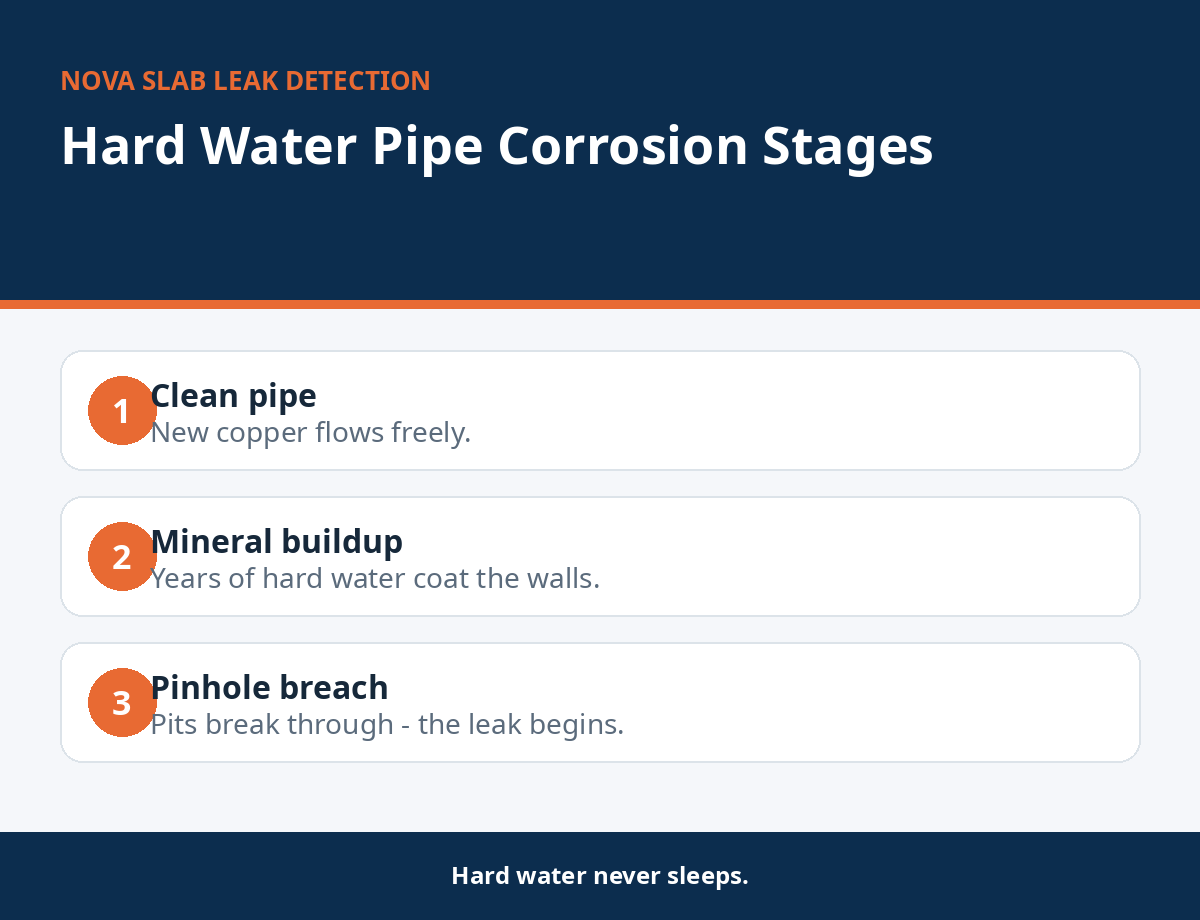
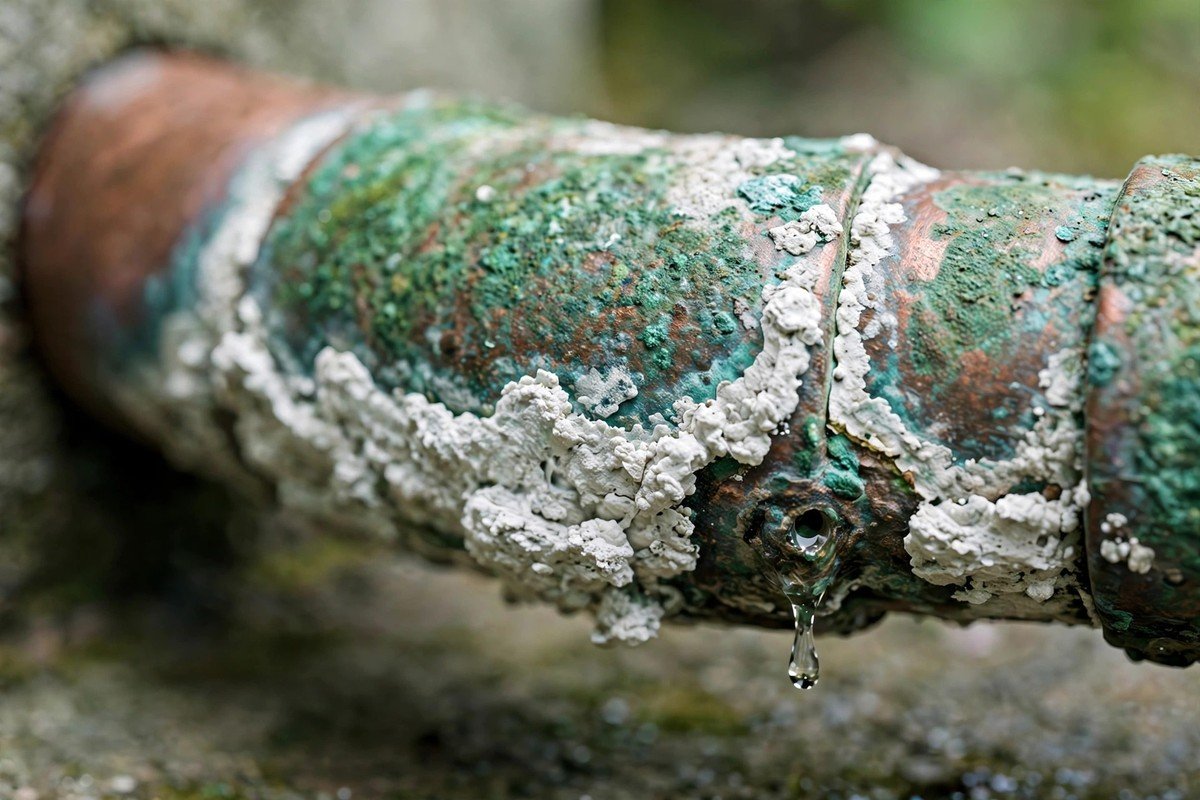
Drought, storms, and frost all take turns. Hard water never does. A hard water slab leak year round forms as minerals in your water eat copper pipe from the inside, thinning walls until pinhole leaks break through under your slab. No season starts it. No season stops it. Each shower and each hot water draw feeds the wear.
This guide is one entry in our seasonal slab leak guide series. Read on for how it works and how to fight it.
How Do Minerals Wear Down Copper Pipe?
Hard water holds dissolved calcium and magnesium. These minerals harm pipes in two ways. First, they form scale, a crust that narrows the pipe. Second, and worse, hard water eats copper itself. It thins pipe walls year by year.
Harm hits hot water lines first. Heat speeds the wear. The hot line to your shower or sink often fails first. Pinholes start as tiny pits in the pipe wall. They grow in the dark until one breaks through. Then water sprays soil under your slab.
Why is hard water harm unseen until it leaks?
It all takes place in the pipe. The pipe face can look fine while the wall grows thin as paper. By the time you see a sign, the pipe has lost metal for years.
Does hard water harm plastic pipes too?
Less so. Scale still forms in plastic pipe. But the eat-away of the wall is mostly a copper woe. Homes with copper under the slab face the most risk.
When Does Hard Water Harm Peak?
It never peaks and never rests. But some patterns speed it up.
- Hot water lines wear first. Heat speeds wear, so watch hot-side signs first.
- High-use homes wear faster. More water through the pipe means more mineral touch.
- No softener means full force. Each gallon hits the pipe raw.
- Old pipe has less spare. Years of wear leave thin walls that fail sooner.
The harm never pauses, so test your water and act now.
Where Is Hard Water Hardest on Slab Pipes?
Arizona, Nevada, Texas, and Florida all sit in hard water belts. Ground water there holds heavy mineral loads. In these states, owners face a dual threat. Seasonal soil shift plus year-round mineral wear.
But hard water is not just a Sun Belt tale. Much of the Midwest and Plains has very hard water too. Lime rock lands tend to make hard water. Your water firm posts hardness each year. Look for grains per gallon.
Can city water run hard?
Yes. City plants make water safe, not soft. Many city feeds still run hard enough to thin copper over the years.
Who Should Worry Most About Hard Water?
Four groups should act first.
- Homes with copper pipe under the slab — copper is the metal hard water eats.
- Homes with no water softener — raw hard water hits pipes at full force.
- Owners of older homes — long years of wear leave the thinnest walls.
- Heavy hot water users — big homes and long showers wear hot lines fastest.
If you have copper pipe, hard water, and no softener, you sit in the top risk group. A water test costs little. It tells you just where you stand.
How Can You Tell Your Water Is Hard?
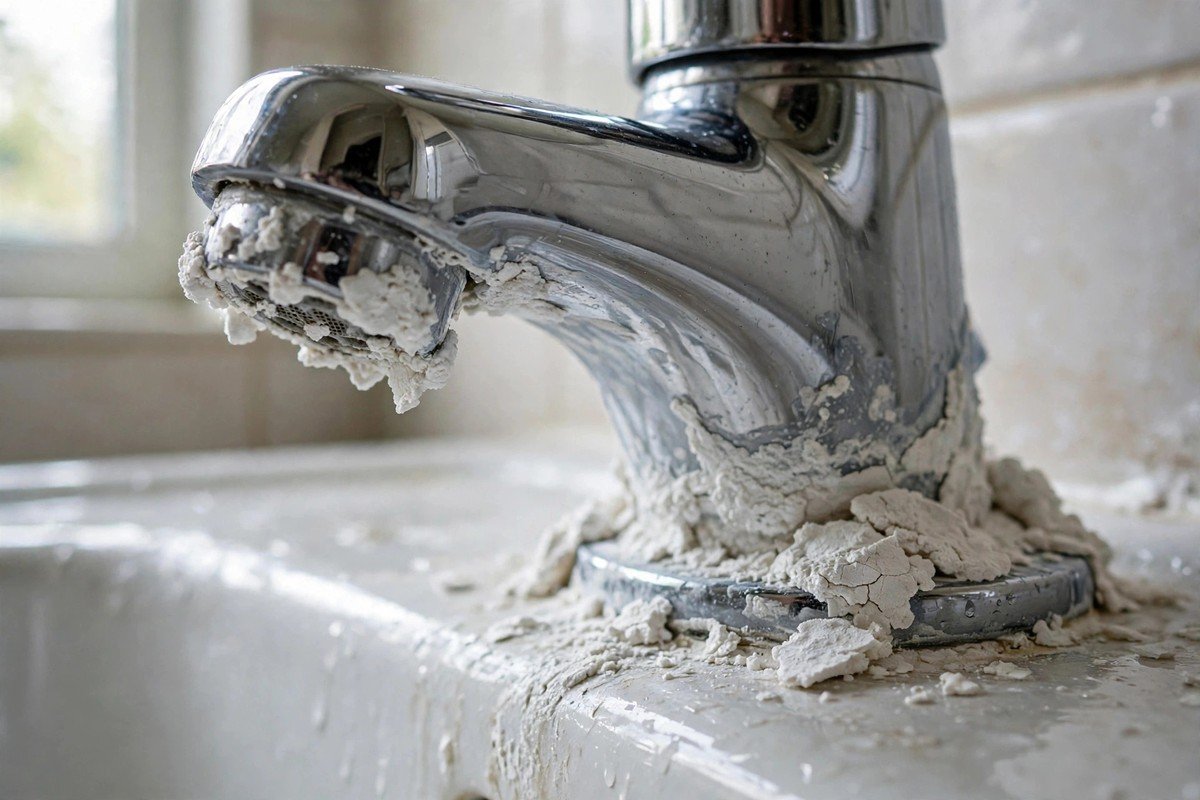
Your home shows signs long before pipes fail. Look for these.
- White, chalky scale on taps, shower heads, and fixtures.
- Spots on dishes that live through the wash.
- Soap that will not foam and wash that feels stiff.
- A water heater that rumbles — scale coats the tank too.
- Past pinhole leaks or pipe fixes in the home.
For a firm count, test your water. Home strips give a rough read in minutes. Your water firm’s yearly report lists true hardness. Past 7 grains per gallon counts as hard.
Do water softeners truly guard pipes?
Yes. A softener pulls minerals out before they reach pipes. That slows both scale and wear. It cannot heal thin pipe, but it guards what is left.
How Do We Find Pinhole Leaks From Hard Water?
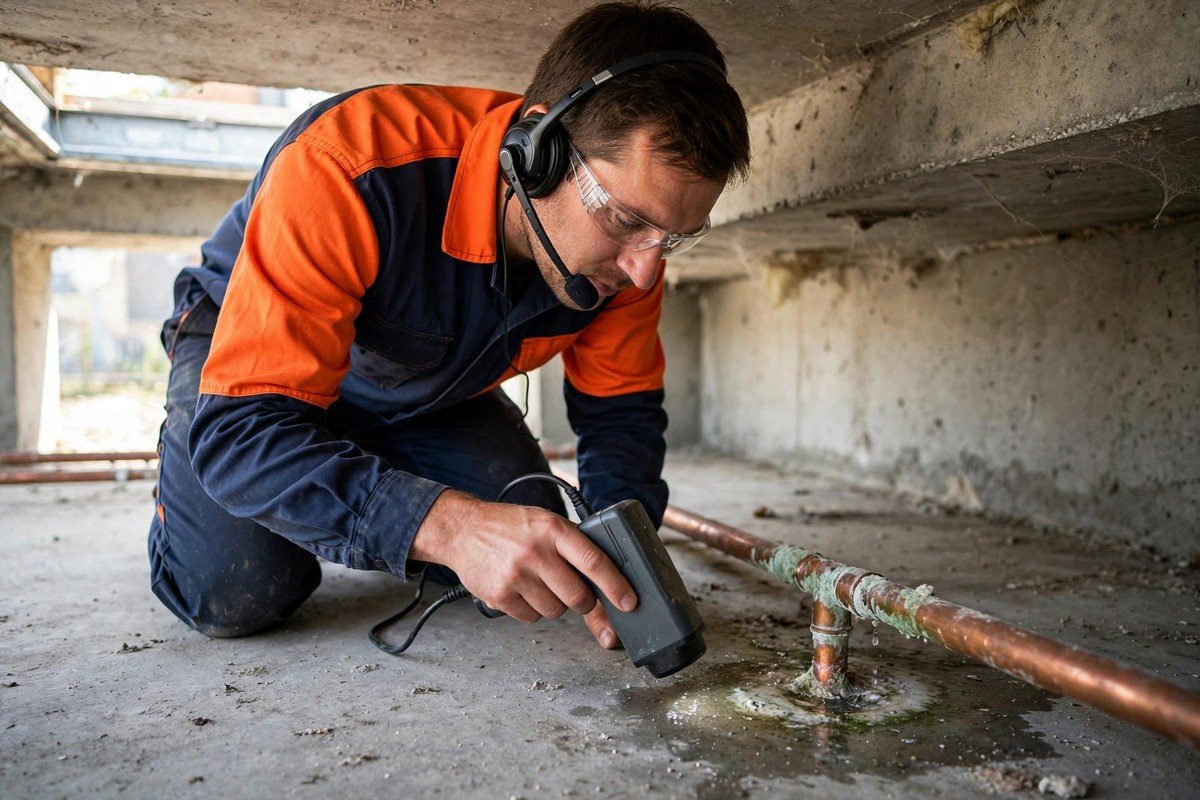
Our technicians answer 24/7 in the hard water states and in all 50 states plus D.C. Pinholes run small and soft, which makes them hard to hear. But our sound gear, pressure tests, and heat scans are made for just this. Expect a one-to-three-hour visit. We trace the leak down to about one to three feet. A detection visit is $150–$500 as national estimates as of 2026.
Your technician will also say how wide the wear runs. One pinhole in sound pipe points to a spot repair. Pinholes all down the run point to a reroute — and to a softener, so new pipe does not meet the same fate. See each option and its price in our cost guide. Dry states face this threat most — see our summer drought guide.
Can one pinhole mean more are on the way?
Often, yes. Pinholes come from wear all down the line, so one break tends to mean thin walls elsewhere too. Your technician will check the full run, not just the one leak.
How Can You Shield Your Pipes Year-Round?
Five shields slow hard water harm.
- Test your water. Know your hardness count. Act on facts, not hunches.
- Fit a water softener. It pulls minerals out before they reach pipes.
- Flush the heater each year. Scale in the tank warns of scale in pipes.
- Watch hot water lines. They fail first, so mind hot-side bills and warm floor spots.
- Book a visit at the first sign. Pinhole leaks grow. Early finds mean small fixes. A softener plus early checks is the best shield.
FAQs
How long does hard water take to cause a slab leak?
Most years 15 to 25 years of slow wear, though very hard water and hot lines can fail sooner. The harm stays hidden the whole time, which is why tests and checks count.
Will a softener fix pipes that run thin?
No. A softener halts new harm but cannot build back lost metal. Thin pipe stays thin. Pair the softener with a visit to learn where your pipes stand.
Are pinhole leaks paid by insurance?
At times the water harm is paid, while the pipe fix often is not. Slow wear is a common opt-out. Check your plan or agent, and take photos first.
Is hard water bad for health?
No. Hard water minerals pose no health threat at normal counts. The risk hits your pipes and gear, not you.
Can I soften just the hot water line?
Whole-home softening guards each pipe and each fixture. Half softening leaves half the home bare. Most homes soften it all.
Do plastic PEX pipes end the hard water woe?
PEX shrugs off the wear that thins copper, so a PEX repipe ends the loop. Old copper under your slab still needs a check. If you see scale or a leak sign, call (833) 542-3027 — we are open 24/7 and a visit can catch small leaks.