
Why Does This Slab Leak Glossary Exist?
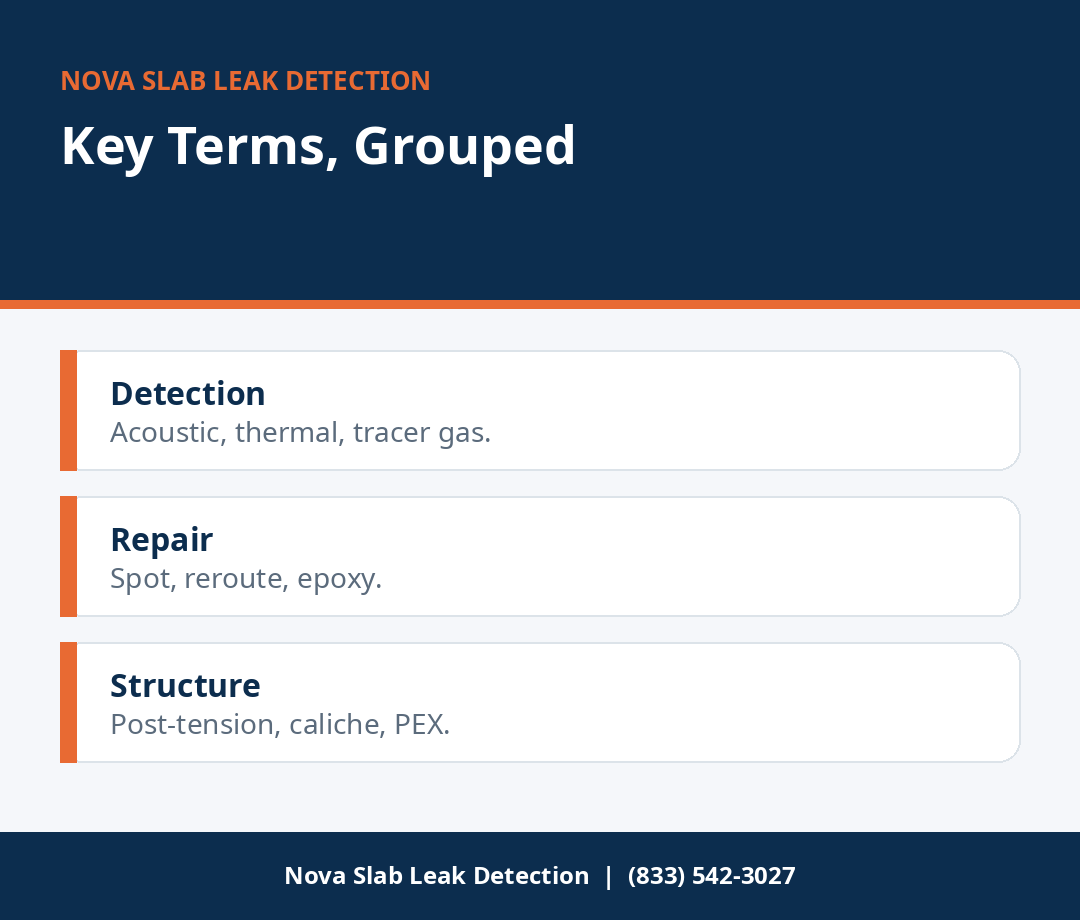
This slab leak glossary spells out 20 terms in plain words, so you can track any talk about your home. When you know the words, you can ask sharp questions and make wise picks. Scan the terms in A-to-Z order below.
| Group | What it covers | Example terms |
|---|---|---|
| Detection | How leaks are found | Acoustic detection, tracer gas, thermal imaging |
| Repair | How leaks are fixed | Reroute, spot repair, epoxy lining |
| Slab and pipes | Your home’s structure | Post-tension slab, PEX, copper pitting |
What Is Acoustic Detection?
Sound gear that hears leaks. Leak water hisses or whooshes down below. We use keen mics and earphones to catch it through concrete.
Which term will I hear most often from a technician? Acoustic detection and reroute come up a lot. They are two of the most common words in how we find leaks under concrete.
What Is Backflow?
Water that runs the wrong way in a pipe. It can drag grime into clean lines. It is a water health issue, not a leak. Check valves stop it.
What Is Caliche?
A hard, rock-like soil layer. It is rife in dry parts of the land. Pipes that rub on caliche can wear thin in time. Thin spots can spring leaks under the slab.
What Is Copper Pitting?
Tiny pits that eat at copper pipe walls. In time the pits turn to pinhole leaks. Harsh water speeds the rot. Learn how long copper holds up in our copper pipe lifespan FAQ.
What Is Epoxy Lining?
A fix that coats pipe walls with resin from the inside. The coat sets hard and plugs small leaks. No floor gets torn up. It fits pipes that are still sound.
How does epoxy lining compare to repiping? Epoxy seals the pipe from the inside. Repiping replaces it. See epoxy lining vs. repiping for the full comparison.
What Is a Hydrostatic Test?
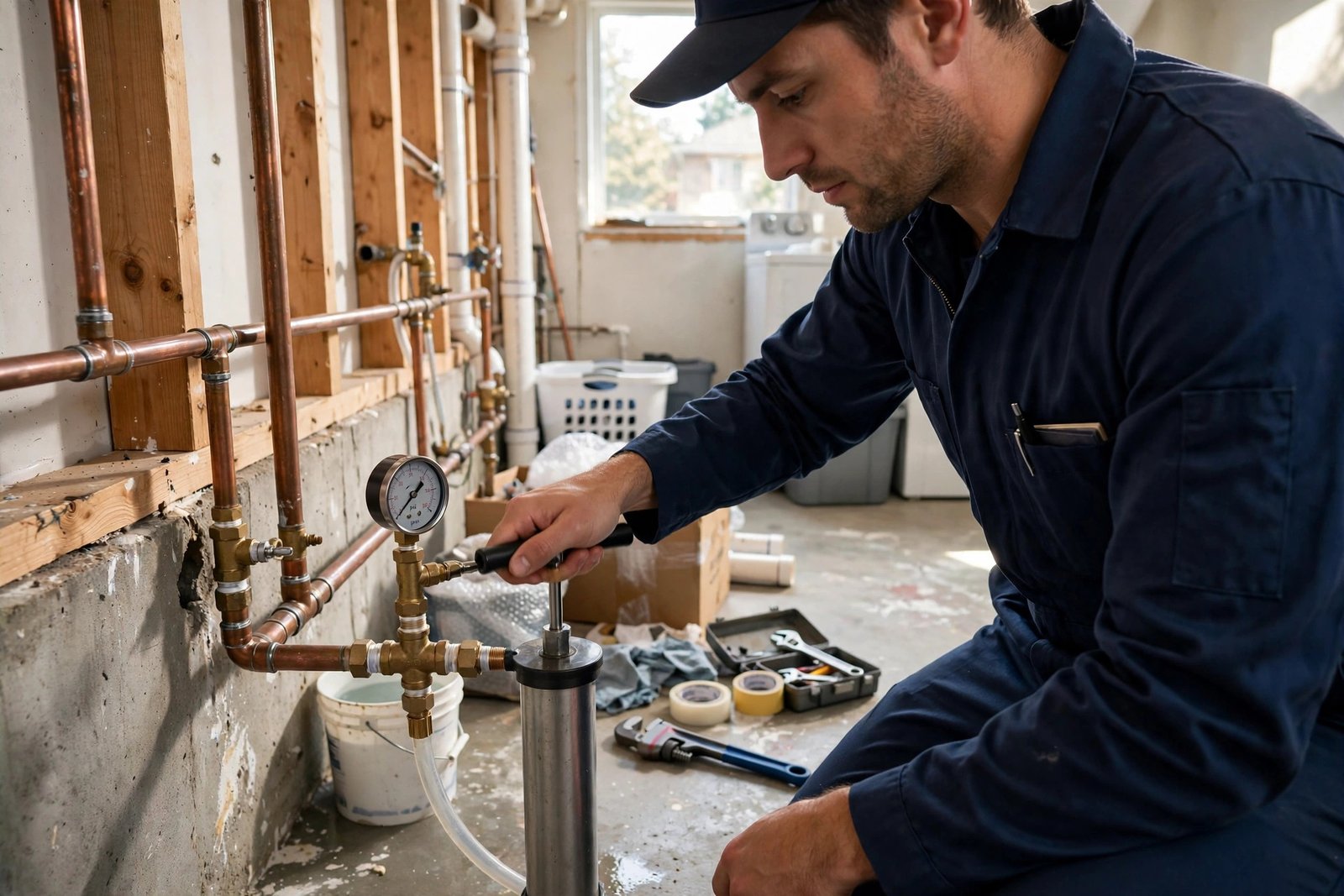
A test that fills pipe with water under force. Then we watch the gauge for a dip. A dip means water slips out someplace. It is a tried-and-true way to prove a leak is real.
What Is a Manifold?
A hub where water lines split off. One main line runs in. Small lines run out. Each line tends to have its own shutoff. Hubs make reroutes and fixes less of a chore.
What Is PEX?
Bendable plastic pipe. It curves past blocks with few joints. We use it for reroutes and full repipes. It stands up well to scale and frost.
What Is a Post-Tension Slab?
A slab laced with steel cords pulled taut. The cords get set once the pour firms up. They lend the slab great strength. Cuts in this slab type need added care.
Why does my slab type matter for repairs? Some repairs, like spot repairs, break the floor. With a post-tension slab, our technician plans the cut to avoid the cables. See post-tension slab repair for details.
What Is a Pressure Test?
A check that sees if pipe holds force. We fill the line with air or water. Then we eye the gauge. A drop spells a leak. It proves a leak but will not pin its spot.
What Is a Reroute?
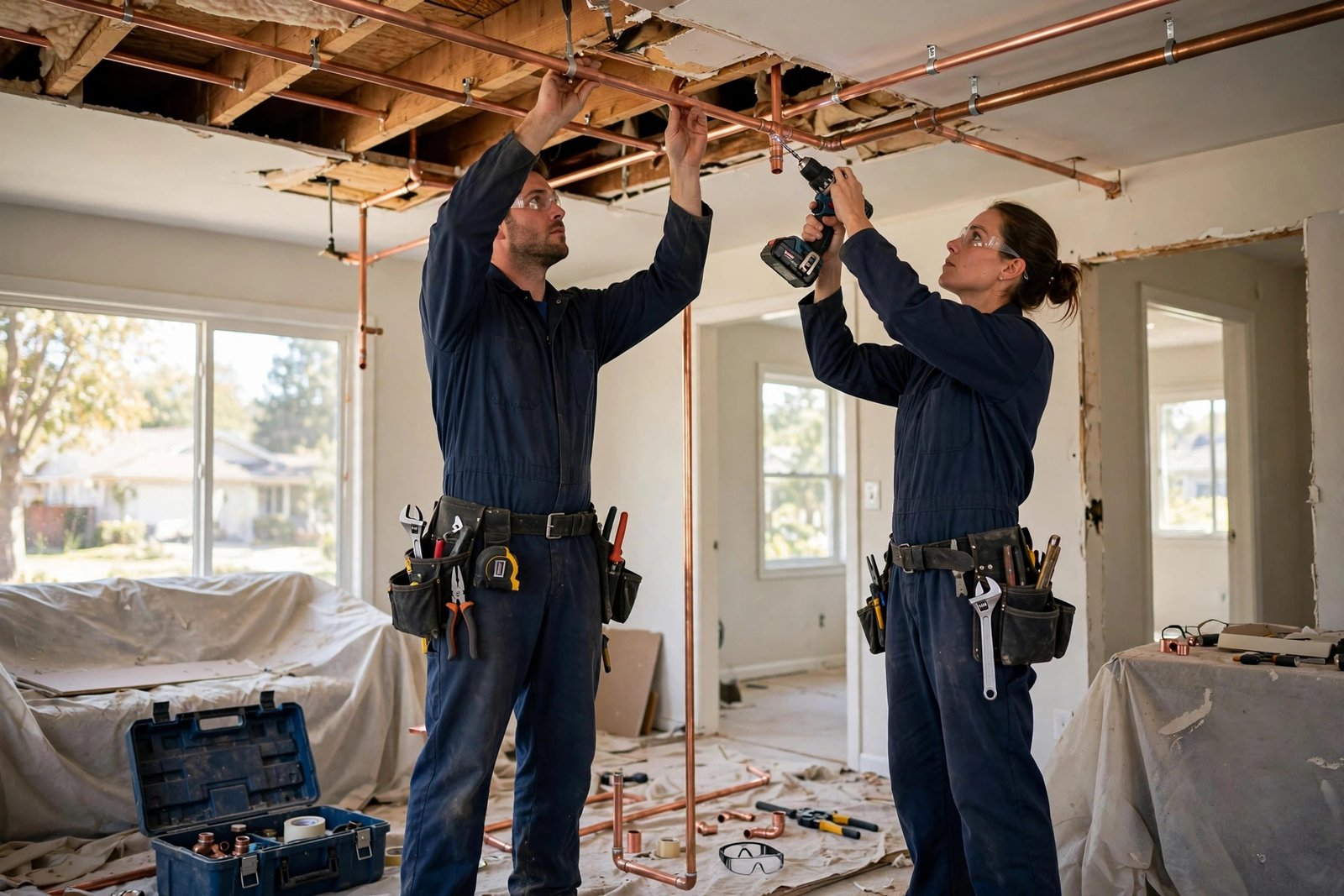
A new pipe path that skirts the slab. The new line tends to run through walls or the loft. The old leaky line stays put, capped off. Your floor stays whole.
What Is Slab Curl?
Slab rims that lift or curl up. Shifts in soil damp can bring it on. It can crack floors and trim boards. A leak down below can feed the damp that brings curl.
What Is a Slab Penetration?
Each spot where a pipe runs through the slab. Each such spot can be a weak link. Water lines, drains, and sleeves all pass through. Shifts there can strain pipes.
What Is Soil Compaction?
Soil packed down hard before the pour. Firm soil holds the slab up true. Loose soil can sag and leave gaps. Gaps let pipes shift, and pipes that shift can leak.
What Is a Spot Repair?
A dig at one marked spot to mend one leak. We trace the leak first, then breach the floor right there. It is the straightest fix for a lone leak. All else down below stays as is.
What Is Thermal Imaging?
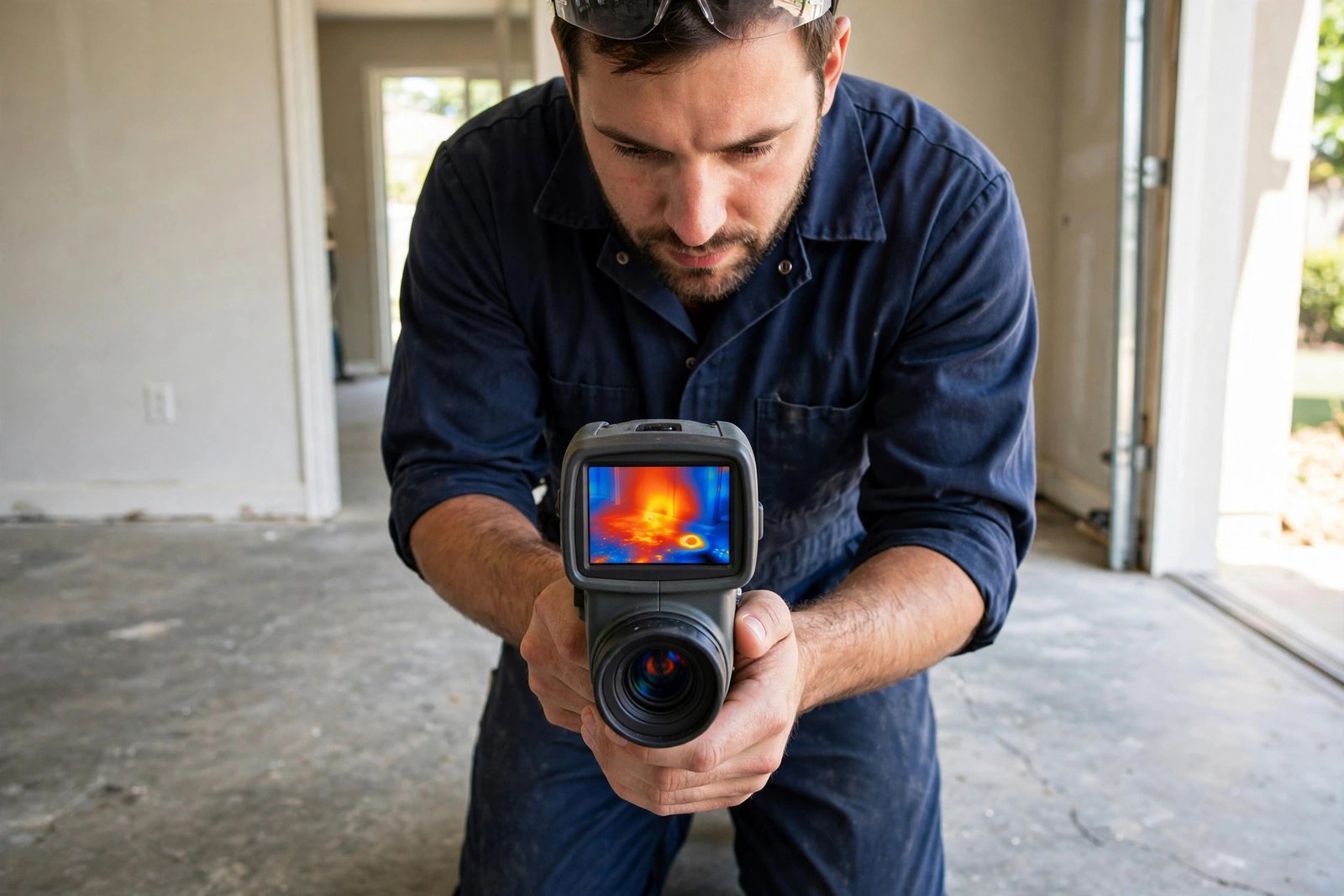
A heat-seeking cam view. A hot leak warms the slab just above it. The cam shows that warm patch well. It works best on hot water lines.
What Is Tracer Gas?
A safe gas fed to a water pipe. The gas slips out at the leak. We catch it at the floor with a sniffer. It finds leaks when water sounds run faint.
Is tracer gas safe for my family? Yes. The gas is non-toxic. It is used in tiny amounts and leaves no residue.
What Is Tunneling?
A path dug under the slab from outside. We reach the pipe with your indoor floor left whole. Dust and noise stay out of your rooms. It tends to cost more than a spot dig.
What Is a Vapor Barrier?
A plastic sheet laid under the slab. It blocks ground damp from seeping up. With no sheet, damp can reach your floors. It fights damp, not pipe leaks.
What Is Water Hammer?
A loud thud in your pipes. It hits when flow halts fast, as when a tap slams shut. The jolt strains joints in time. Long-term banging can shake joints loose and breed leaks.
Learn more on our detection services or browse the resources hub.
FAQs
What is the most common cause of slab leaks?
Copper pits, soil shift, and water hammer wear pipes thin over the years. Loose soil and caliche add strain. Age is the top cause of all.
Do I need to know these terms before calling?
No. You never need the trade talk. We spell it all out in plain words when we come by.
What is the difference between a pressure test and a hydrostatic test?
A hydrostatic test is a pressure test run with water. Other kinds run with air. Both hunt for a loss of force.
Is a reroute better than a spot repair?
It hinges on your pipes. A spot fix mends one leak. A reroute skirts a weak line. We will name the fit for your home.
Can thermal imaging find cold water leaks?
It works best on hot lines. Cold leaks show faint. Tracer gas and sound gear cover cold lines well.
What should I do if I hear water hammer?
Do not brush it off. Long-term banging strains your pipes. Call (833) 542-3027 and we will find the cause.