
How Do We Locate a Leak Hidden Under a Concrete Slab?
Here is how we find leaks under concrete: our technicians combine proven detection methods to pinpoint the leak within about 1 to 3 feet, so we only open the slab once we know exactly where the problem is. We never dig first and hope for the best. Each step confirms the last. The visit takes one to three hours.
A slab leak is a broken pipe under your concrete base. Water seeps into the soil below your home. You may hear running water, feel warm spots on the floor, or see a high water bill. These signs say a leak is there. They do not say where. That is where we come in.
Think of a doctor. They find what is hidden. We use tools that listen, sense heat, and read pressure. The tools lead us to one small spot. Then, and only then, do we open the slab.
Want the full picture of how we find leaks? See our slab leak detection page. For quick answers on other topics, browse our slab leak FAQs.
What Tools Do Our Technicians Use to Find Slab Leaks?
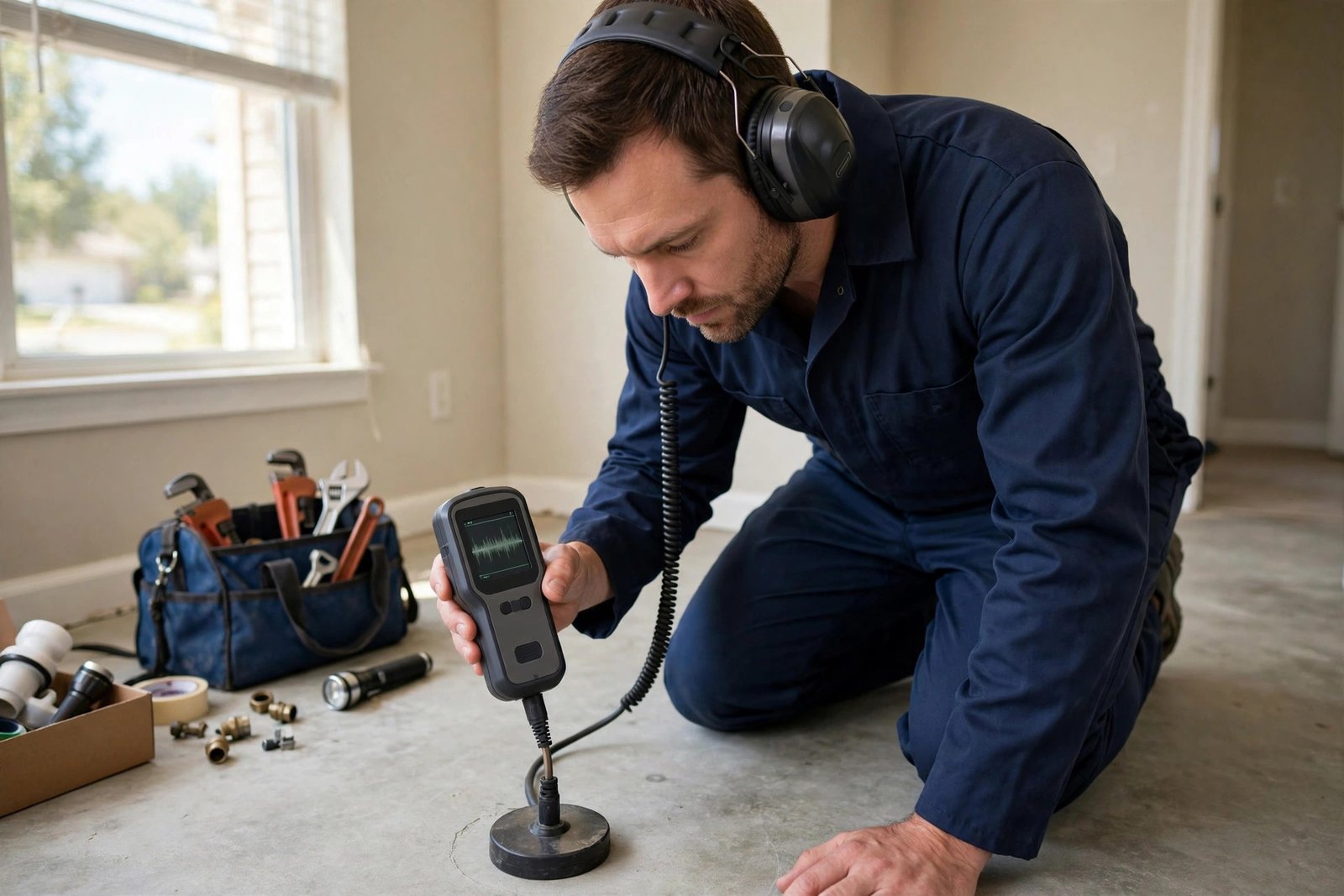
We bring good gear to every job. Each tool adds a clue. They shrink the search zone.
| Tool | What it tells our technician |
|---|---|
| Acoustic listening gear | Where water sounds are loudest under the slab |
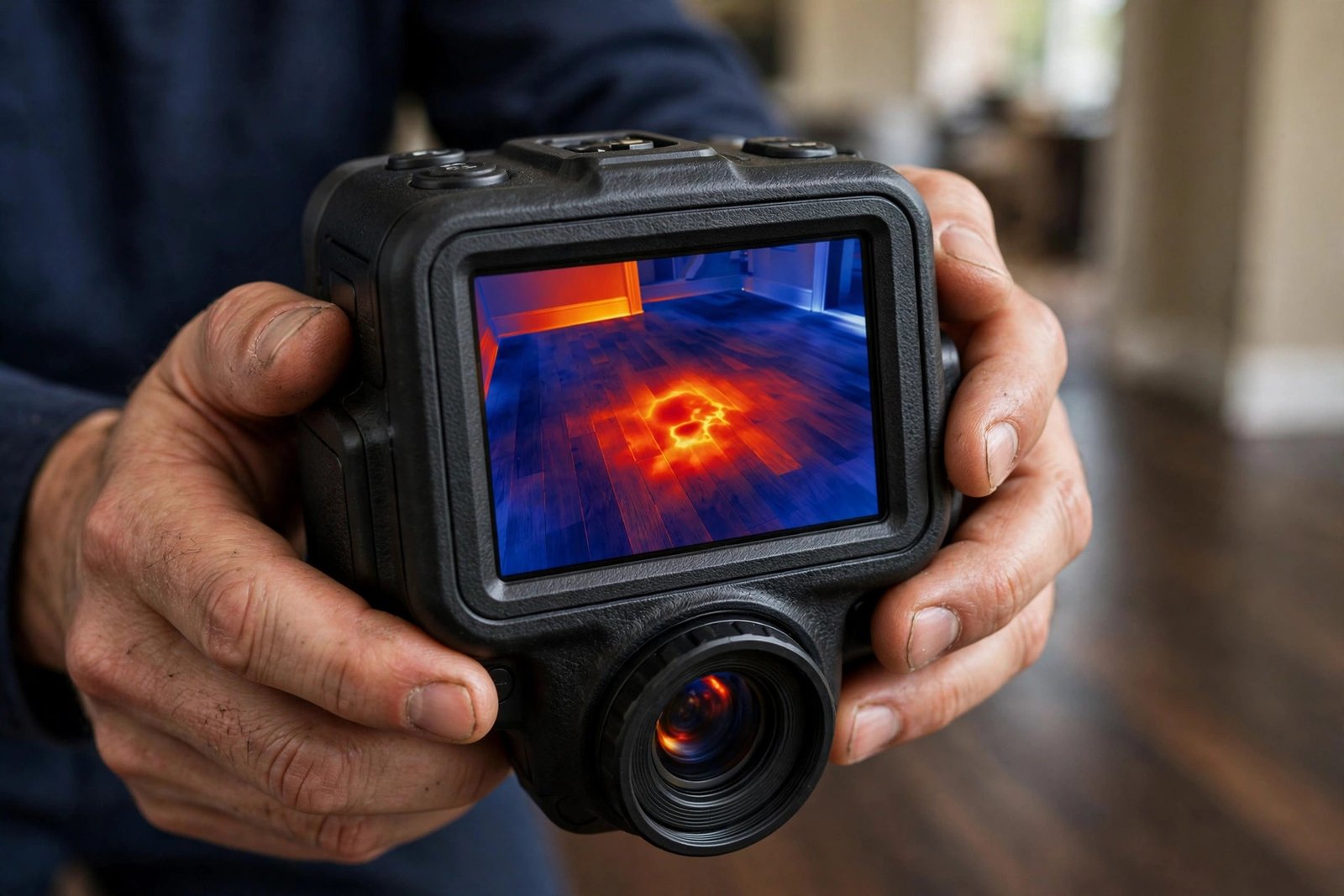
| Thermal imaging camera | Where hot water leaks warm the floor above |
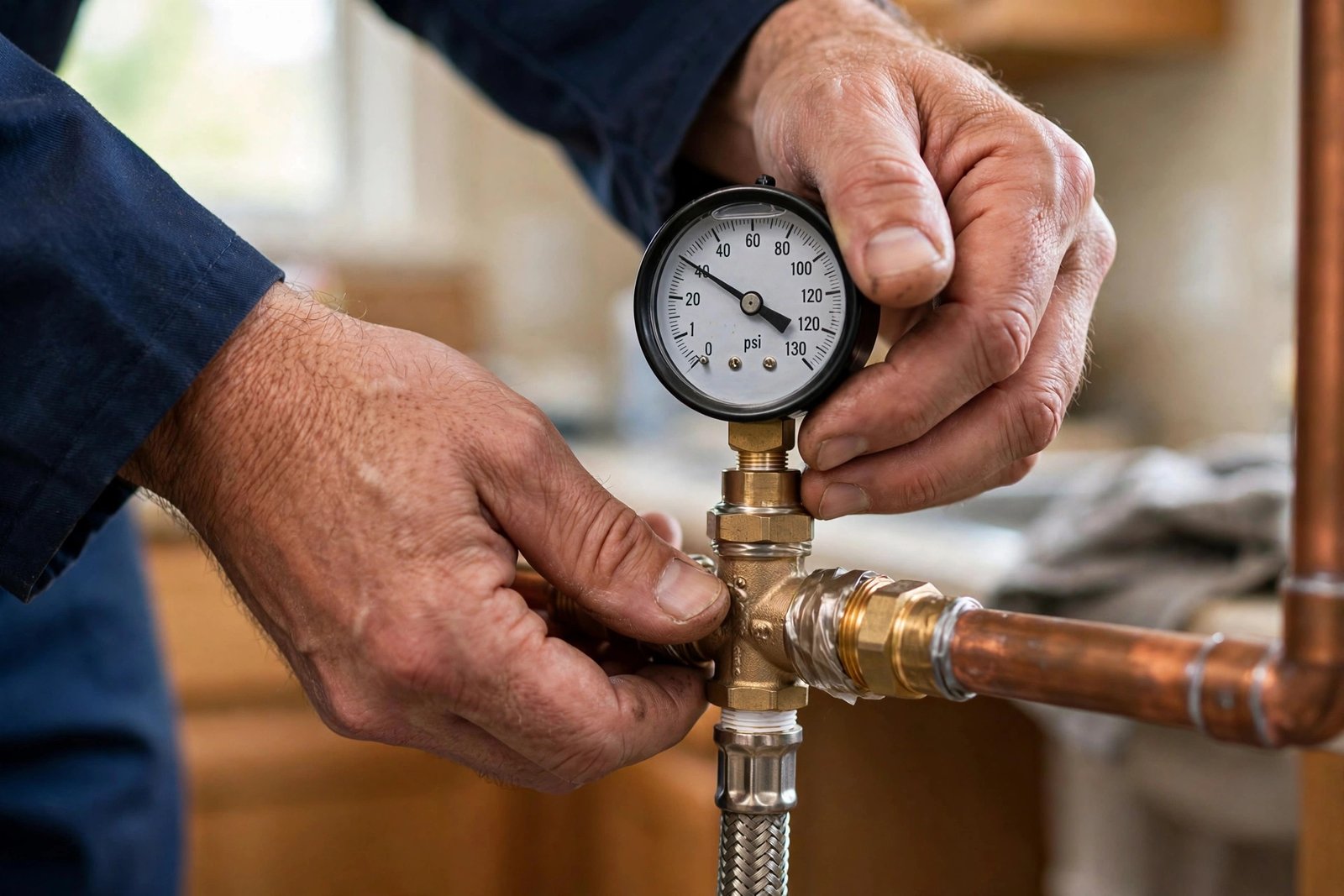
| Line pressure testing | Which pipe run is losing pressure |
| Tracer gas detection | Where safe gas escapes through the break |
| Moisture meter | How far dampness has spread in floors and walls |
Sound gear picks up the hiss of water leaving a pipe. Ground mics make faint sounds loud enough to hear. Heat cameras spot warm patches on the floor from hot water leaks. Pressure tests show which line is failing as gauges drop. Tracer gas marks the exact path of the leak up through the concrete. Moisture meters map how far the water has spread into floors and walls.
No single tool does it all. That is why we use several and cross-check the results.
What Are the Steps in How We Find Leaks Under Concrete?
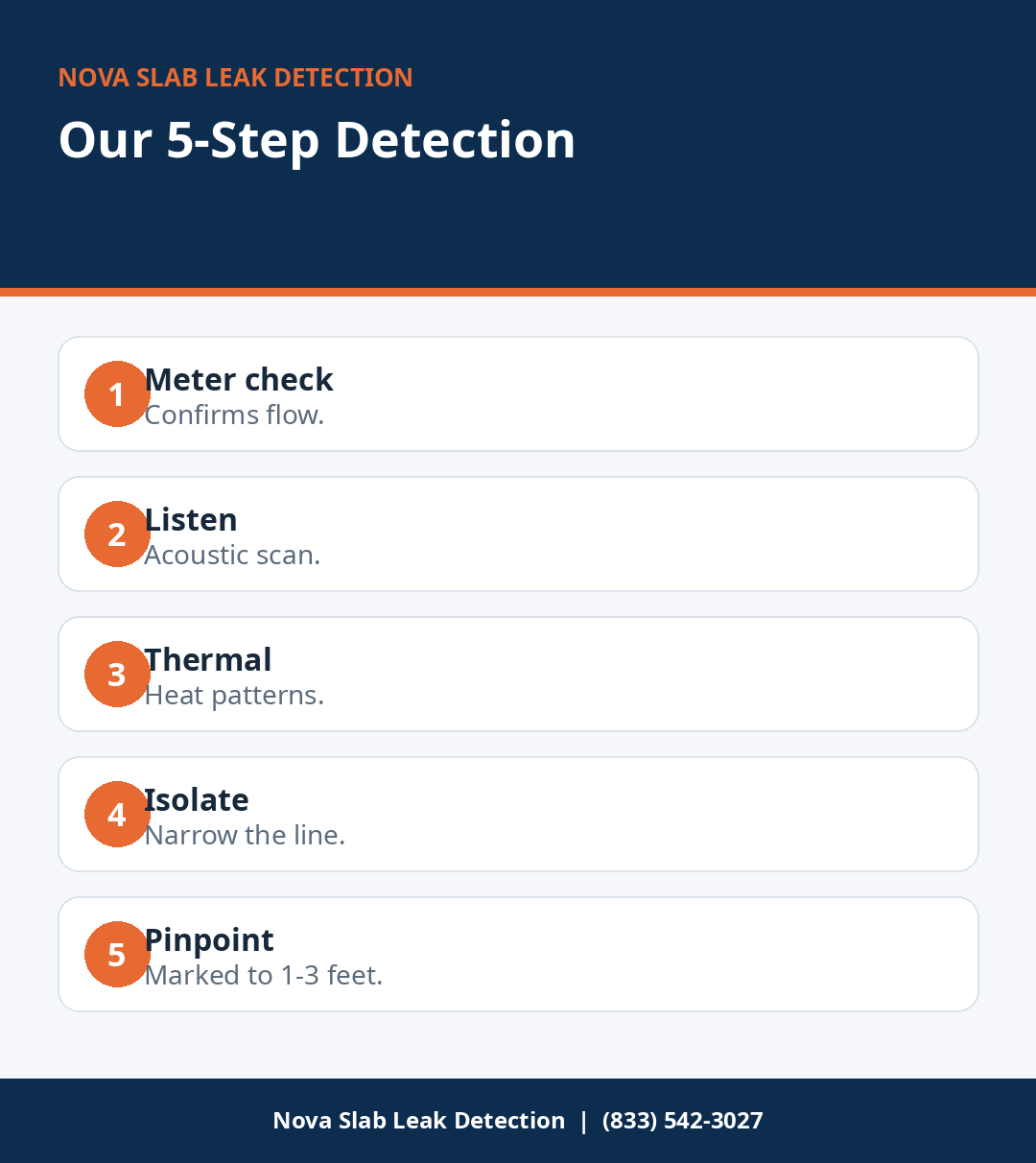
Our visit has five steps. Each step builds on the last. The search gets tighter as we go.
- Meter check. Your technician confirms water is flowing when everything in the house is off. This proves a leak exists before we start hunting.
- Isolation test. We shut off valves zone by zone to learn which part of the plumbing loses pressure. This narrows the search to one pipe run.
- Acoustic sweep. Listening gear scans the slab along that pipe run. The loudest spot marks the leak zone.
- Thermal scan. A heat camera checks the floor for warm patches or cool damp areas. This backs up what the listening gear found.
- Pinpoint and mark. Your technician marks the leak location within about 1 to 3 feet. No digging happens until this point.
The whole visit takes one to three hours. Most homes need just one visit to get a firm answer.
How Accurate Is Our Leak Pinpointing?
We mark leaks within about 1 to 3 feet. That sounds like a range. But it is small enough for one neat access point. This is why we rarely break up large parts of your floor.
No more cutting holes and hoping. Our gear ends that. When we mark a spot, the leak is there. That keeps repair costs down and your floors mostly whole.
Hear water when no tap is on? Our page on hearing running water explains what that sound means and what to do next.
When Should You Call Us Instead of Guessing?
Call us when the signs point to a slab leak but you cannot see the source. Warm spots, damp floors, the sound of running water, and a bill that jumps fast are all worth a visit. Guessing cuts concrete in the wrong place. That costs far more than a visit to find the leak.
Finding the leak runs $150–$500. That is the 2026 national estimate. Tough jobs run up to about $600. Compare that to opening your slab in three wrong spots. The math is simple. One true visit beats a week of guesswork.
We are open 24/7. Call when you spot trouble.
Do our technicians dig to find the leak? No. Digging only starts after we pinpoint the leak location with our gear.
Can our technicians find leaks under tile or wood floors? Yes. Acoustic and thermal tools work through common floor coverings.
Will detection damage my floors? No. All five methods are non-invasive. Nothing is cut or drilled during detection.
Do we serve homes outside big cities? Yes. Our technicians serve homeowners across all 50 states and Washington, DC.
FAQs
How long does it take to find a leak under concrete?
Most visits take one to three hours. Hard pipe layouts can take a bit longer.
Can a hot water slab leak be found faster?
Often, yes. Hot leaks make warm spots that heat cameras spot fast.
Must I be home for the detection visit?
Yes. We need to reach your fixtures, meter, and shut-off valves.
What happens if no leak is found?
We tell you what the tests showed and what to check next. You still get answers.
Is finding the leak part of the repair price?
No. Each has its own price. You always know what each step costs.
Can you detect a leak under an addition or garage slab?
Yes. The same tools and steps work under any concrete slab you own.