
How Is a Post-Tension Slab Leak Repaired?
A post-tension slab is hard concrete with tight steel cables. When a leak hides in one, post tension slab repair means we map the cables first, then steer clear of them. A reroute tends to be the fix. We never cut a live cable. A cut can hurt and crack the slab.
What Does Post Tension Slab Repair Mean?
It means fixing a pipe leak in a slab with steel cables. “Post-tension” means the cables were pulled tight after the pour. Our technicians treat the slab with care. Those cables hold huge force.
Why Is It Dangerous to Cut a Tension Cable?
A tight cable packs force. If cut, it can lash back and harm those close. It can also wreck the slab. That is why we never cut a cable. Safety leads each job.
Can a cut cable be fixed? It is a major engineering job and very costly. Avoiding the cables in the first place is far safer and cheaper.
How Do Our Technicians Work Around the Cables?
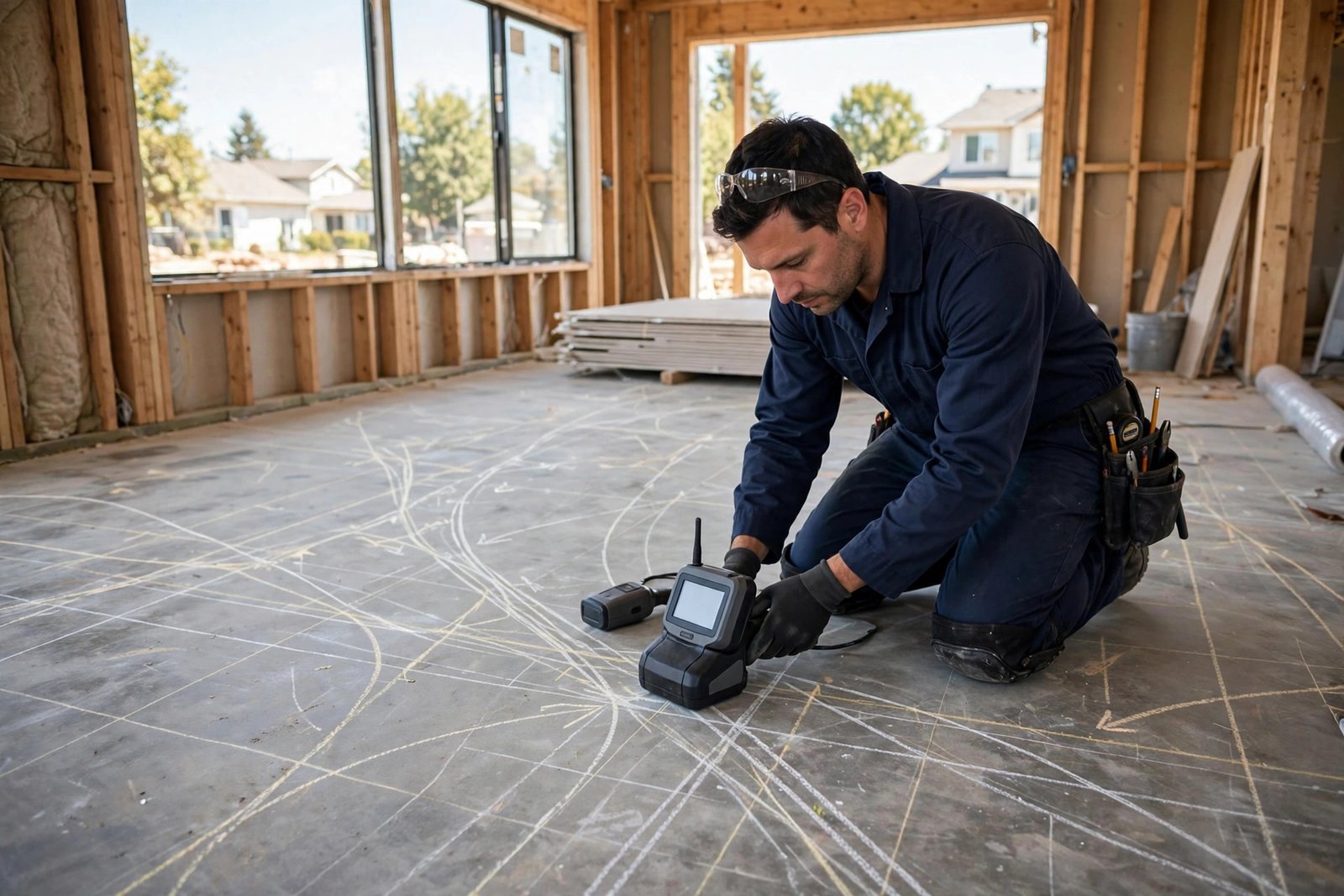
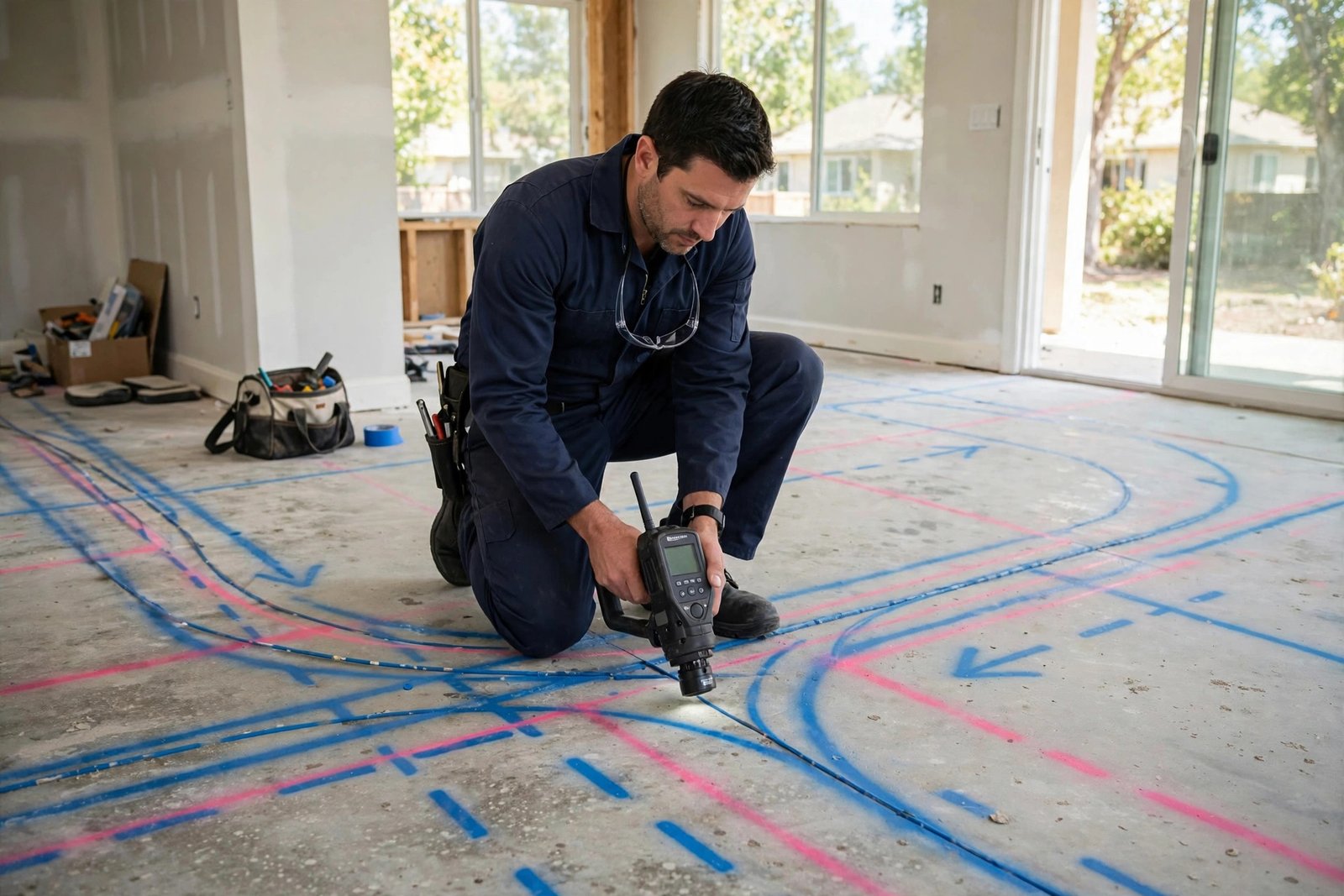
We find the cables first. Then we pick a path that skirts them.
- Detect the leak. We pinpoint it within about one to three feet, as in a normal detection visit.
- Map the cables. Our technicians trace where the cables run in that area.
- Plan the repair. We pick a repair method that avoids every cable.
- Repair or reroute. We fix the leak with the cables untouched.
No dig starts till the cable map is clear. Our detection service page shows how the first visit works.
How do you know where the cables are? Our technicians use cable-locating equipment to trace them before marking any dig zone. The map guides every step after that.
Is a Reroute Better Than Digging Up the Slab?

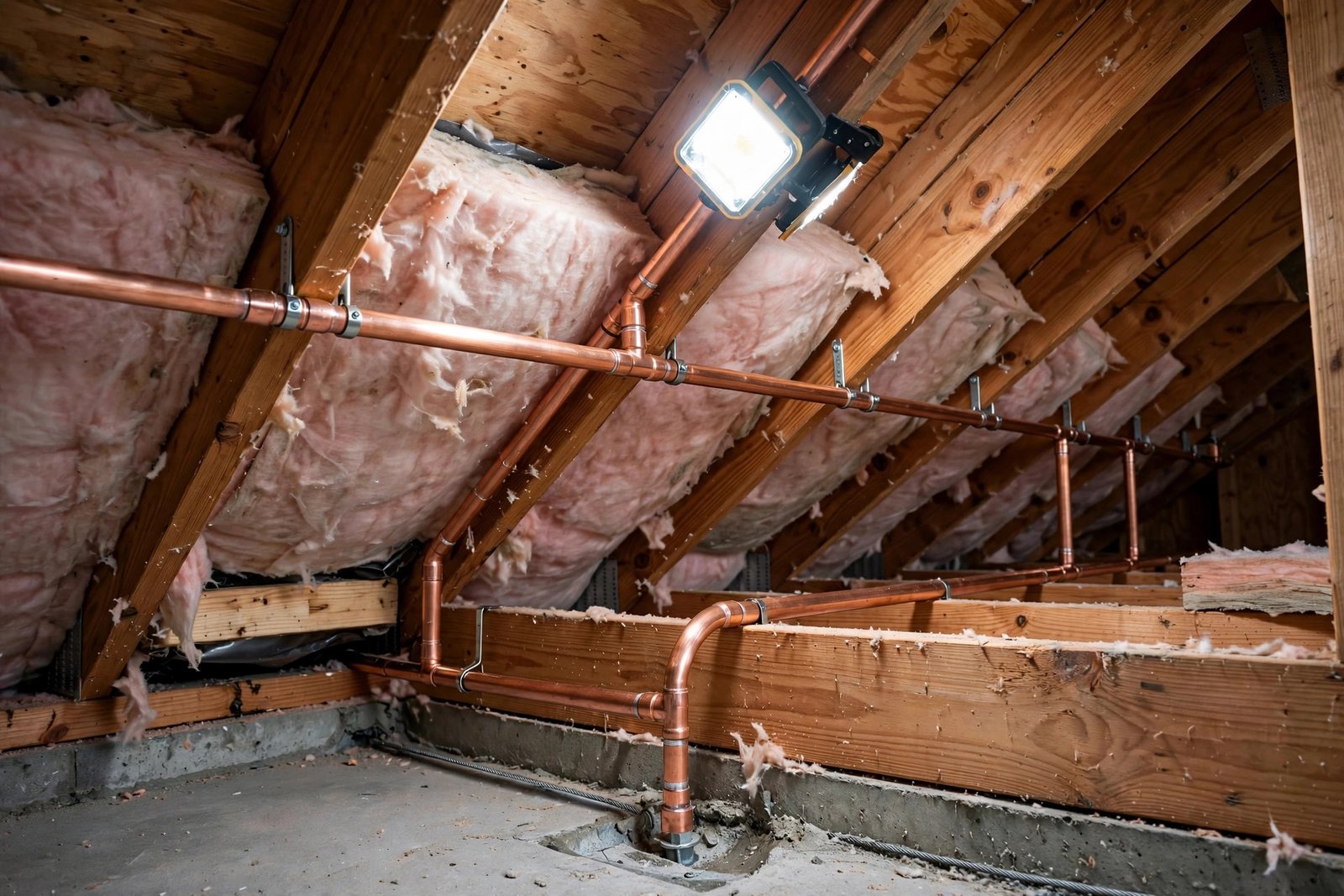
Often, yes. A reroute sends a new pipe past the leak, mainly through walls or the attic. The slab stays shut. To cut a post-tension slab takes care near cables.
| Option | How it works | When it fits |
|---|---|---|
| Spot repair | Open the slab at the leak and fix the pipe | Leak is reachable with cables safely avoided |
| Reroute | Run a new line above the slab | Cables crowd the leak area |
| Tunneling | Dig under the slab from outside | Deep leaks where the slab must stay intact |
National estimates as of 2026: spot repair $1,500–$4,500. Reroute: $3,500–$7,000. Tunneling: $3,500–$8,000. Your technician names the best fit. Sloped floors can hint at a leak. See our guide on uneven floors.
Does a reroute last as long as a pipe in the slab? Yes. The new line is a full replacement for the failed section, and it sits where future leaks are easy to reach.
How Long Does the Repair Take?
Most jobs take one to two days once set. A plain reroute may end in a day. Tunneling takes more time. The crew digs by hand. Tests take one to three hours. Call (833) 542-3027. We work 24/7. Or browse the FAQ hub for more.
FAQs
How do I know if my slab is post-tension?
Many homes built since the 1970s use them in parts. A stamped note may sit on the garage floor. When in doubt, ask us to check.
Will the repair weaken my slab?
No. We miss the cables. We dig as little as we can. The slab keeps its strength.
Can you repair a leak under a post-tension slab without digging?
Often yes, with a reroute. A new pipe skips the leak. No slab work is needed.
Is a post-tension leak repair more expensive?
It can be. The cable hunt takes more time and care. We share options and costs up front.
Should I turn off my water while waiting?
If water runs where it should not, shut the main valve. That curbs harm. Your technician guides you on the day.