
What Are the First Signs of Slab Leak?
What are the first signs of slab leak trouble? Most homeowners notice a higher water bill first, then odd sounds, warm spots, or damp floors. These signs arrive in a rough order, and catching them early keeps the damage small. A simple meter test can confirm your hunch in under an hour.
Trust the order below. It matches what we hear on calls every day. If two or more signs show up together, call (833) 542-3027 — we are open 24/7.
When Do the First Signs of Slab Leak Show Up?
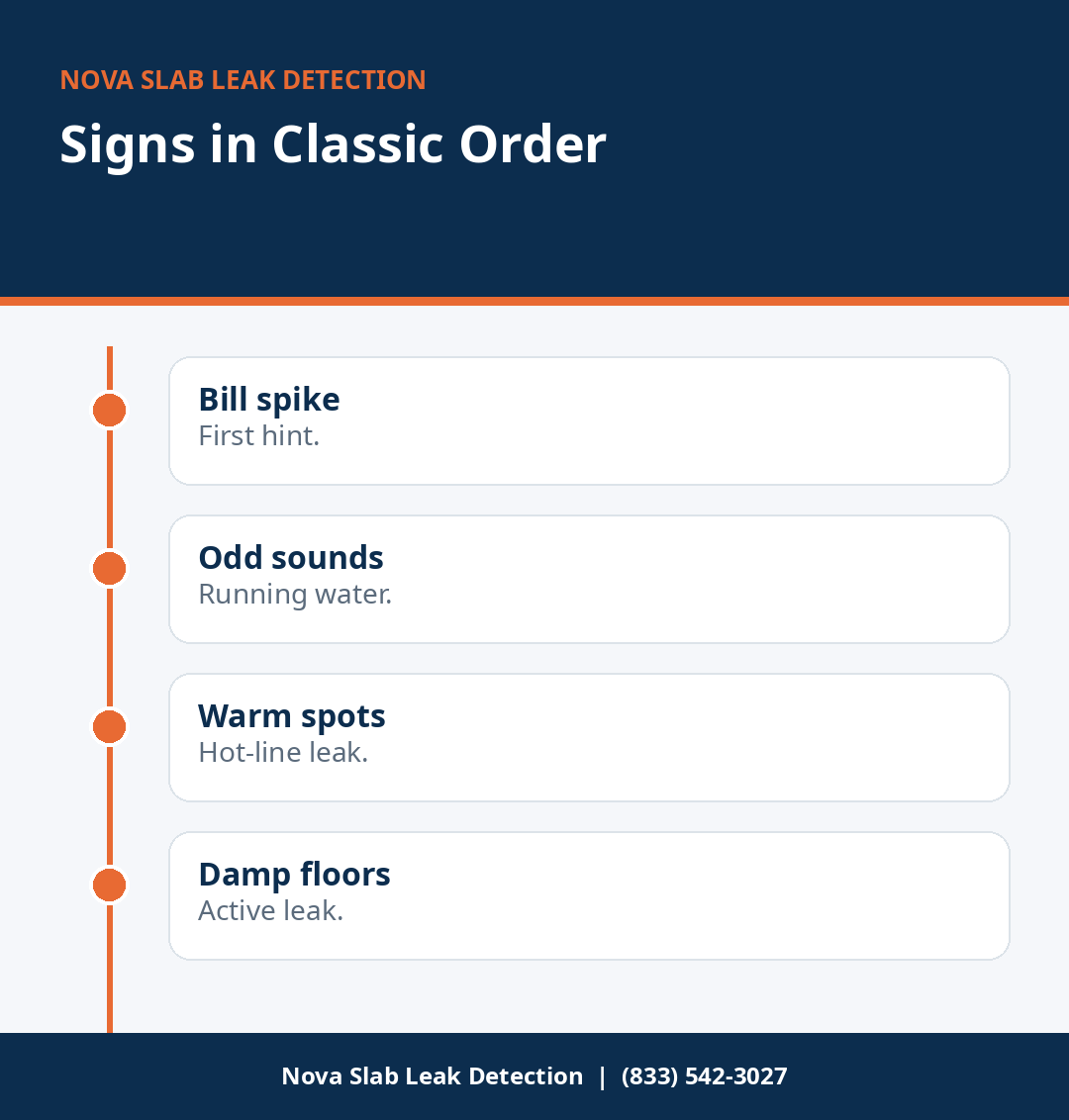
Most leaks announce themselves in this order:
- The water bill climbs for no clear reason.
- You hear water running when nothing is on.
- A warm spot appears on the floor (hot-water line leaks).
- Damp spots, odors, or mildew show up near the slab.
Not every home gets all four. But this order is common. Each sign needs a bit more water than the last. Early signs are quiet. Late signs are easy to see.
Why Is a High Water Bill Often the First Sign?

A leak under the slab runs day and night. You never see it, but the meter does. The bill is often the first clue. It catches even small, steady leaks.
The EPA’s WaterSense program says the average home’s leaks can waste nearly 10,000 gallons of water a year. About one in ten homes has a leak that wastes 90 gallons or more per day. A slab leak can be that kind of leak. If your use jumps and your habits did not, suspect the pipes. Read more on our high water bill page.
What Sounds Give a Slab Leak Away?
Put your ear to the floor in a quiet house. A slab leak can sound like:
- A faint hiss or rush of water underfoot
- Water running when every tap is off
- A soft trickle inside a wall or under the floor
These sounds are easy to miss by day. Check late at night when the house is still. If you hear running water with all taps off, act on it.
What Does a Warm Spot on the Floor Mean?
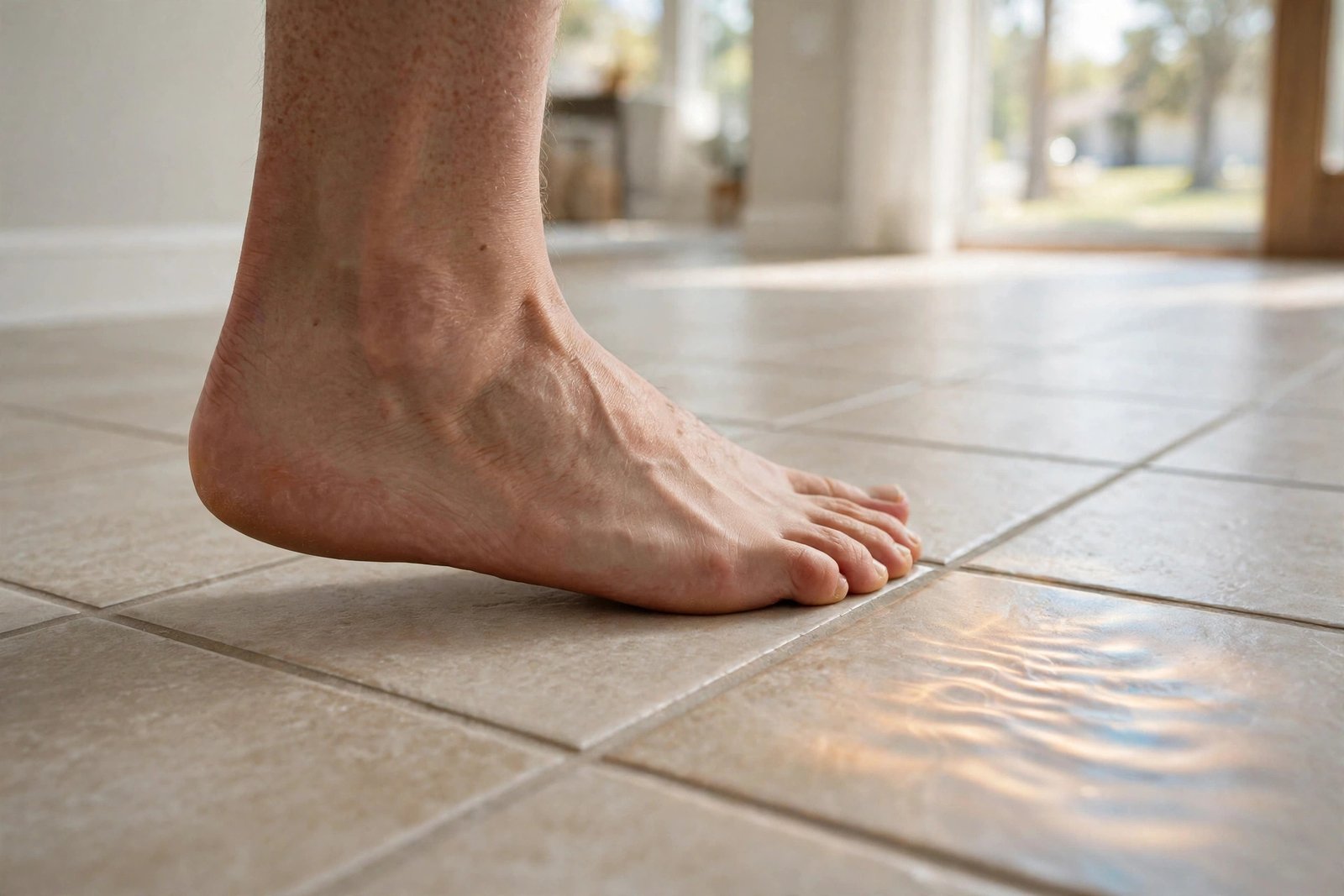
A warm patch on tile, wood, or carpet often means a hot-water line leaks under the slab. Hot water heats the concrete. The floor above feels warm to bare feet.
Walk the house with no shoes on. Note where the warm area starts and ends. That outline helps us aim our gear when we arrive. Cold-water leaks never make warm spots, so no warm spot proves nothing. See our warm spots on the floor page for more.
What Do Damp Spots and Odors Tell You?
Damp carpet edges, bent baseboards, or a musty smell near the floor mean water has reached the top. By this stage the leak has run a while.
Act fast now. The EPA mold guide says to dry wet areas within 24 to 48 hours to slow mold growth. Pull back wet rugs, run fans, and call us. If anyone at home feels ill, see a doctor. We find leaks. We do not treat health issues.
How Do You Run a Water Meter Test?
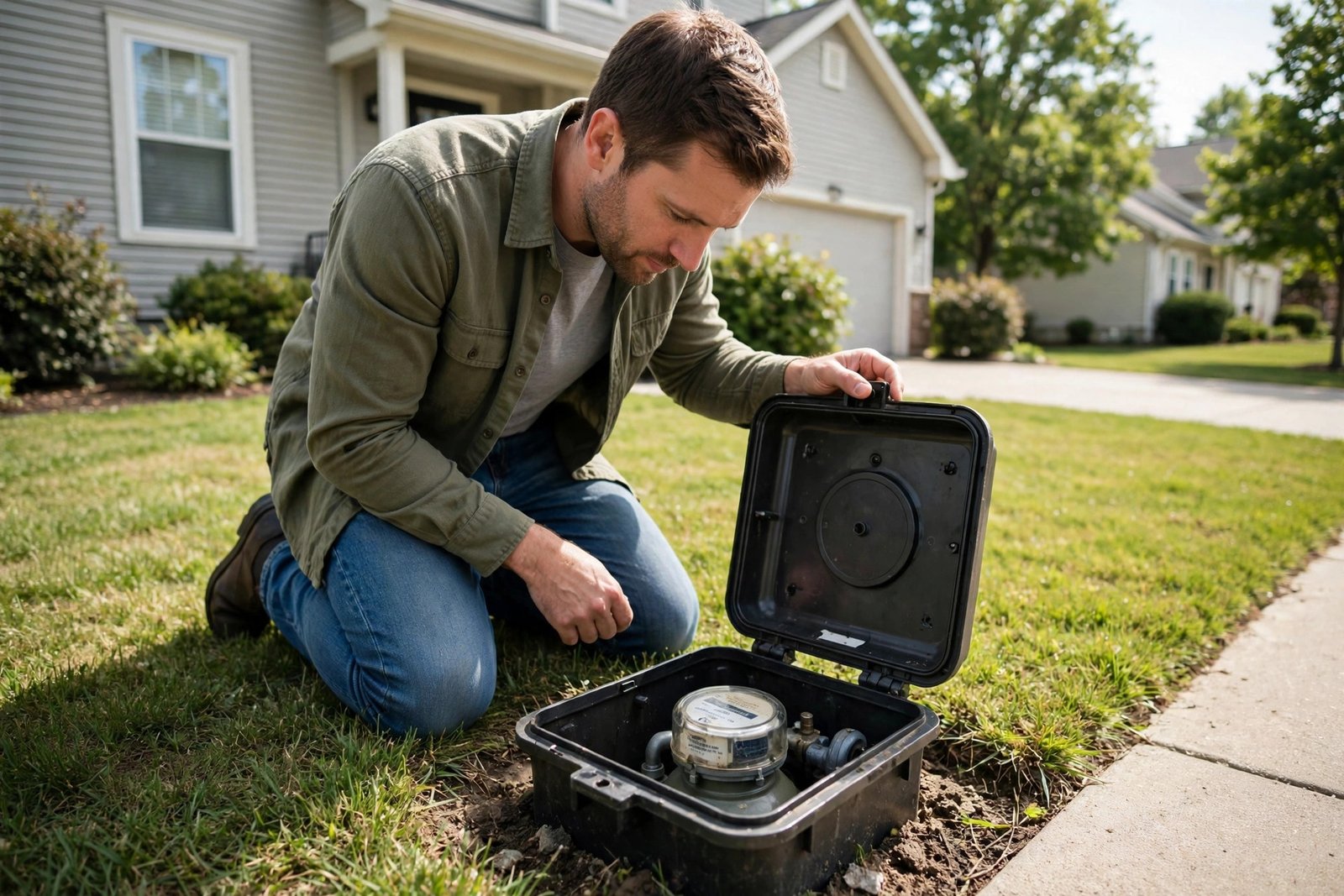
This free test takes under an hour:
- Turn off every tap, appliance, and irrigation zone.
- Find your water meter, usually near the curb.
- Write down the reading, including the small dial.
- Wait 30 to 60 minutes. Use no water at all.
- Read the meter again. Any movement means water is escaping somewhere.
A moving meter with all taps off points to a leak. It does not prove the leak is under the slab. But it proves you need detection. Our full water meter test guide covers tricky meter types.
What Do Homeowners Ask Us About Early Slab Leak Signs?
My bill jumped but I see no water. Is that normal? Yes. Slab leaks hide under concrete. The bill often moves weeks before any visible sign appears.
Can a slab leak make my floors buckle? It can, if water reaches the surface and stays there. Warped wood or lifting tile near the slab edge is a late sign — call soon.
Do cold-water leaks cause warm spots? No. Only hot-water line leaks warm the floor. Cold leaks show up as bill spikes, sounds, or damp spots instead.
How fast should I act on a warm spot? Fast. Warm spots mean an active hot-water leak. Shut off the water heater feed if you know how, then call (833) 542-3027.
Can I confirm a leak myself before calling? The meter test above is the best DIY check. For the exact location, you need our detection gear — it pinpoints leaks within about one to three feet.
FAQs
What is the very first sign of a slab leak?
A higher water bill with no change in usage. It shows up before sounds, warm spots, or dampness because the meter catches every gallon.
How can I tell if a warm spot is a slab leak?
Walk barefoot and map the warm area. A defined warm patch over concrete, with a rising bill, strongly suggests a hot-water line leak.
Do slab leaks always cause visible water?
No. Many never show surface water. Bill spikes and sounds are the early signs; damp spots come later, if at all.
How long does a slab leak take to cause damage?
It varies. A fast leak can damage floors in days. A slow one can run for months. Either way, earlier detection means a smaller repair.
What should I do first if I suspect a slab leak?
Run the meter test, then call (833) 542-3027. We are open 24/7, and early detection keeps your options — and costs — down. More answers live in our FAQ hub.