

Slab Leak Detection in South San Francisco, CA
Our technicians find hidden slab leaks fast in South San Francisco — pinpointing the leak before any concrete is opened. Available 24/7 across the South San Francisco area.
Why Does South San Francisco Get So Many Slab Leaks?
South San Francisco grew round Bay plants: “The Industrial City.” Its blocks went up in the 1940s–60s. Those homes run 60 to 80 years old.For slab leak detection, South San Francisco, California owners trust our technicians for clear answers. We pinpoint the leak to 1 to 3 feet. Visits take 1 to 3 hours.
The ground is the foe. Much flat land sits on bay mud and adobe clay. Among the livest soils in the Bay Area. Winter rain swells it. Summer shrinks it. Slabs heave and settle each season. Buried pipes flex at joints for years till pinholes open. Hill blocks west of El Camino Real sit firmer. But those homes run oldest of all.
Sign Hill looms over tracts built fast postwar. Quick-build tracts at times hide poor soil pack under slabs. Poor pack means poor settling. Add quake shakes — the San Andreas just west — and old pipes take much motion.
Water is Hetch Hetchy. Known soft. Water harm is mild here. Time and soil do the true harm. Old under-slab pipes from the 1940s to 1960s are past prime in Westborough, Avalon, and downtown.
Bay winds drive rain sideways. Slant rain soaks one wall more. Old cannery lands sit on fill. Fill drops off-kilter over time. Biotech digs shook nearby blocks. Shakes work old joints loose. Fog drip keeps soil damp for weeks. El Camino slopes shed storm water fast. Winter storms soak the bay edge.
Q: My home is near the Bay. Is soil worse there? A: Yes. Bay-edge clays are the livest in town. Homes east of 101 sit on the toughest ground.
Which South San Francisco Neighborhoods Do We Serve?

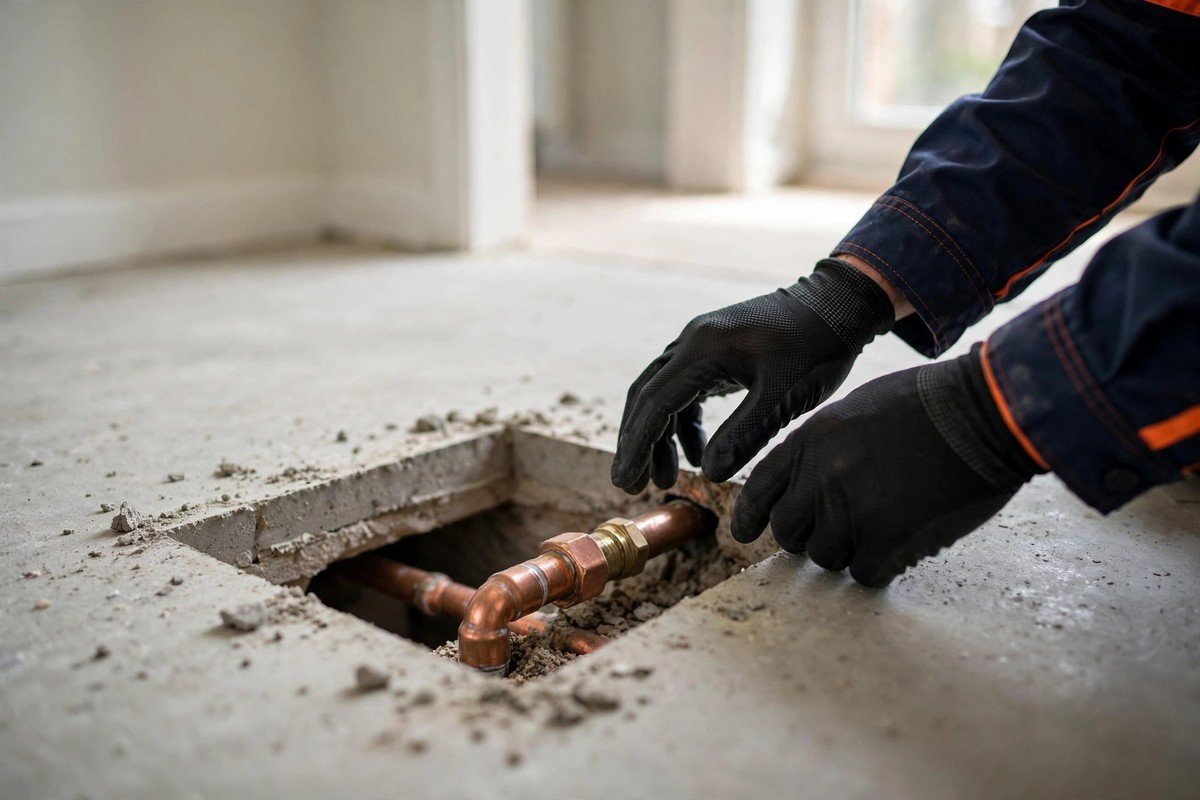
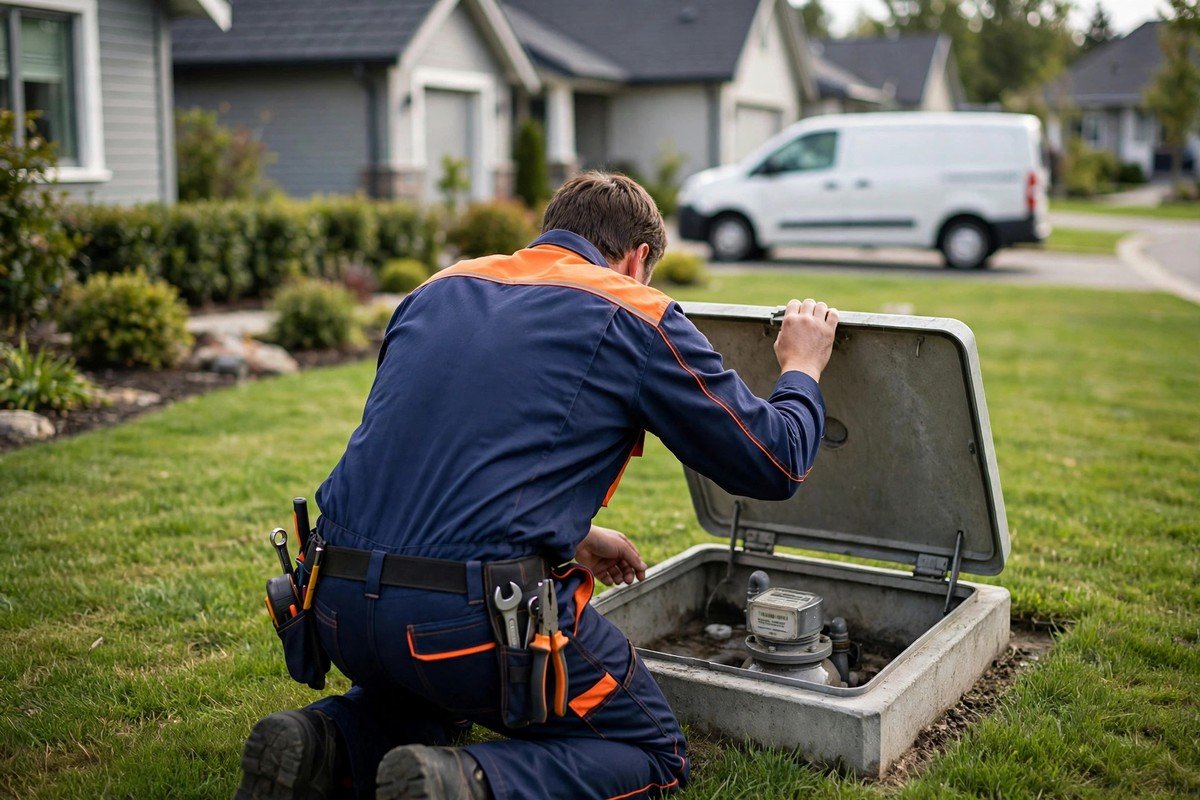
We serve all of South San Francisco.
- Downtown South San Francisco. Old homes near Grand Avenue.
- Westborough. 1950s and 1960s family blocks.
- Avalon. Older homes near the hills.
- Sunshine Gardens. Older tracts.
- Sign Hill area. Homes under the landmark hill.
- Lindenville. Mixed edge blocks we cover too.
Call (833) 542-3027 from anywhere in the city. Both ZIPs are covered.
How Does Our South San Francisco Detection Visit Work?
Your technician starts with your story. Then we prove with tools.
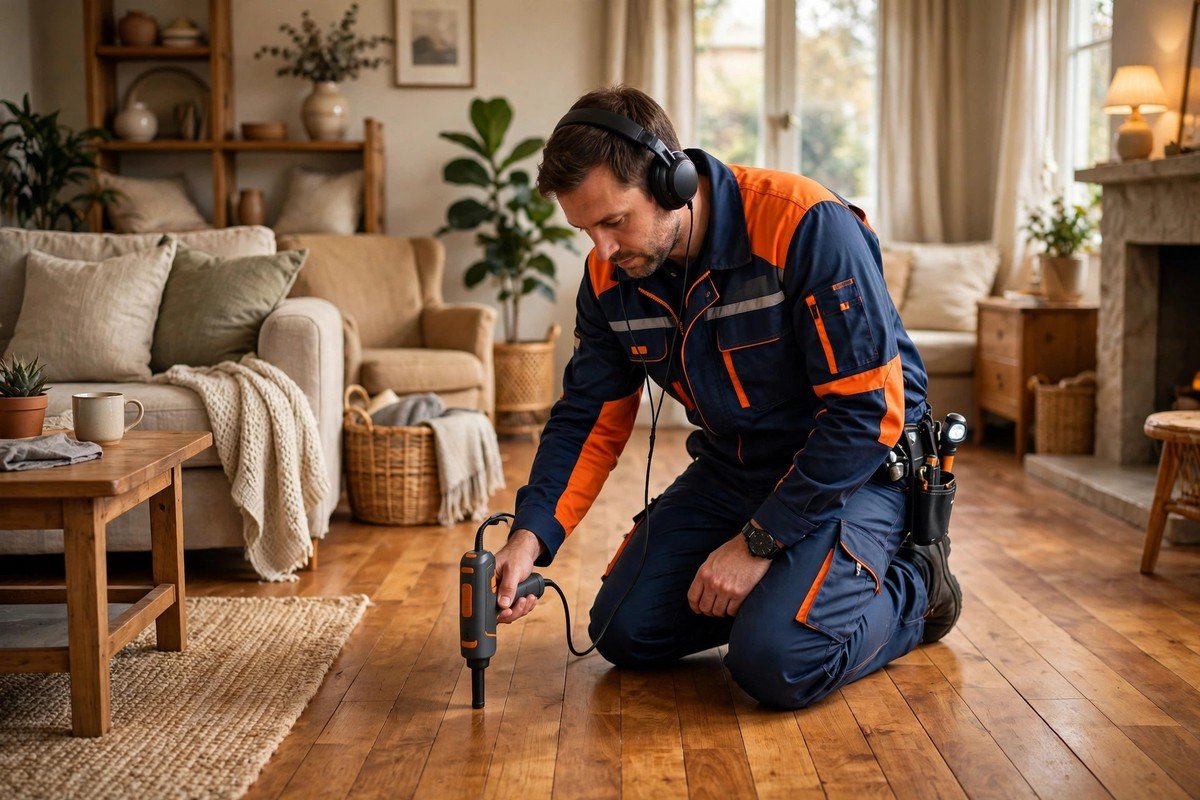
First the meter. All taps off. A moving meter proves a leak. Sound gear listens through the slab. A heat scan maps floor heat. It flags hot-line breaks. Tracer gas nails the tough ones. All no-dig. All exact.
The tools agree in 1 to 3 feet. Most visits take 1 to 3 hours. We walk you through each reading. You see what we see. You get notes on our findings. You get straight talk. See our South San Francisco slab leak detection process.
Q: My home was built in 1952. More leaks ahead? A: Plain truth: yes. One leak at this age means worn pipes all through. Your technician sizes up the full picture.
What Does Slab Leak Repair Cost in South San Francisco?
National estimates as of 2026 are below. Age and shape set your price.
| Repair option | National estimate as of 2026 |
|---|---|
| Detection visit | $150–$500 (complex homes to ~$600) |
| Spot repair | $1,500–$4,500 |
| Pipe reroute | $3,500–$7,000 |
| Tunneling under slab | $3,500–$8,000 |
| Epoxy pipe lining | $3,000–$6,000 |
| Whole-home repipe | $4,500–$15,000 |
For 1940s–60s homes on bay clay, a pipe reroute often lasts. Lines leave the heaving soil. A spot repair fits one clear break. Tunneling works from outside. It saves floors. Epoxy seals pipes inside. A South San Francisco whole-home repipe suits the oldest pipes. Frame slab leak repair paths on our cost guide.
Insurance may pay for sudden harm. Not for old pipes. Policies vary.
What Are the Warning Signs of a Slab Leak in South San Francisco?
In South San Francisco, watch for these slab leak warning signs. Catch them early. Small leaks cost less.
- A high water bill in South San Francisco with no new use.
- Warm floor spots in South San Francisco.
- Water sounds with taps closed.
- Damp carpet or buckling floors.
- Musty smells. Read about mold from slab leaks in South San Francisco.
- Sticking doors or new wall cracks.
Q: My doors stick in winter, free up in summer. Normal? A: That swing screams clay motion. With a live leak too, the shift gets worse. A visit rules it out.
Why Does a Reroute End the Cycle in South San Francisco?
Bay clay does not deal. It swells each winter and shrinks each summer while your home stands. Pipes under the slab keep riding that motion. A spot fix wins today. The clay wins the long game.
A reroute shifts the game. Pipes move to walls and attic: above the clay, past its grip. Old 1940s–60s pipes get a fond farewell. New lines, new stock, no soil touch. For this town’s old homes, it truly ends it.
Q: My home is from 1948. Too old for a reroute? A: Not at all. Old homes reroute fine. The work lives in walls and attic at any age. We do them in old homes often.
Areas and ZIP Codes We Serve in South San Francisco
We serve both South San Francisco ZIP codes: 94080 and 94083. (California coverage).
FAQs
How long does the visit take in South San Francisco?
Most visits take 1 to 3 hours. You get the exact mark plus full notes before we leave.
Must you tear up my floors?
Not for detection. It needs no digging. Repairs open just the exact spot. Or we reroute and skip the slab.
Why is bay clay so bad?
It moves more than most soils. Big swell when wet, big shrink when dry. Long years of that wear buried pipes out.
Do you test condos near the biotech corridor?
Homes are our focus. Call (833) 542-3027. We tell you straight if your place fits.
Are you open on weekends in South San Francisco?
Yes. 24/7, each day. Phone is the only way to reach us.
Do you work on raised homes too?
Some homes here sit on raised piers. We check under those first. Quick and easy.
Warm floor or odd bill? Reach Nova Slab Leak Detection any time at (833) 542-3027. We are on call 24/7.