
Why Does Freezing Weather Threaten Pipes Under Your Slab?
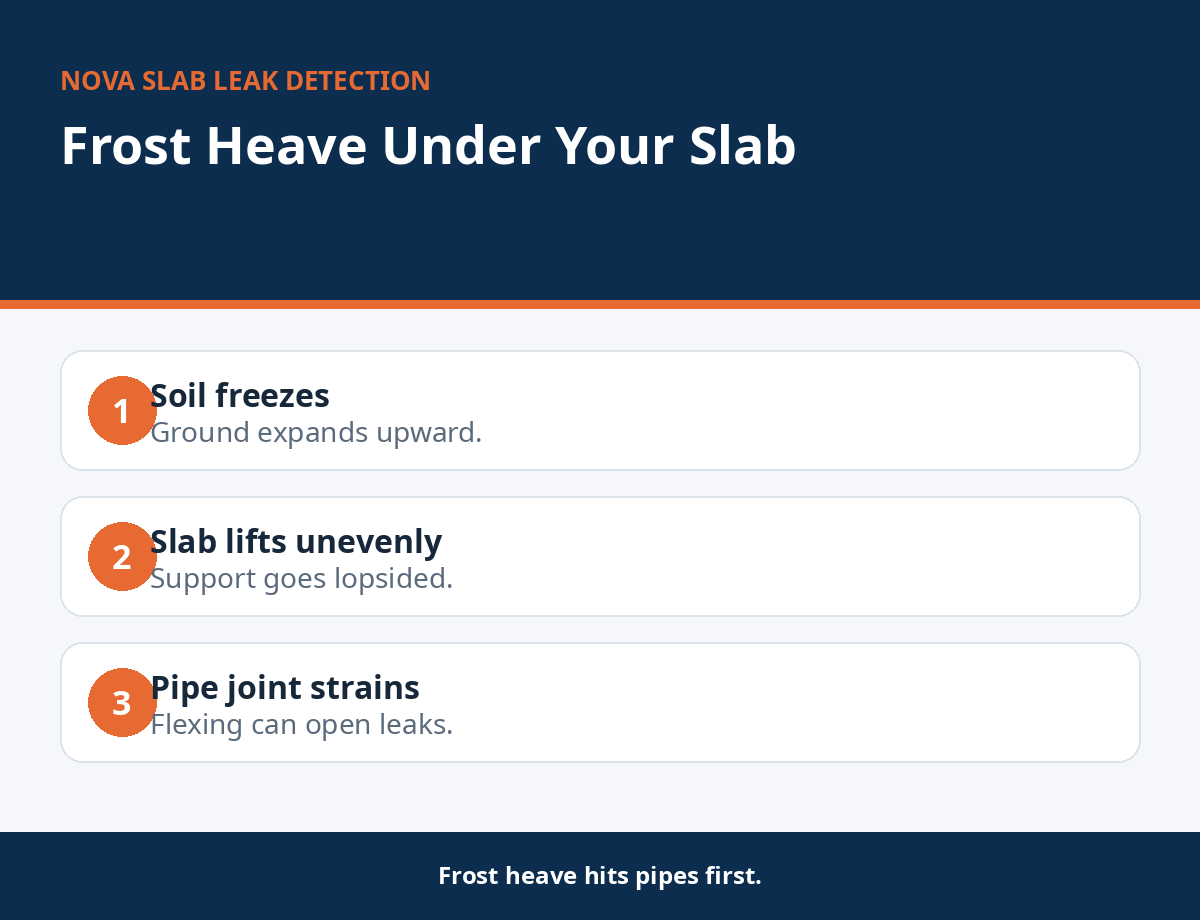
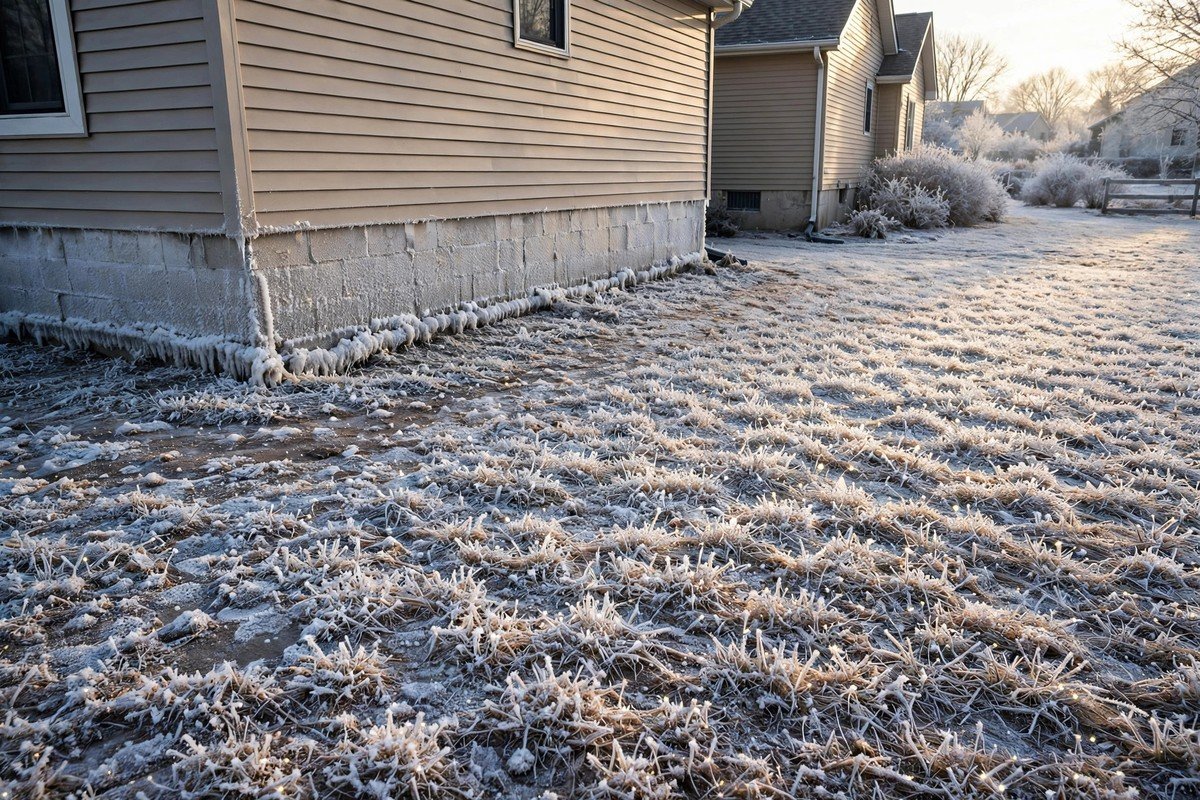
Cold does not freeze water in pipes. It moves the ground. A winter freeze slab leak forms when frozen soil swells and lifts under your slab while cold pipes shrink, and both forces strain joints until a weak spot breaks. The freeze-thaw loop is the threat. Each freeze lifts. Each thaw drops. Pipes bend a bit more each time.
This page lives in our seasonal slab leak guide. Read on for how it works and how to guard your home.
How Do Frost Lift and Cold Shrink Work Together?
Wet soil swells when it freezes. That swell, called frost heave, can lift ground under parts of your slab. When the thaw comes, the ground drops back, but not always in a flat way. The slab rides up and down. Buried pipes bend with each ride.
Cold also shrinks pipe metal and plastic a touch. That shrink tugs on joints and fittings. A joint that held in fall can start to weep in deep winter.
Why is the thaw as risky as the freeze?
The freeze lifts. The thaw drops. The drop often breaks pipes. The slab lands on soil that shifted while frozen. Many winter leaks show in the first warm week, not the coldest one.
Can pipes under a slab freeze solid?
Rarely. Slab pipes sit deep, below the frost line in most homes. Harm comes from soil shift and pipe shrink, not from ice in the pipe.
When in Winter Is the Risk Highest?
Risk peaks in hard freezes and in the freeze-thaw swings of late winter. Deep cold runs December through February. But March is often the cruelest month. Warm days and cold nights cycle the ground each day.
Watch for these timing clues.
- The first hard freeze — fast cold after a wet fall freezes soaked soil, which lifts the most.
- Long deep freezes — weeks of sub-zero cold drive frost deep.
- Fast thaws — a quick warm-up drops the slab onto shifted soil.
- Late-winter cycling — daily freeze-thaw in March bends pipes again and again.
Should I check in winter or wait for spring?
Do both. Look for signs after each hard freeze. Then run a full check once the ground thaws for good. Our spring thaw guide covers the post-winter check step by step.
Where Does Winter Hit Slab Homes Hardest?
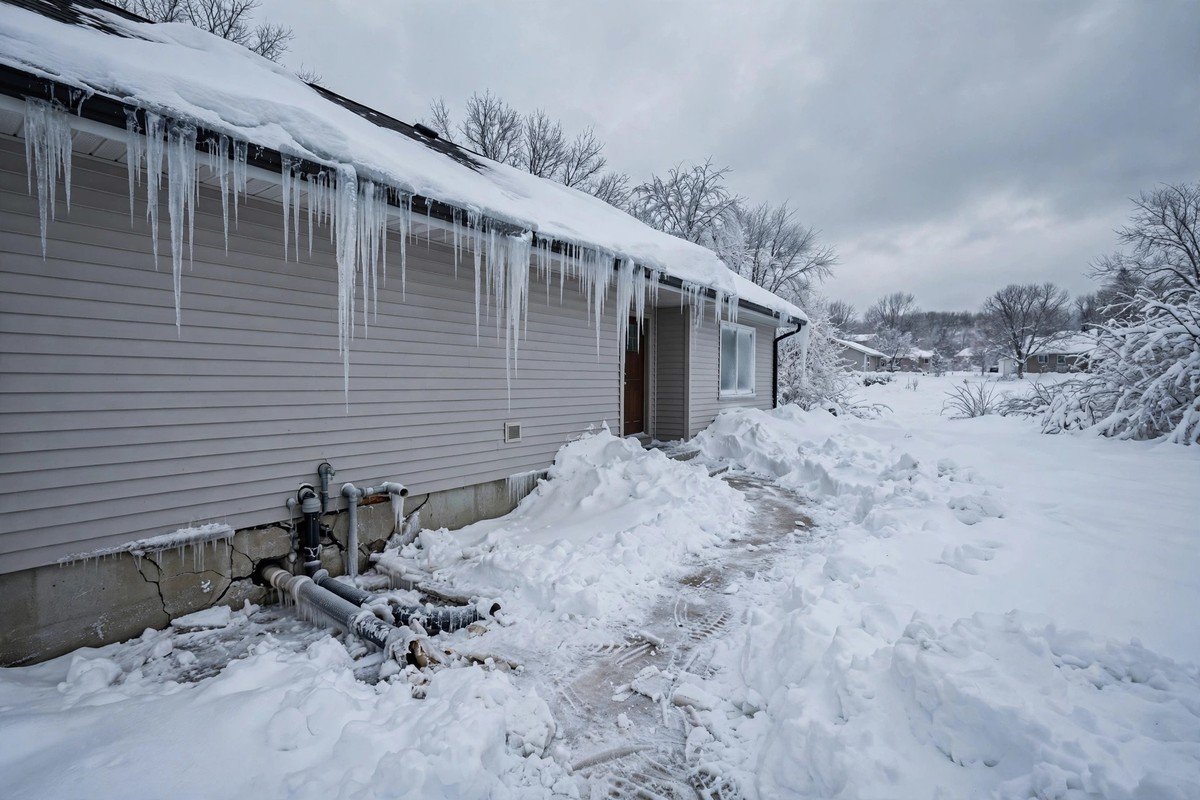
Northern states, the Midwest, the Northeast, and mountain states face the deepest frost. They get the most freeze-thaw cycles. The colder the winter and the wetter the fall soil, the harder the lift.
But winter risk is not just a northern tale. Texas, the Southeast, and warm states get rare hard freezes. Their homes stand least ready. Shallow pipes, bare lines, and slabs built for mild days take more harm in one rare freeze than northern homes take in a full season.
Can one bad freeze cause a leak in a warm state?
Yes. A single hard freeze in Texas or Florida can burst bare lines and shift soft soil. Warm-state homes earn a check after any odd freeze.
Who Should Watch Most Closely in Winter?
Four groups should stay alert when cold sets in.
- Owners of older homes — worn joints and thin walls break first.
- Owners of empty or part-time homes — cold houses with no heat let frost drive deep.
- Homes with past slab leaks — prior fix spots and tired runs give way first.
- Warm-state owners in a cold snap — mild-weather homes freeze hardest.
If your home will sit empty in winter, keep the heat on low. A cold house pulls frost deep under the slab.
How Can You Guard Your Home Before the Freeze?
Five steps before winter cut your risk.
- Keep the heat on. Never let the home near freezing, even on trips. Set the heat no lower than the mid-50s.
- Wrap bare pipes. Cover lines in crawl spaces, garages, and along outer walls.
- Seal drafts. Cold air through gaps chills floors and the slab edge. Seal doors and vents.
- Know your main shutoff. If a pipe breaks, fast shutoff caps the harm. Make sure each adult knows the valve spot.
- Drain outdoor lines. Shut off and drain hose taps and yard lines so they cannot freeze.
Keep the heat on above all. The rest helps, but a warm house guards the slab best.
How Do We Find Leaks After a Hard Freeze?
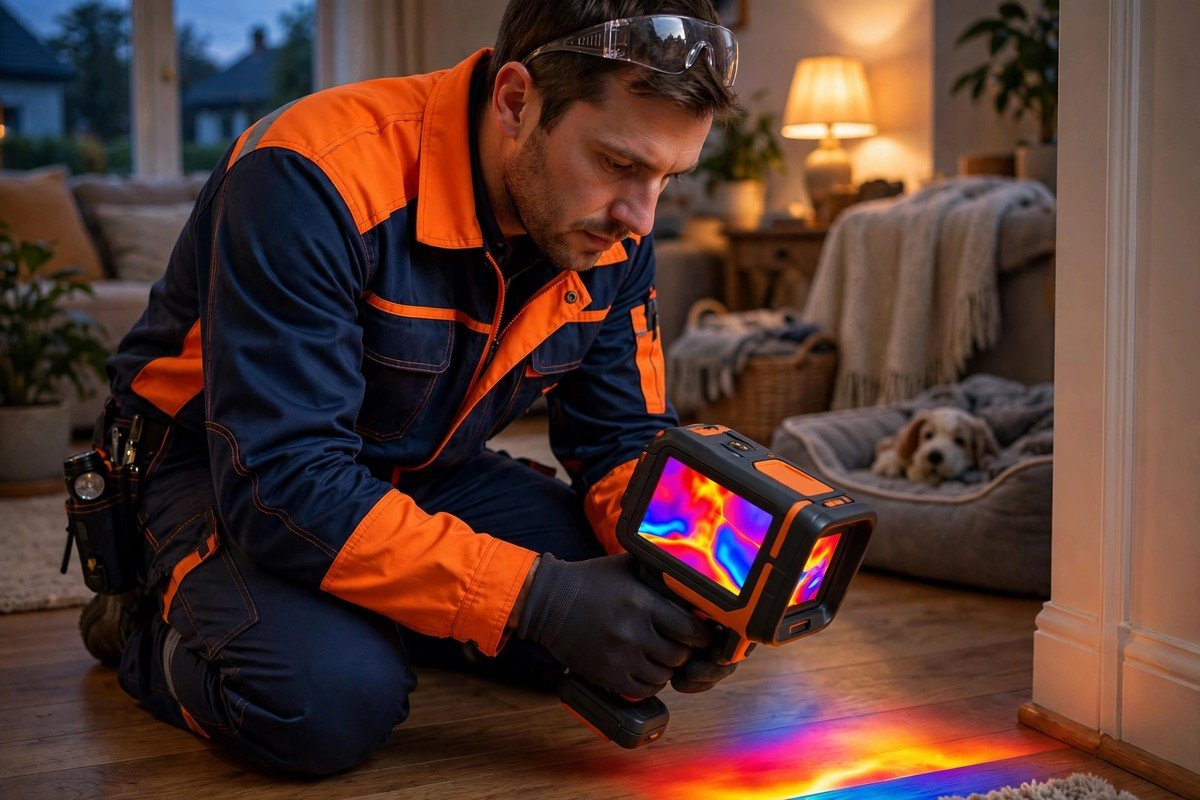
Our technicians answer 24/7 all winter in each northern state and in all 50 states plus D.C. We trace freeze leaks with sound gear, pressure tests, and heat scans. Visits take one to three hours. We track the leak to about one to three feet. Detection runs $150–$500 as national estimates as of 2026.
Your technician will say if frost lift moved your slab. That shapes the fix. Find all options and prices in our cost guide. Phone us any time — reach us here.
Can you find a leak when the ground is frozen?
Yes. Our gear reads the leak itself, not the frozen soil. Frozen ground does not block us. Call as soon as you spot a sign.
FAQs
What are the first signs of a freeze-driven slab leak?
Watch for them after the thaw. Damp spots. Warm floor areas. New cracks. Water sounds. A bill jump. Many freeze leaks hide until the ground softens.
Can a slab leak flood my home in winter?
It can cause real harm, though most slab leaks seep more than gush. Fast shutoff and a quick call cap the harm. Keep the valve spot known to all at home.
Should I drip taps to guard slab pipes?
Drips help bare pipes, not pipes buried under the slab. They do no harm, but they do not stop frost lift. Keep the heat on instead. That guards the slab.
Does home insurance pay for freeze harm?
Many plans pay for fast freeze harm if you kept the home warm, but the pipe fix is often left out. Empty-home freezes may be denied. Check your plan or agent.
How long does frost harm take to show?
Days at times, months at others. A lifted slab may not crack a pipe until the spring thaw drops it back down. That is why the post-thaw check counts as much as the winter one.
Can I stop frost lift under my slab?
You can’t stop frost, but you can blunt it. Good drains keep fall soil drier, and steady indoor heat keeps ground under the slab warmer. After the next hard freeze, run the meter test. If you spot trouble, call (833) 542-3027 — we are open 24/7.