
Why Do Utah’s Expansive Clays Break Pipes?
Utah sits on some of the thirstiest clays in the West. An old lake left them by the Wasatch Front. These clays rank as highly expansive. They swell when wet and shrink when dry. That cycle snaps pipe joints. Desert soils and freeze-thaw add more strain. Our Utah technicians know this ground.
What Makes Lake Bonneville Clays So Aggressive?
These clays absorb huge amounts of water. A dry summer shrinks them deep. A wet fall swells them back fast. The swing can move a slab by inches.
Pipes caught in the swing flex constantly. Flexing work-hardens copper. Hardened copper cracks at the joints. Joints are always the weak point.
The Wasatch Front holds the worst of it. Dense housing sits right on the old lake bed. We find the most breaks in these neighborhoods.
How Do Desert Soils and Freeze-Thaw Add Strain?
Desert soils outside the valley shift and settle. Wind-blown fines wash out under slabs. Small voids form. Pipes spanning voids sag and crack.
Freeze-thaw hits the higher ground. Winter frost heaves soil. Spring thaw drops it back. That up-down cycle adds one more stress on joints.
Watering makes it worse. Heavy watering soaks one side of a slab. One-sided soaking lifts in spots. That lift shears pipes.
Do expansive clays break new pipes too? Rarely. New copper flexes well. The danger starts after years of cycles. Homes past 20 years face the real risk.
When Do Slab Leaks Hit Utah Homes Hardest?



Spring leads the year. Snowmelt soaks the clays. Swelling soil heaves slabs. Weak joints snap as the ground lifts.
Fall brings the reverse. Watering ends. Soil dries and shrinks. Shrinking soil pulls pipes the other way. Joints stressed in spring crack in fall.
Watch for these signs in any season:
- A bill that jumps with no new use.
- Hot spots on tile floors.
- Doors that stick as the slab shifts.
- Cracks zigzagging up drywall.
- Damp baseboards or low stains.
- A hiss when the house is still.
Sticking doors are a Utah tell. Shifting slabs rack door frames. A door that worked last year and sticks now means the ground moved.
Can I curb clay damage? Steady watering helps. Keep soil moisture even round the slab. Do not soak one side while the other dries out.
Where Do We Serve in Utah?
We serve an expanding service area in Utah. We serve the Wasatch Front and southern Utah. Rural towns may need a booked visit.
We know the lake-bed clay zones. We know the high freeze-thaw ground. See where we work on the locations page.
Who Should Call Nova in Utah?
Call if your home sits on the Wasatch Front. The old lake bed moves the most. Homes here face the highest risk in the state.
Call if doors started sticking. That signals slab movement. Moving slabs stress pipes. A check now beats a break later.
Call if your home is past 20 years. Decades of clay cycles wear copper thin. A check each few years finds pinholes early.
Call if you are buying. Clay-zone leaks hide well. Our gear finds them before you close.
Expansive clay drives most breaks here.
Should renters call? Yes. Tell your landlord about warm floors or bill jumps. We work with property owners on scheduling.
What Does a Nova Detection Visit Involve in Utah?
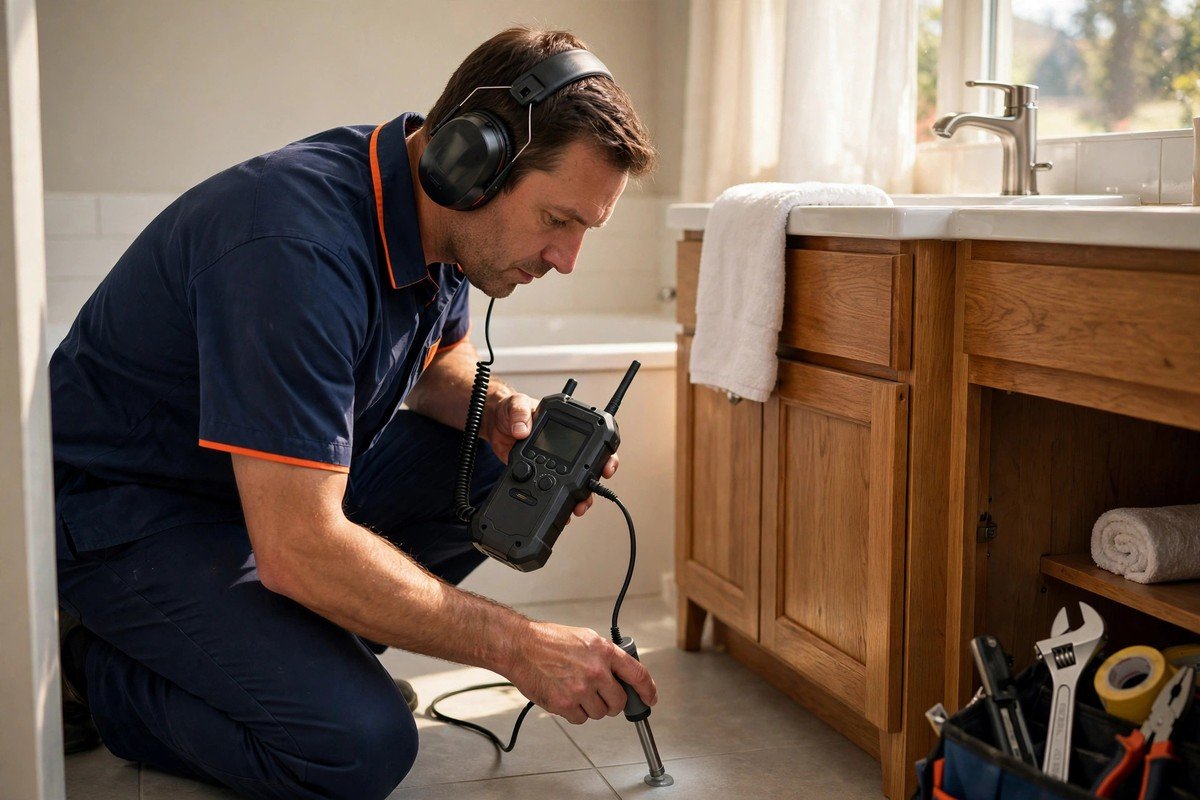
Our technician leads your check start to finish. One of our own people. We bring sound, heat, and gas tools.
First, the meter test. All water goes off. We watch the dial. A moving dial proves a leak. Then we split-test hot and cold lines. The bad side shows fast.
Then we trace. Sound gear tracks the leak’s noise through concrete. Heat scans back hot-line breaks. Tracer gas finds cold-line leaks. We pinpoint within 1–3 feet.
Then we mark the spot and hand over a written plan. You approve the price before any fix starts. Checks take 1–3 hours. Detection never breaks the slab.
See how we work for the full approach.
Will you cut my floors to find it? No. Our tools read through concrete. The slab stays whole while we check.
What Does Slab Leak Detection Cost in Utah?
These are national estimates as of 2026. Your technician confirms pricing up front.
| Service | National estimate (2026) |
|---|---|
| Detection visit | $150–$500 (complex homes up to ~$600) |
| Spot repair | $1,500–$4,500 |
| Reroute | $3,500–$7,000 |
| Tunneling | $3,500–$8,000 |
| Epoxy lining | $3,000–$6,000 |
| Whole-home repipe | $4,500–$15,000 |
Expansive clay can push fix costs up. Digging heaved ground goes slow. Reroutes through walls often win on the Wasatch Front. They skip the moving soil. Your technician prices each option.
Our cost guide covers the numbers. Policies vary, so check your own plan.
How Do You Book a Visit in Utah?
Call (833) 542-3027. We answer 24/7, each day. The call is free.
Tell us what you see. We send one of our technicians. They call to set a time.
If our work misses the mark, call us back. Our guarantee is simple. If our work falls short, Nova makes it right. You deal with Nova throughout.
FAQs
How fast can I get a visit?
We answer 24/7. Most Utah visits book within a day or two. Active leaks move up.
Will my plan pay for a slab leak?
Policies vary. Many cover water damage but not the pipe fix. Read your policy and ask your agent.
Does finding the leak harm floors?
No. Sound, heat, and gas tools see through concrete. The slab stays whole.
How exact is your leak pinpoint?
We land within 1–3 feet. Shifting clay does not dull our tools. A tight mark keeps fixes small.
Patch or repipe on the Wasatch Front?
With worn copper in clay, a repipe often wins. One patch on worn copper invites the next leak. Your technician can scope the full run.
Do you serve southern Utah?
We cover an expanding service area statewide. Find your area on the locations page.