
How Do Bacteria Grow in Stagnant Water Under Slabs?
Bacteria in stagnant water under a slab grow fast because standing water gives them warmth, darkness, and nutrients with no flow to wash them away. A slab leak can pool water in soil pockets. That water just sits. It is the classic bacteria stagnant water slab setup. This page explains why, in plain words.
Why Does Water Go Still Under a Slab?
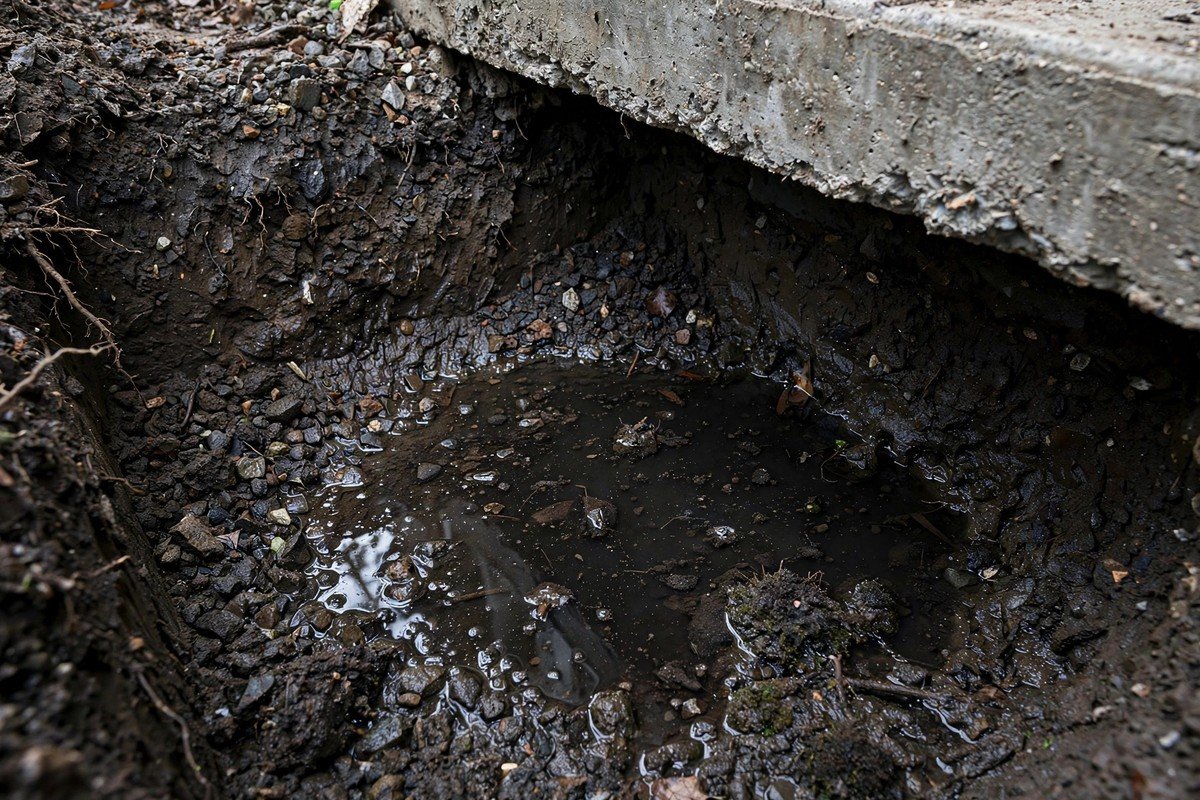
Water under a slab has nowhere to go. Soil may trap it in low spots. The concrete above seals it in. With no sun and no flow, the water just sits. Days turn into weeks. The water goes stale.
Think of a puddle in a shaded yard. It turns green and slimy fast. Now picture that puddle sealed under concrete, warm from the earth. Germs move in fast. They feed on soil food and plant matter in the water.
Is all water under a slab stagnant? Not always. Some leaks drain into loose soil and move on. But clay soils and compacted fill trap water. Hot water leaks keep the pool warm. Warm, still, dark water is the worst mix.
How Do Germs Grow in Standing Water?
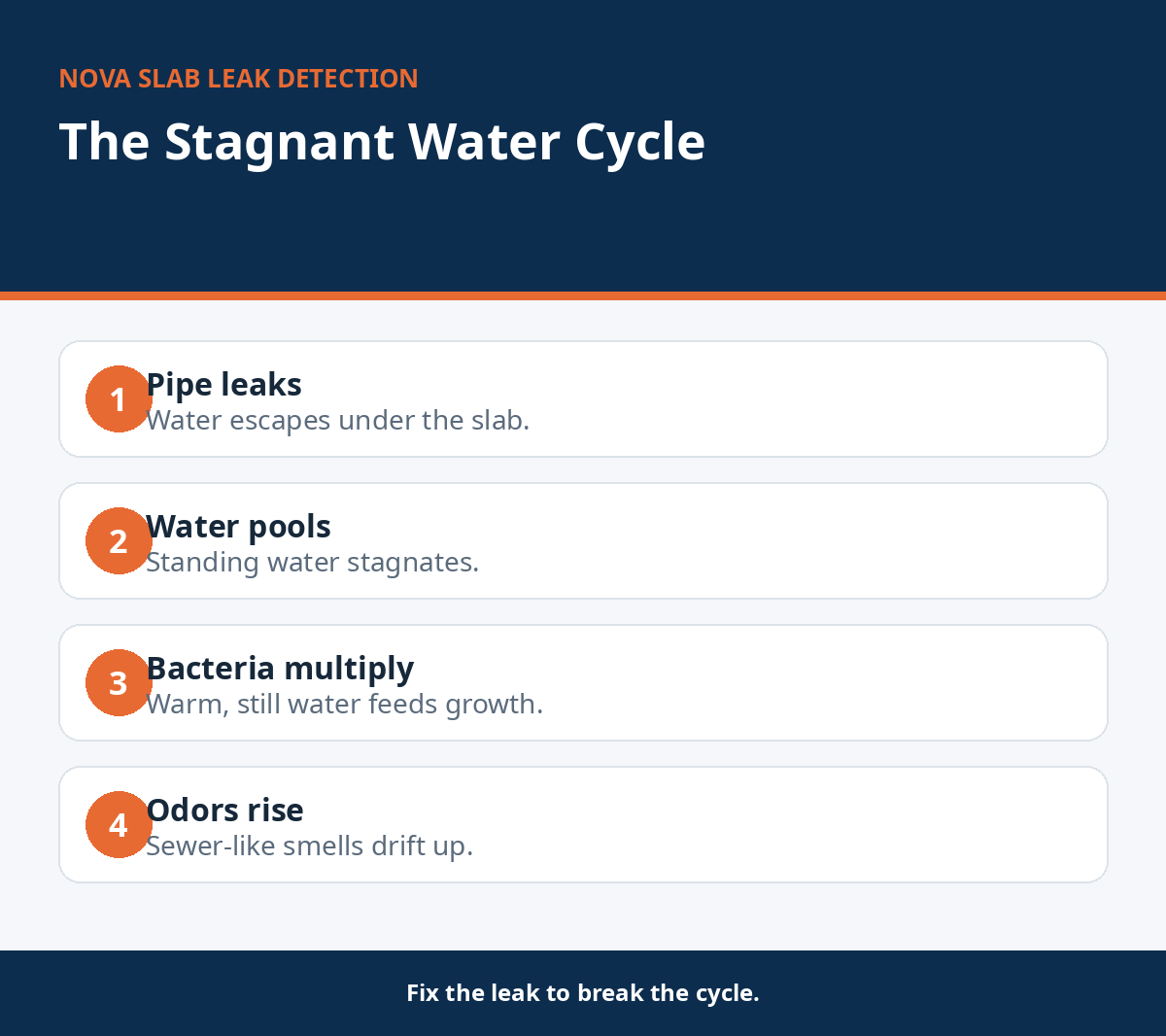
Germs need food, water, warmth, and time. Still water under a slab offers all four. Soil gives them salts and tiny bits of plant matter. The earth keeps them warm. Darkness does not slow them down. Given time, groups bloom.
Growth follows a simple pattern. A few germs arrive. They feed and divide. Soon there are millions. They form slimy films on wet surfaces. Biofilms protect the colony and make smells worse.
How fast do germs grow in standing water? Some germs can double in under an hour in warm water. A small group can grow large in a day. Under a slab, where water may sit for weeks, germ growth can be heavy.
What feeds them down there?
Soil is full of food for germs. Decaying roots, plant matter, and salts all feed germs. Leaking drain lines add even more food. Even clean supply-line leaks carry tiny bits of salt. Germs are not picky eaters.
What Do the Odors Mean?
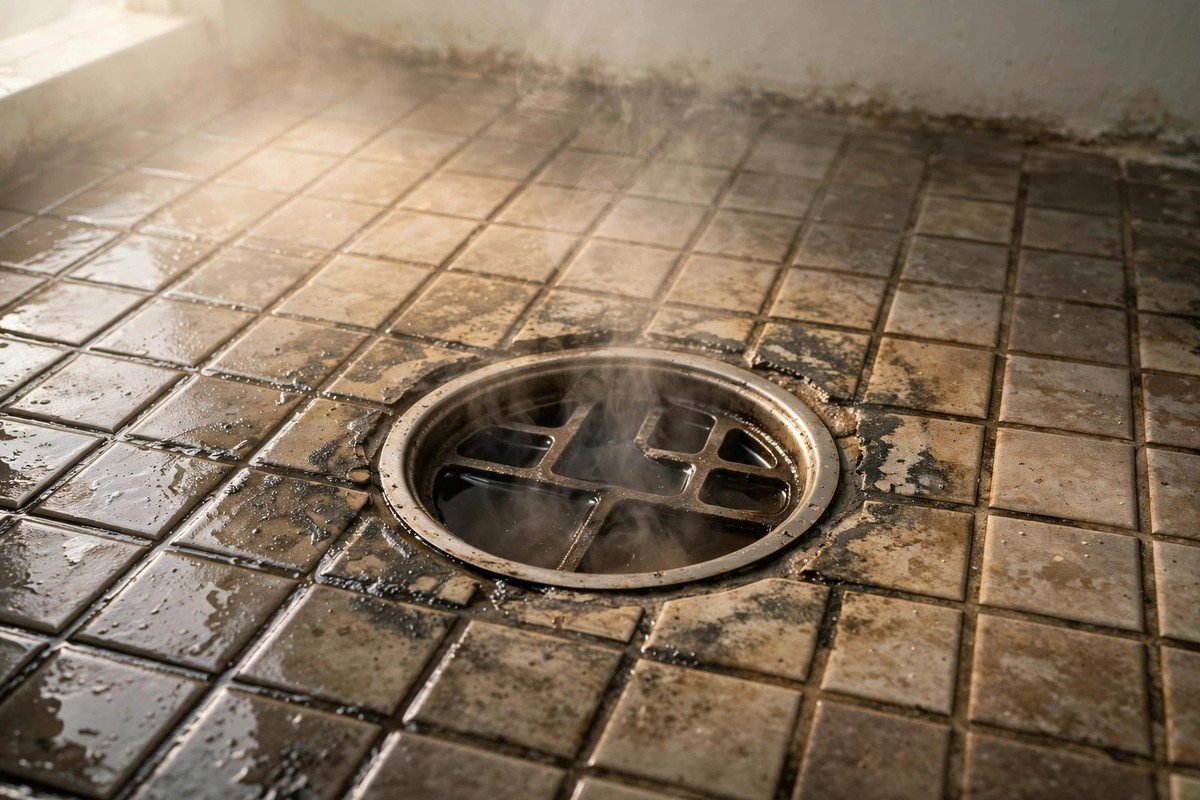
Bad smells are the most common sign. Germs release gases as they feed. These gases rise through cracks and joints in the slab. Common smells include:
- Rotten egg smell — sulfur gases from germs
- Musty or earthy smell — mold and soil germs
- Sewage smell — possible drain line leak
- Swampy smell — long-standing stagnant water
Does a rotten egg smell mean a gas leak? It can also mean natural gas, so act fast. If you smell strong rotten egg odor, leave the area and call your gas company first. If gas is ruled out, a slab leak with bacterial growth is a likely cause. Then call us.
Why do the smells come and go? Air pressure changes push gases up at other rates. Warm days can make smells stronger. Rain can stir up trapped gases. The smell fading does not mean the problem is gone.
Is Stagnant Water Under a Slab Dangerous?
Standing water itself is a property problem first. It softens soil. It feeds mold. It draws pests. Germ growth adds odor and can break down materials faster. We do not make health claims about specific germs. If you have health concerns, see a doctor.
What we know for sure: the water should not be there. It damages your home over time. It can also eat pipes faster, which you can read about in our guide to microbe-driven pipe damage.
Who Finds the Source of the Water?
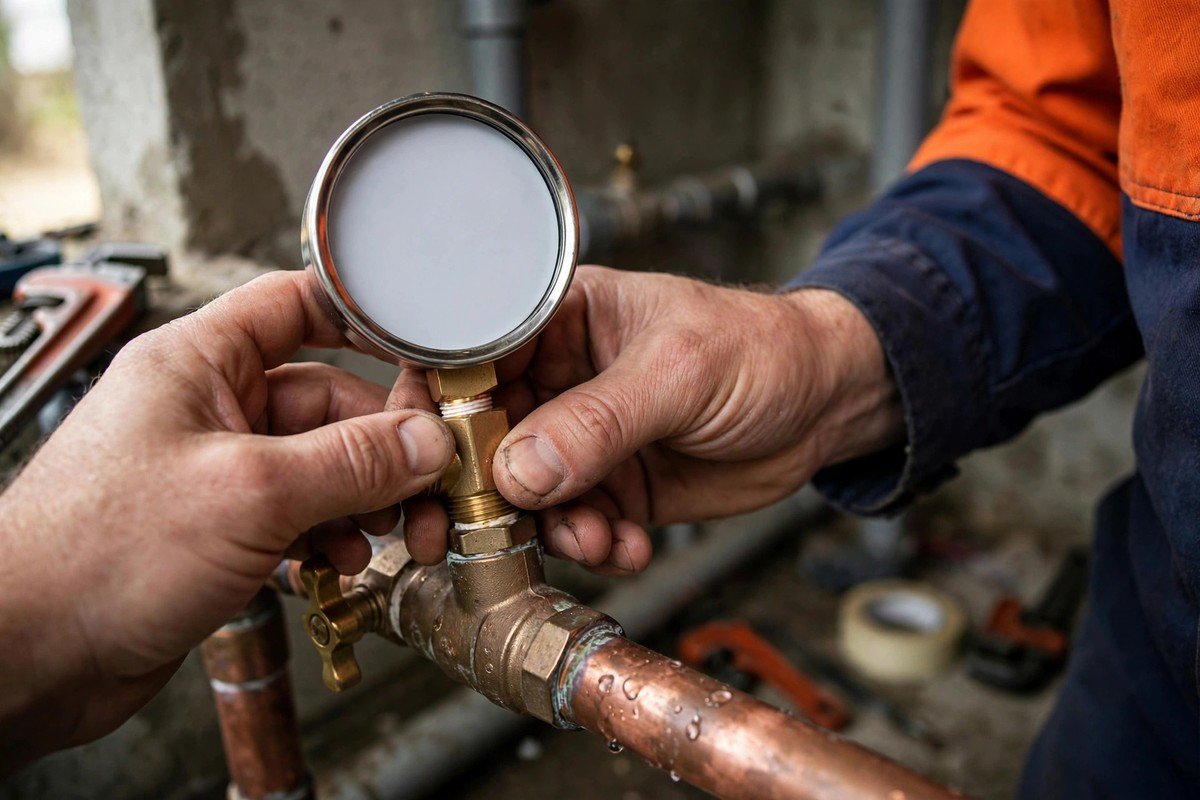
We do. We are Nova Slab Leak Detection, a firm built around slab leak detection and fix work. Our own techs track down where the water comes from. Your tech uses pressure tests and sound gear to tell a supply leak from a drain leak. Then we fix it.
Supply leaks and drain leaks need their own fixes. That is why finding the true source counts. Guessing wastes money. Our check pinpoints the spot in about 1 to 3 feet, and a visit takes 1 to 3 hours.
Can I just pump the water out myself? Pumping removes water for now, but the leak refills the pool. It is like bailing a boat with a hole in it. Fix the hole first. Then the water stays gone.
How Do You Break the Cycle?
The fix follows clear steps. The table shows the order.
| Step | What happens | Why it matters |
|---|---|---|
| Detect | Find the exact leak spot | No guessing, no extra digging |
| Fix | Fix or reroute the pipe | Stops new water |
| Dry | Remove pooled water, ventilate | Starves germs |
| Watch | Check for smells after fix | Confirms the fix worked |
Once the water stops, germs lose their home. Drying finishes the job. Smells fade as the area dries out. If smells persist after fix, call us back and we will recheck.
This guide sits inside our slab leak science hub. Related reading: how mold grows from slab leaks and why moisture attracts termites and pests. For pricing, see our /resources/cost-guide/. We are open 24/7 at (833) 542-3027.
FAQs
Why does my house smell like rotten eggs near the floor?
Sulfur gases from germs in stagnant water are one cause. Rule out a natural gas leak first by calling your gas company. Then have the slab checked for a leak.
Can standing water under a slab attract bugs?
Yes. Damp soil draws many pests. Our moisture and pests guide has the full picture.
Will the smell go away on its own?
No. As long as water keeps pooling, germs keep growing. The odor may fade and return, but the source stays. Fix stops it.
Is it a supply leak or a drain leak?
Both can pool water under a slab. Drain leaks add more food for germs. Our pressure tests tell them apart during the check.
How long does it take for water to go stagnant?
In warm, dark soil it can happen in days. Smells may take longer to reach you. By the time you smell it, the water has been there a while.
Does fixing the leak remove the germs?
Fixing the leak stops new water. Drying removes their home. The group dies back as the area dries. That is why fix plus drying is the full fix.