
What Is Slab Leak Science?
Slab leak science is the study of how water escapes from pipes under a concrete slab and what it does to your home. Water can seep into soil, soften ground, and feed mold. Leaks can grow over time. This hub explains each step in plain words so you know what matters and when to call (833) 542-3027.
Why Do Slab Leaks Start?
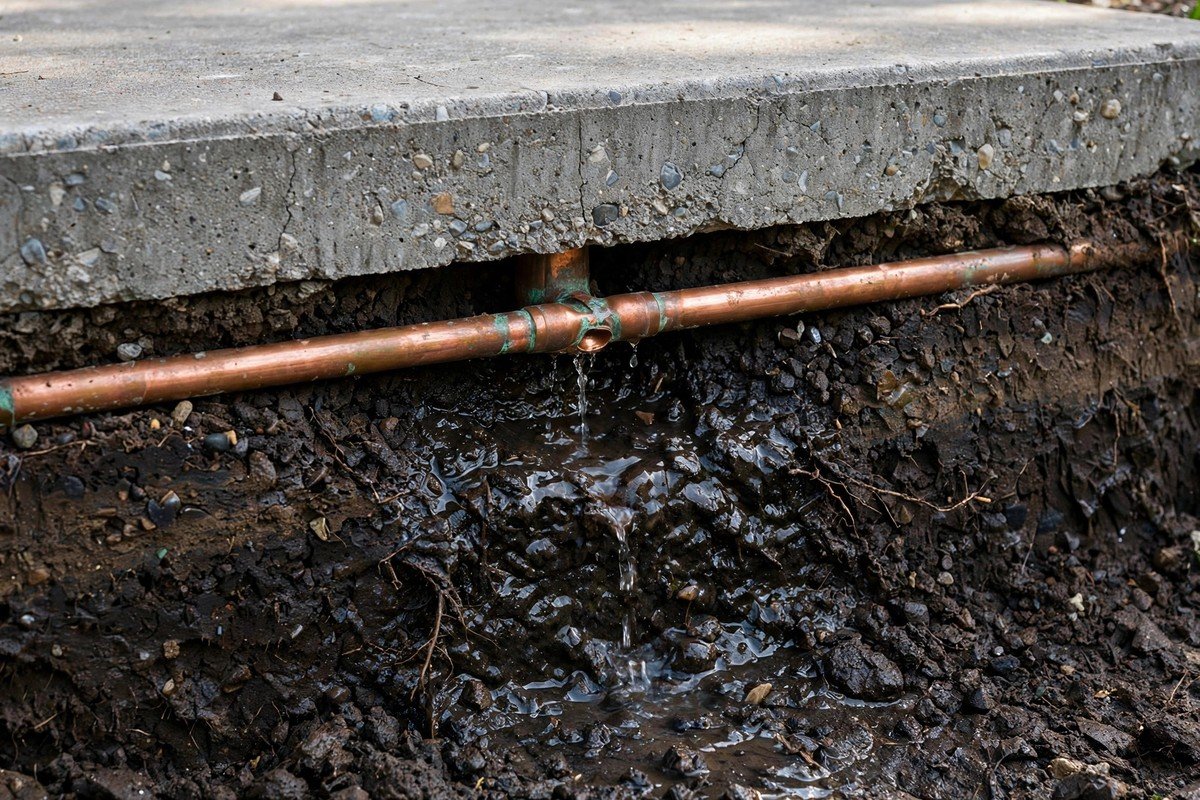
Pipes under a slab face stress day after day. Water pressure pushes from the inside. Soil pushes from the outside. Time adds wear. In most homes, a leak starts small. It may be a pinhole or a worn joint. Then water begins to escape.
A few forces work together. Soil shifts with rain and dry spells. Concrete rubs against copper lines. Harsh water eats at pipe walls. Small flaws grow into larger ones. None of this happens overnight. It builds over months or years.
Why do pipes leak under a slab and not elsewhere? Because these pipes sit buried in soil under concrete. You can’t see them or check them. Stress from shifting, pressure, and water makeup has nowhere to go. That is why slab leaks need special detection gear.
If you want the full process, read about our /services/slab-leak-detection/. Our techs find the leak spot before any fix starts.
How Do Slab Leaks Spread Under a Home?
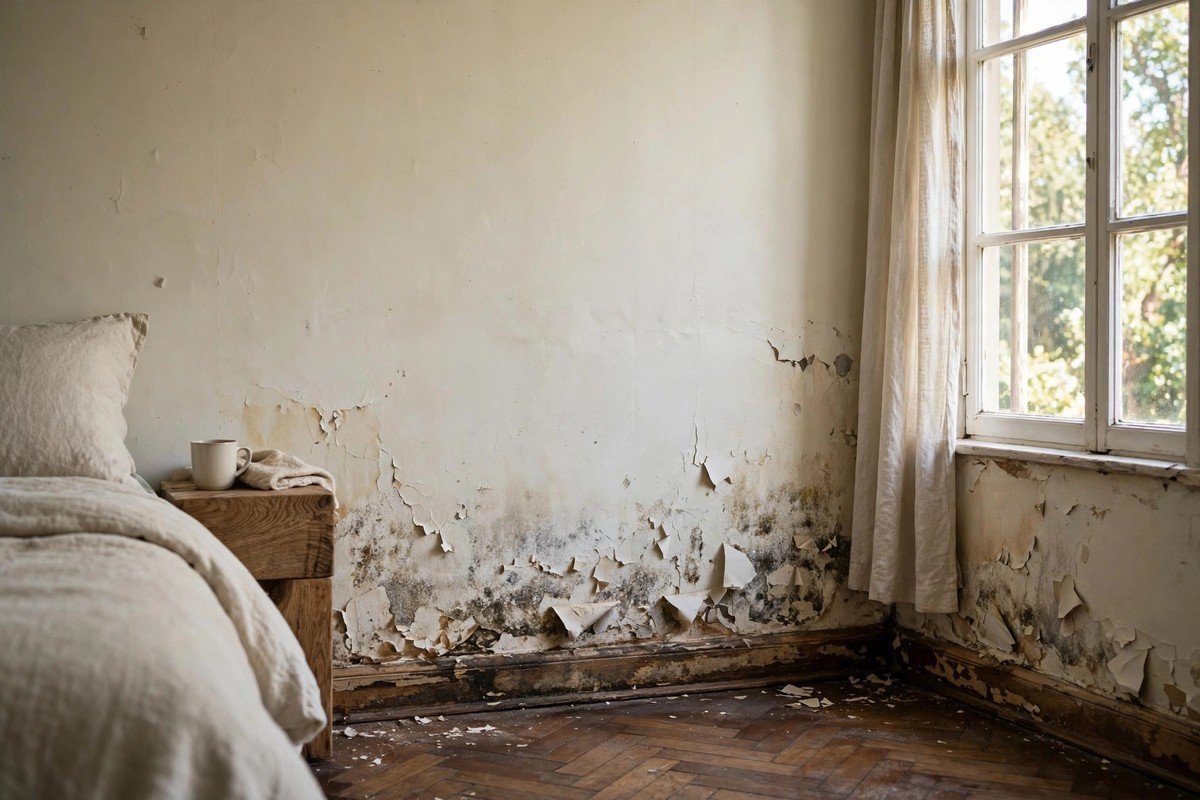
Water from a leak follows the path of least resistance. It moves through soil and along the underside of the slab. It can wick up through tiny cracks in the concrete. It can also travel sideways for many feet. That is why damage may show far from the leak.
How fast does water spread under a slab? It depends on soil type, leak size, and pressure. Loose soil lets water move fast. Dense clay slows it down. A small pinhole may spread water slowly for months. A larger break can flood an area in days.
Where Does the Water Go After It Escapes?
Water can pool under the slab. It can soak into soil grains. It can rise into the concrete itself. Concrete acts like a hard sponge. It wicks moisture up. From there, moisture can reach flooring and walls.
Think of a paper towel touching a spill. The water climbs. Concrete does the same, just more slowly. Over time, damp spots appear on floors. Trim swells. Musty smells grow. All of this can start from one small leak.
What Happens as a Slab Leak Grows?
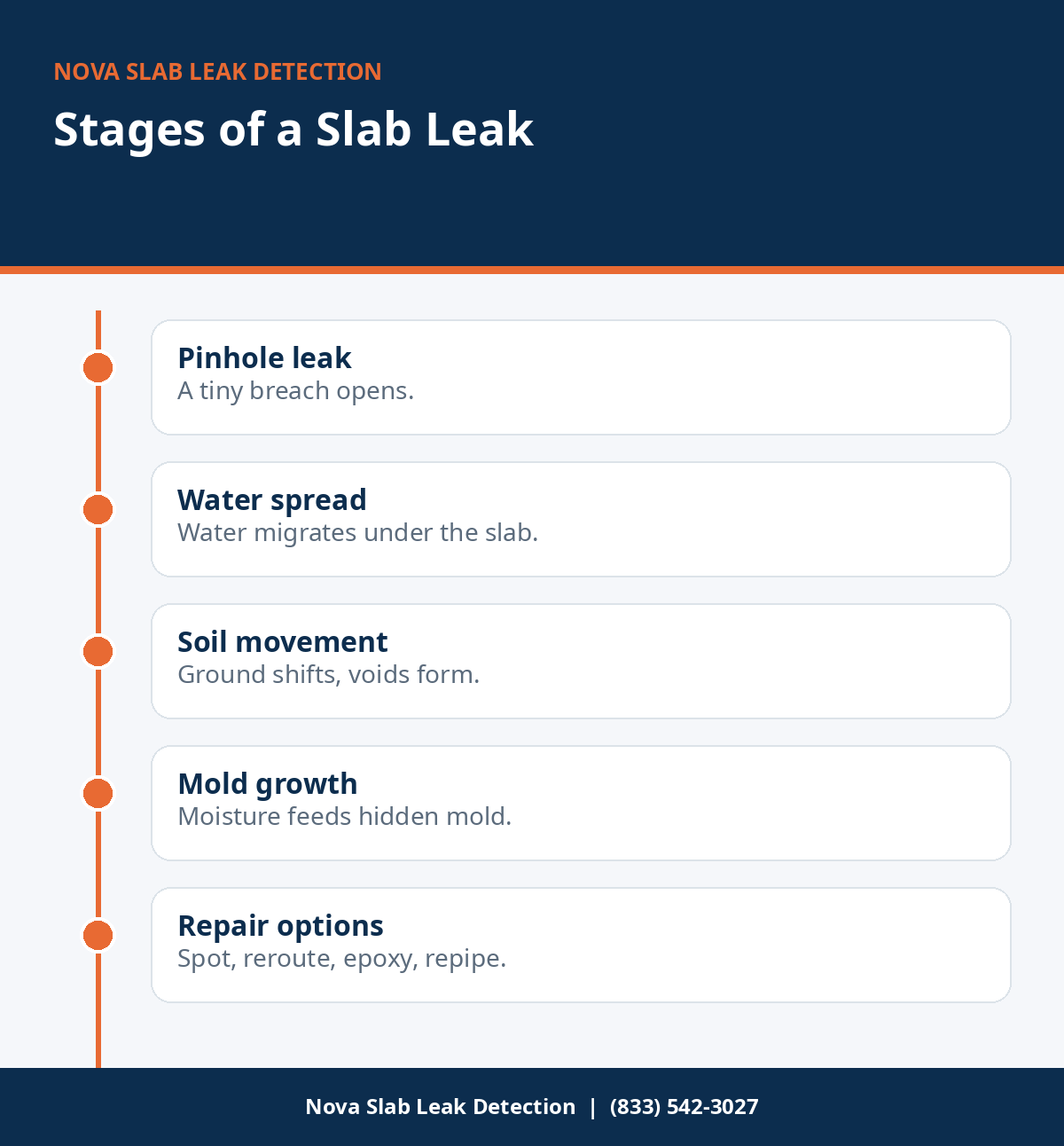
A slab leak moves through stages. Each stage brings new problems. The table below shows the path.
| Stage | What happens | What you see | What to do |
|---|---|---|---|
| Pinhole | A tiny opening lets water out | Water bill rises slightly | Call for a check |
| Spread | Water soaks soil and concrete | Warm floor spot or damp smell | Book a visit soon |
| Soil shift | Wet soil moves or washes out | Cracks in floors or walls | Call now |
| Damage | Mold, wood rot, or pest signs | Visible stains and smells | Call right away |
When does a small leak become a big problem? When it runs long enough to move soil or feed mold. Weeks of slow seepage can cause as much harm as one big break. The EPA advises drying wet areas in 24 to 48 hours to slow mold growth.
Can a slab leak fix itself? No. Pipes do not seal on their own. Mineral buildup may slow a leak for a while, but the flaw stays. Pressure will reopen it. The only fix is to find the leak and fix the pipe.
When Should You Call About a Slab Leak?
Call when you see warning signs. A high water bill is a common first clue. Warm spots on the floor are another. Musty smells, damp carpets, or cracks all point to trouble. You do not need to be sure. We check, and we tell you the truth.
Leak-check visits take 1 to 3 hours. Our check pinpoints the leak in about 1 to 3 feet. Then we show you fix options. Costs are national estimates as of 2026: checks run $150 to $500 (hard cases to about $600).
How urgent is a suspected slab leak? Treat it as soon as you can. Water keeps working while you wait. Mold can start in days in damp material. Soil can shift under the slab. A quick call is cheap insurance. We are open 24/7.
Who Finds and Fixes Slab Leaks?

We do. Nova Slab Leak Detection is a firm whose whole focus is slab leak detection and fix work. Our own techs do the work. Your tech brings sound gear, heat scans, and pressure tools. We locate the leak, explain your options, and do the fix.
We never hand your job to someone else. There is no middleman and no referral. You call us, we show up, and we fix it. That is the whole model.
You do not need to find your own plumber after the check. We are a full-service firm. Our techs handle both the check and the fix. One call covers the whole job.
What Science Topics Can You Read Here?
This section breaks the science into short guides. Each one answers common questions in plain words.
- How does mold grow from slab leaks? — why damp slabs feed mold and how to spot it
- How does hidden moisture affect health? — what damp homes mean for the people inside, with care
- How do germs grow in stagnant water under slabs? — standing water, smells, and risks
- How do germs corrode pipes? — the plain-English story of germ-driven corrosion
- Why does moisture attract termites and pests? — damp soil draws unwanted guests
- What soil science should you know? — clay swelling, washout, and slab shifts
- How does water chemistry corrode pipes? — pH, hard water, and pipe wear explained
Start with the topic that matches your worry. Each page links back here, so you can always come back to this hub at /.
FAQs
What is a slab leak in simple terms?
A pipe under your home’s concrete slab springs a leak. Water leaks into the soil. It can damage floors, walls, and the slab itself. A check finds the exact spot before repairs begin.
Why does a slab leak matter if I cannot see it?
Hidden water still works on your home. It feeds mold, shifts soil, and rots wood. Damage grows over time. An early check costs far less than late repairs.
How do technicians find a leak under concrete?
They use sound tools, heat cameras, and pressure tests. The gear pinpoints the leak in about 1 to 3 feet. A visit takes 1 to 3 hours in most homes.
Can water really move through concrete?
Yes. Concrete is porous. It wicks moisture upward through tiny channels. That is why a leak under the slab can cause damp floors and walls above.
Does cold weather cause slab leaks?
Cold can stress pipes, but most slab leaks come from long-term wear. Shifting soil, water pressure, and water makeup do most of the damage over years.
How much does slab leak science help me as a homeowner?
It helps you spot trouble early and ask good questions. You will know what signs matter and what your options are. Call (833) 542-3027 any time for clear answers.