
How Accurate Is Slab Leak Detection?
Our gear finds slab leaks within about one to three feet in most homes. Most visits take one to three hours. Slab leak detection accuracy rests on gear, skill, and home shape. We use sound, heat, and pressure tests to shrink the hunt to a small zone before the fix starts.
What Does Slab Leak Detection Accuracy Mean?
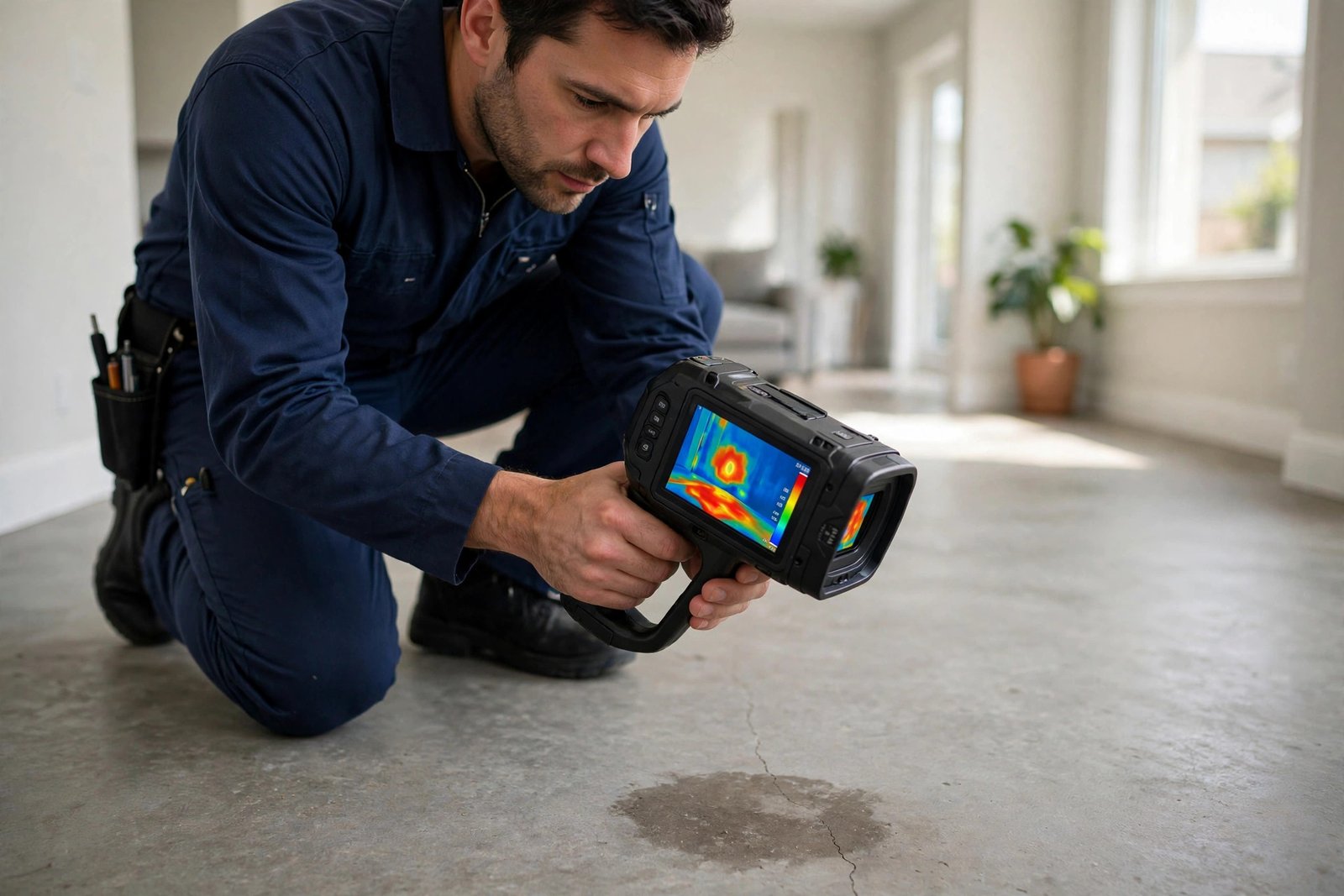
It means how close our marked spot is to the real leak. We mark a zone one to three feet wide. The fix crew cuts the floor in that zone. A tight mark means less dig, less dust, and less cost to you.
Why Does Detection Accuracy Matter?
A wild guess tears up more floor than needed. More cracked concrete means more time and cost. Sharp tests keep the fix zone small. Your home gets back to shape fast. See our detection service page for how a visit works.
Does better accuracy really lower the cost? Yes. A small, well-marked area means a smaller hole, less concrete to replace, and less flooring to fix. That keeps the whole repair cheaper.
How Do We Pinpoint the Leak So Precisely?

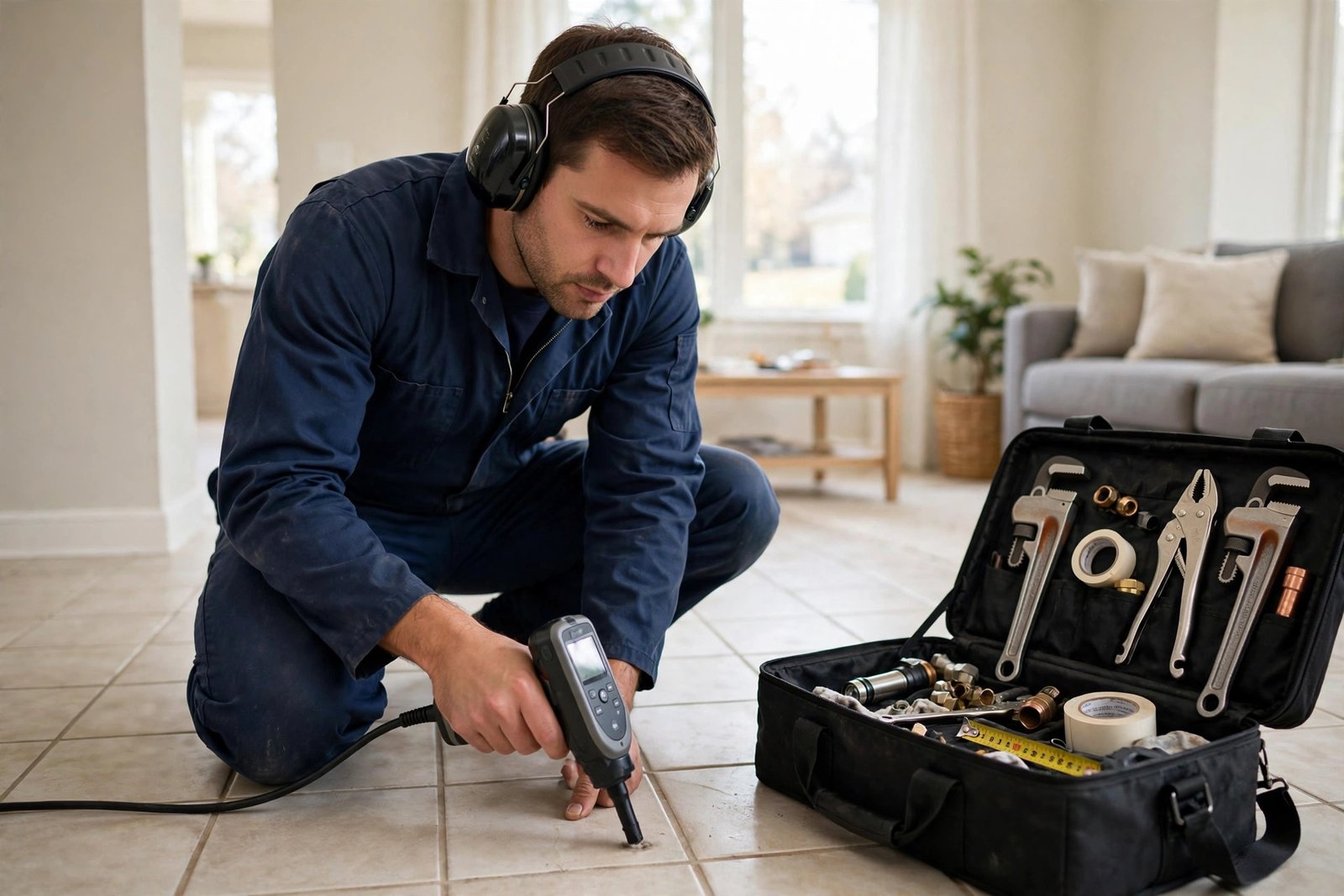
No one tool does it all. Our technicians blend tools. They match each read, then mark the floor.
| Method | What it does |
|---|---|
| Acoustic listening | Picks up the sound of water escaping the pipe |
| Pressure testing | Finds which line is losing pressure |
| Thermal imaging | Spots warm areas from hot-water line leaks |
| Moisture meters | Maps damp areas in floors and walls |
When tools agree on one spot, we mark it with trust.
Can you find a leak with no visible water? Yes. Most slab leaks never show water inside the home. Sound and pressure tests reveal them long before floors buckle.
How long does a detection visit take? Most visits take one to three hours. Complex homes with several bathrooms or long pipe runs can take longer.
What Can Make a Job Harder?
Some homes are hard to read. Deep lines, loud sites, and more than one leak can blur the read. Leaks under tile or thick floors mute sound. Then our technicians take more time. They may grow the marked zone a bit. We are frank when a job gets hard.
What if there are two leaks? We test line by line until each one is found. Multiple leaks take longer, but each gets its own marked area.
Are There Honest Limits to Detection?
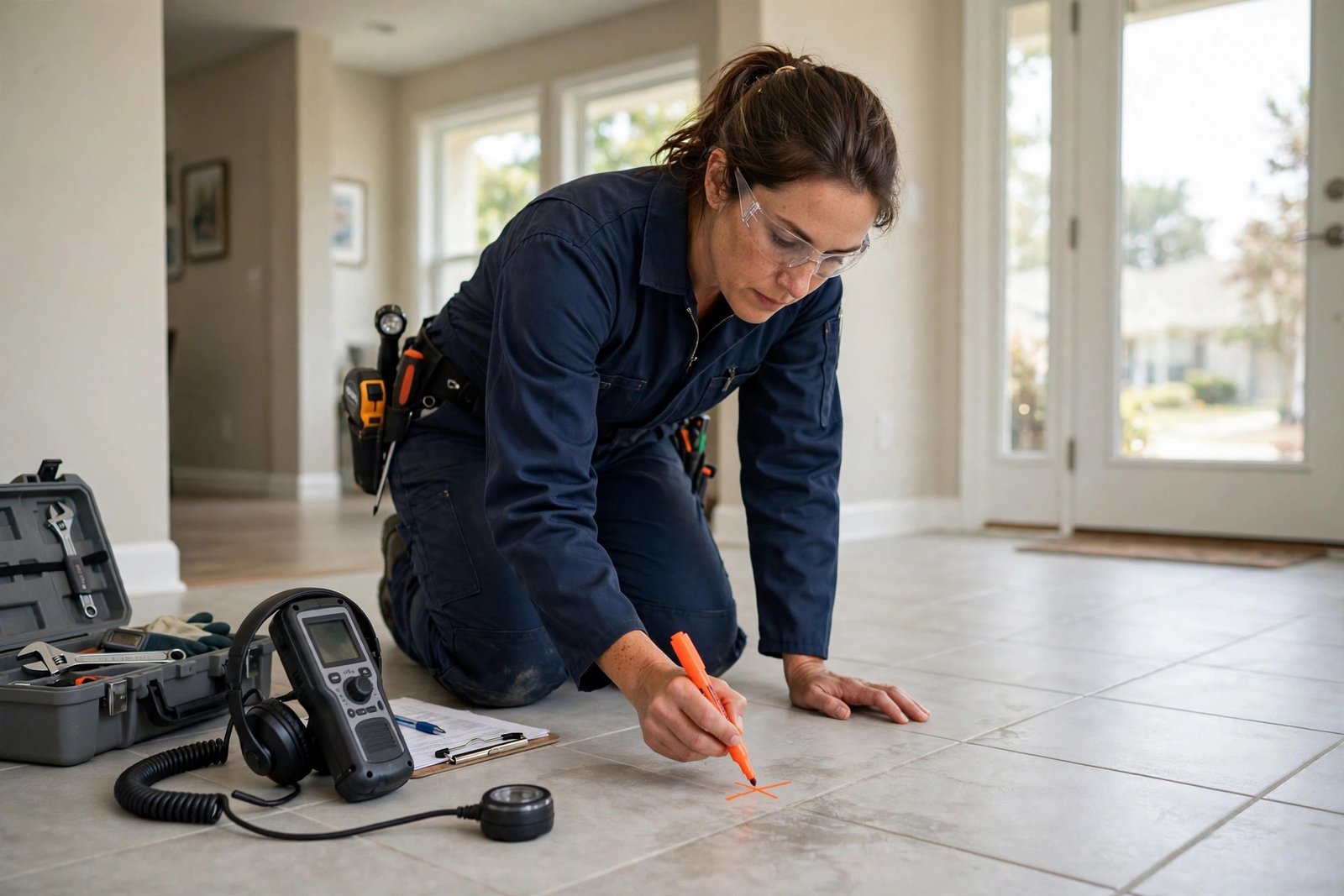
Yes. No test is sure. We won’t vow an inch-perfect mark. We do give a small, marked zone built on real test reads, not a guess. That keeps repairs small and costs low. If you hear water run with no taps on, read our guide on hearing running water.
Will you put the findings in writing? Yes. You get a written report with the leak location and the tests we ran. It also works as proof if you file a water bill claim.
FAQs
Is acoustic detection enough on its own?
It’s the lead tool, but we match it with force or heat tests. Two that match beat one.
Can detection damage my floors?
No. Tests break no ground. We hear, scan, and test. We never cut or drill on a visit.
Will you mark the exact spot for the repair crew?
Yes. We mark the leak spot on the floor. You get our written report of the finds.
What if a second leak appears later?
Leaks do not move. But wear can start a new weak spot in time. If a new sign shows, call us for a fresh check. Our FAQ hub has more.
Do you detect leaks in older homes?
Yes. Old homes tend to have copper lines prone to leak. Age won’t stop our tools.