
Will a Home Inspection Find a Slab Leak?
Most often not. A standard home inspection rarely finds a hidden slab leak because inspectors cannot see under your concrete slab. They check taps, heaters, bare pipes. A buried leak makes no sound. It leaves no mark till it is far gone. Home inspection slab leaks are the blind spot. We close it with a leak check.
What Does a Standard Inspector Actually Check?
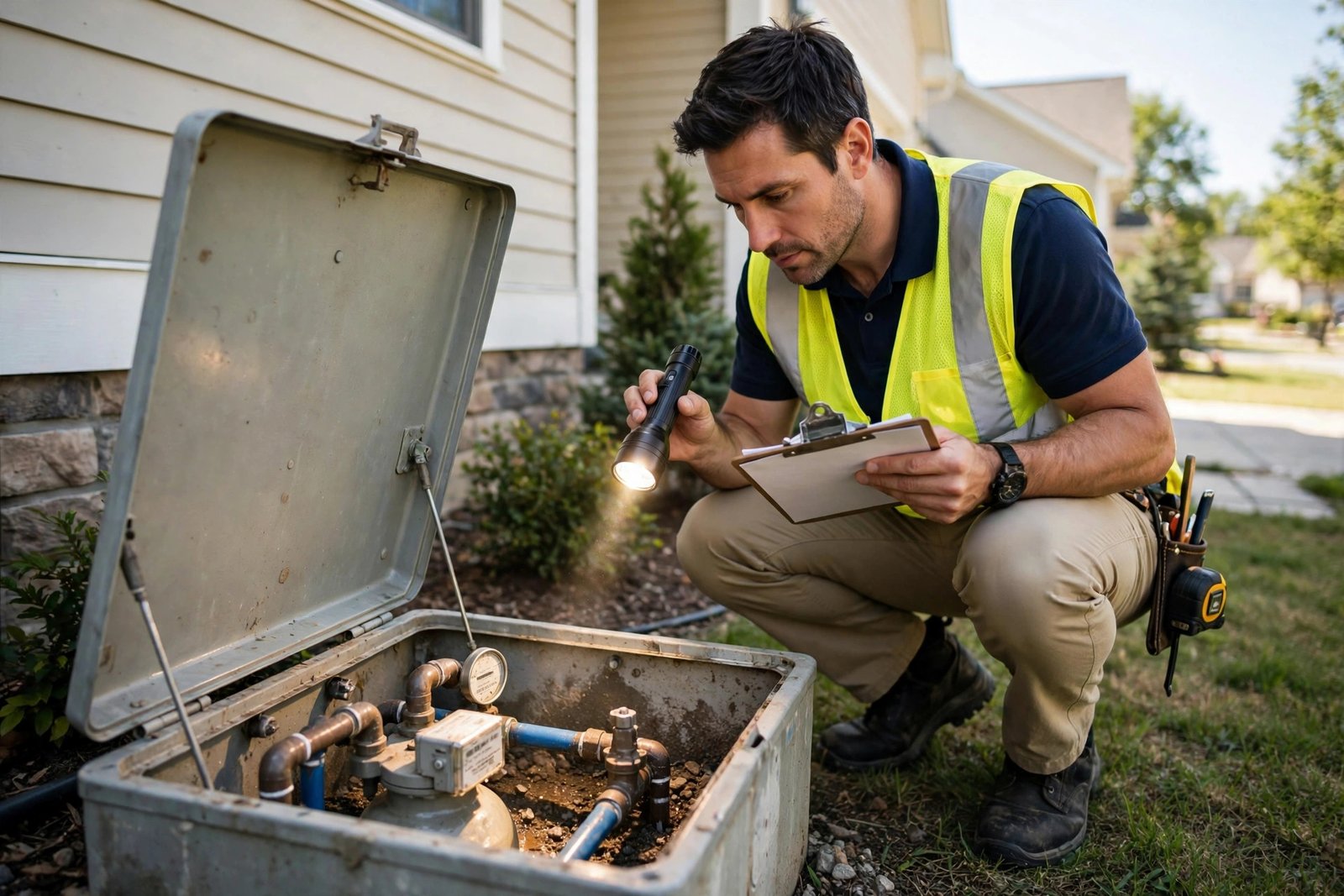
A plain check stays at the pipe face. Here is what they do. Each step stops:
- Run taps and flush toilets. Watch flow and drain speed.
- Look under sinks. Spot drips or stains you can see.
- Check the water heater. Note age, rust, and safe venting.
- Test flow force at a hose bib.
- Scan for stains on ceilings and walls.
They don’t open walls. They don’t lift floors. They don’t use sound gear. Their terms bind them to seen pipes. A clean report can still miss a leak. It may sit under the slab. You would not know. Not till harm shows.
Do inspectors test for slab leaks with the water meter? Some do a quick meter glance, but most do not run a full 15–30 minute meter test during a busy inspection. You can run one yourself — our guide at how to test for a slab leak with a water meter walks you through it in plain steps.
Home Inspection Slab Leaks: Why Do Standard Inspections Miss Them?
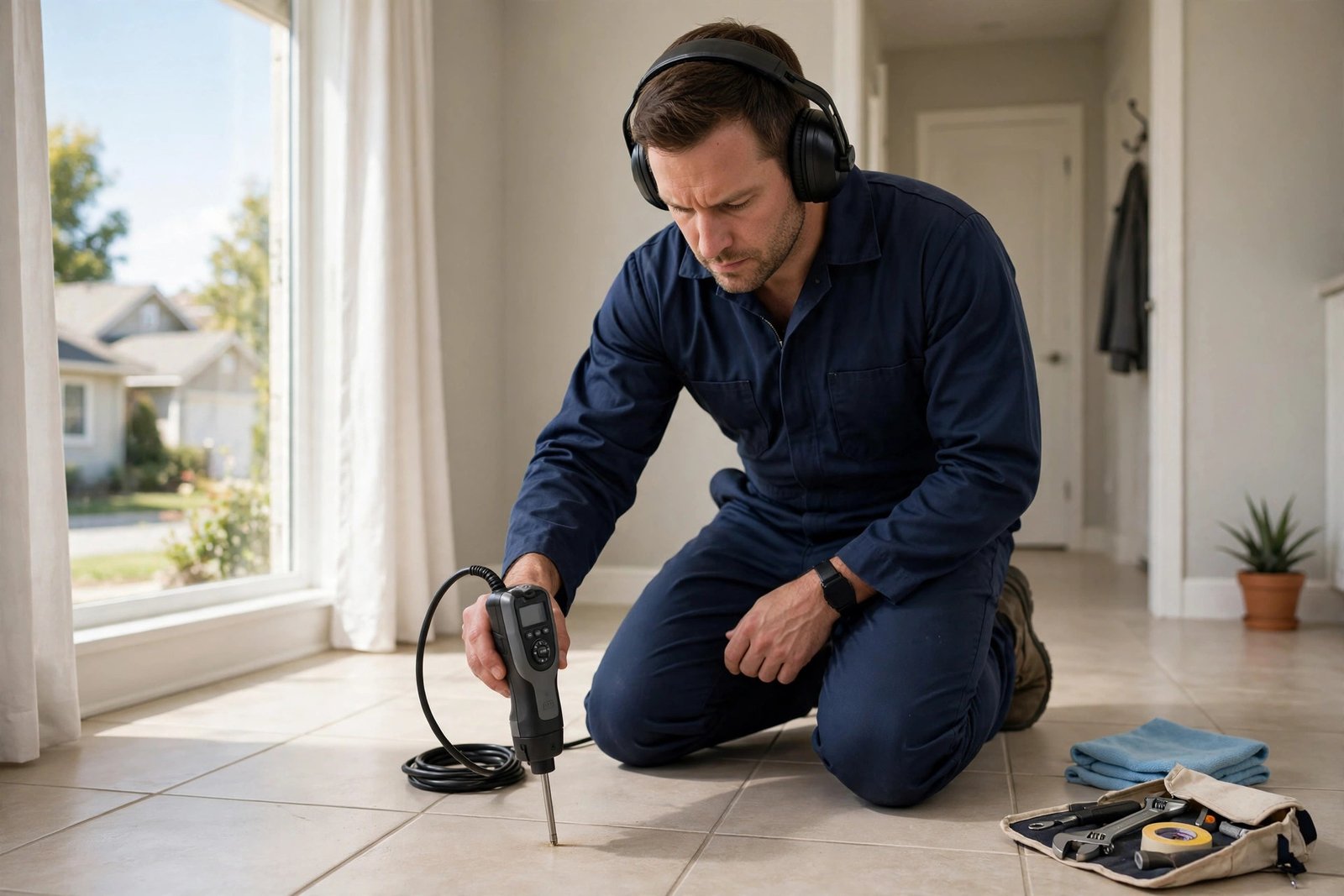
Three short points:
- The leak is hidden. Pipes run inside or beneath a concrete slab. Nothing to see, nothing to touch.
- Early leaks leave no clues. A small leak may not change water pressure, stain a floor, or raise the bill enough to notice.
- The inspection is visual. Home inspectors follow standards that limit them to what they can observe without special tools or destructive testing.
This is no fault of theirs. It is the shape of the job. Slab leaks need their own kind of visit. They need their own tools. We bring them to you.
Can a seller hide a slab leak from an inspector? A seller may genuinely not know about the leak. Slab leaks often run silently for months, so the seller’s ignorance can be real. That is why buyers should verify rather than assume the inspection caught everything.
How Is Our Detection Visit Different From an Inspection?
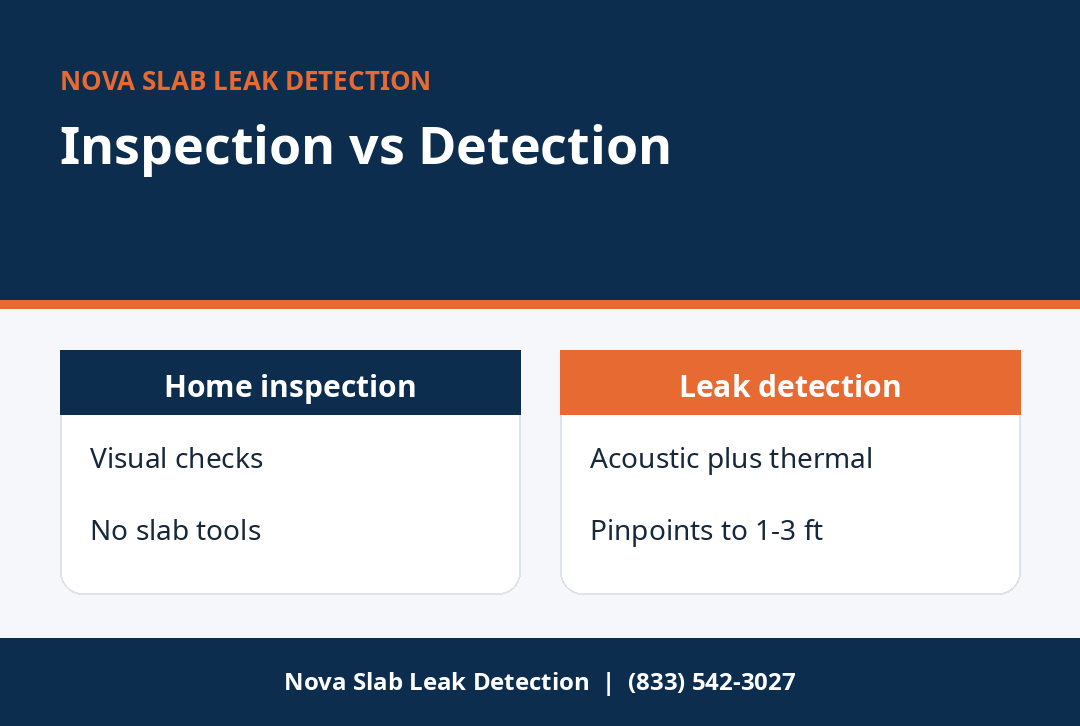
We do one job: find leaks you can’t see. When you book a visit through (833) 542-3027, here is what we do:
- Sound checks. We press small mics to the floor. We hear the hiss of water in the pipe.
- Heat scans. Our cams spot warm, damp spots. Those point to hot-line leaks.
- Force and meter checks. We shut lines one by one. We watch the flow drop.
Visits take 1-3 hours. We pin leaks down to about 1-3 feet. National estimates as of 2026 put a check at $150-$500. Hard homes may run ~$600. Learn what the visit covers at slab leak detection services. It takes just hours. You get clear facts.
How long before closing should I schedule a detection visit? As early in the inspection period as possible. That gives you time to negotiate repairs or credits if we find a leak — see who usually pays at our FAQ on the topic in the full FAQ library.
What Should Buyers Ask for Before Closing?

Guard your buy:
- Ask the seller about leak history. Request any past plumbing repairs, insurance claims, or detection reports in writing.
- Run the water meter test. Do it during a showing if the seller allows. No water should be running, yet the meter should stay still.
- Book our detection visit. A written report from our technicians gives you hard evidence for negotiation.
- Read the disclosure carefully. Sellers in many states must disclose known defects, but “known” is the key word — unknown leaks still slip through.
Should I still buy a home if a slab leak is found? Often yes. A found leak is a negotiable repair, not a dealbreaker. Repair ranges nationally as of 2026: spot repair $1,500–$4,500; reroute $3,500–$7,000; tunneling $3,500–$8,000; epoxy lining $3,000–$6,000. With a clear report, you can ask for a credit or have the seller fix it before closing.
FAQs
Does a home inspector guarantee there are no slab leaks?
No. Their terms bar unseen pipes. The report spans seen pipes. It can’t vouch for the slab. We can.
Can I ask the inspector to check for a slab leak?
You can ask. A sharp eye notes warm floors. Or stains. But they lack our sound tools. And our heat tools. Book our check soon.
Is a slab leak a dealbreaker when buying a house?
Most often not. It turns into a price point. Get our leak report. Get a fix quote. Ask for a credit. Or ask the seller to fix it first. You gain a fair deal.
Who pays for a detection visit during a home purchase?
Most often the buyer. Part of due checks. It is a small sum. Small next to a leak you missed. It pays for itself.
What if the seller already fixed a slab leak?
Ask for proof. Get the leak report. Get the fix bill. Get any signed pledge. Then weigh a fresh check from us. Make sure the fix held. Trust, then buy.