
Slab Leak vs Water Heater Leak: How to Tell Them Apart
Water where it shouldn’t be? We’ll help you find whether the slab or the water heater is to blame.
Slab Leak vs Water Heater Leak: Quick Answers
The short version of this guide to slab leak vs water heater leak:
- How Can You Tell a Slab Leak vs Water Heater Leak Apart? A slab leak vs water heater leak puzzle is common. Water on the floor can come from pipes under the slab or from the tank itself.
- Why Does the Source of the Leak Matter? Each source needs its own fix. A failed tank often needs a swap. A slab leak needs pipe work under concrete.
- Where Does Water Heater Water Usually Pool? Tank leaks stay close to the tank. Check the garage first. Then the utility closet.
Keep reading for the full guide to slab leak vs water heater leak.
How Can You Tell a Slab Leak vs Water Heater Leak Apart?
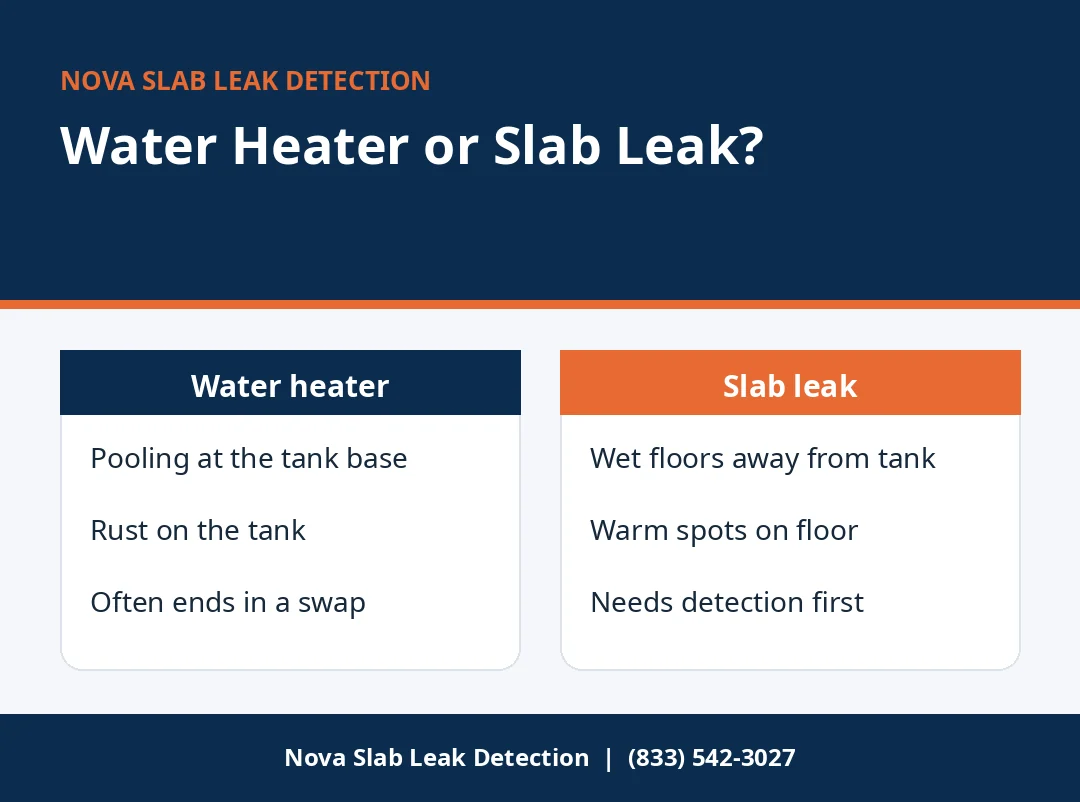
A slab leak vs water heater leak puzzle is common. Water on the floor can come from pipes under the slab or from the tank itself. The location of the water and the state of your water heater usually give it away. Our team checks both. We find the true source fast. Then we fix it right.
Here is a quick guide. Match your clues to the likely source.
| Clue | Points to the water heater | Points to the slab |
|---|---|---|
| Where is the water? | Right at the tank base | Random damp spots on floors |
| How is the hot water? | Runs out fast or looks rusty | Fine, but floors feel warm |
| What do you hear? | Hissing or popping at the tank | Water running with taps off |
| What did the bill do? | Rose a little | Jumped a lot |
| Tank age and shape | Old, rusty, or damp on top | Tank looks fine and dry |
No single clue proves it. But patterns help a lot. Two or more slab clues? Get a pro check soon.
Why Does the Source of the Leak Matter?
Each source needs its own fix. A failed tank often needs a swap. A slab leak needs pipe work under concrete. Paying for the wrong repair helps no one. That is why we test first. We find the true source. Then we fix it once. You save money and stress.
Can both leak at the same time? It is rare. But it happens. Old tanks and old pipes age together. We check both so nothing hides.
Where Does Water Heater Water Usually Pool?
Tank leaks stay close to the tank. Check the garage first. Then the utility closet. Look at the drain pan too. Water rarely travels far from a tank leak. If the far hallway is wet, think slab.
Follow the wet trail backward. It often leads to the tank. Stains on the wall behind the tank are a tell. So is a damp platform under it. Dry everywhere near the tank? The slab moves up the suspect list.
What Are the Classic Signs of a Water Heater Leak?
Rust leads the list. Look at the base seam. Check the top pipe joints too. Popping sounds mean sediment buildup inside. Hot water may run out fast. The pilot light may fail often. Any pooling at the base needs fast action. Shut the cold inlet valve. Then call us.
Does a leaking heater raise my water bill? Sometimes. A stuck valve can waste water all day. The rise starts small. It grows each month.
How Old Is Too Old for a Water Heater?
Age is not a firm rule. But older tanks leak more often. Metal wears thin over years of heat cycles. If yours is aging, check it each month. A quick look takes sixty seconds.
What Are the Classic Signs of a Slab Leak?
Warm spots on tile or wood floors. The sound of water with taps off. A bill that jumps for no clear reason. Cracks in floors or walls. Damp baseboards or a mildew smell. Low pressure in one area of the home.
One sign alone may mean little. Two or three together mean a lot. Trust the pattern you see. Early checks cost less than late repairs. See how slab leak detection ties each clue to its source.
When Should You Suspect the Slab Instead?
Suspect the slab when the tank looks fine. Dry tank, wet floor, warm tile — that is the classic trio. Also watch the meter. A spinning meter with taps off means water is flowing. Try the water meter test. It takes ten minutes. It costs nothing to do.
Will my hot water still work with a slab leak? Often yes. But a hot-line leak drains heat fast. Showers may cool sooner than before.
Who Should You Call for a Mystery Leak?
Call us. Our technicians handle tank leaks and slab leaks alike. We inspect the heater first. Then we test the slab lines. One visit covers both systems. Call (833) 542-3027 any time. We answer around the clock.
Should I shut off the water heater if I see pooling? Yes. Turn the cold inlet valve off. Leave the tank alone otherwise. We will take it from there.
How Do We Pinpoint the Real Source?
We start simple. Eyes, ears, and a moisture meter. Then we use pro listening gear on floors and walls. We test line pressure as well. Most leaks are found within about 1–3 feet. A full visit often takes 1–3 hours. You get answers the same day.
No guesswork from us. No tearing up floors just to look. We mark the spot first. Then we plan the smallest fix that works.
What Happens If You Guess Wrong?
You pay twice. A new tank will not stop a slab leak. And slab repair will not fix a bad tank. Wrong guesses also waste weeks. Water keeps flowing meanwhile. Damage keeps growing. A pro check costs far less than a wrong repair. A detection visit runs $150–$500 in national estimates as of 2026. That is cheap insurance.
How Can You Prevent the Next Surprise?
Check your tank each season. Look for rust and dampness. Watch your water bill monthly. Sudden jumps deserve a closer look. Know where your main shutoff is too. Fast shutoffs limit damage.
Our work carries our satisfaction guarantee. If something isn’t right, call us. We’ll make it right. Browse more plumbing problem guides any time.
Slab Leak vs Water Heater Leak: Frequently Asked Questions
Homeowners often ask us these questions about slab leak vs water heater leak. Each answer is short, and the full detail on slab leak vs water heater leak is in the sections above.
Related Slab Leak Problems
More guides related to slab leak vs water heater leak:
- Slab Leak Water Damage Timeline: Days, weeks, months — here’s what a leak does over time.
- Termite Damage vs Slab Leak: Cracks and damage look alike. Here’s how to tell termites from a slab leak.
- Uneven Floors: Your floor slopes where it used to be flat. We find out why, fast.
- All slab leak problems: Every warning sign, cause and risk in one place.
- Slab Leak Detection: How we find a leak under concrete without breaking it.
The EPA estimates the average household’s leaks can waste more than 9,300 gallons of water a year (EPA WaterSense), which is why slab leak vs water heater leak is worth acting on early.
Slab Leak vs Water Heater Leak: Talk to Nova Today
Call any time, day or night. Tell us your ZIP code and what you are noticing, and we will book your visit. Mention slab leak vs water heater leak when you call so we bring the right equipment.