
Slab Leak vs Sewer Leak: How to Tell the Difference
Water under your slab — but from which pipe? We tell supply from sewer fast.
Slab Leak vs Sewer Leak: Quick Answers
The short version of this guide to slab leak vs sewer leak:
- What Is the Core Difference? A slab leak breaks a supply line. Force jets water out. Clean water jets out.
- When Does Each Type Strike? Supply leaks start when pipes weaken. Corrosion eats copper over decades.
- Where Do the Pipes Run? Supply lines run under slabs to fixtures. They feed baths, kitchens, laundry.
Keep reading for the full guide to slab leak vs sewer leak.
What Is the Core Difference?
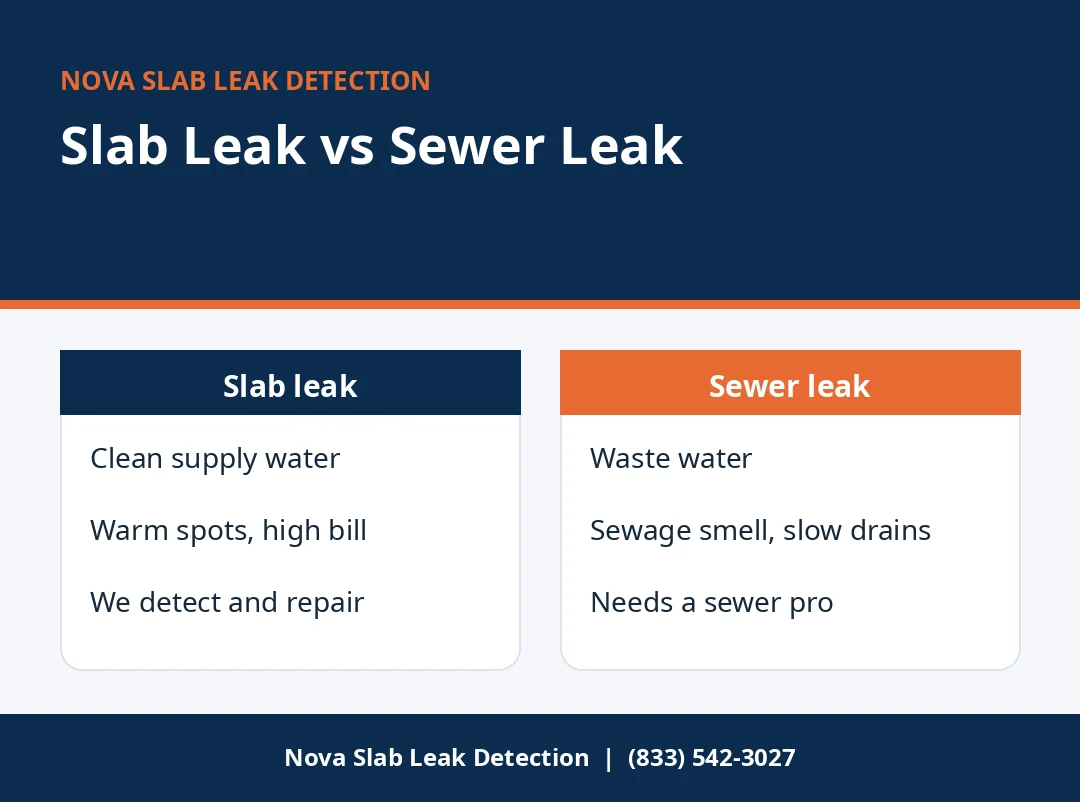
A slab leak breaks a supply line. Force jets water out. Clean water jets out. A sewer leak breaks a drain line. Waste seeps out with no force. That pressure gap is key. Slab leak vs sewer leak checks start here. Supply leaks waste metered water fast. Sewer leaks bring odors and slow drains.
When Does Each Type Strike?
Supply leaks start when pipes weaken. Corrosion eats copper over decades. Abrasion wears lines that rub concrete. Soil shift snaps rigid joints. Sewer leaks trace to roots. Old clay and iron sag. Neither waits its turn.
Can a home suffer both at once? Yes, in older homes. We check both systems when signs mix. One visit can cover it.
Which Signs Point to Each Type?
Match your symptoms to this table.
| Sign. | Likely supply (slab) leak. | Likely sewer leak. |
|---|---|---|
| Water bill spike. | Yes. | Rarely. |
| Warm floor spots. | Yes, hot-line break. | No. |
| Hiss with taps off. | Yes. | No. |
| Sewage odor. | No. | Yes. |
| Slow, gurgling drains. | No. | Yes. |
| Damp carpet, no odor. | Yes. | Less common. |
| Lush grass strip outside. | Sometimes. | Often over drains. |
Two matches give a strong read. Mixed signs mean test both. Guessing wastes money.
Where Do the Pipes Run?
Supply lines run under slabs to fixtures. They feed baths, kitchens, laundry. Sewer lines send waste to the street. They sit deep and slope down. Cleanouts give access outside. Maps speed testing.
Can a sewer leak raise my water bill? Rarely. Drain flow already passed the meter. Bill spikes are supply clues.

Slab Leak vs Sewer Leak: How Do We Tell?
We test both systems well:
- Meter test, all water off. Movement means supply.
- Sound gear hears spray below.
- Camera runs check drain breaks.
- Dye traces drain seep paths.
- Wet maps matched per system.
Most visits take 1 to 3 hours. Our slab leak detection covers supply lines. Camera work covers drains. You leave with one clear answer today.
Who Handles Each Repair?
We fix supply-side slab leaks. Sewer fixes need drain crews. They bring digging or lining rigs. Find a sewer fault? We say so. We never guess past our trade. Honest beats wrong. You always know the next move.
Will I need two companies? Sometimes, yes. We diagnose both sides first. Then we map your path forward.
What Does Each Fix Cost?
Supply-side costs as of 2026.
| Service. | Typical range. |
|---|---|
| Leak detection visit. | $150–$500. Complex homes run up to ~$600. |
| Spot repair. | $1,500–$4,500. |
| Reroute. | $3,500–$7,000. |
| Tunneling. | $3,500–$8,000. |
| Epoxy lining. | $3,000–$6,000. |
Sewer costs vary by depth. Camera checks run a few hundred. Full sewer jobs cost more. We quote our side first.
What Health Notes Apply?
Sewer leaks move waste water. Take them seriously. Keep kids and pets off wet zones. Do not shrug at sewage odors. Do not breathe them long. We are not doctors. See yours with concerns. Supply leaks are clean water. They still wreck homes fast.
Who Should You Call First?
Call us. We sort supply from sewer weekly. Reach us 24/7 at (833) 542-3027. A real person answers fast. Fall short? Call us back. We will put it right. That is our guarantee. Compare bill clues and warning signs.
Should I limit drain use meanwhile? Yes, cut back till we check. Less flow means less seepage now.
How Do You Prevent Both Types?
Fix small plumbing faults early. Plant trees far from drain lines. Never pour grease down kitchen sinks. Watch bills and drains for shifts. Learn warning signs. Watchfulness saves thousands. Snap a photo of your cleanout spot. You will thank yourself later.
Do chemical drain cleaners help? No. They can harm old pipes. Use a plunger or call a pro.
Can You Prevent Sewer Leaks Too?
Yes, with care. Keep grease out of drains. It hardens and clogs. Plant trees far from lines. Roots chase water. Flush only waste and paper. Wipes clog even when labeled flushable.
How often should drains be checked? Every few years is smart. Older homes need it more. A camera check is quick.
Ask about drains on our visit. We look at the full picture.
Which Test Comes First?
Start with the meter test. It is fast and free. All water off for 30 minutes. Watch the dial. Movement means a supply leak. No movement points to drains.
What if the meter test is unclear? We run both tracks. Acoustic gear checks supply lines. A camera checks the drains. One visit can cover both.
Do the simple test before you call. It shapes our plan. It also saves time on site. Bring your notes to the visit.
Slab Leak vs Sewer Leak: Frequently Asked Questions
Homeowners often ask us these questions about slab leak vs sewer leak. Each answer is short, and the full detail on slab leak vs sewer leak is in the sections above.
Related Slab Leak Problems
More guides related to slab leak vs sewer leak:
- Slab Leak vs Water Heater Leak: Water where it shouldn’t be? We’ll help you find whether the slab or the water heater is to blame.
- Slab Leak Water Damage Timeline: Days, weeks, months — here’s what a leak does over time.
- Termite Damage vs Slab Leak: Cracks and damage look alike. Here’s how to tell termites from a slab leak.
- All slab leak problems: Every warning sign, cause and risk in one place.
- Slab Leak Detection: How we find a leak under concrete without breaking it.
The EPA estimates the average household’s leaks can waste more than 9,300 gallons of water a year (EPA WaterSense), which is why slab leak vs sewer leak is worth acting on early.
Slab Leak vs Sewer Leak: Talk to Nova Today
Call any time, day or night. Tell us your ZIP code and what you are noticing, and we will book your visit. Mention slab leak vs sewer leak when you call so we bring the right equipment.