
Why Do Slabs Here Leak in Two Ways?
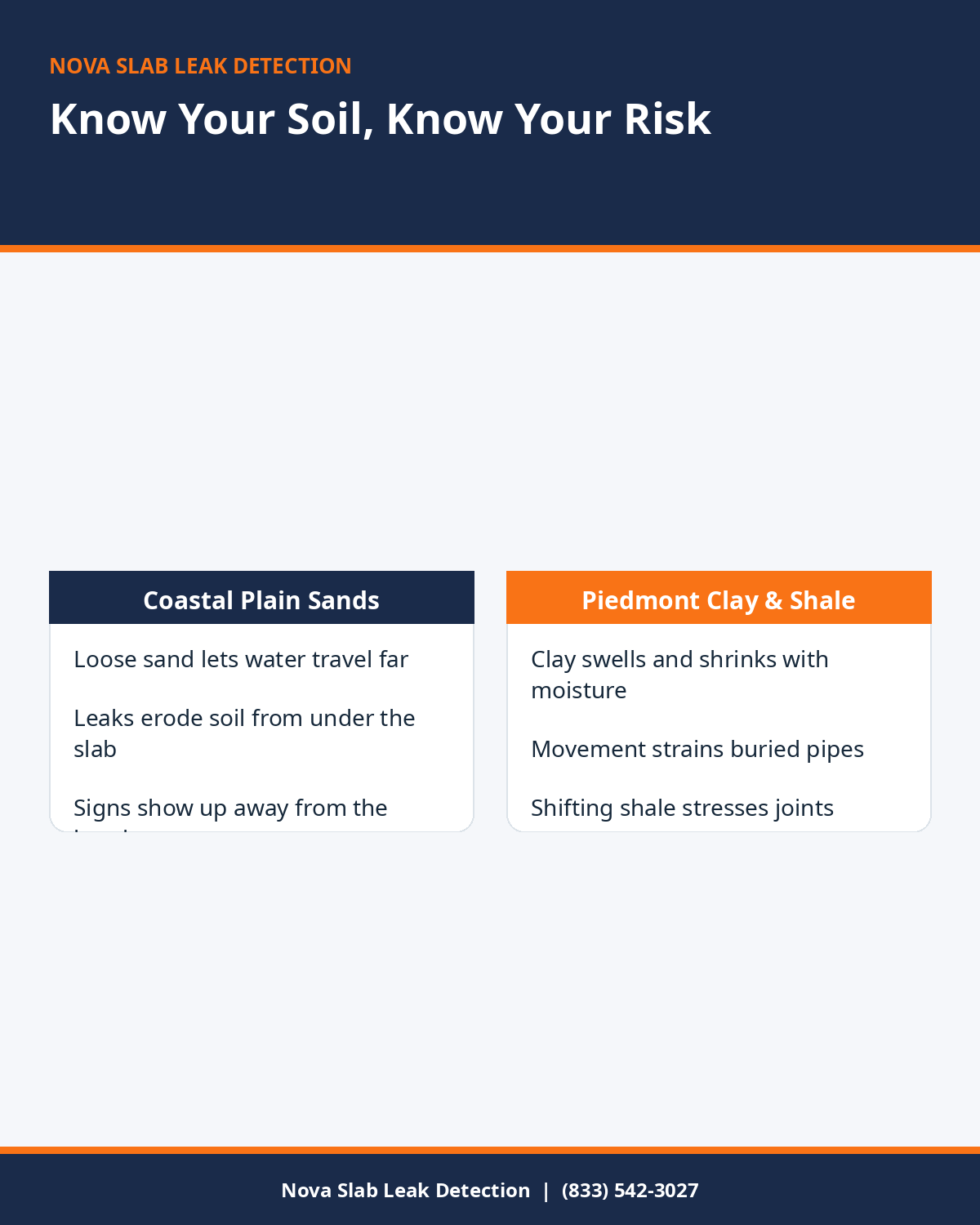
Slab leak detection New Jersey is a tale of two soils. The south sits on coastal plain sands. The north sits on Piedmont clay and shale. Sand washes out from under slabs while clay swells and shrinks — both moves break buried pipes. Add freeze-thaw statewide, and lines face force from all sides.
What Do Coastal Plain Sands Do?
South Jersey soil is loose and sandy. Sand drains fast. That sounds good, but it has a dark side. Leak water washes sand away in short order.
Even a small leak can hollow soil under the slab. The slab loses its base. It sinks or cracks. Sinking bends the buried line more, and the leak grows. It is a loop that feeds itself.
How Do Piedmont Clay and Shale Cause Leaks?
North Jersey holds clay and shale. Clay swells when wet. It shrinks when dry. That seasonal swing rocks the slab a bit each year.
Shale adds its own harm. It can be hard and lumpy. Lines laid over shale ridges get point force. Freeze-thaw then works those points till pipe gives way.
Which soil is worse for leaks? Neither is kind. Sand washes out fast once a leak starts. Clay grinds lines down over years. Soil type shapes each leak we find here.
Where Does Freeze-Thaw Fit In?
Winters here freeze the ground statewide. Frost heave lifts soil in lopsided sheets. Slabs ride up. Spring thaw drops them back.
North Jersey sees deep frost and big heave. South Jersey sees more freeze-thaw swings as temps bounce. Both wear out buried copper. Old lines feel it most.
What Signs Mean a Slab Leak?


Watch the water bill. A jump with no new use is the top clue. Leaks under slabs hide, but the meter never lies. Check a few months for a trend.
Listen for water. Hiss or running sounds with all taps shut mean a live line is leaking. The sound oft comes through the floor. Night is the best time to hear it.
Feel floors and watch for damp. Warm spots point to hot line leaks. Damp carpet, musty smells, or soft spots point to cold line leaks. Cracks in tile or grout can trace harm below.
Can a high bill have another cause? Yes. A bad toilet or yard valve can spike bills too. We check the meter first to rule those out. If it spins with all off, the leak is in the lines.
When Do Leaks Hit Homes Here Hardest?
Late winter leads. February and March bring the worst heave-thaw swings. Ground lifts and drops in fast cycles. Worn joints crack.
Spring storms run second. Heavy rain soaks north clay. Swelling clay pushes slabs. Down south, storm water speeds sand loss under slabs. Both soils ache in wet springs.
Summer heat adds a small wave. Dry spells shrink clay. The slab drops in spots. Then a storm hits and clay swells back. That swing is rough on old joints.
Where Does Nova Serve in New Jersey?
We serve an expanding service area in New Jersey. That is full statewide reach, north and south, coast and inland. If your home sits on a slab here, we can get to you.
Nova Slab Leak Detection serves all 50 states and DC. Reach us at (833) 542-3027 any time — open 24/7, phone is our only contact method. See each area we serve on our locations page.
Who should call us right away?
Call if your bill jumped with no new use. Call if you hear water running with taps shut. Call if floors feel warm, damp, or soft. Call if tile cracks in lines you cannot explain.
Shore homes need keen eyes. Sandy soil washes out fast once a leak starts. What starts as a pinhole can wash out base soil in weeks. Fast calls save slabs.
Old homes need fast acts too. Copper lines from past decades have seen many winters. Metal gets tired in a quiet way. Do not wait for harm you can see.
Will insurance cover the fix? Policies vary. Many cover water harm but not the pipe fix. Check with your carrier. Our insurance FAQ walks through common terms.
How Do Our Technicians Track Down the Leak?
Each visit runs the same proven path:
- We hear your story. Your technician asks what you saw and when. We check the water meter and bill past. That tells us the leak size.
- We hear the slab. Sound tools pick up leak noise under concrete. This shrinks the hunt zone fast.
- We see the floor. Heat cameras map warm and cool zones. Hot leaks show warm. Cold leaks show cool. The map points to the line.
- We pin the spot. Tracer gas traces faint leaks. We narrow it to about 1 to 3 feet. The visit takes 1 to 3 hours.
You get a clear report and your options before any concrete is touched. Most visits need no digging at all. See the steps on our process page.
Will the visit harm my floors? No. Each tool we use is safe. We find the leak first. Floors stay whole through the check.
What Will the Work Cost?
These are national estimates as of 2026. Your quote rests on access, soil, and the fix you pick.
A check visit costs $150–$500, up to about $600 for complex homes. Spot repair through the slab costs $1,500–$4,500. Reroute around the slab runs $3,500–$7,000. Tunneling under the slab runs $3,500–$8,000. Epoxy lining runs $3,000–$6,000. Whole-home repipe runs $4,500–$15,000.
Our cost guide has the full split.
Why do costs swing so wide? Access is the big driver. A leak under an open garage costs less than one under a done kitchen. We show each option after we pin the leak.
FAQs
How long does a visit take?
Most take 1 to 3 hours. Tough leaks can run longer. You learn the spot and your options the same day.
Should I shut off my water?
If you hear strong running water, yes. Shut the main valve to curb harm. Then call (833) 542-3027.
Can a leak harm my slab?
Yes. Leak water washes soil from under the slab. In sand this moves fast. Early checks stop slab sink spots before they start.
Is mold a risk?
Yes. Wet floors grow mold fast. The EPA mold guide calls for drying wet spots in 24 to 48 hours. Call at the first damp sign.
Do you fix leaks too?
Yes. Our technicians find and fix. We do spot repairs, reroutes, tunneling, and epoxy lining.
What if there is no leak?
You get a clean report and peace of mind. We will point to other causes. You pay only for the visit.
Does Nova back its work?
Yes. If something is not right, call us and we will work to make it right. That promise holds on each job.
How do I set up my visit?
Call (833) 542-3027. It is the only way to reach us. We answer 24/7.