
Why Does Illinois Soil Put Slab Pipes at Risk?
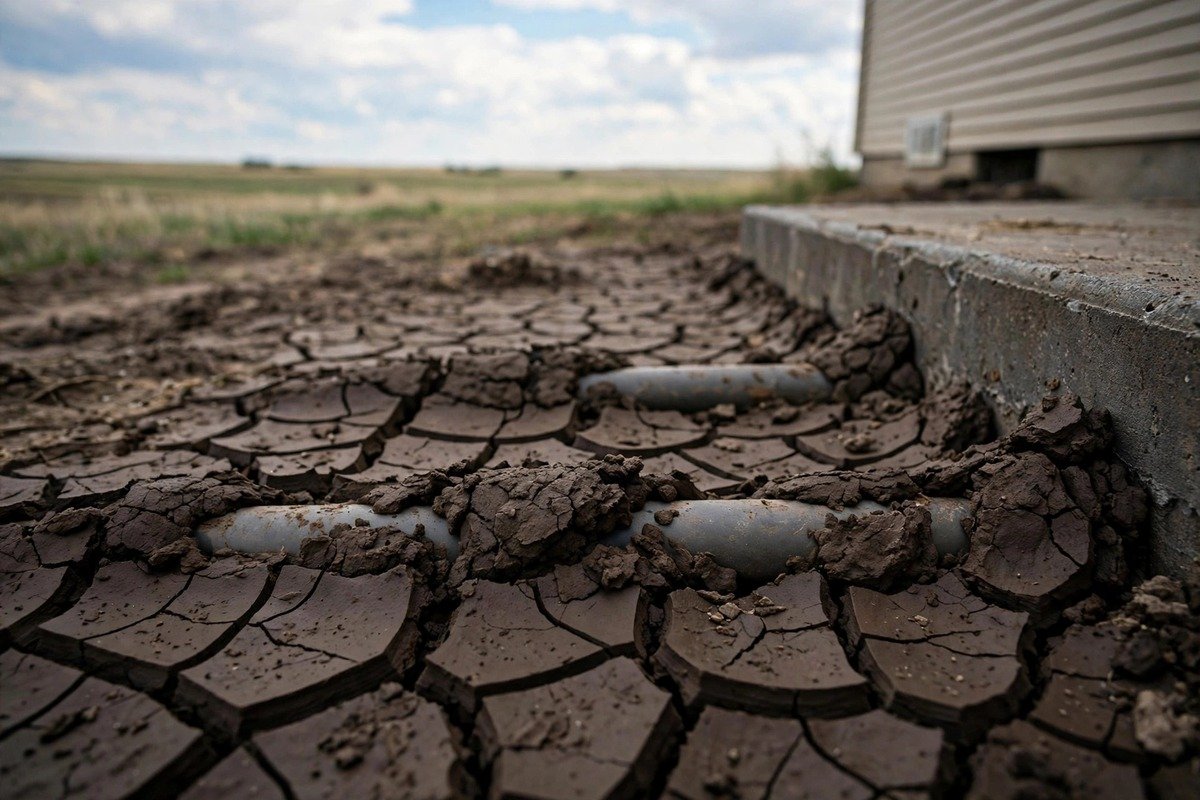
Glacial till lies under much of Illinois. Prairie loess covers it. Clay subsoils swell when wet. They shrink when dry. That soil motion is why slab leak detection Illinois calls spike after wet springs and hard freezes. Freeze-thaw heaves the ground each winter. Pipes feel every shift.
Water lines run under the slab. The slab rests on soil. Moving soil tugs at joints. Years of tugs open pinholes. Joints can crack too.
Winter adds ice force. Soil water freezes. Ice grows strong. It lifts the slab. Thaw drops it back. Each round wears the pipes.
Why does freeze-thaw hurt buried pipes? Ice swells with force. It strains walls and joints. Many winters fatigue metal. Old copper fails first.
Can clay soil break a pipe alone? Yes, over time. Wet clay grips the pipe. Dry clay leaves voids. The slab bears weight in a skewed way. Joints take the load.
Soil shapes our work. Our soil science guide shows how ground wears pipes.
What Warning Signs Should Illinois Homeowners Watch For?
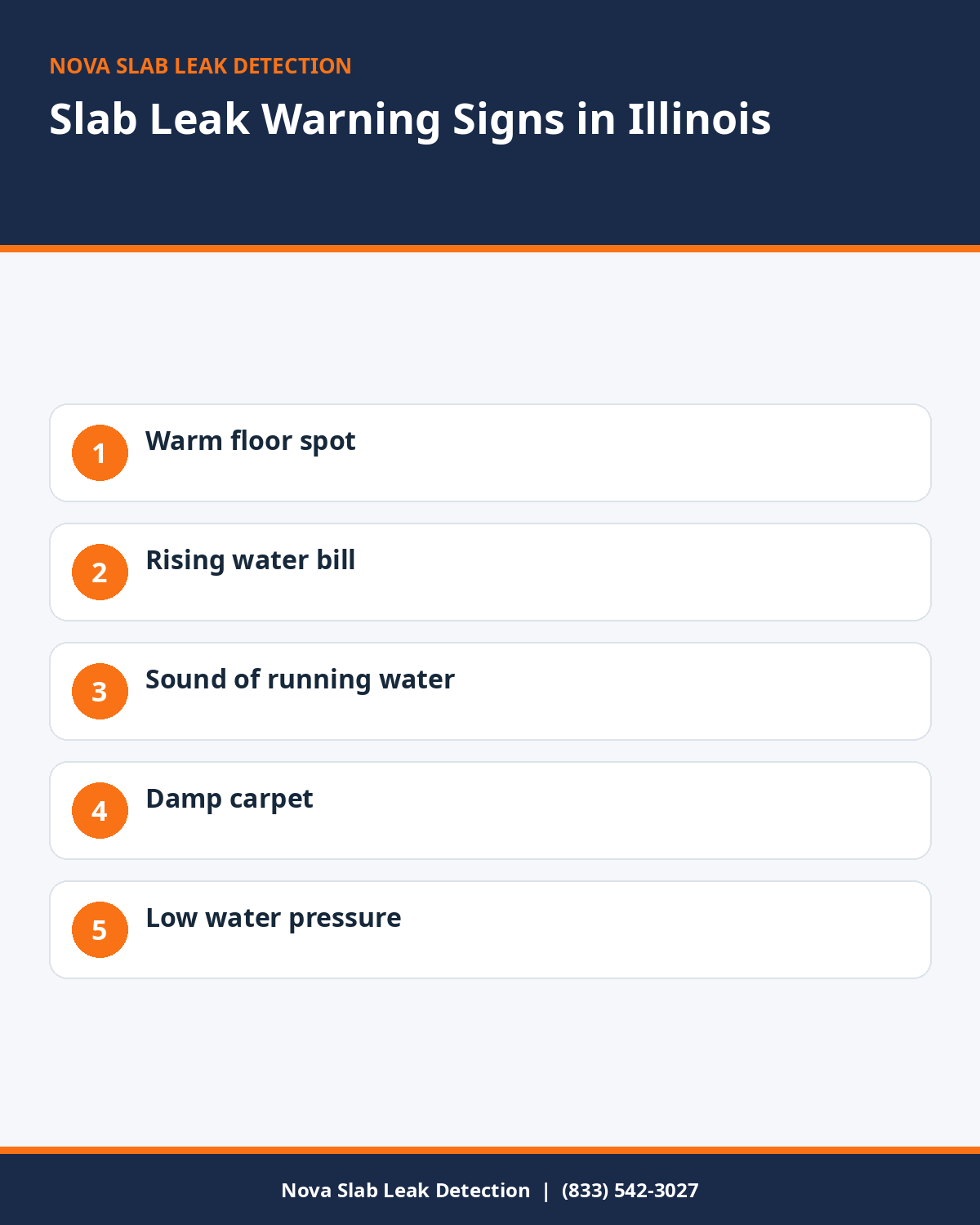
Hot spots lead the list. A warm floor zone hints at a hot line leak. Cold damp spots hint at cold line leaks. Check low rooms first.
Bills tell the next tale. A jump with no new use means loss. Test the meter. Read it. Wait one hour. Read it again. A moved dial proves a leak.
Hiss sounds count. Listen at night near the floor. Musty smells count too. Dry wet spots fast. The EPA says 24 to 48 hours slows mold. Their mold guide lists safe steps.
Can a slab leak cut my water pressure? Yes. Big leaks steal flow. Fixtures run weak. Whole-home drops deserve a call.
Do all slab leaks make noise? No. Small ones run silent. Trust floors and bills more than ears.
Where in Illinois Do Our Technicians Work?
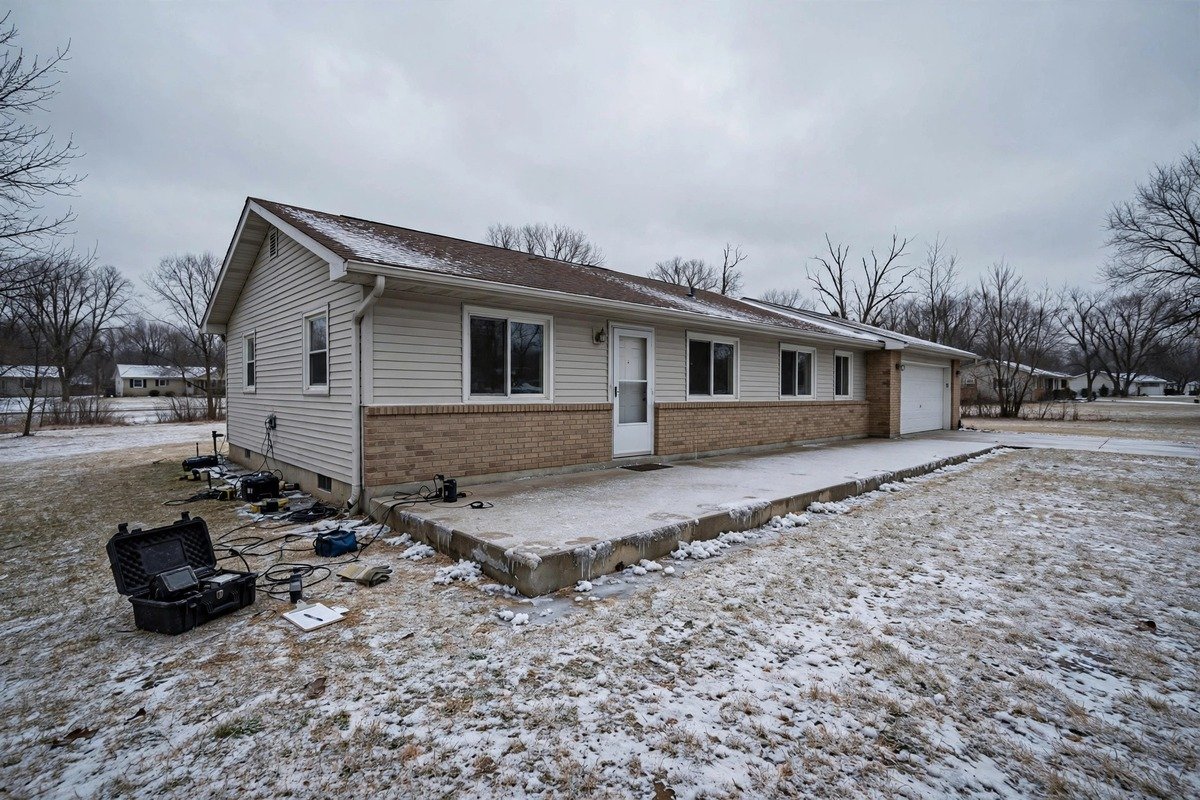
We serve an expanding service area in Illinois. Farm towns count. Suburbs count. Our technicians cover the state. One call reaches us.
See the full map on our locations hub. If your ZIP sits in Illinois, we can help.
What does our detection visit involve?
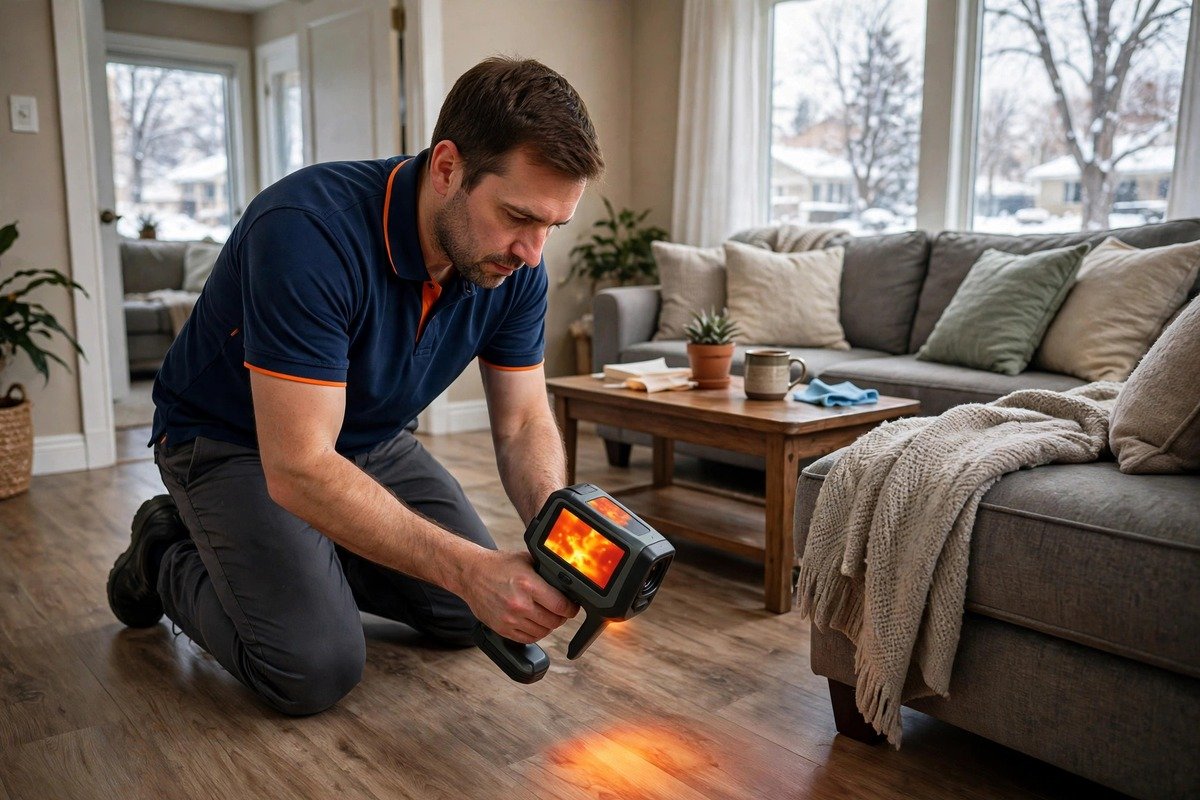
Your technician brings three tools. Sound gear. Heat cams. Tracer gas. Most visits take one to three hours. No concrete is cut.
The visit runs in order:
- You walk us through each sign.
- We test the meter for hidden loss.
- Sound gear finds the loudest zone.
- Heat cams map warm and cold spots.
- Tracer gas pins the leak to one to three feet.
- You get a marked spot and next steps.
Our process page lays out the full method.
Who Should Call Us About a Possible Slab Leak?
Call if you own the home. Call if a bill spiked. Call if a floor feels warm. Waiting spreads water. It raises repair costs too.
We answer 24 hours a day, 7 days a week. Phone is our only contact method. Call (833) 542-3027 any time.
Not happy after the visit? Call us. Tell us what fell short. Nova works to make it right. That is our pledge.
What Does Slab Leak Detection Cost in Illinois?
These are national estimates as of 2026. They help you plan. Your price rests on your home.
| Service | National estimate (2026) |
|---|---|
| Detection visit | $150–$500 (up to ~$600 for complex homes) |
| Spot repair | $1,500–$4,500 |
| Reroute | $3,500–$7,000 |
| Tunneling | $3,500–$8,000 |
| Epoxy lining | $3,000–$6,000 |
| Whole-home repipe | $4,500–$15,000 |
Detection comes first. It picks the repair. Our cost guide adds detail.
Can a Slab Leak Raise My Water Bill in Illinois?
Yes, and fast. Even a pinhole wastes lots of water daily. The meter spins as you sleep. Winter hides the signs, so bills climb unseen.
Match bills month to month. A steady rise with no new habits is a clue. Ask about insurance too. Policies vary. Our insurance FAQ lists smart questions.
How Does an Illinois Winter Change Leak Signs?
Cold hides leaks. Frost slows water spread. Damp spots stay buried for weeks. Bills become the top clue. Read yours each month.
Snowmelt brings a surge. Thaw frees trapped water. Harm shows fast then. Call early in spring.
Keep heat steady all winter. Cold snaps stress old joints. Do not drop the thermostat far. Warm air guards pipes.
Check hose bibs each fall. Drain them dry before frost. A frozen bib can feed a slab line. One quick check saves grief.
Walk the slab each March. Feel for warm zones. Note soft spots. Mark them with tape.
Bring us your notes. Your technician will use them. Each clue speeds the find. Spring visits still run one to three hours.
What Does Our Satisfaction Pledge Mean in Illinois?
It means we stand by the visit. If the find feels wrong, call us. We recheck the read. We explain each step again.
It means clear quotes. You see each line item. No hidden fees. No vague terms.
It means clean work. Our technicians treat your home with care. Shoe covers on. Tools wiped down.
It means one call fixes issues. Phone is our only channel. Call (833) 542-3027 any time. Day or night.
If something still feels off, we keep working. That is the pledge. Every Illinois visit holds it.
FAQs
How long does a detection visit take in Illinois?
One to three hours. Your technician uses sound, heat, and tracer gas. No concrete is cut.
What does detection cost in Illinois?
$150–$500 per national estimates as of 2026. Complex homes can reach about $600. We quote before we start.
Will you tear up my floor to find the leak?
No. We pin the leak to one to three feet with safe tools. Concrete stays whole.
Do Illinois winters cause more slab leaks?
Freeze-thaw strains pipes each winter. Wet springs swell clay. Watch bills in both seasons.
How do I reach Nova?
Call (833) 542-3027 any time. We are open 24/7. Phone is our only contact method.
What if I am not happy with the visit?
Call us. Tell us what fell short. Nova works to make it right.