
Epoxy Lining vs Repiping: Which Fixes Your Slab Leak?
Two ways to fix failing pipes under your slab — here’s how to choose honestly.
Epoxy Lining vs Repiping: Quick Answers
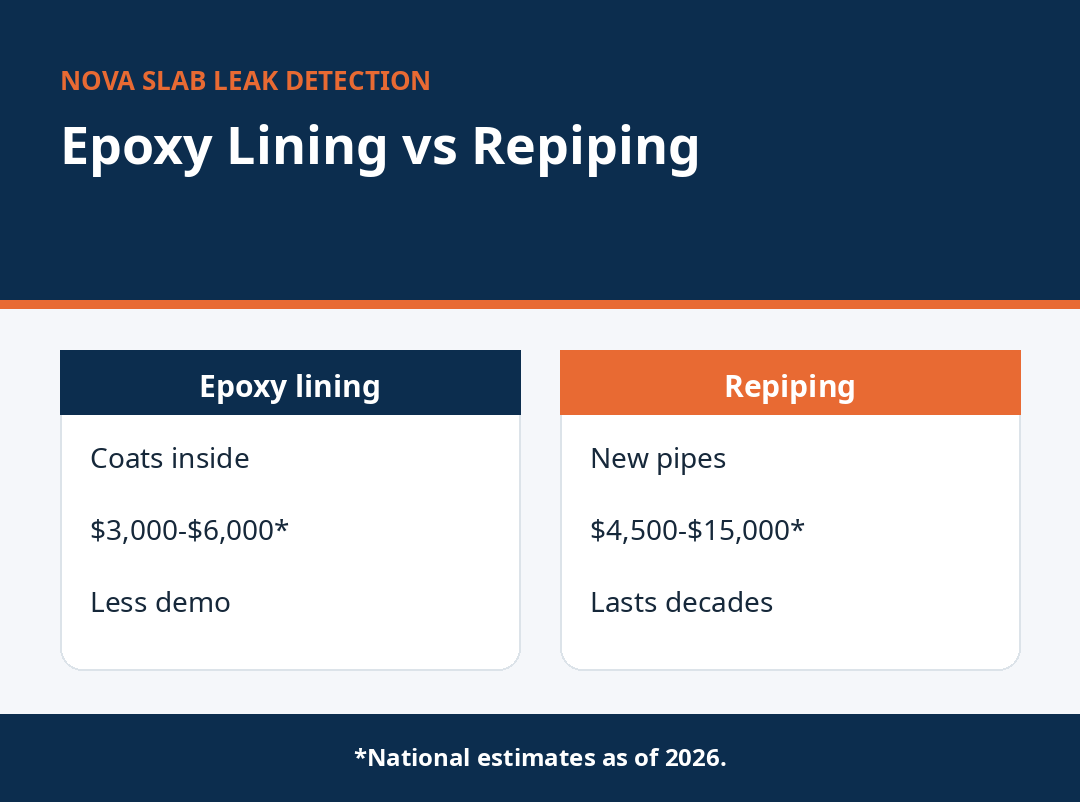
The short version of this guide to epoxy lining vs repiping:
- Epoxy Lining vs Repiping: What Is the Short Answer? Epoxy pipe lining coats the inside of your existing pipes with hardened resin, sealing pinhole leaks without digging.
- What Is Epoxy Pipe Lining? First the pipe interior is cleaned — usually with an abrasive grit blasted through the line — then liquid epoxy resin is blown in and left to cure (harden) in place.
- What Is a Whole-Home Repipe? A repipe leaves the old pipes exactly where they are — disconnected and abandoned under the slab — and installs a completely new water system.
Epoxy Lining vs Repiping: What Is the Short Answer?
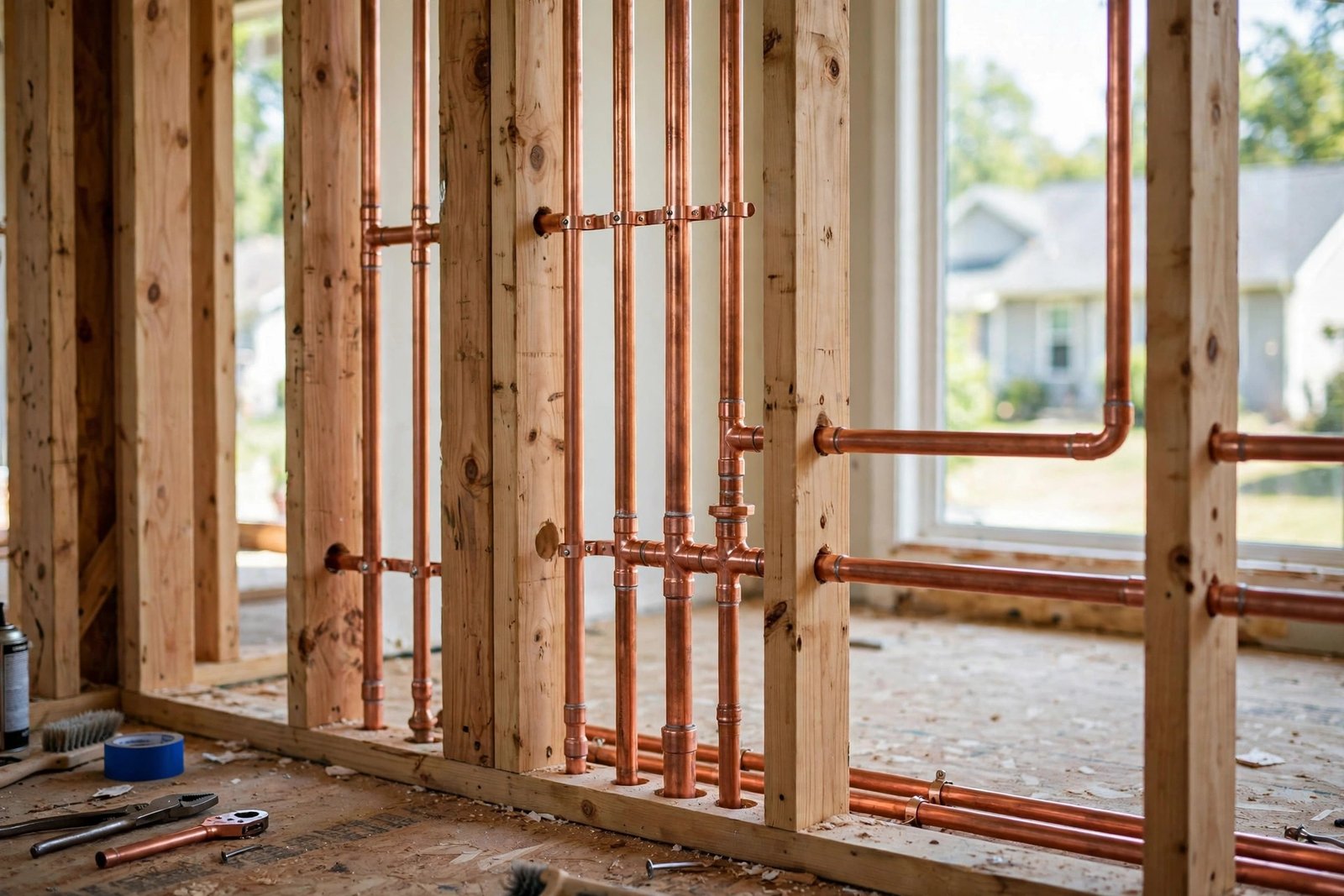
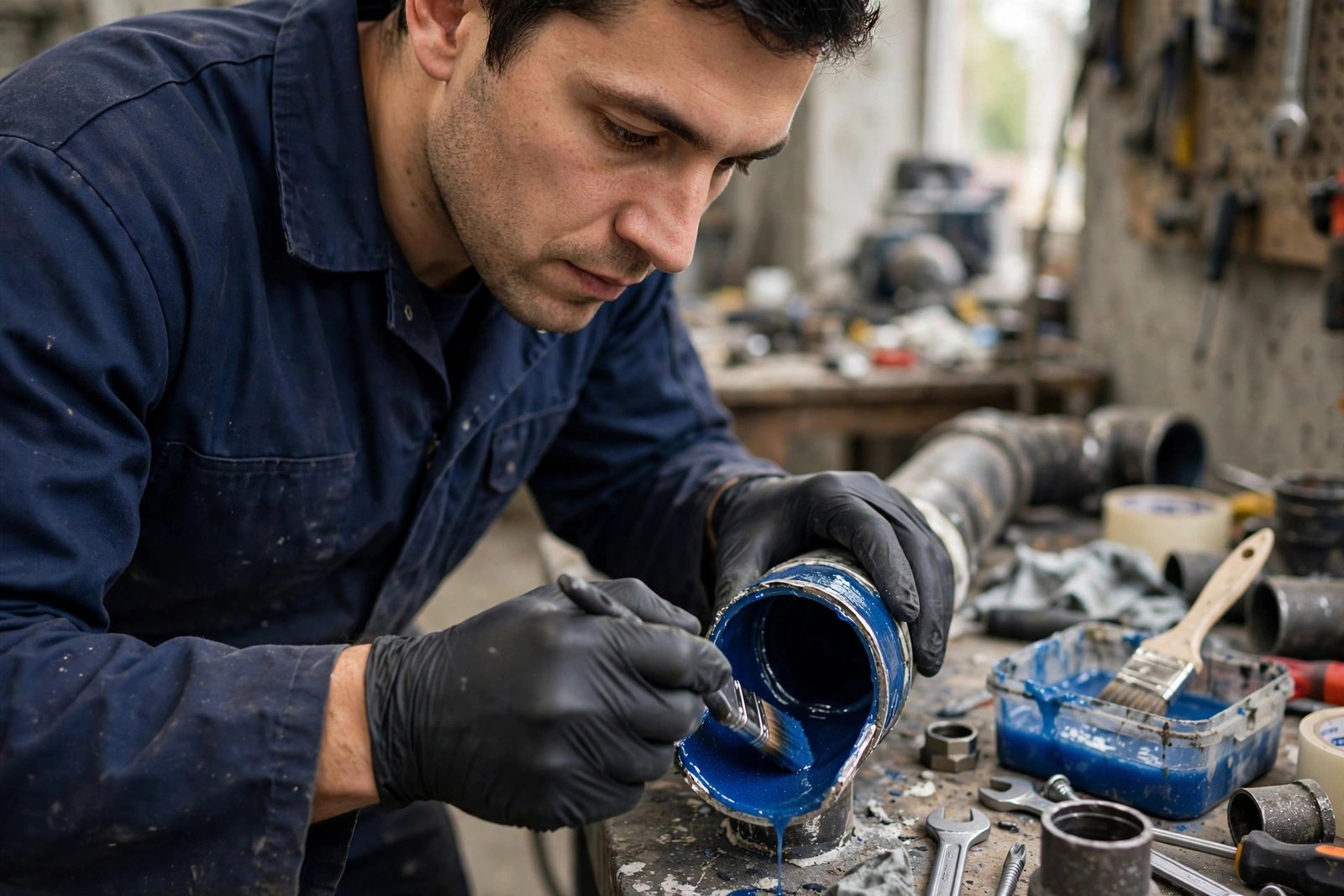
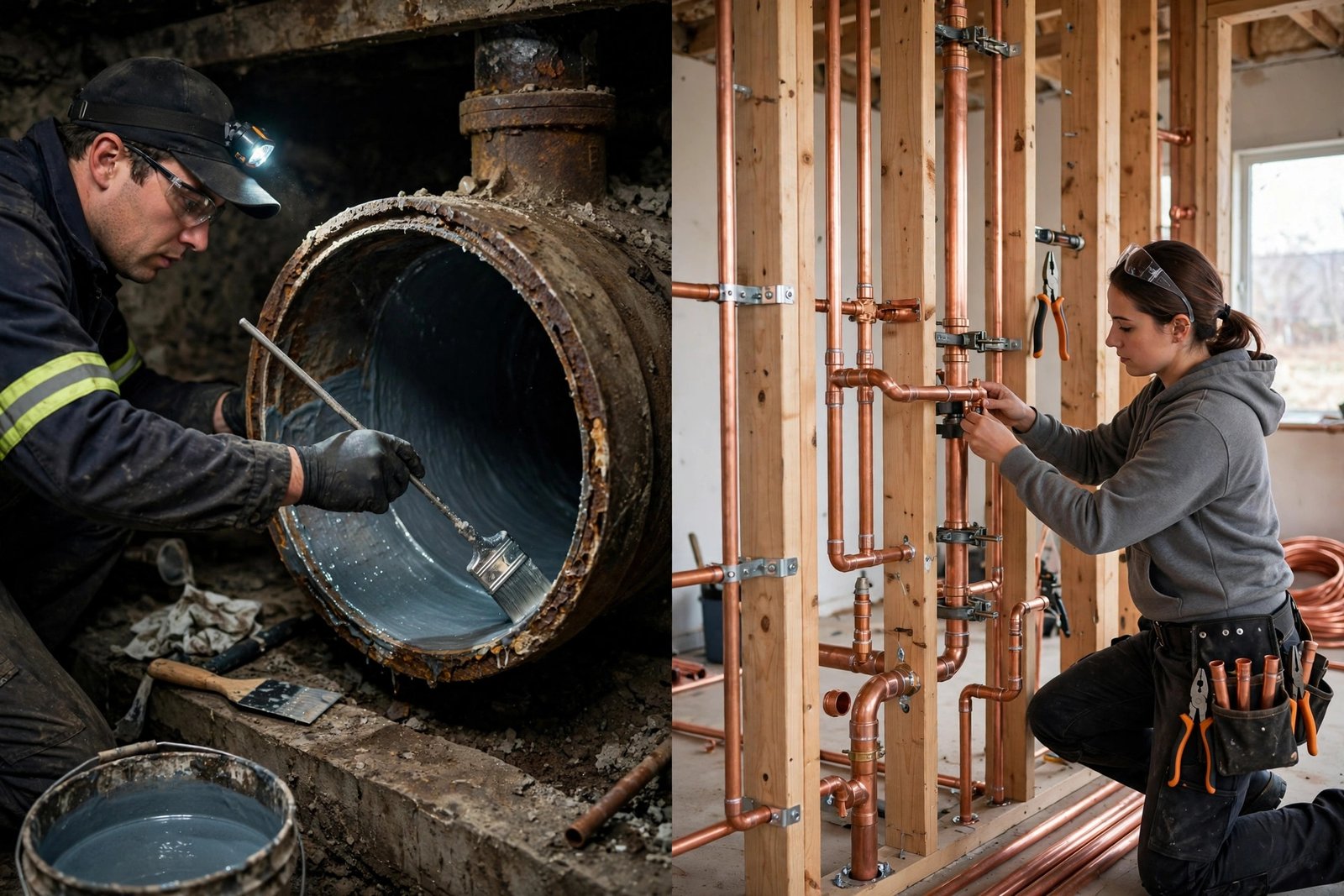
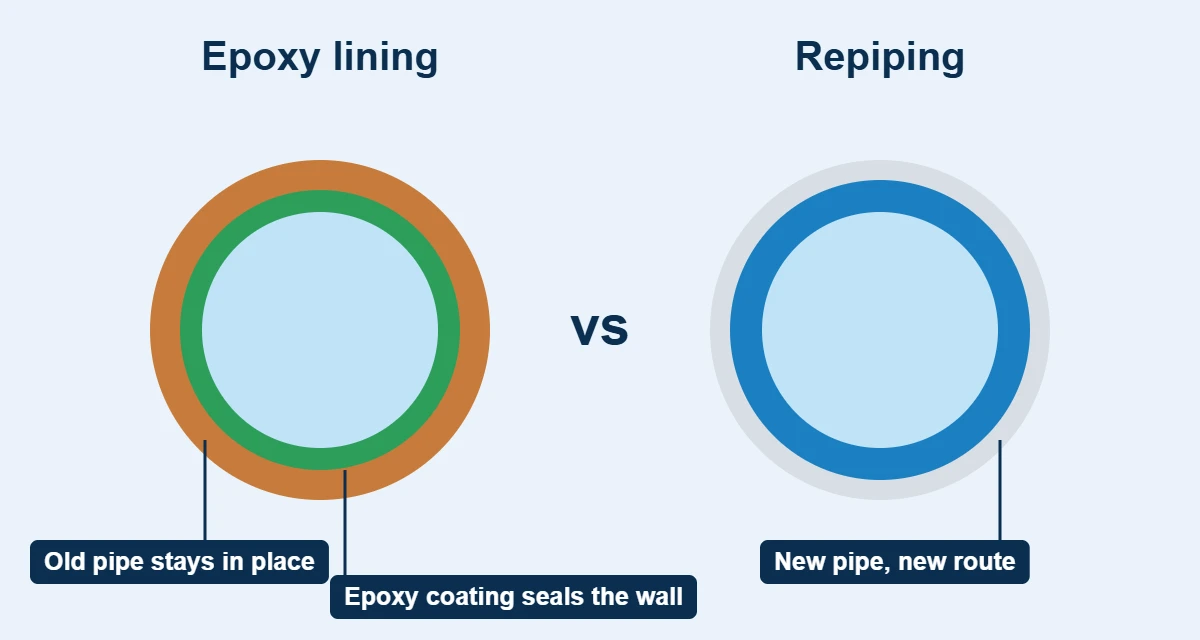
Epoxy pipe lining coats the inside of your existing pipes with hardened resin, sealing pinhole leaks without digging. Repiping abandons the old pipes and installs new ones through your walls and attic. Comparing epoxy lining vs repiping honestly: lining costs less and disrupts less, while repiping lasts longer and ends repeat leaks.
What Is Epoxy Pipe Lining?
First the pipe interior is cleaned — usually with an abrasive grit blasted through the line — then liquid epoxy resin is blown in and left to cure (harden) in place. The result is a smooth new surface inside the old pipe, a few millimeters thick, that seals pinhole leaks and slows further corrosion. No concrete is cut and no walls are opened, which is the main appeal over conventional slab leak repair. The industry term is “cured-in-place pipe,” meaning the new lining forms inside the existing pipe.
What Is a Whole-Home Repipe?
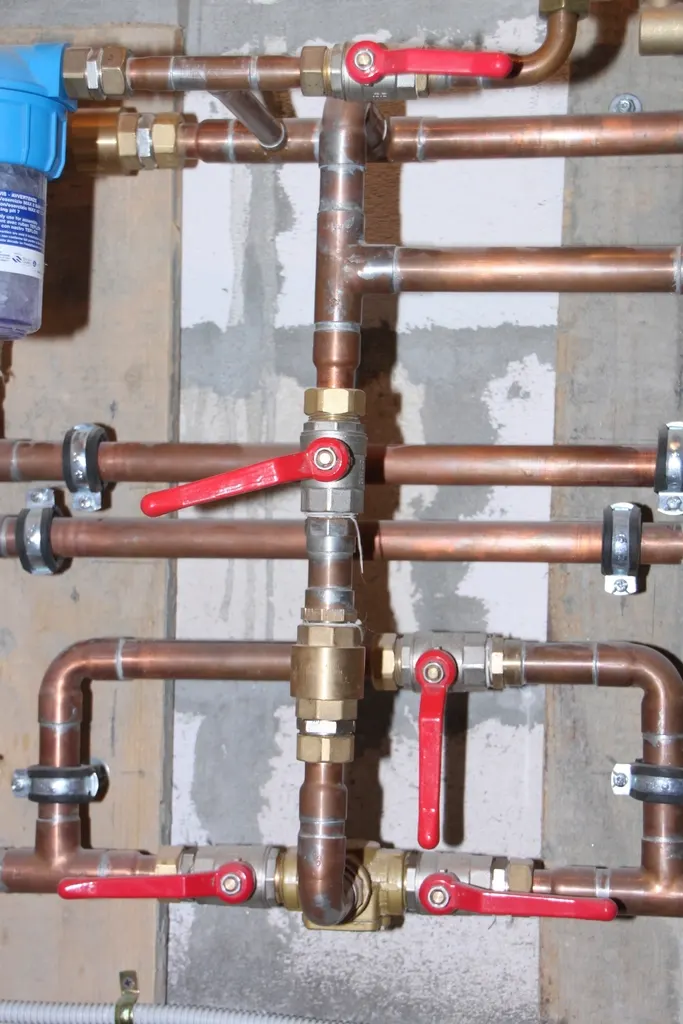
A repipe leaves the old pipes exactly where they are — disconnected and abandoned under the slab — and installs a completely new water system. New PEX (flexible plastic tubing) or copper lines run through the attic, walls, and ceilings to every fixture. It’s more invasive inside the living space for a few days, but nothing under the slab is touched. Learn more on our whole-home repiping page.
Epoxy Lining vs Repiping: How Do They Compare Head to Head?
| Factor | Epoxy pipe lining | Whole-home repipe |
|---|---|---|
| Cost, national estimates as of 2026 | $3,000–$6,000 | $4,500–$15,000 |
| Disruption | Minimal — no digging, no wall openings | Moderate — attic and wall work for 2–5 days |
| Project time | Usually 1–2 days | Usually 2–5 days |
| Expected lifespan | Manufacturers claim up to 50 years; independent long-term data is limited | New PEX or copper: 25–50+ years |
| What it fixes | Pinhole leaks and interior corrosion | Everything — old pipes are abandoned |
| Best for | One or two leaks in otherwise sound pipes | Recurring leaks or aging pipe systems |
| Not suitable for | Collapsed, sagging, or heavily scaled pipes | Homes where attic or wall access is very difficult |
When Does Epoxy Lining Make Sense?
- A camera inspection shows the pipes are mostly sound with isolated pinhole leaks.
- You want to avoid opening the slab or cutting into walls.
- You plan to sell within a few years and need a working system, not a 40-year solution.
- Your budget is tight and the alternative is patching leaks one by one at $1,500–$4,500 a pop (national estimates as of 2026).

When Is Repiping the Smarter Choice?
- You’ve had two or more slab leaks in a few years — the system is telling you it’s failing, not just one joint.
- Your home still has polybutylene or heavily corroded galvanized pipe, which tends to fail system-wide.
- You plan to stay long-term and want the problem finished, not managed.
- Multiple fixtures show low pressure or discolored water — those are system-wide symptoms, not a single leak.

What Are the Limits of Epoxy Lining?
- Lining cannot fix a collapsed pipe, a bellied (sagging) section that holds standing water, or a pipe choked with heavy scale — the coating needs a reasonably intact pipe to grip.
- Success depends almost entirely on surface preparation. Poor cleaning means poor adhesion, and a failed lining is expensive to redo.
- Longevity claims come mostly from manufacturers. For a decision this size, a second opinion is cheap insurance — the FTC’s guidance on avoiding home-improvement scams is worth reading before you sign: consumer.ftc.gov
What Should You Ask Before Choosing Between Epoxy Lining vs Repiping?
Ask any company bidding on the job — after leak detection has pinpointed the problem: “Will you camera-inspect the lines before recommending lining?” “What exactly does your warranty cover — the coating itself, or future leaks too?” “If the lining fails in five years, what then?” Get the answers in writing, and be wary of anyone who recommends lining without looking inside the pipe first.
If you’re comparing quotes or want our team to assess your pipes, call Nova at (833) 542-3027 — open 24 hours a day, 7 days a week, and calling is free.
Epoxy Lining vs Repiping: Frequently Asked Questions
Services Related to Epoxy Lining vs Repiping
These pages cover what comes before and after epoxy lining vs repiping.
- Post Tension Slab Leak Repair: Your slab may hold steel cables under high tension — here’s why that changes everything.
- Slab Penetration and Restoration: A small, precise opening in the slab — then your concrete is restored like it was never touched.
- Slab Leak Repair: Four proven ways to fix a leak under your slab — and how to pick the right one.
- Slab Leak Detection: How non-invasive detection finds a leak under concrete, with methods, cost and accuracy.
- Whole Home Repiping: When patching old pipes stops making sense, a full repipe ends the cycle.
Need Epoxy Lining vs Repiping? Call Nova Today
Call any time, day or night. Tell us your ZIP code and what you are noticing, and we will book your visit for epoxy lining vs repiping.