
What Soil Science Should Homeowners Know?
Soil science slab leak basics come down to this: soil moves when its water level changes, and that shift can stress pipes and crack slabs. Clay swells when wet and shrinks when dry. Loose soil washes away under flowing water. Your slab rides on top of it all. This page explains the basics in plain words.
Why Does Clay Soil Move So Much?
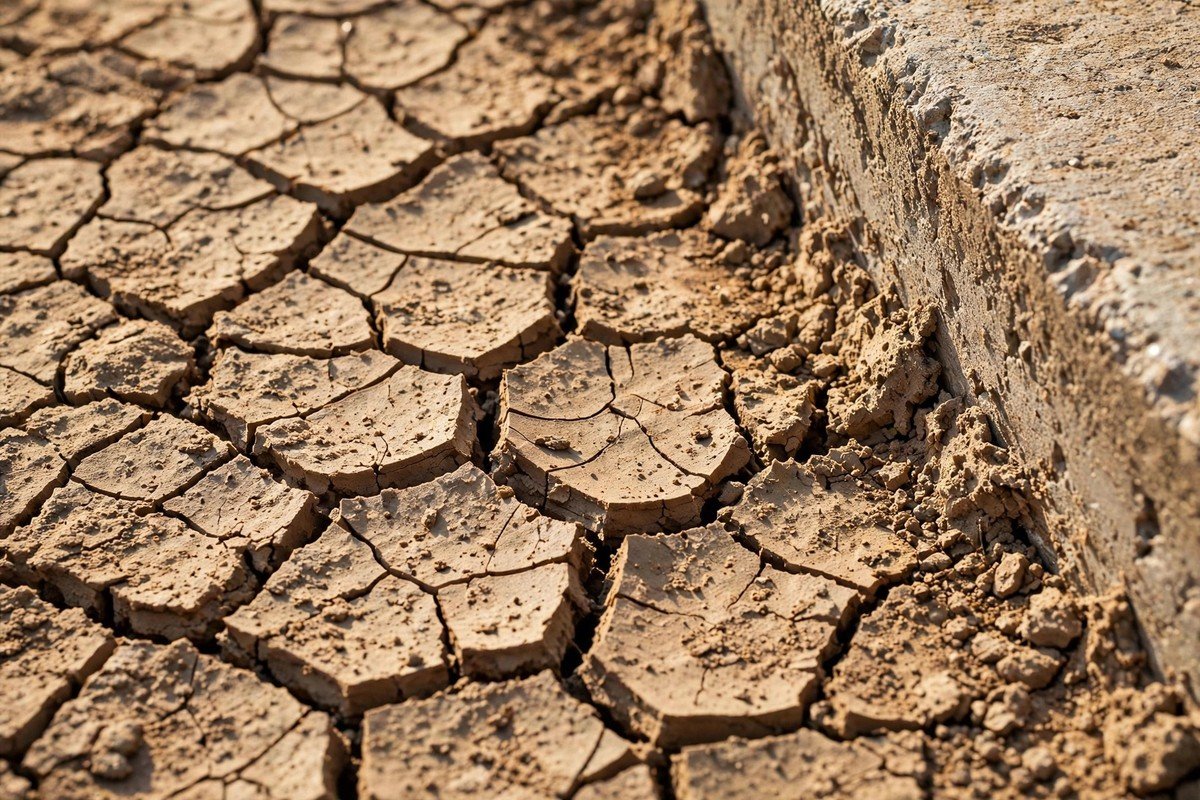
Clay is made of tiny flat bits. They stack like plates. Water slips between the plates and pushes them apart. The soil swells. When water leaves, the plates settle back down. The soil shrinks. This cycle can repeat for the life of your home.
Some clays swell a lot. Others barely move. It depends on the clay type and how much water is around. A leak under the slab feeds water to clay for months. That keeps one area swollen while the rest stays dry. Tilted lift stresses the slab.
How much can clay soil actually move? Enough to matter. Even an inch of tilted shift can crack concrete. Severe clays can move some inches between wet and dry seasons. Your slab was built to handle some movement, but not endless cycling.
Which soils are the troublemakers?
Expansive clays top the list. They are common across the South, Texas, and parts of the Midwest and West. Sandy soils drain fast and move less, but they wash out easily. Silty soils sit in the middle. Your local soil type shapes your risk.
What Is the Wet-Dry Cycle?
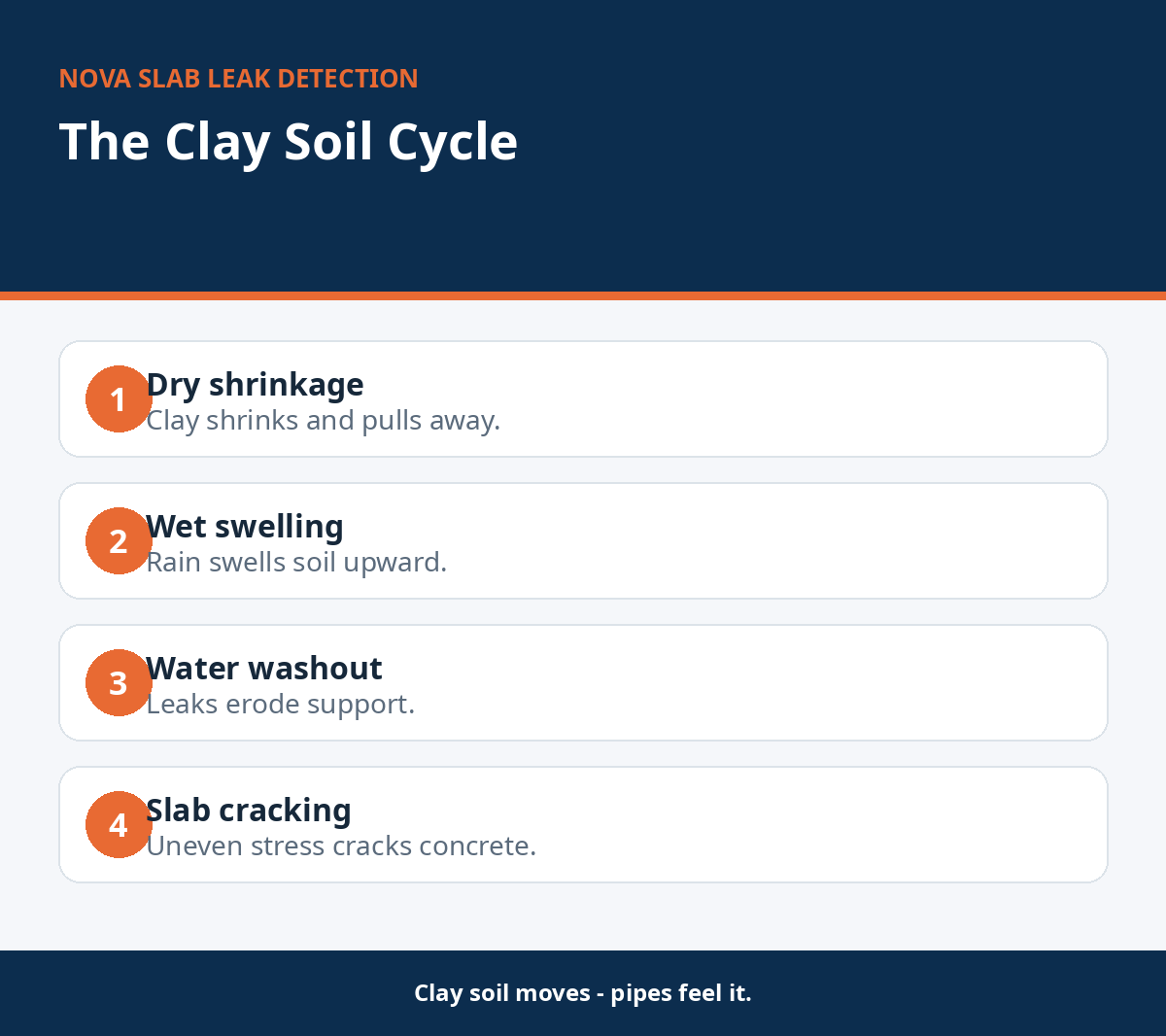
The wet-dry cycle is the engine of shifting soil. Rain or a leak wets the soil. It swells. Dry weather pulls the water out. It shrinks. Each cycle shifts the ground a little. Over years, the shifts add up.
A slab leak makes the cycle worse in one spot. The soil near the leak stays wet while soil farther away dries. That makes a hump under the slab. The slab bends. Concrete is strong but brittle. Bend it enough and it cracks.
Should I water more to even things out? A steady soak can help in dry climates. It keeps soil water steady around the base. But it can’t fix a leak. A leak adds far more water than a sprinkler. Fix the pipe first.
How Does Soil Washout Happen?
Washout differs from swelling. It is erosion under the slab. A strong leak jets water through soil. The water carries fine bits away. A void grows under the concrete. The slab loses support.
Think of a stream carving a channel. The same thing happens in miniature under your home. Sandy soils wash out fastest. Clay resists washout but swells instead. Either way, the slab ends up stressed.
How do I know if washout is happening? Hollow sounds when you tap the floor are a clue. So are cracks that keep growing. Floors that feel tilted or bouncy point to lost support. Our check finds the leak feeding the washout.
How Does Shifting Soil Crack a Slab?
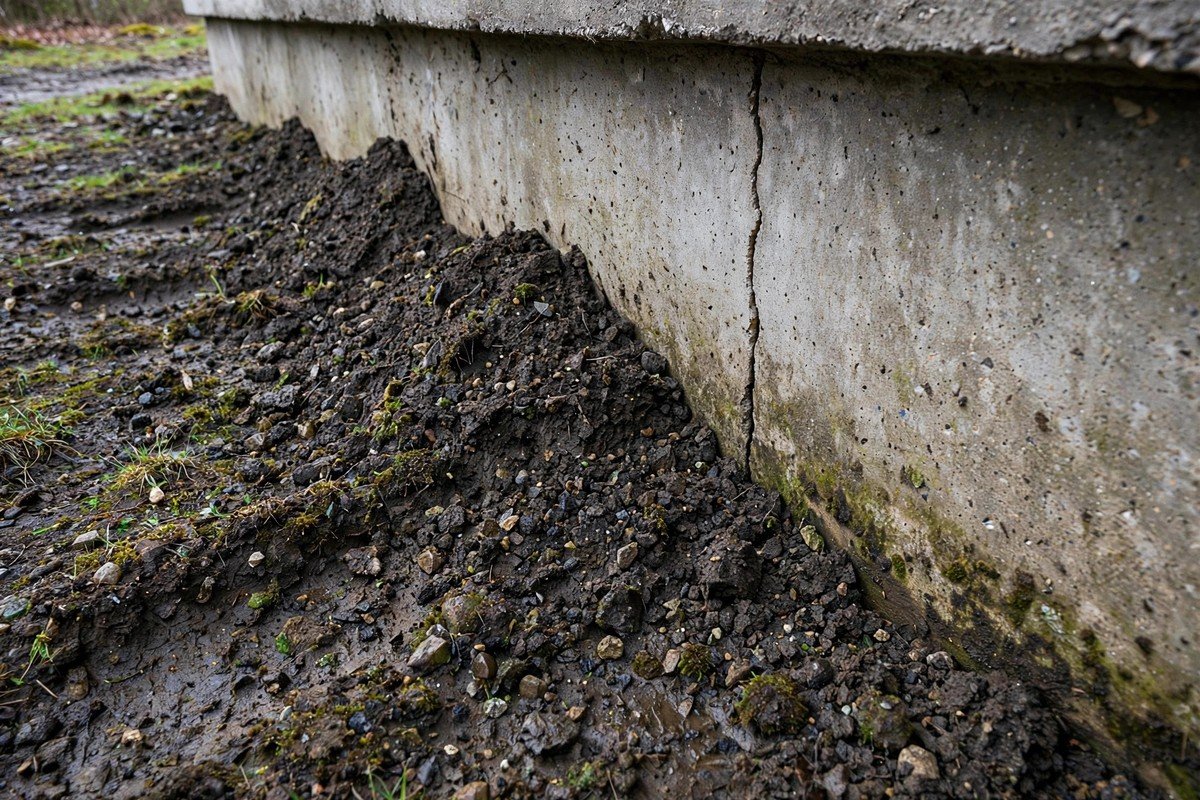
Slabs crack when support is not level. One corner lifts while another drops. The concrete bends past its limit. A crack opens. Water then enters the crack and makes things worse. It is a feedback loop.
Pipes suffer too. Shifting soil tugs on buried lines. Joints loosen. Copper rubs against concrete. A pinhole forms. The leak then wets the soil more, which moves the soil more. The cycle feeds itself until someone breaks it.
| Soil problem | What the soil does | What you see in the home |
|---|---|---|
| Clay swelling | Pushes up under the slab | Cracks, sticking doors |
| Clay shrinking | Drops away from the slab | Gaps at the base edge |
| Washout | Carries soil away | Hollow floors, settling |
| Patchy moisture | Lifts one area only | Slant cracks in walls |
Can a cracked slab be fixed? Yes. Small cracks can be sealed. Bigger shifts may need piers or mudjacking. But always fix the leak first. Fixing a slab over an active leak is wasted money.
Who Deals With Soil and Slab Problems?
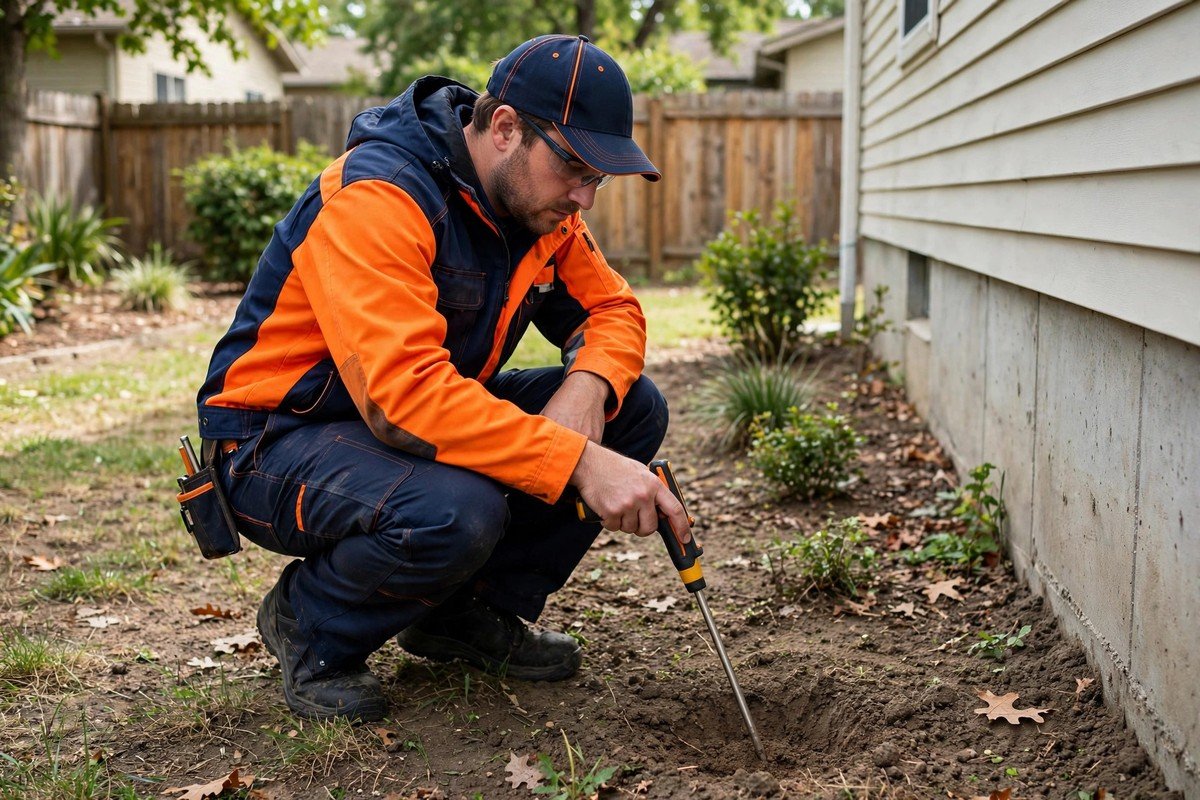
We handle the leak. Nova Slab Leak Detection is a slab leak detection and fix firm, and our own people do the work. Our own techs find the water source and fix the pipe. Your tech will explain what the water has done to the soil near it.
Base fix is a separate trade. If shifting soil has hurt the slab or base, a base pro does that work. We stop the water. They steady the structure. Fix the leak first so their work lasts.
Do I need a soil test? Most owners do not. Knowing your soil type helps, but the fix is the same: stop the water. If base work is needed, the pro may test the soil then.
This explainer is part of our slab leak science hub. More reading: water chemistry and pipe corrosion and why moisture attracts termites and pests. See our cost guide for fix pricing. We are open 24/7 at (833) 542-3027.
FAQs
What is expansive soil?
Soil, often clay, that swells when wet and shrinks when dry. The shift can lift or drop slabs and crack bases over time.
Can shifting soil cause a slab leak?
Yes. Shifting soil tugs on buried pipes. Joints loosen and pipes rub against concrete. That wear can open pinholes and cracks in the line.
Will fixing the leak stop shifting soil?
It stops the leak-driven part. Normal yearly swelling still happens. But removing the constant water source ends the worst of the cycling.
How do I know if my soil is clay?
Rub a damp sample between your fingers. Clay feels smooth and holds a ribbon shape. Sandy soil feels gritty and falls apart. Your county soil survey can confirm.
Should I water around my foundation?
In dry climates, steady watering can cut yearly shifting. Keep water away from the slab edge and never water to fix a leak.
Does insurance cover shifting soil damage?
Plans vary. Many exclude earth shifts. Some cover the resulting water damage. Check your plan for the exact terms.