
Can a Slab Leak Cause Foundation Cracks?
Yes. A slab leak can cause foundation cracks by washing away the soil that holds your slab up. Leaking water wears the ground under the slab. Gaps form. The slab loses its base and sags or shifts. That shift cracks the slab — and slab leak foundation cracks can grow with time if the leak keeps running.
How Does Leaking Water Break a Foundation?
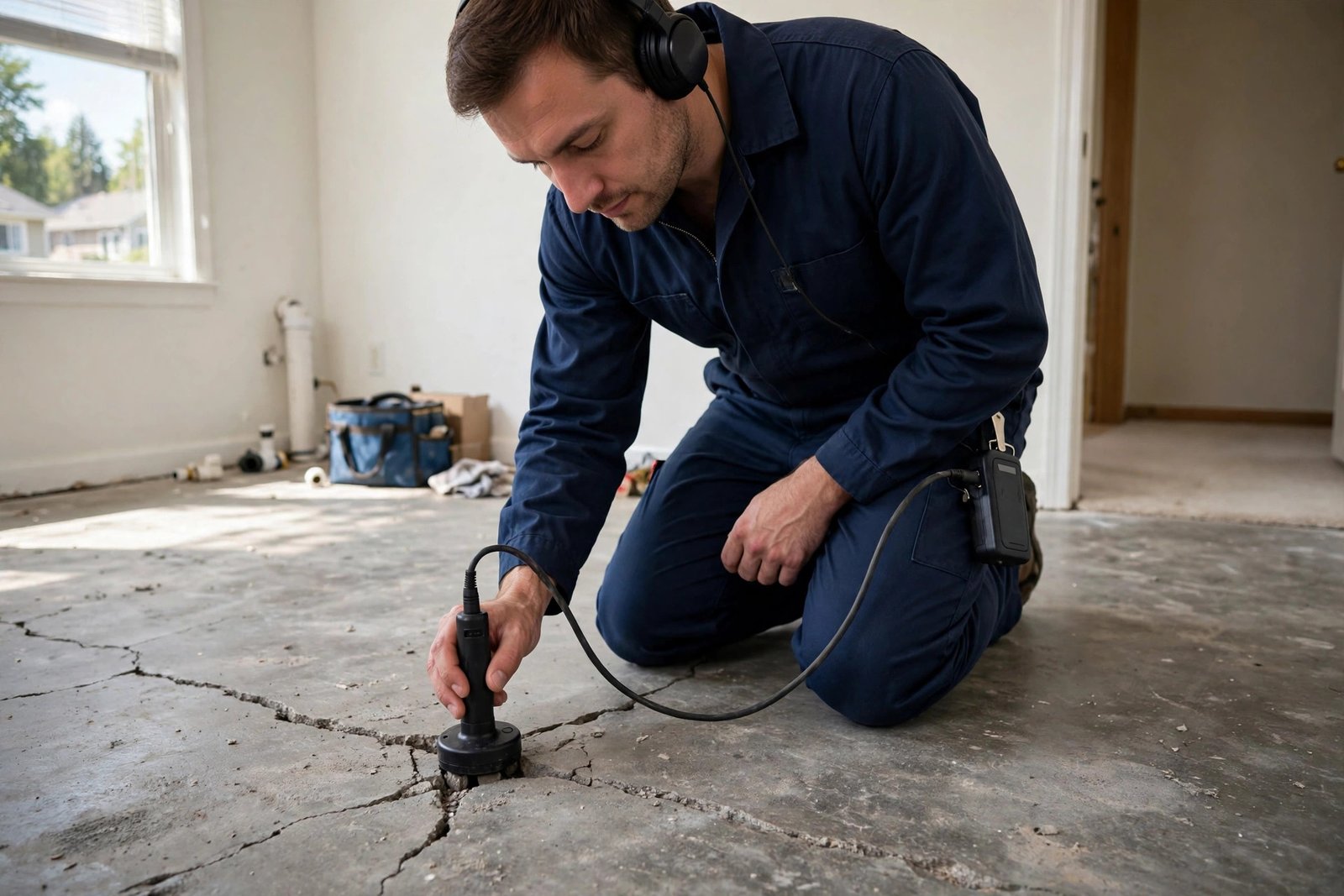
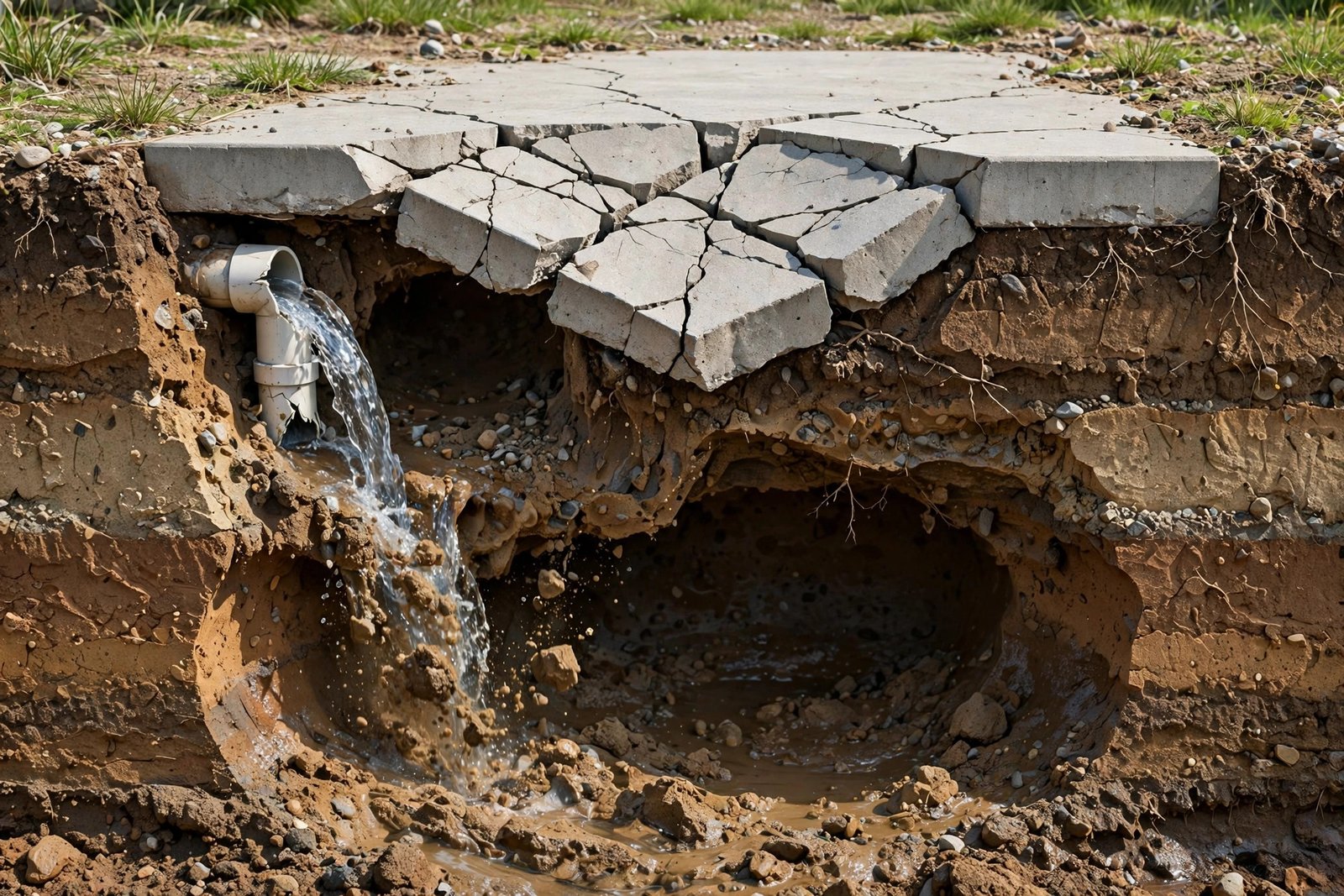
It does not hit all at once. A small leak may run for weeks or months with no sign at all. Here is the chain we see time and time again:
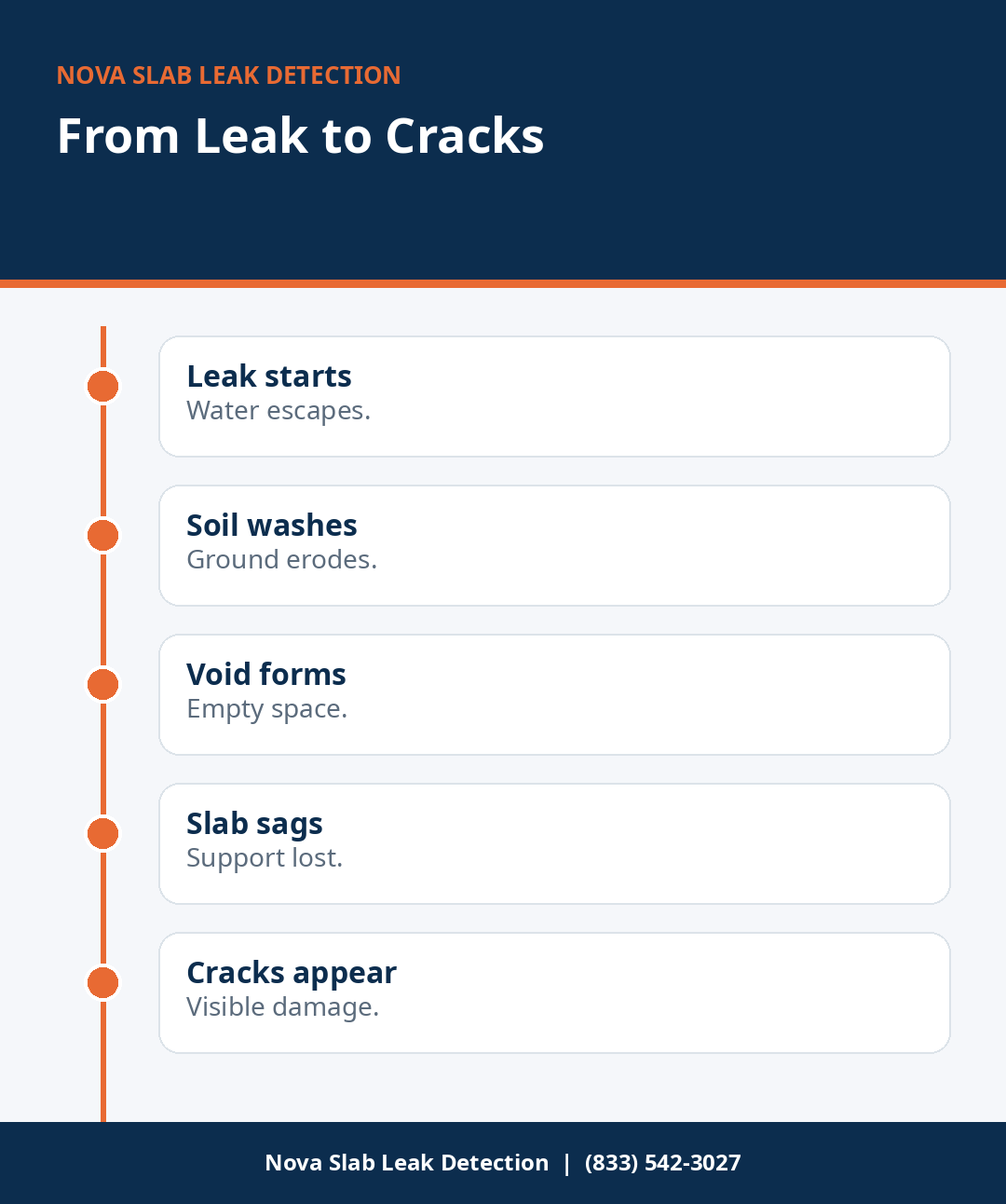
- A pipe under the slab starts leaking. It may be a tiny pinhole in a copper line.
- Water saturates the soil. The ground under your home soaks up the constant flow.
- Soil erodes and washes away. Moving water carries soil particles out from under the slab.
- Voids form. Empty pockets open where solid soil used to be.
- The slab settles unevenly. Concrete is strong but brittle — it cracks when support vanishes beneath it.
The gap does not have to be big. A dip just a few inches deep can tilt one part of a slab till it cracks. That is why small leaks still need fast care.
Can a slab leak damage my home even if I see no cracks yet? Yes. Soil erosion starts long before cracks show. By the time a crack appears, the leak may have been running for months. A quick meter check can catch it earlier — see how the simple test works at how to test for a slab leak with a water meter.
How Do Slab Leak Foundation Cracks Differ From Settling Cracks?
Not each crack means a leak. Homes shift a bit as they age. But some signs put us on alert at once:
| Crack pattern | More likely a leak | More likely normal settling |
|---|---|---|
| Cracks that widen over weeks | Yes | No |
| Stair-step cracks in brick or block | Sometimes | Yes |
| Floor cracks with moisture or dampness | Yes | No |
| New cracks after a quiet plumbing history | Yes | No |
| Tiny hairline cracks, stable for years | No | Yes |
Do foundation cracks from leaks look different from settling cracks? Often, yes. Leak-related cracks may appear with damp spots, musty smells, or warm patches on the floor (from a hot water line). Settling cracks are usually dry and stop changing. If a crack is still growing, keep watching it — and get the plumbing checked.
Strain can climb walls too. It can crack door frames, jam windows, or open gaps where walls meet floors. The root cause can still be water under the slab.
You can compare the two causes in more detail at foundation settling vs slab leak and learn the full symptom list at cracks in the foundation.
Why Do We Check for Leaks When Cracks Keep Growing?
A crack that grows is a red flag, not just a flaw you can see. Water keeps moving soil while the leak runs. Patching the crack with no fix for the leak is like paint on a wet wall — it won’t hold.
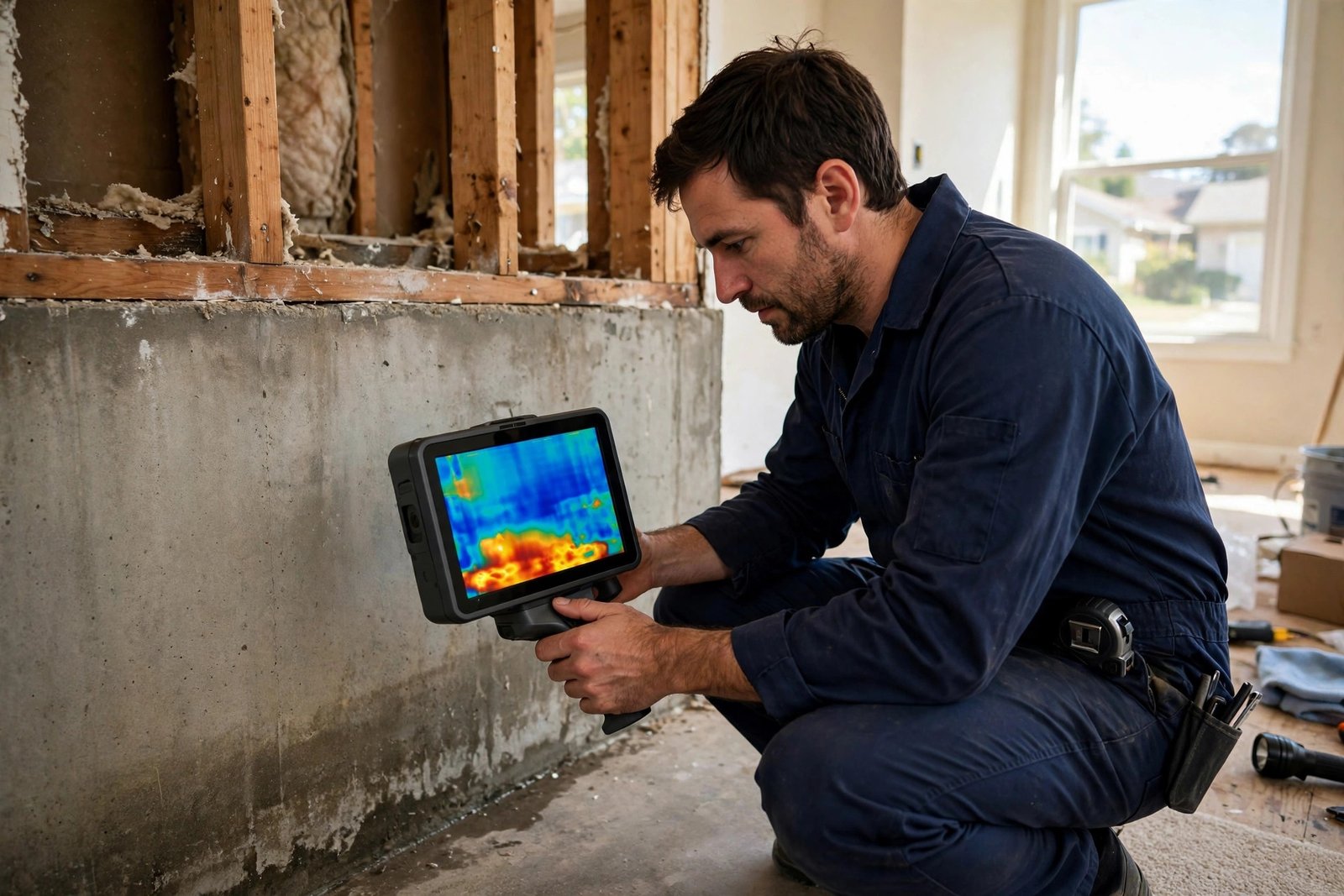
When you call us at (833) 542-3027, we bring sound gear and heat cameras. We hear the hiss of water that flees a pipe. We scan for warm or damp spots on the floor. Our checks take 1-3 hours. We pin leaks down to about 1-3 feet. National estimates as of 2026 put a check at $150-$500, or up to ~$600 for hard homes.
How soon should I get a crack checked if I suspect a leak? Soon. Erosion does not pause on its own. The earlier we find the leak, the smaller the repair tends to be — and the less the slab moves.
Will fixing the slab leak stop the cracks from growing? Fixing the leak stops new erosion, which usually stops new movement. Existing cracks may still need repair afterward, but they should no longer spread once the water source is gone.
What Can You Do Right Now If You Spot a New Crack?
Start with these steps tonight or this weekend:
- Mark the crack. Draw pencil lines at each end and write the date. You will see if it grows.
- Run the water meter test. Turn off all water, then watch the meter for 15–30 minutes. If it moves, water is going somewhere it should not.
- Look for moisture. Check along the crack for dampness, staining, or a musty smell.
- Call us. If the meter moves or the crack keeps growing, reach (833) 542-3027. We answer 24/7, and the phone is the only way to reach us.
Can I seal the crack myself while I wait? You can fill a small crack with concrete filler to keep out surface water, but do not treat it as a fix. The leak below is the real issue, and sealing the crack can hide how fast things are changing. Keep your pencil marks visible so we can see the history.
For more homeowner questions on this topic, browse our full FAQ library.
FAQs
Can a slow slab leak crack a foundation even with no puddles?
Yes. A slow leak can eat soil for months with no wet signs. The first clue may be a thin crack, not a pool.
How fast can a slab leak cause foundation cracks?
It varies. In soft or sandy soil, shifts can show in weeks. In firm clay, it may take months. Fast checks count in both cases.
Are hairline floor cracks always a sign of a slab leak?
No. Lots of thin cracks come from plain slab cure. Watch for growth, damp, or warmth — those point to a leak.
Should I repair the crack before or after finding the leak?
Find the leak first. A crack fixed too soon can pop back open as the slab keeps shifting.
Does homeowners insurance cover foundation cracks from a slab leak?
It rests on your plan. Some plans pay for water harm but not the pipe fix or the slab work. Read your plan or ask your agent.
Who fixes a foundation crack caused by a slab leak?
We fix the leak. A foundation crew fixes the cracks. We tend to find the leak first, so that work rests on firm ground.