
Cracks in Foundation Slab Leak: What’s Normal & What’s Not
A crack caught your eye. We tell you if it’s cosmetic or a real problem.
Cracks in Foundation: Quick Answers
The short version of this guide to cracks in foundation:
- Why Do Foundations Crack? Concrete shrinks as it cures. Most slabs gain hairline cracks early. Soil swells and shrinks with seasons too.
- When Should a Crack Worry You? Worry when a crack grows, leaks, or widens. Mark both ends with pencil.
- Where Do Leak-Related Cracks Appear? They hug plumbing runs and wet rooms. Baths, kitchens, and laundry lead.
Keep reading for the full guide to cracks in foundation.
Why Do Foundations Crack?
Concrete shrinks as it cures. Most slabs gain hairline cracks early. Soil swells and shrinks with seasons too. That cycle stresses slabs over years. Most cracks are harmless. But cracks in foundation slab leak cases pair with water signs. The crack alone tells little. What rides with it tells more.
When Should a Crack Worry You?
Worry when a crack grows, leaks, or widens. Mark both ends with pencil. Date the marks. Recheck in a month. Growth means active movement. Seepage means an open path. Either deserves a pro visit. Do not wait a year.
Is a thin hairline ever urgent? Rarely alone. Thin, dry, stable lines are common. Watch them, but stay calm.
Where Do Leak-Related Cracks Appear?
They hug plumbing runs and wet rooms. Baths, kitchens, and laundry lead. Cracks may trace the water path below. Damp cracks are strong clues. Far, dry cracks matter less. Location narrows the cause fast.
What Do Different Crack Types Mean?
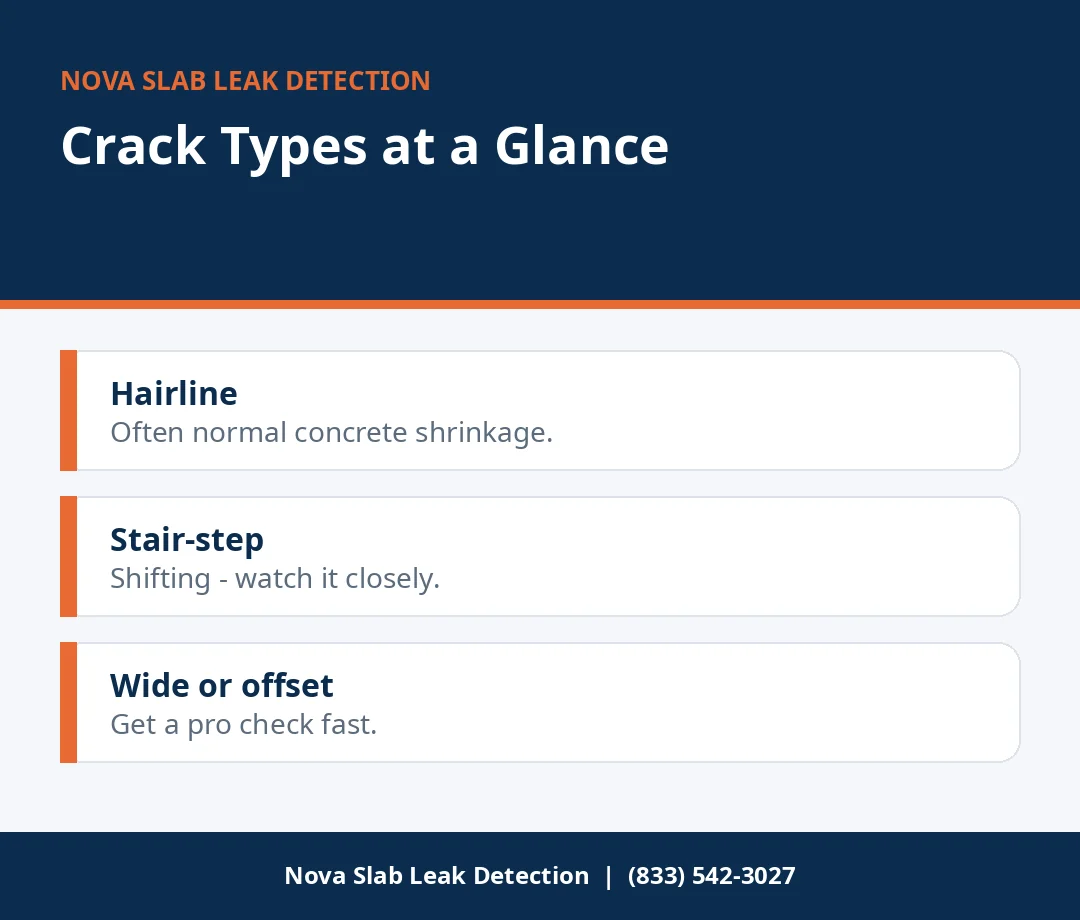
Each crack type tells a story:
| Crack type | What it often means |
|---|---|
| Hairline, under 1/16 inch. | Normal shrinkage. Often cosmetic. |
| Stair-step in block walls. | Soil shift. Worth watching. |
| Wide, over 1/4 inch. | Structural flag. Get it checked. |
| Wet or seeping. | Open water path. Find the source. |
| Growing over months. | Active movement. Needs a pro. |
Treat this as a first guide. A trained eye confirms the read. Photos over time help a lot.
Do vertical cracks differ from horizontal? Often, yes. Vertical lines usually mean shrinkage. Horizontal lines can mean soil pressure. Both need context.
Which Cracks in Foundation Slab Leak Signs Matter Most?
The ones joined by water clues matter most. A crack plus a high water bill is suspect. A crack plus damp carpet is worse. Cracks with water sounds need quick care. Water turns cracks into leak routes. See all slab leak warning signs.
How Do Leaks and Cracks Feed Each Other?
It runs both ways. Leaks erode soil below. Slabs sag and crack. Old cracks let water up easy. Each makes the other worse. Early leak repair guards foundations. Stop water first. Judge cracks after.
Can sealing a crack stop a leak? No. Sealant blocks the symptom. Water still flows below. Find and fix the pipe.
How Do We Check a Cracked Foundation?
Our techs study crack patterns. We meter moisture down the line. Sound gear hears water below. If a leak feeds it, we find it. We narrow it to 1 to 3 feet. Most visits take 1 to 3 hours. Our slab leak detection splits the causes. Pipe trouble or soil trouble.
What Does Foundation Crack Repair Cost in 2026?
It hinges on what we find. National estimates as of 2026 run like this:
| Service | Typical range |
|---|---|
| Leak detection visit. | $150–$500. Complex homes run up to ~$600. |
| Spot repair. | $1,500–$4,500. |
| Reroute. | $3,500–$7,000. |
| Tunneling. | $3,500–$8,000. |
| Epoxy lining. | $3,000–$6,000. |
Plain cracks may need sealant. Structural shifts need an engineer first. We tell you which one. Honest news, either way.
Do you fix foundations too? We fix the leak itself. Leveling is specialist work. We advise after.
Who Should Look at My Cracks?
We should. Our team reads foundations daily. Call (833) 542-3027. We answer 24/7. A real person books your visit fast. Not happy with how it turned out? Call us. We will make it right. That is our guarantee.
How Do You Keep New Cracks Away?
Keep soil moisture even. Do not bake one side dry. Aim downspouts away. Fix leaks the day you spot them. Small care stops big cracks. Walk your slab edge twice a year. Photo it each spring. Compare shots yearly. Slow shifts show up. Save them in one folder.
Can I seal a small crack myself? Dry, thin ones, yes. Concrete caulk works fine. Wet ones need a pro.
Should You Monitor Cracks Yourself?
Yes, basic watch is smart. Mark each crack end with pencil. Write the date beside it. Snap a photo with a coin for scale. Recheck every month or two.
What change means call now? Growth of any kind. New dampness along the line. A hairline turning wide.
Keep a simple log on paper. Dates and photos tell the story. Bring it when we visit. Good records speed good answers.
Do Cracks Affect Home Value?
Yes, if buyers spot them. Wide cracks scare buyers off. They hint at big bills. Small sealed cracks matter less. Keep repair receipts. They prove care. Ask your agent what matters locally. Rules vary by state. Photos help here too. File them with your home records today. Keep them with your deed papers. Buyers love proof of care.
Cracks in Foundation: Frequently Asked Questions
Homeowners often ask us these questions about cracks in foundation. Each answer is short, and the full detail on cracks in foundation is in the sections above.
Related Slab Leak Problems
More guides related to cracks in foundation:
- Damp Carpet: Carpet feels damp but nothing spilled. We trace the moisture to its source.
- Foundation Settling vs Slab Leak: All homes settle a little. We’ll show you when it’s normal — and when it’s a leak.
- Hearing Running Water: You hear water, but nothing is on. We track that sound to its source.
- All slab leak problems: Every warning sign, cause and risk in one place.
- Slab Leak Detection: How we find a leak under concrete without breaking it.
The EPA estimates the average household’s leaks can waste more than 9,300 gallons of water a year (EPA WaterSense), which is why cracks in foundation is worth acting on early.
Cracks in Foundation: Talk to Nova Today
Call any time, day or night. Tell us your ZIP code and what you are noticing, and we will book your visit. Mention cracks in foundation when you call so we bring the right equipment.