
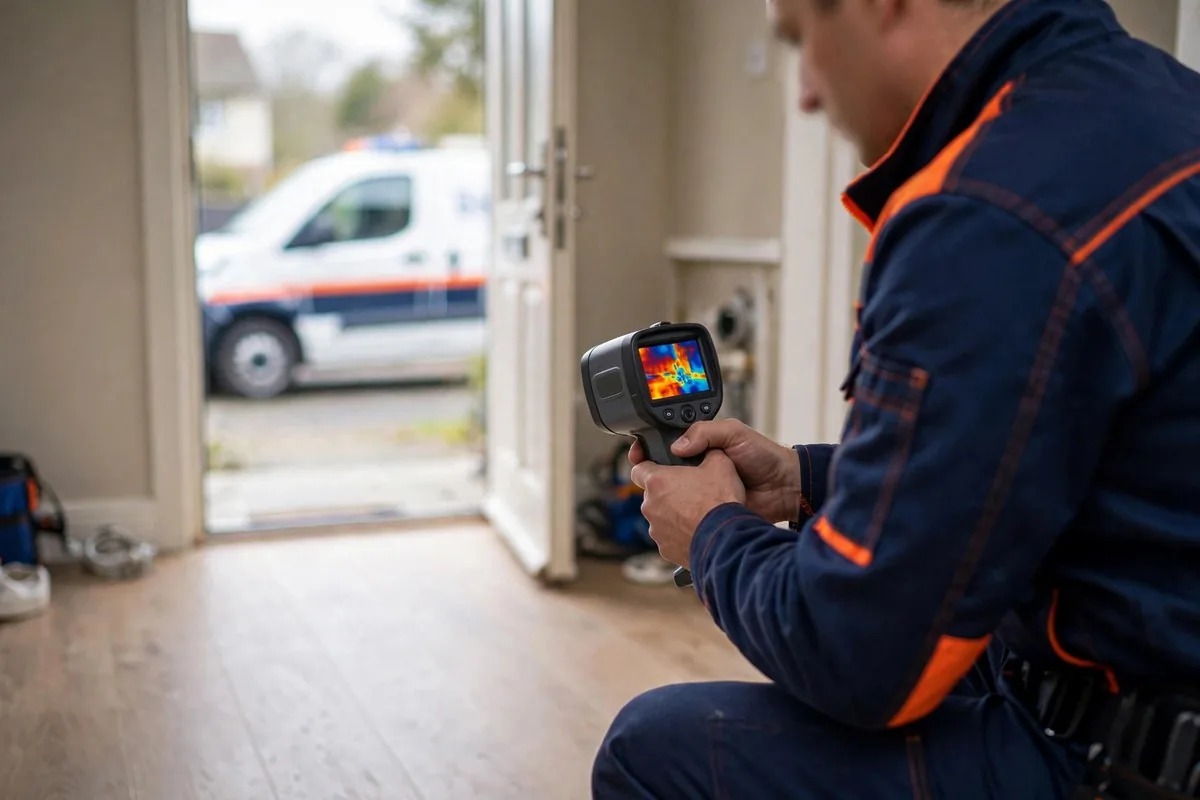
Slab Leak Detection in Corona, CA
Our technicians find hidden slab leaks fast in Corona — pinpointing the leak before any concrete is opened. Available 24/7 across the Corona area.
Why Do Corona Homes Develop Slab Leaks?
Corona trusts us for slab leak detection. We know old downtown lines and new tract pipes. Eagle Glen homes date to about 2000. South-side tracts went up in the late 1990s. Downtown holds the oldest homes with vintage pipes. Grand Boulevard rings it.
Even 1990s copper is near thirty years old. Joints and pipe entries can fail before the pipe wears out. Hard water in the Inland Empire coats lines with scale. That scale speeds wear. Hot summers and wet winters swell and shrink the ground. That shift strains buried pipes.
The foothills add motion. The south side sits by the Santa Ana Mountains. Hillside soils move more than flat ground. That slow crawl tugs at pipes under slabs year after year.
How hard is Corona’s tap water?
Corona’s water office reports hardness of 260 parts per million. That is about 15.2 grains per gallon. The utility calls it hard to very hard. Hard minerals coat copper fast. Inland Empire heat makes water use heavy. More flow means more scale per year. Old downtown pipes carry the most buildup. We weigh that load on each visit.
Why do Corona’s 1990s tracts still leak?
Eagle Glen and south tracts went up in the 1990s. Even young copper can fail at joints. Joints and pipe entries break before the pipe wears out. Hillside ground near the mountains creeps with wet and dry spells. That creep tugs at young lines year after year. Hot summers swell the ground and wet winters shrink it. Our techs test joints first on these homes.
How Can I Tell If My Corona Home Has a Slab Leak?
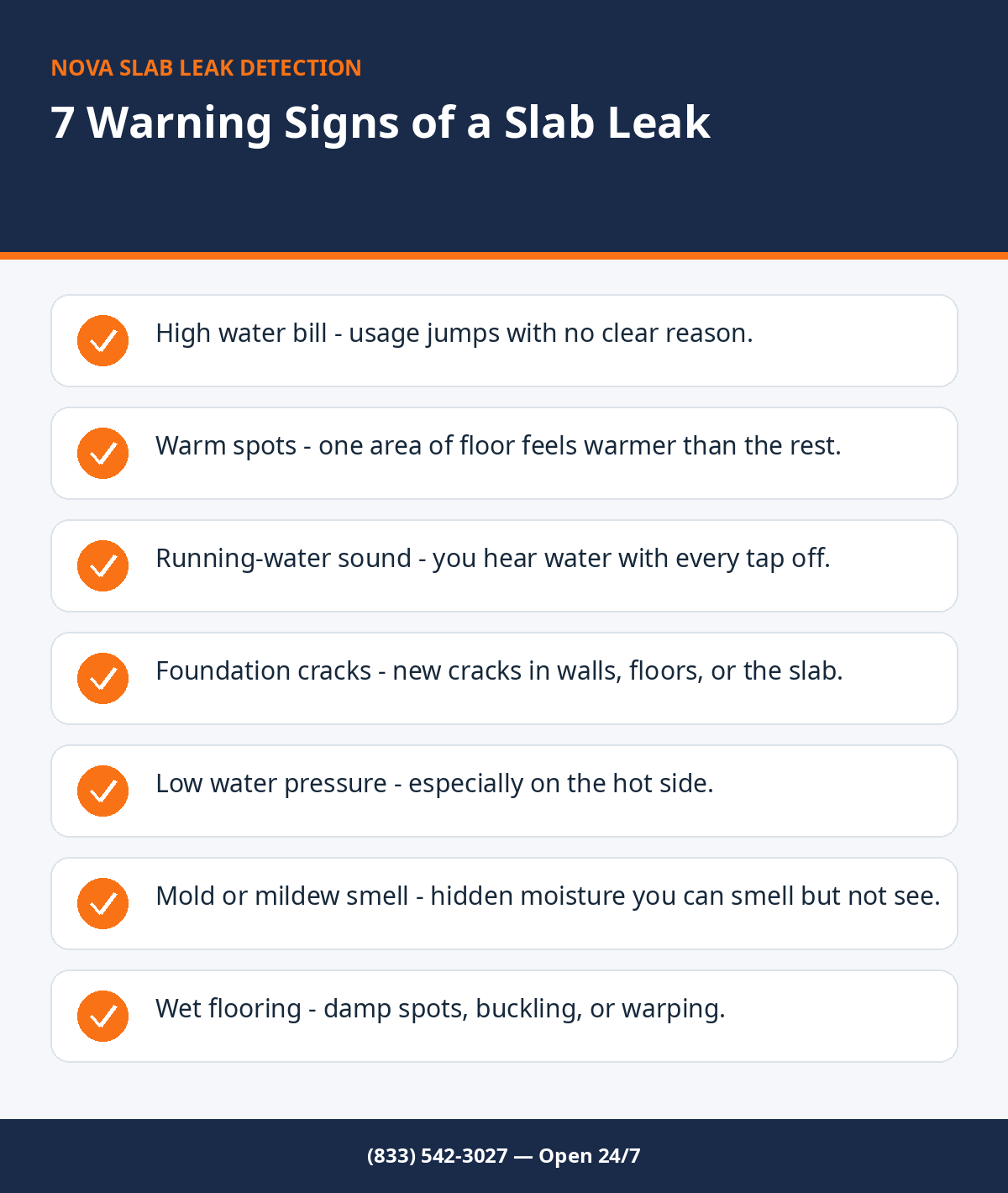
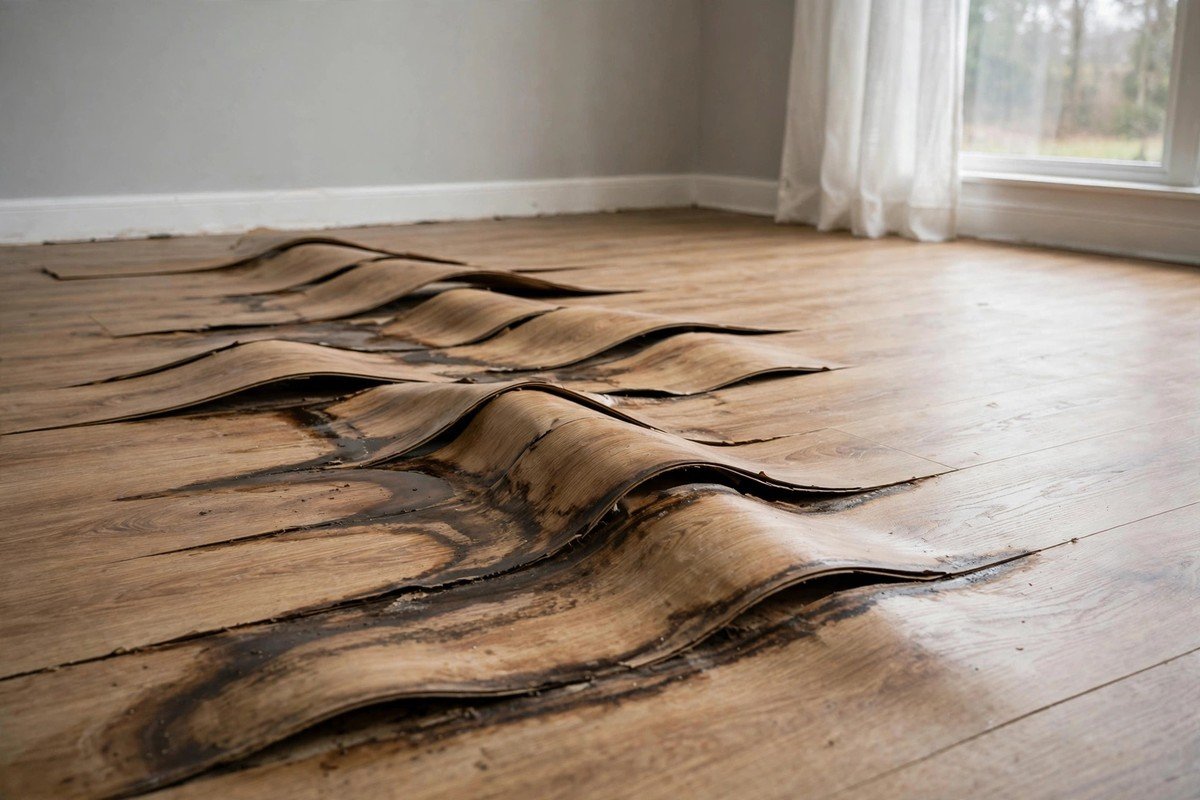
Feel for a warm spot on your floor that stays warm. Hear water run when all taps are off. Watch the bill for a jump you cannot explain.
Cracked tile, damp carpet, and warped wood can mean water rising. A musty smell near baseboards is one more sign. Meter turning with nothing on? You likely have a leak.
Can a 1990s home here really have a slab leak? Yes. Joints and pipe entries can fail in homes under thirty. The main runs can still be sound.
Is one warm tile enough to call? Yes. One warm tile often marks a hot leak’s spot.
Which Corona Areas Do We Serve?
We serve each part of the city. Our stops include these zones most:
Eagle Glen. Golf course homes from about 2000. Joint and early-run failures are the main leak source.
South Corona. Late-1990s Spanish-style homes by the Santa Ana Mountains. Aging copper plus hill soils.
Downtown. Old core around Grand Boulevard with the oldest pipes in town.
We also serve Dos Lagos and Mountain Gate Park. We serve all seven ZIP codes from 92877 to 92883.
Areas and ZIP Codes We Serve in Corona
We cover all of Corona. These are the ZIP codes:
92877, 92878, 92879, 92880, 92881, 92882, 92883
Call (833) 542-3027 day or night — our local line never closes.
What Happens During Our Slab Leak Visit in Corona?
We load sound gear, a heat camera, and trace gas tools. Expect one to three hours on site. Your home stays whole.
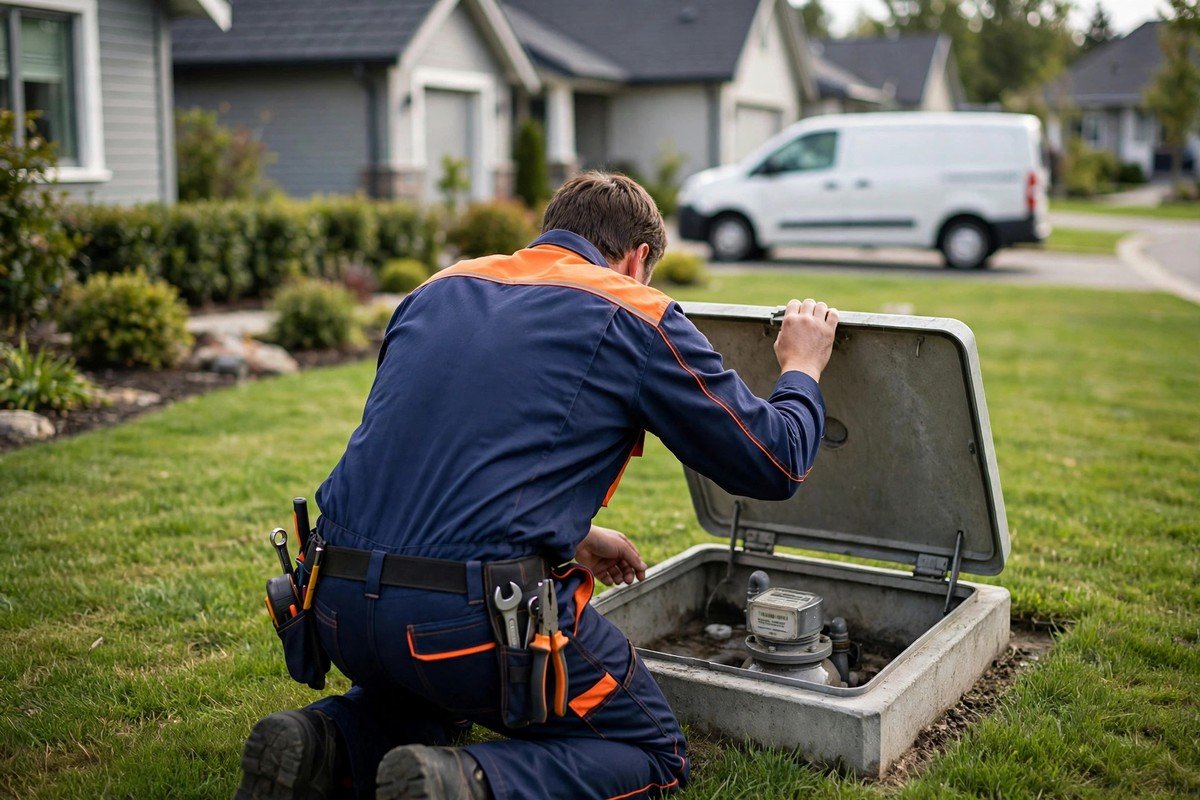
- Prove it — We start at the water meter. We test each line for leaks.
- Listen — Sound sensors pick up water under the slab.
- Scan — Heat scans show warm spots from hot line leaks.
- Trace — Trace gas pinpoints the leak when sound falls short.
- Report — You get a written brief. It puts the leak at about one to three feet. It lists fixes and firm prices.
Can you test a newer tract home? Yes. Our tools catch joint and entry leaks at any home age.
Will you harm my tile? No. The check does your home no harm.
How long is the visit? Expect one to three hours for most homes here.
See how our leak check visits work.
What Are the Repair Options for a Slab Leak in Corona?
After we map your leak, your technician sets out fix options. Each quoted price is a national estimate as of 2026.
- Spot repair — We open one small slab patch to fix the single leak. A spot repair falls into the national $1,500 to $4,500 band. Best for newer pipe with just one bad spot.
- Pipe reroute — We route new lines through your attic or walls. A reroute falls into the national $3,500 to $7,000 band. A good pick when joints fail across a 1990s system.
- Epoxy lining — We seal your pipes from the inside. Epoxy lining rests in the national $3,000 to $6,000 band. Suits homes with pipes that are still sound.
- Tunneling — We come at your pipe from outside, under the slab. Tunneling falls into the national $3,500 to $8,000 band.
National estimates as of 2026 value a leak check at $150 to $500. Hard jobs near $600.
Leaks here bring high water bills and mold under flooring. Our Corona repair services and cost guide cover next steps.
My Eagle Glen home is from 2001. What fix is likely? A single joint failure often means a spot repair. We will make sure the rest of your pipes are sound.
Reach us at (833) 542-3027 today. We serve Corona and all of California.
Corona’s Desalter, the Circle City, and the River Wash
Corona was a water project before it was a city. Founded in 1886 as South Riverside by the South Riverside Land & Water Company, which bought 12,000 acres from the Yorba family and set out water and irrigation for the new citrus colony. The three-mile circular Grand Boulevard — modelled on Omaha’s — still rings downtown, and the oldest homes sit inside it, on pipework dating to the Temescal Water Company, incorporated in 1889. Those are the lines most likely to be leaking now.
The water has a modern twist. The City of Corona’s Department of Water and Power supplies the city from local groundwater and imported water — in 2000 about a third was pumped from the city’s own wells in the Temescal Basin. Since July 2001 the city has also run the Temescal Basin Desalter, a reverse-osmosis plant treating salty, high-nitrate basin groundwater once too poor to drink, producing 10 million gallons a day. The treated water is cleaner, but the tap water still runs hard — the city’s own water office puts hardness at 260 parts per million, about 15.2 grains per gallon, hard to very hard. Scale still builds.
The ground adds its own motion. The Santa Ana River and Temescal Creek wash through the north, and the south side climbs toward the Santa Ana Mountains, where hillside soils creep with wet and dry spells and tug at young lines year after year. The 1990s tracts — Eagle Glen among them — sit on that moving ground, which is why their joints fail before their pipes wear out. If your bill is up or a floor feels warm, call (833) 542-3027 — our technicians trace leaks with sound, heat and gas before any concrete is opened, open 24/7.
FAQs
How much does slab leak detection cost in Corona? National estimates as of 2026 value the cost at $150 to $500. Hard jobs near $600. A written brief and firm prices come with each visit.
Do you serve Eagle Glen and South Corona? Yes. We serve Eagle Glen and South Corona. We serve downtown and each tract in town.
Can newer homes get slab leaks? Yes. Here, joints and pipe entries can fail young. Soil shift can bring leaks in 1990s and 2000s homes.
My home was built in 1998. Is that a worry? Less than old homes, but joints can fail at this age. A visit gives you a firm answer.
How much time does a leak check take? Most homes take one to three hours.
Will home insurance cover slab leaks? Each plan differs. Most pay for the water harm but not the pipe fix. Read the plan.
Does living inside the Grand Boulevard circle mean older pipes? Yes — the circle holds Corona’s oldest homes. The city was founded in 1886 as South Riverside, and the first water system was the Temescal Water Company, incorporated in 1889. The downtown homes inside the three-mile ring carry the oldest pipework in the city, and a century of hard water has had the longest to work on it. A detection visit runs $150–$500 (national estimates as of 2026), and our technician will pinpoint any leak and give you a report before you decide on a fix.
Does Corona’s desalter water wear pipes differently? Not much. The Temescal Desalter, running since July 2001, strips nitrates, PFAS and dissolved solids from basin groundwater by reverse osmosis, so the treated share is cleaner than the raw basin water. But the supply is still a blend, and the city’s own water office puts tap hardness at 260 parts per million — about 15.2 grains per gallon, hard to very hard — so scale still builds on copper. Our technician tests your lines either way.