
What Puts Arkansas Pipes at Risk Underground?

Arkansas has two kinds of tough ground. The east sits on Mississippi delta clays that swell with rain and crack in dry spells. Our slab leak detection Arkansas homeowners rely on starts with our own trained technicians. The northwest sits on rocky Ozark soils that can grind against buried pipe.
Delta clay moves like a sponge. It drinks storm water and puffs up. It dries in summer heat and pulls back. Pipes caught in this cycle bend at the joints. Bent joints weep, then break. In the Ozarks, the threat is rock. Hard ground does not cushion pipe. It rubs the pipe with each small shift. Rubbed spots wear thin and split. Thin walls cannot hold line pressure forever. A split starts as a seep. A seep becomes a leak.
Q: Does rocky soil really cause leaks? A: Yes. Rock gives pipe no room to flex. Small ground shifts press pipe against stone. The friction wears the pipe wall. A thin wall splits under water pressure.
What Are the Warning Signs of a Slab Leak?


Your home will drop hints. Here are the six we hear about most:
- A water bill that climbs though your habits did not change.
- A patch of floor that feels warm under bare feet.
- The faint sound of running water in a silent house.
- Damp carpet, buckling wood, or tiles that lift.
- Water pressure that fades at one or two taps.
- A musty odor that air freshener cannot kill.
Spot two of these and call us. One visit can end the guessing. Waiting only lets the damage spread.
Delta clay hides leaks well. Wet soil masks damp spots. Ozark rock can hide sound too. Do not trust your eyes alone. A meter test tells the truth in minutes.
Q: Can a slab leak raise my water bill a lot? A: Yes. A pinhole leak can waste hundreds of gallons a day. You pay for every drop. That is why a sudden bill jump is the top sign we hear about.
How Does Our Technician Find Your Leak?
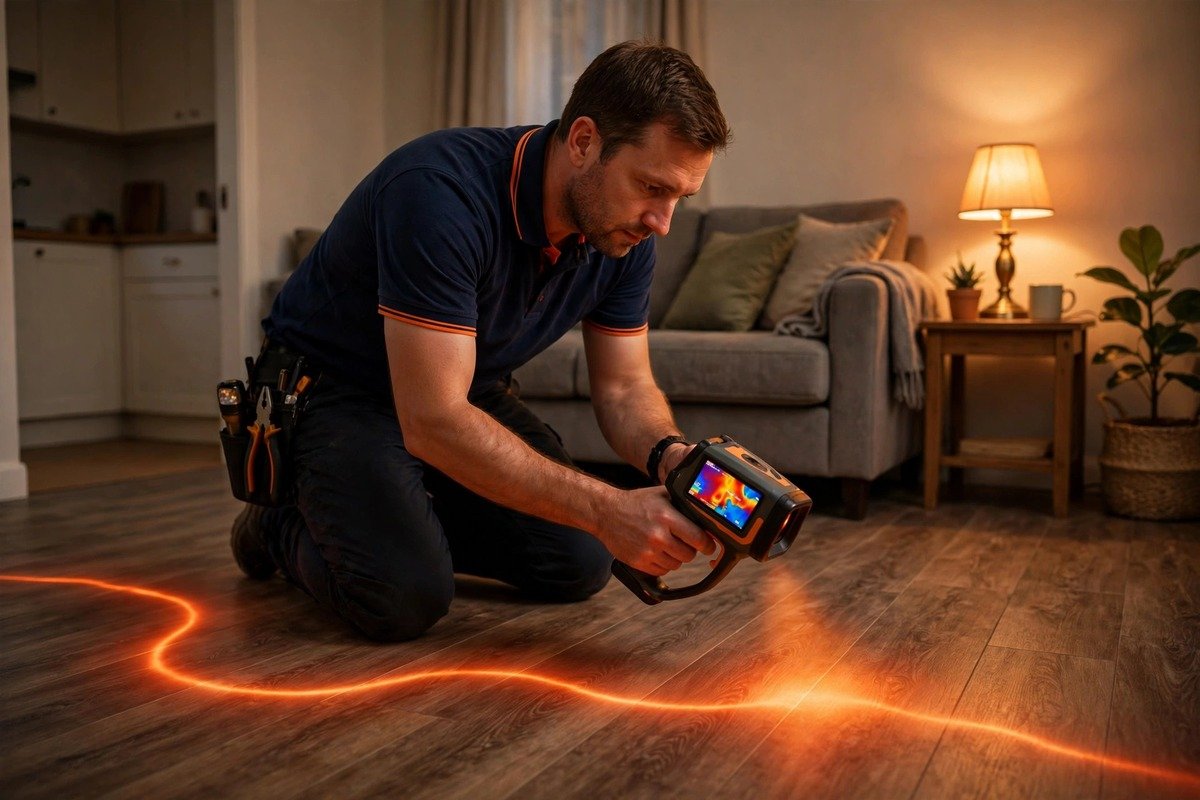
We start at your water meter. With all taps off, a spinning meter proves water is escaping. Next we listen. Acoustic sensors pick up the high hiss of a pressurized leak. Then we look with heat. A thermal camera shows warm trails from hot water lines. If the leak still hides, we charge the line with tracer gas. The gas seeps up through the slab right over the break.
The whole visit runs one to three hours. We mark your leak to about one to three feet. No concrete is touched until the mark is set. See our full process.
Q: Will the tests damage my home? A: No. Every test is non-invasive. We listen, scan, and trace from above the slab. Your floors stay whole until we both agree on a repair plan.
Do I Need to Be Home During the Visit?
Yes. We need you there to let us in and point out the signs. The visit is quiet work. We listen and scan with handheld tools. You can stay in the next room. Most visits wrap up in one to three hours.
Where Does Nova Serve in Arkansas?
We serve an expanding service area in Arkansas. Delta towns, Ozark towns, and all the ground between them get the same skilled crew. Browse every area we serve.
No matter your ground type, the gear is the same. The care is the same. One call starts it all.
When Should You Pick Up the Phone?
Today, if you see a sign. Water damage compounds fast. A small drip soaks the soil under your slab. Soaked soil moves more. More movement strains more pipe. The EPA mold guide warns that wet materials should dry within 24 to 48 hours. Fast calls keep small leaks small.
When you call, we ask a few quick questions. What signs have you seen? How long have they lasted? Then we set a time. Our line is open 24 hours a day. Nights, weekends, and holidays all count.
Q: Can I wait until the weekend to call? A: You do not need to wait. We are open 24 hours a day, 7 days a week. Night, weekend, or holiday, your call reaches our team.
How Much Does Slab Leak Work Cost in Arkansas?
Costs shift with each home, so we quote on site after testing. As a guide, here are national estimates as of 2026. A detection visit runs $150 to $500, with complex homes up to about $600. Spot repairs run $1,500 to $4,500. A reroute runs $3,500 to $7,000. Tunneling runs $3,500 to $8,000. Epoxy lining runs $3,000 to $6,000. A whole-home repipe runs $4,500 to $15,000.
You will see your price in writing before we start. Learn more in our slab leak cost FAQ.
Q: Why give national estimates instead of a flat price? A: Because no two leaks match. Pipe depth, slab thickness, and leak size all change the job. An honest quote needs eyes on your home first.
FAQs
How fast can you find my leak?
Most detection visits take one to three hours. You get answers the same day in nearly every case.
Do Ozark rocks make detection harder?
A little, but our tools hear through rock and soil alike. Sound, heat, and tracer gas work in both ground types.
Will you fix the pipe after you find it?
Yes. Our technicians handle detection and repair. You deal with one team from start to finish.
Does insurance cover slab leaks in Arkansas?
Policies vary. Many cover water damage but exclude the pipe fix. Ask your agent what your plan pays for.
How do I reach you?
By phone only. Call (833) 542-3027 any time. We are open 24 hours a day, 7 days a week.
What if the repair fails later?
Call us at (833) 542-3027. If our work falls short, we will come back and make it right. We answer 24/7, and the phone is the only way to reach us.