
Why Do Iowa’s Loess Soils Threaten Pipes Under Slabs?

Wind laid deep loess over glacial till. Loess looks soft. It shifts with water. Wet spells swell it. Dry spells shrink it. That endless motion is why slab leak detection Iowa calls peak after rainy springs and harsh winters. Freeze-thaw lifts the ground each cold season. Pipes ride it all.
Your pipes sit under the slab. The slab sits on this soil. Each swell-and-shrink round tugs joints. Time turns tugs into cracks.
Winter adds ice force. Soil moisture freezes hard. Ice grows. It heaves slabs up. Spring thaw drops them back. Pipes feel each round.
Is loess worse than other soils? It moves much with moisture. The motion never rests. Joints tire over the years.
Can new homes leak too? Yes. Fresh fill settles in a lopsided way. Settling strains young pipes. Age gives no shield.
Our soil science guide explains how ground wears pipe.
What Signs Point to a Slab Leak in an Iowa Home?
Warm floor patches top the list. They hint at hot line leaks. Cool damp spots hint at cold line leaks. Note them by room.
Bills speak next. A jump with no new use means loss. Test the meter. Read it. Wait one hour. Read it again. A moved dial proves a leak.
Night hisses count. Musty ground-floor smells count too. Dry wet spots fast. The EPA sets 24 to 48 hours to slow mold. Their mold guide covers safe drying.
Does a slab leak always smell? No. Many stay odor-free for weeks. Trust floors and bills more than your nose.
Can one wet spot mean a big leak? Yes. Water fans out under slabs. A small spot can hide a wide pool.
Where Does Nova Work in Iowa?
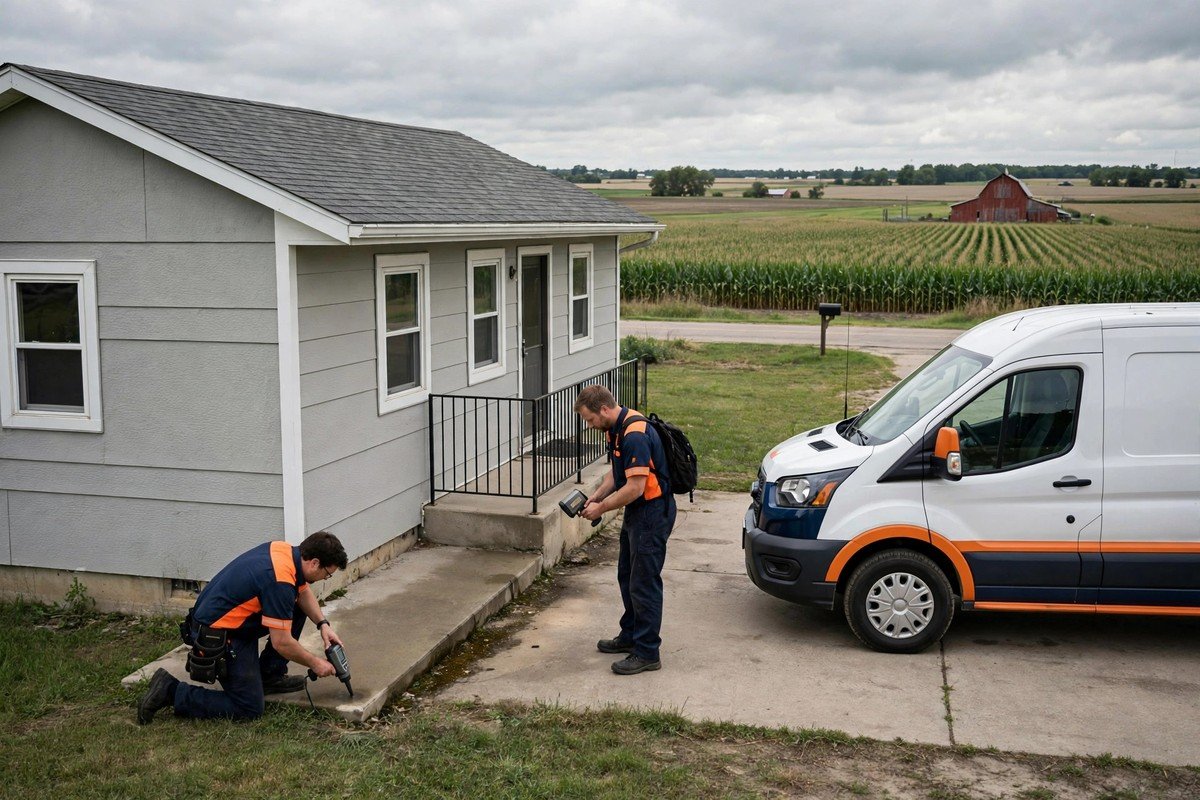
We serve an expanding service area in Iowa. Farms count. Towns count. Suburbs count. Our technicians cover them all. One call reaches us.
Our locations hub maps the full spread. If your home sits in Iowa, we can serve you. Rural routes need more drive time. We still come. Choose a slot that fits. We confirm by phone.
What Does Our Visit Look Like, Step by Step?

Your technician brings sound gear, a heat cam, and tracer gas. The visit takes one to three hours. You watch the find happen. No concrete is cut.
- We start with your story and signs.
- A meter test proves water loss.
- Sound gear finds the loudest zone.
- Heat scans paint the floor’s warm map.
- Tracer gas finds the leak within one to three feet.
- We mark the spot and walk through options.
Our process page covers each tool in plain words.
Who Should Pick Up the Phone?
Any owner who spots a sign. Any buyer touring a home with damp floors. Any landlord fielding odd utility gripes. If water may leak, the call pays off.
We answer round the clock, each day. Phone is our only contact method. Our number is (833) 542-3027.
Left unsatisfied? Call back. Nova works to make it right. Each visit holds that pledge. Renters should tell landlords first. Put it in writing. Dates matter.
What Will Slab Leak Detection Cost in Iowa?
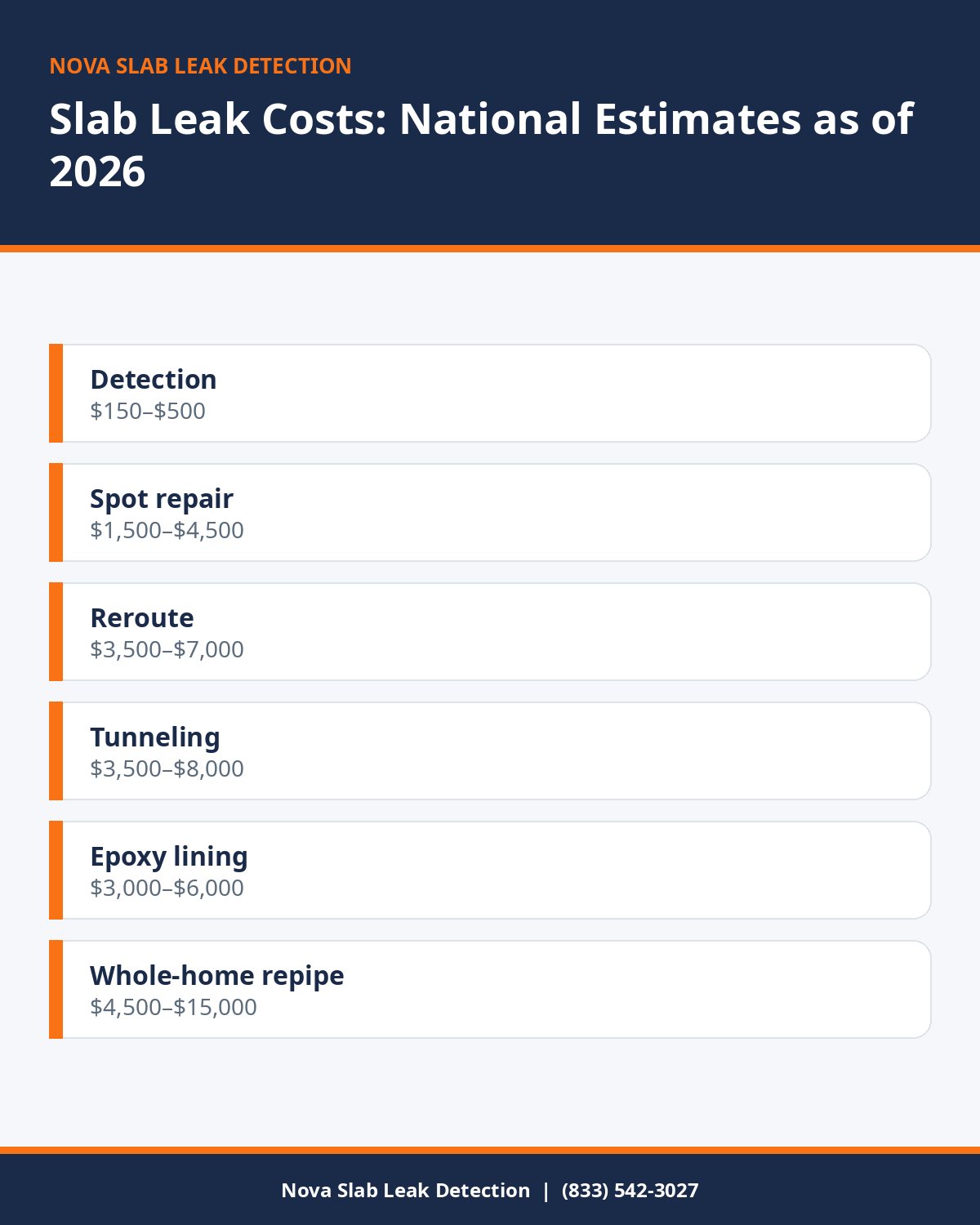
These are national estimates as of 2026. They frame your budget. Your price fits your home.
| Service | National estimate (2026) |
|---|---|
| Leak detection | $150–$500 (complex homes up to ~$600) |
| Spot repair | $1,500–$4,500 |
| Pipe reroute | $3,500–$7,000 |
| Tunneling | $3,500–$8,000 |
| Epoxy lining | $3,000–$6,000 |
| Whole-home repipe | $4,500–$15,000 |
We find first. Then we fix. The find picks the path. See detection costs for more.
Can Cold Snaps Hide a Slab Leak in Iowa?
Yes. Deep cold slows water spread. Damp spots may hide for weeks. Bills turn into the best winter clue.
Frozen ground masks sound too. Hiss grows hard to hear. Watch the meter instead. A creeping dial never lies.
Thaw reveals harm fast. Puddles pop up. Odors rise. If winter bills looked odd, call before full thaw.
What Should I Do Before Our Iowa Technician Arrives?
Write down each sign. Note warm floor spots. Note odd bills. Note strange sounds.
Clear the work zones. Move rugs off suspect floors. Shift light chairs aside. Leave heavy items to us.
Find your water meter. Know the main shutoff spot. Your technician may ask. Fast access saves time.
Keep pets in another room. Our gear beeps and hums. Calm pets keep the visit smooth.
List past plumbing work. Note the home’s age. Note old repairs. History guides the search.
The visit runs one to three hours. Stay home throughout. Ask us anything.
How Do Iowa Renters Handle Suspected Leaks?
Spot the signs first. Warm floors. Odd bills. Damp smells. Renters see them daily.
Tell the landlord in writing. Text works. Email works. Note the date. Keep proof.
Share our number: (833) 542-3027. Owners book the visit. We answer 24/7.
Dry wet spots in 24 to 48 hours. The EPA urges that span. It slows mold. Guard your health.
Do not stall for permission to call us. Detection only finds. It cuts nothing.
If the owner drags feet, call anyway. We log the find. Proof speeds slow cases.
FAQs
How long until a technician can come?
Call any time. We are open 24/7. Detection takes one to three hours on site.
What will detection cost me?
$150–$500 per national estimates as of 2026. Complex homes can hit about $600. We quote first.
Is detection messy?
No. Tools read through floors. Nothing is cut or drilled. Your home stays as found.
Do Iowa soils really break pipes?
They can, over time. Loess swells and shrinks. Freeze-thaw heaves yearly. Both wear joints.
How do I contact Nova?
Call (833) 542-3027. We answer 24 hours a day, 7 days a week, by phone only.
What is your satisfaction guarantee?
If something is not right, call Nova. We work to make it right.