
How Do Indiana’s Glacial Soils Stress Slab Pipes?

Glaciers left till and outwash here. Clay pockets hide in that mix. They swell with rain. They shrink in dry spells. That restless ground is why slab leak detection Indiana calls climb after wet seasons and deep freezes. Freeze-thaw heaves the soil each year. Joints pay for it.
Pipes rest under your slab. The slab rests on this soil. Swelling clay pushes hard. Drying clay drops away. Joints bear the strain. Years of strain crack them.
Freeze-thaw lands a second blow. Ice grows in the soil. It lifts the slab a touch. Thaw sets it back down. Each winter grinds pipes thinner.
Why are clay pockets worse than plain dirt? They move more. Sand shifts little. Soaked clay swells far. That extra motion works joints hard.
Does outwash soil help or hurt? It drains fast, which helps. But fast flow can wash fines from under slabs. Voids let slabs sink. Sinking strains pipes.
Our soil science guide shows how each soil treats pipe.
When Should an Indiana Homeowner Suspect a Slab Leak?
Suspect one when bills climb for no cause. Suspect one when a floor zone feels warm. Suspect one when hissing sounds rise at night.
Damp carpet warns too. Musty low rooms warn too. Dry wet spots fast. The EPA gives 24 to 48 hours to slow mold. Their mold guide shows how.
Can a slab leak cut water pressure? Yes. Large leaks divert flow. Showers run weak. Faucets sputter. Full-home drops deserve a call.
Should I wait and watch? No. Leaks never heal. Water spreads under the slab. Early calls cost less. Snap photos of damp spots. Dates help track spread.
Which Parts of Indiana Do We Serve?

We serve an expanding service area in Indiana. Our technicians travel statewide. Big towns count. Small towns count. One call links you to us.
See each zone on our locations hub. If you live in Indiana, we likely reach you. Rural drives take longer. We still come. Pick a time that suits you. We confirm by phone.
How does your technician locate the leak?
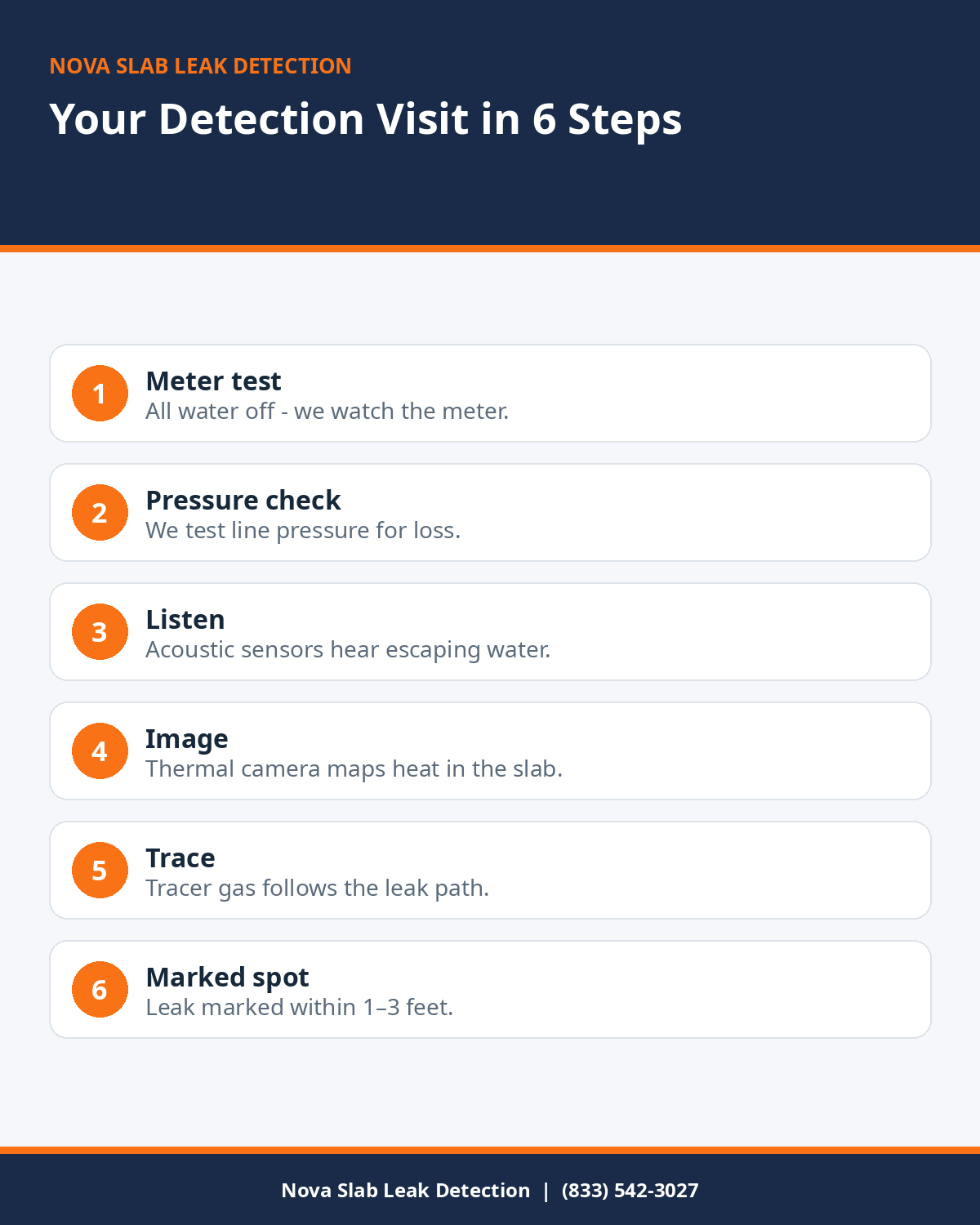

Your technician brings three tools. Listening gear. A heat cam. Tracer gas. The visit lasts one to three hours. Concrete stays whole.
The steps run like this:
- You point out each sign you saw.
- We test the meter to prove loss.
- Listening gear shrinks the search zone.
- The heat cam maps hot and cold floor spots.
- Tracer gas nails the leak to one to three feet.
- You get a marked spot and clear next steps.
Our process page covers the method in plain terms.
Who Needs to Call Nova in Indiana?
Owners with warning signs should call. Buyers who spot damp floors should call. Landlords with odd tenant bills should call. Early beats late.
Our line stays open 24 hours a day, 7 days a week. Phone is our only channel. Dial (833) 542-3027 any time.
Not pleased with the visit? Say so. Nova works to make it right. That is our word. Renters should loop in landlords. Report signs fast. Written notes help.
How Much Does Slab Leak Detection Cost in Indiana?
These are national estimates as of 2026. They set your budget. Your quote fits your home.
| Job | Typical national cost, 2026 |
|---|---|
| Detection visit | $150–$500 (about $600 for complex homes) |
| Spot repair | $1,500–$4,500 |
| Reroute | $3,500–$7,000 |
| Tunneling | $3,500–$8,000 |
| Epoxy lining | $3,000–$6,000 |
| Whole-home repipe | $4,500–$15,000 |
Detection leads. It names the right repair. Our cost guide breaks down each fix.
Does Homeowners Insurance Cover Slab Leaks in Indiana?
It rests on your policy. Many cover sudden bursts. Few cover slow wear. Detection coverage shifts too. Policies vary, so read yours.
Ask two things. Does it pay for the find? Does it pay for pipe access? Our insurance FAQ adds more good questions.
Can a Slab Leak Hurt My Indiana Foundation?
It can, over time. Water softens soil. Soft soil shifts. Slabs settle or lift. Cracks grow.
Watch doors and windows. Sticking frames hint at slab motion. New floor cracks warn too. Note when you see them.
Clay pockets swell fast when fed by leaks. One zone lifts. The next stays put. That twist strains pipes more.
Act fast on signs. Quick finds curb soil harm. Our visit takes one to three hours. Detection runs $150–$500 per national estimates as of 2026.
Do not wait for proof. Proof arrives with damage. A call costs nothing. Waiting can cost thousands.
Why Call Before Thaw Hits Indiana?
Winter hides leaks under frost. Signs stay buried for months. Bills hint first. Meters prove it.
Thaw frees trapped water fast. Damp spots bloom in March. Odors rise. Harm spreads quick.
A pre-thaw call beats the rush. Your technician finds the leak early. Soil harm stays small. Repair bills stay low.
Book in late winter. Slots fill as thaw nears. Call (833) 542-3027 today. We answer 24/7.
Do not wait for puddles. Puddles mean deep harm. Early finds save floors and funds.
FAQs
How fast can you visit in Indiana?
We take calls 24/7 and book fast. Detection takes one to three hours on site.
What does a detection visit cost?
$150–$500 per national estimates as of 2026. Complex homes may run about $600. We quote first.
Do you break concrete to find leaks?
No. We use sound, heat, and tracer gas. Leaks get pinned to one to three feet. Nothing is cut.
Can Indiana winters cause slab leaks?
Yes. Freeze-thaw heaves soil each winter. Wet springs swell clay pockets. Watch bills in both.
How can I get in touch with Nova?
Call (833) 542-3027. We are open 24 hours a day, 7 days a week, by phone only.
What if the visit does not go well?
Call us back. If something is not right, Nova works to make it right.